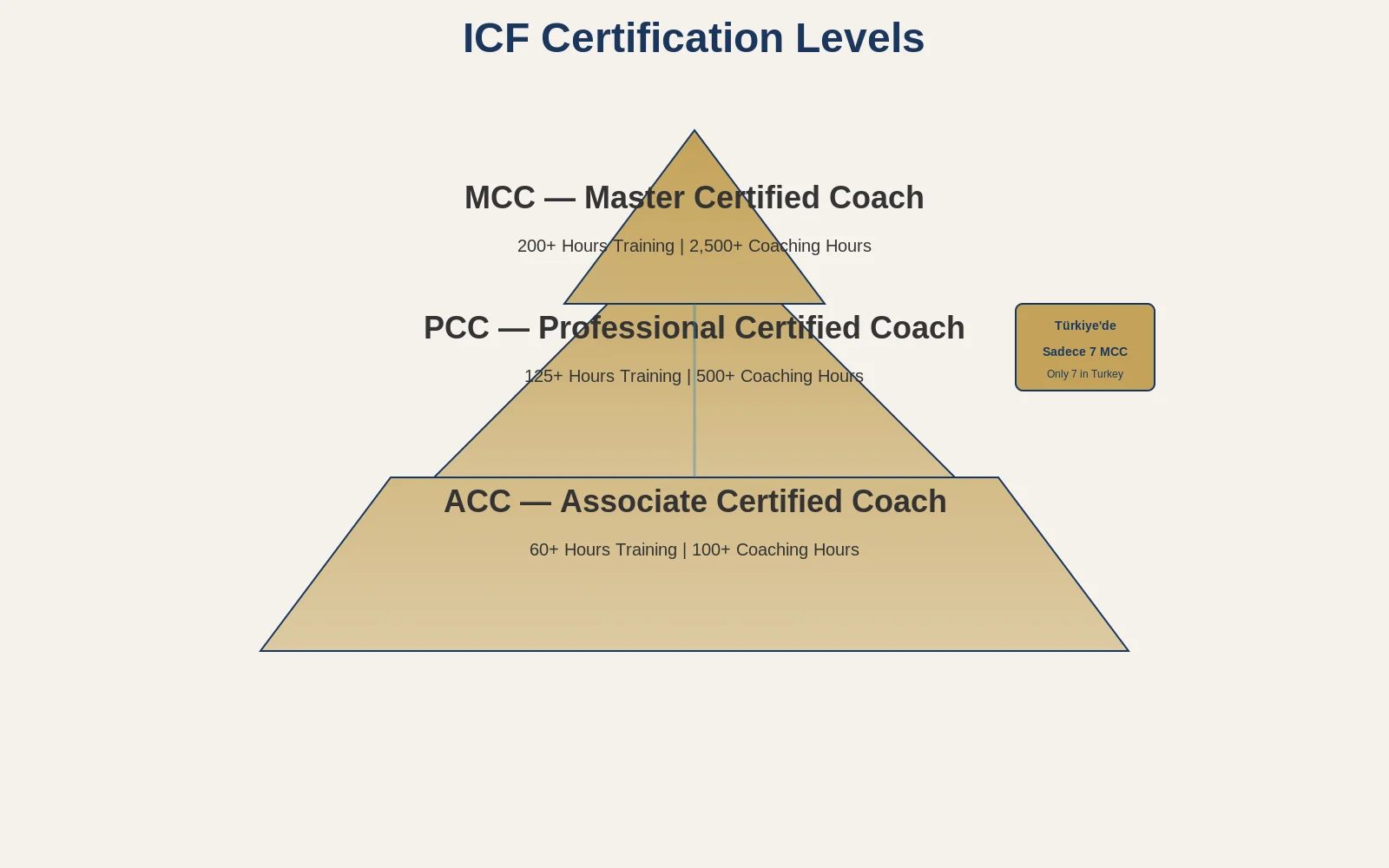
The International Coach Federation (ICF) offers three credential levels—ACC (Associate Certified Coach), PCC (Professional Certified Coach), and MCC (Master Certified Coach)—each requiring progressively higher hours of coach training, client contact hours, and demonstrated competency in the ICF Core Competencies.
The International Coach Federation is the world’s leading professional organization for coaches, established in 1995. ICF credentials represent a globally recognized standard for coaching excellence, earned through a rigorous process that combines formal training, supervised practice, and independent assessment.
What Is ICF Coaching Certification?
Unlike coaching certificates from training schools—which validate completion of a course—ICF credentials validate actual coaching competency. You cannot “complete” an ICF credential; you must earn it through demonstrated hours, documented client work, and examination. This distinction matters enormously when hiring coaches for enterprise or high-stakes environments.
The ICF credential system rests on three pillars: the ICF Core Competencies (11 competency clusters covering everything from establishing trust to facilitating client growth), the ICF Code of Ethics (principles of honesty, integrity, and respect), and documented evidence of coaching hours and client impact.
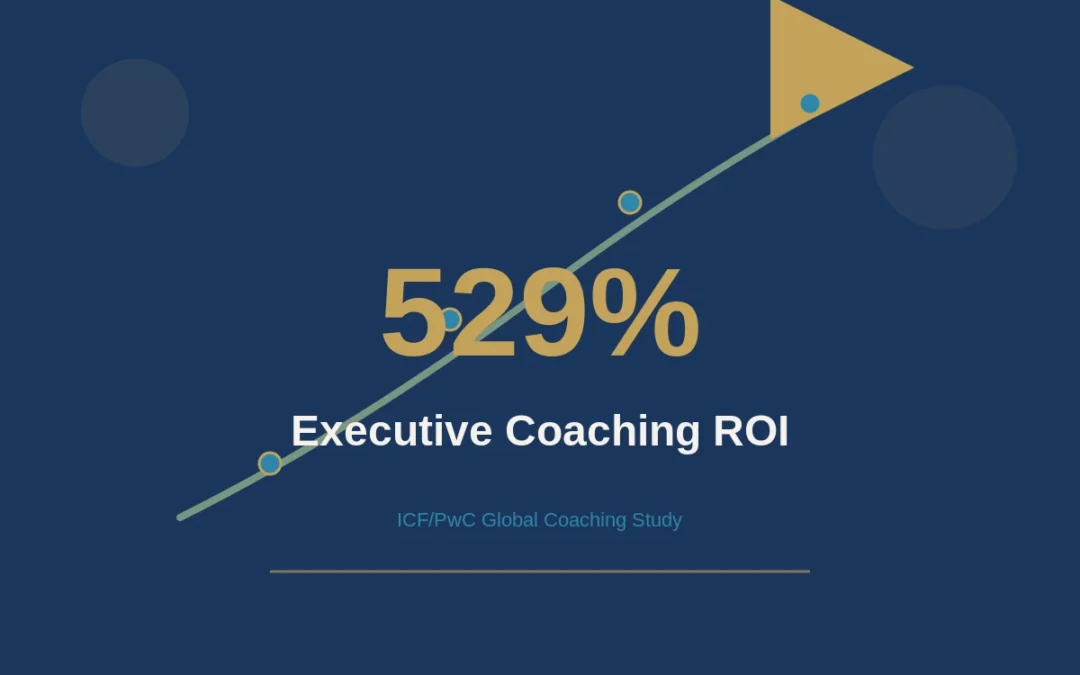
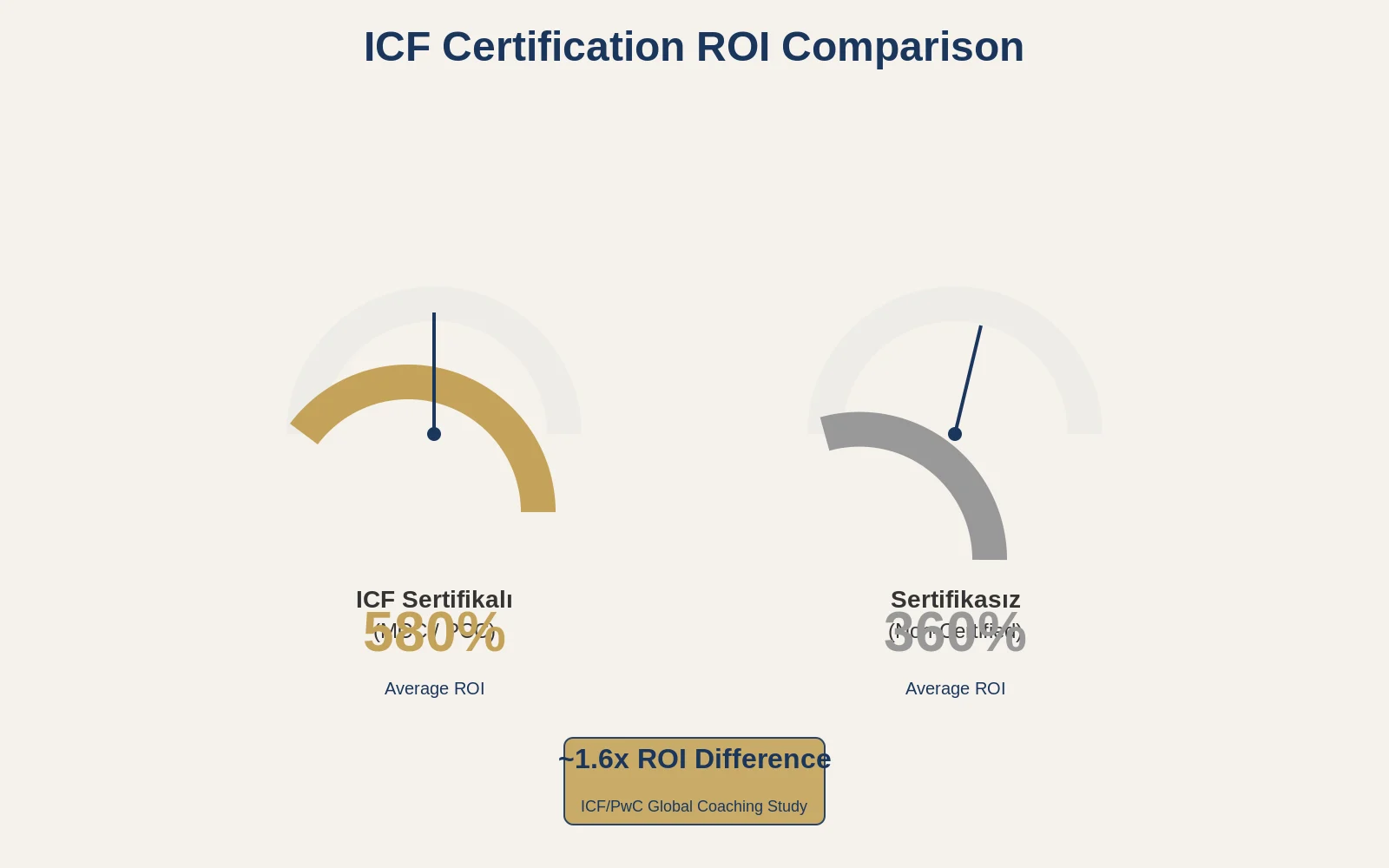
In 2025, ICF represents over 50,000 certified coaches across 143 countries. The coaching industry itself is valued at $4.564 billion globally, with enterprise coaching showing 529% ROI and 21% profitability margins for organizations that invest in credentialed coaches. Coaching clients report 130% increase in effectiveness, 5.7x performance improvements, and dramatically higher engagement scores.
For The Integral Institute—which has delivered 20,000+ coaching sessions across Turkey, MENA, Malaysia, Europe, the US, and the UK—ICF credentials represent the bedrock of our coaching practice. Our founder, Sami Bugay, holds the MCC (Master Certified Coach) credential, setting the standard for the organization.
The Three ICF Credential Levels: ACC, PCC, MCC
ACC (Associate Certified Coach)
The ACC is the entry-level ICF credential. It signals that a coach has completed foundational training and logged meaningful client hours. To earn ACC:
- Minimum 60 hours of formal coach training (with an ICF-accredited provider)
- Minimum 100 hours of paid or unpaid client coaching
- Completion of the ICF Exam (100 multiple-choice questions covering the 11 Core Competencies and Code of Ethics)
- Two client assessments (feedback from clients you’ve coached)
The ACC credential is ideal for coaches early in their practice, those transitioning into coaching from other fields, or coaches serving individual clients in self-directed growth programs. Many internal corporate coaches—hired by HR departments to develop managers—operate at the ACC level. The credential typically takes 6–12 months to earn after completing formal training.
Who earns ACC: career transitioners, internal HR coaches, independent coaches building a practice, coaching students still completing their training.
PCC (Professional Certified Coach)
The PCC credential represents professional mastery. It requires significantly more hours and deeper competency assessment. To earn PCC:
- Minimum 125 hours of formal coach training (typically from an accredited provider)
- Minimum 750 client coaching hours (paid or unpaid, but must be substantive coaching relationships, not transactional advice)
- ICF Exam (same as ACC: 100 questions)
- Three client assessments (evidence that clients perceive you as competent in the 11 Core Competencies)
- Portfolio review (ICF examiner reviews your client agreements, session notes, and coaching philosophy to verify alignment with Core Competencies)
The PCC credential typically takes 18–36 months to earn, depending on coaching volume and client availability. Many executive coaches, organizational development coaches, and coaches specializing in leadership transition operate at PCC level. PCC holders serve as mentors for newer coaches and often develop specialized coaching methodologies.
Who earns PCC: executive coaches, leadership development specialists, organizational coaches, coaches with 2–5 years of practice.
MCC (Master Certified Coach)
The MCC is the highest ICF credential, representing mastery, ethical leadership, and contribution to the profession. To earn MCC:
- Minimum 125 hours of formal coach training (often supplemented by ongoing professional development)
- Minimum 2,500 client coaching hours (demonstrating sustained, deep practice)
- ICF Exam (100 questions)
- Five client assessments (higher bar for competency feedback)
- Extensive portfolio review (ICF examiner scrutinizes your work for evidence of mastery across all 11 Core Competencies, ethical reasoning, and integration of coaching with broader business impact)
- Sponsorship or senior-level professional standing (MCC candidates are expected to contribute to the coaching profession through mentoring, teaching, or thought leadership)
The MCC credential typically takes 5–10+ years to earn, given the 2,500-hour requirement. Master-level coaches operate at the intersection of coaching, organizational strategy, and systems change. They serve C-suite executives, advise boards, develop coaching cultures in enterprises, and mentor other coaches. MCC holders often publish, teach, or lead coaching organizations.
Who earns MCC: elite executive coaches, coaching leaders and entrepreneurs, organizational development strategists, coaches with 7+ years of deep practice. At The Integral Institute, Sami Bugay’s MCC credential reflects our commitment to the highest standard of coaching practice.
ICF Certification Requirements: Hours, Training, and Assessment
The most visible difference between ACC, PCC, and MCC is the hours required and the depth of assessment. To maintain momentum and provide the highest value to our clients, The Integral Institute emphasizes that coaching certification is not a destination but a beginning—the start of a lifelong commitment to growth, impact, and ethical practice.
Why ICF Certification Matters for Enterprise Coaching
When an organization hires an ICF-credentialed coach, they know that coach has met a global standard. The credential is not granted by a commercial training provider trying to sell more courses; it is granted by an independent professional organization with governance and standards. This distinction carries weight in regulated industries.
All ICF-credentialed coaches subscribe to a published Code of Ethics and agree to resolve complaints through ICF’s ethics process. If a coach violates the code, ICF can revoke the credential. This accountability structure is rare in the coaching industry and increasingly required by large enterprises, healthcare systems, and government agencies.
Organizations investing in credentialed coaching report:
- 529% ROI (return on investment in coaching, per Metrix Global data)
- 21% profitability improvement among teams with credentialed coaches
- 130% increase in workplace effectiveness (based on ICF Global Coaching Study data)
- 5.7x improvement in performance metrics for coached leaders
- Higher retention: Employees who receive coaching stay 2.3x longer
ICF Certification vs. Other Coaching Certifications
The coaching industry includes various credentialing bodies. ICF is the global standard, but EMCC (European Mentoring and Coaching Council), CCE (Coach Certification Europe), and BCC (Board Certified Coach) serve specific regions and niches. ICF credentials carry the most recognition globally, particularly in North America and increasingly in Europe, Asia, and the Middle East.
Bottom line: If you coach globally or in North America, ICF is the credential that carries the most weight. EMCC is the equivalent in Europe. If you practice internationally or in organizations with global operations, ICF is the clear choice.
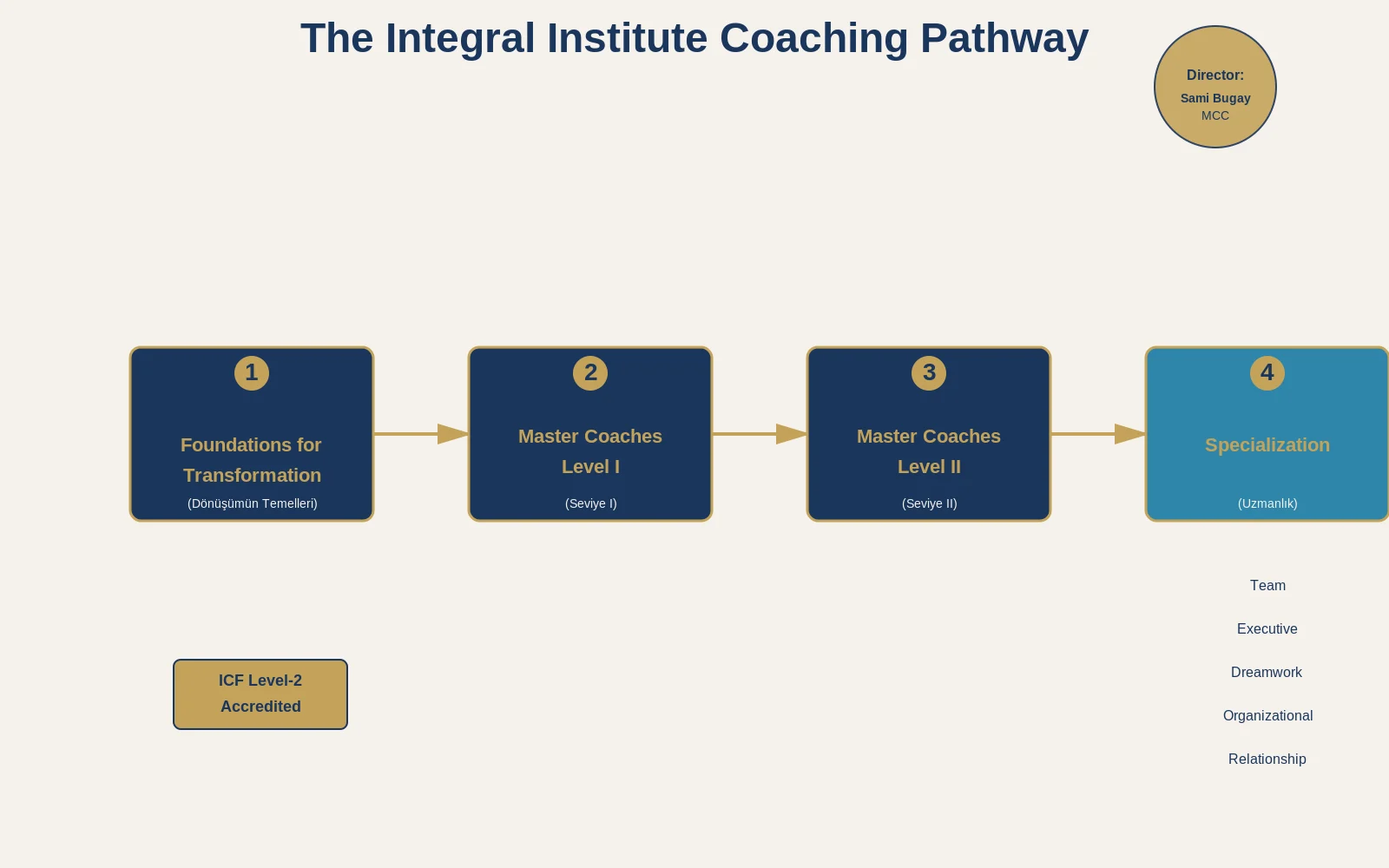
The Integral Coaching Approach to ICF Development
At The Integral Institute, we integrate integral coaching methodology with ICF competency development. Integral coaching goes beyond transactional skill-building; it develops the coach as a person—their presence, wisdom, and capacity to work with complexity.
Our approach to ICF credential development includes foundational competency training in the 11 ICF Core Competencies, supervised client practice in real coaching relationships, integration with leadership and organizational coaching across teams and systems, and ethical practice grounded in deep presence and self-awareness.
The Integral Institute’s track record reflects this depth: 20,000+ coaching sessions delivered with sustained client satisfaction, organizational impact, and coach retention. Our coaches don’t burn out; they deepen.
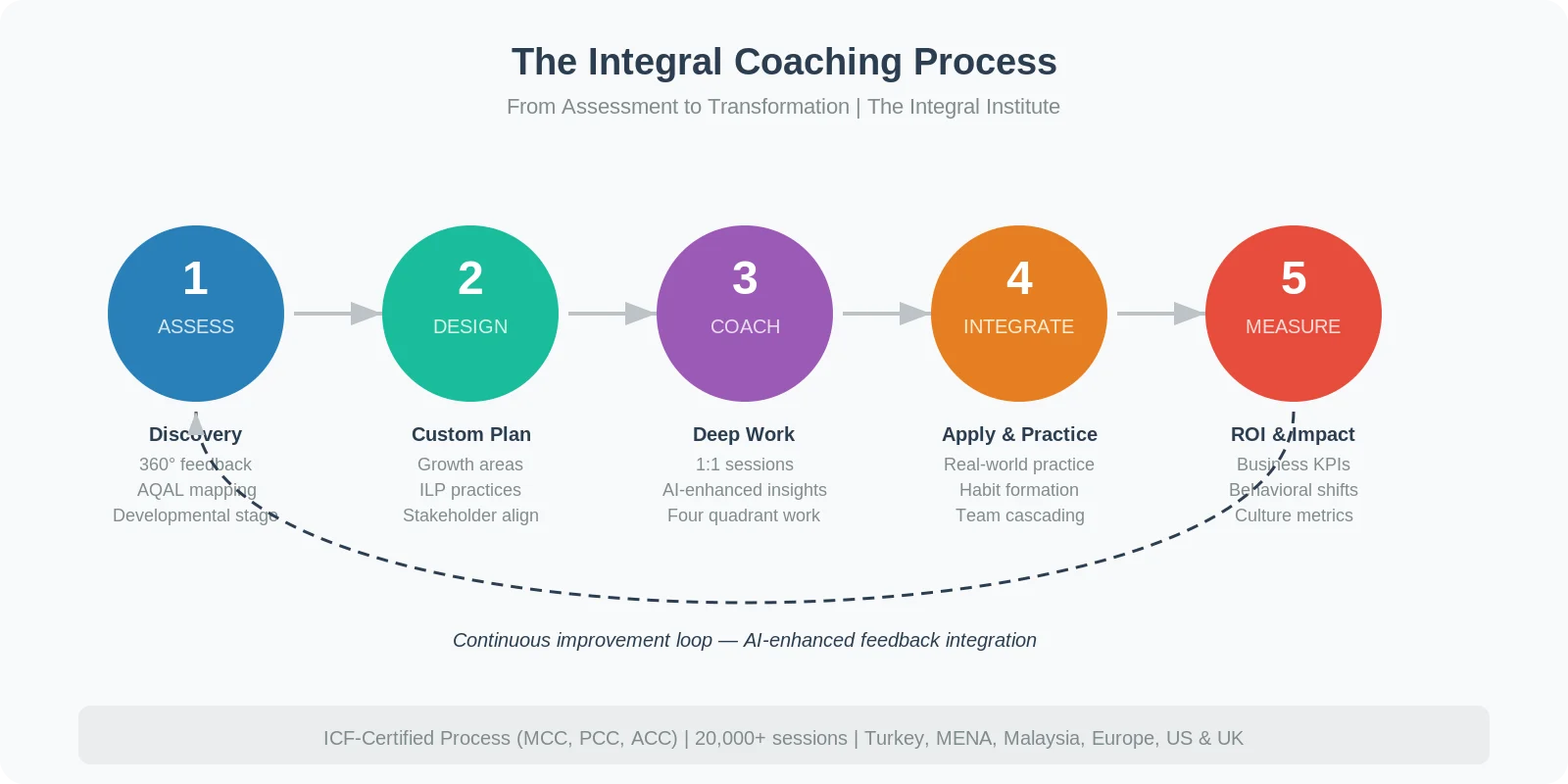
This diagram illustrates our integral coaching process: from establishing presence and trust through facilitating transformational insight to anchoring sustainable change. The process integrates ICF Core Competencies with integral development principles.
ICF Certification Costs and Timeline
Direct Costs:
- Formal Coach Training: $3,000–$12,000 depending on program length and delivery
- Client Coaching Hours: $0–$15,000+ (your clients may pay you, generating income while you log hours, or you may coach pro-bono)
- ICF Exam: $300
- ICF Membership: $200–$500/year
- Total ACC Path: $3,600–$13,300
- Total PCC Path: $3,800–$13,500+
- Total MCC Path: $4,000–$14,000+ (difference is time, not cost)
Timeline Summary: ACC typically takes 6–12 months, PCC takes 18–36 months, and MCC takes 5–10+ years. The math is important: PCC and MCC credentials are not quick achievements. They represent years of sustained, client-centered practice.
ICF Coaching in Turkey, MENA, Malaysia, Europe, US & UK
Regional Adoption and Growth: ICF coaching has grown substantially across all these regions, with different drivers and applications. In Turkey and MENA, enterprise coaching is accelerating in finance, tech, and oil & gas. Malaysia has positioned itself as a Southeast Asia hub for coaching. Europe has the highest density of ICF-credentialed coaches per capita. The US and UK remain the largest markets with mature executive coaching cultures.
For organizations operating across these regions, ICF credentials provide a consistent global standard. An ICF PCC coach in London operates from the same competency framework as an ICF PCC coach in Istanbul or Kuala Lumpur. Learn more about integral coaching methodology, which integrates cultural context and complexity—particularly valuable in multicultural organizations spanning Turkey, MENA, Europe, and Asia.
Related Guides
- Integral Leadership: A Comprehensive Guide
- Integral Team Coaching Guide
- AQAL Model: Integral Theory Guide
- AI Coaching vs Human Coaching Comparison
- Executive Coaching ROI Guide
FAQ: 7 Common Questions About ICF Certification
Q1: Do I need ICF certification to call myself a coach?
Short answer: No, but it signals competency and protects your clients. Legally, anyone can call themselves a coach. However, ICF certification communicates that you have met global standards for competency, ethics, and accountability. For enterprise and high-stakes coaching, ICF credentials are increasingly table stakes.
Q2: What’s the difference between an ICF certification and a coaching diploma/degree?
ICF certification is a credential awarded by an independent professional organization based on demonstrated hours, exam, and client feedback. Coaching diplomas and degrees are awarded by educational institutions based on completion of their curriculum. A degree says “I completed a program.” An ICF credential says “I meet a global standard for coaching competency.”
Q3: Is ICF MCC worth the 2,500-hour investment?
If your goal is executive coaching for C-suite clients, organizational development leadership, coaching culture building, or coaching mentorship, yes. MCC clients often pay $500–$2,000+/hour. If your goal is part-time life coaching or wellness coaching, probably not.
Q4: Can I get ICF certification outside the US or UK?
Absolutely. ICF has accredited training providers in 40+ countries, including Turkey, MENA, Malaysia, and throughout Europe. Make sure the provider is ICF-accredited—not just “ICF-aligned” or “ICF-compatible.” Check the ICF directory before enrolling.
Q5: How long do ICF credentials last?
ACC and PCC credentials are valid for 3 years. To renew, you must complete 40 hours of continuing coach education, pay renewal fees, and submit to ICF verification. MCC follows the same 3-year cycle.
Q6: What if I don’t pass the ICF Exam?
Most candidates who have completed their training and logged hours pass on the first attempt. If you don’t pass, you can retake it after 14 days. There’s no limit on retakes; each costs $300. Most coaches who fail the first time pass on the second attempt.
Q7: How do I verify that someone is actually ICF-certified?
Check the ICF credential directory at icf.world/credential-directory. Search by name, credential level, and country. If a coach claims ICF credentials and doesn’t appear in this directory, they don’t have them. Red flags: “Trained by ICF,” “ICF-aligned,” or claims of certification from non-accredited schools.
Conclusion
ICF certification is not a quick credential; it is a global standard earned through years of practice, rigorous assessment, and demonstrated ethical competency. For organizations seeking enterprise coaching, ICF credentials signal reliability, ethics, and accountability. For coaches seeking to build a credible, sustainable practice, the ICF path offers a structured, globally recognized pathway.
The Integral Institute has delivered 20,000+ coaching sessions grounded in ICF competencies and integral development principles. Our coaches—including founder Sami Bugay (MCC)—combine credentialed expertise with deep cultural understanding and organizational impact.
For leaders developing your team through coaching, explore Integral Leadership: Complete Framework.
Ready to develop your coaching practice or invest in credentialed coaching for your organization? Contact The Integral Institute to explore ICF-aligned coaching certification and development programs across Turkey, MENA, Malaysia, Europe, and beyond.