

Why CSR Is Now a Business-Model Decision, Not a Side Program
For years, corporate responsibility could live in a communications deck and an annual report. That era is closing. When nearly every large company now discloses sustainability information, a public commitment no longer signals leadership—it signals table stakes, and it invites the harder question of whether your claims survive budget review, procurement pressure, and margin targets. The old CSR model breaks precisely here: disclosure has expanded faster than operating discipline, and visibility without execution invites scrutiny rather than trust. The scale is hard to overstate—91% of companies by market capitalisation disclosed sustainability-related information in 2024 (OECD, 2025).
That is why the center of gravity has shifted. If nearly every major company is saying something about sustainability, the real question is no longer whether you have a program. It is whether your claims survive budget review, procurement pressure, margin targets, and leadership turnover. Deloitte reports that sustainability remains a top-three C-suite priority, which raises the stakes: what sits that high on the agenda will be judged like any other strategic investment—on credibility, measurability, and execution quality (Deloitte, 2025). This article is about how leaders make that judgment before they commit serious capital, management attention, and political support.
A familiar scene makes the point. In a quarterly review at a mid-market manufacturing company, the operations VP supports a packaging initiative until finance asks a simple question: where does the value show up, and who owns the trade-offs if costs rise before savings appear? The room goes quiet because the issue is no longer purpose. It is operating design.
From Program Logic to Operating Logic
This is the shift many organizations still underestimate. A side program can live in communications, community relations, or an annual report. A business-model decision changes how value is created, how risk is priced, how suppliers are chosen, and how managers are rewarded.
That is also why messaging has lost its protective power. Research consistently shows that once a topic reaches board and C-suite level, leaders stop asking whether it sounds right and start asking whether it can be run. Can it be built into governance? Can it be measured without distorting the business? Can it survive contact with incentives?
For companies rethinking their business models, sustainability is now less about adding a visible initiative and more about redesigning the system underneath it. The credible organizations are not the ones with the most polished narrative. They are the ones that can show where sustainability sits in capital allocation, decision rights, and performance management.
The Real Test Starts Inside the Organization
The practical divide is simple. If sustainability is treated as philanthropy, it competes for discretionary funding and weakens under pressure. If it is embedded in value creation, governance, and incentives, it starts to shape everyday choices—product design, sourcing, pricing, hiring, and investment sequencing.
That sounds straightforward. It rarely is.
Because once leaders accept CSR as an operating choice, a harder question appears: what exactly do they test before they fund it—evidence, economics, risk reduction, or organizational readiness?
What Executives Are Really Testing Before They Fund CSR
88% of sustainability disclosures received third-party assurance (OECD, 2025). That is the clearest signal that executive interest is real—but so is the scrutiny that follows.
Why do so many CSR proposals sound compelling in principle but fail the moment finance, operations, or governance reviews them? Because senior leaders are not funding intent. They are testing whether the case can survive the same standards applied to any other operating investment: evidence, ownership, downside protection, and a believable path to scale.
The Questions Behind the Questions
The public conversation still overweights values alignment and brand optics. Inside the decision room, the discussion is harder-edged. What is the cost in year one? Where does the return show up? Which team absorbs the disruption? How much management attention does this consume before it produces a result?
That is why cost, ROI, and organizational impact matter more than many internal sponsors expect. A proposal may sound strategically aligned and still lose funding if it creates friction in procurement, slows product delivery, or depends on heroic cross-functional cooperation. The real test is whether the initiative fits the company’s current operating model—or requires a level of coordination the business has never sustained. For leaders weighing cost, ROI, and organizational impact, credibility starts there.
A regional healthcare provider offers a familiar example. During annual planning, a VP champions a supplier-diversity and waste-reduction program with strong employee support. Finance does not reject the idea. It asks who will track compliance across sites, what happens if unit costs rise for two quarters, and whether the program still holds if reimbursement pressure tightens midyear. That is the moment many CSR cases weaken: not on purpose, but on operating detail.
What Makes a CSR Case Fundable
83% of executives increased sustainability investments in the last year (Deloitte, 2025).
That number can mislead if read casually. It does not mean executives are less selective. It means more capital is available for proposals that clear a higher bar.
The strongest cases connect CSR to three things executives already care about. First, risk reduction—less exposure to supplier failure, compliance gaps, or reputation shocks. Second, employee outcomes—retention, engagement, hiring strength, and the ability to keep critical talent through change. Third, long-term value creation—not abstract goodwill, but a clearer case for resilience, customer trust, and strategic flexibility.
This is where many organizations confuse enthusiasm with readiness. A program can be admirable, even urgent, and still be unfundable if no one can show how it will be governed, measured, and defended in a tougher budget cycle. And if that discipline is missing at approval, what happens once the launch announcement is over?
CSR, ESG, and Sustainable Business Models: Which Lens Fits the Decision?
The Lens-Fit Framework matters here because CSR, ESG, and sustainable business models are not interchangeable labels. Without that distinction, companies report in one language, govern in another, and invest in a third—then wonder why decisions stall.
Here is the practical split. CSR is best understood as programmatic responsibility: community commitments, workforce initiatives, supplier standards, and issue-specific actions that show what the company chooses to stand behind. ESG is different. It is the disclosure and governance language investors, boards, regulators, and assurance processes use to judge whether those choices are being tracked, controlled, and made visible. A sustainable business model goes further. It redesigns how the business creates value so that environmental or social performance is not adjacent to the model, but built into revenue logic, cost structure, product design, or ecosystem position.
That distinction sounds semantic until a real decision lands.
In a quarterly planning meeting at an enterprise software company, the CFO backs a carbon-reporting upgrade, the chief people officer pushes a digital-inclusion initiative, and the product SVP argues for redesigning pricing to reward lower-energy usage by customers. All three can be called “sustainability.” Only one question clarifies the choice: are we funding a responsibility program, a governance requirement, or a new value mechanism?
A Comparison Matrix in Prose
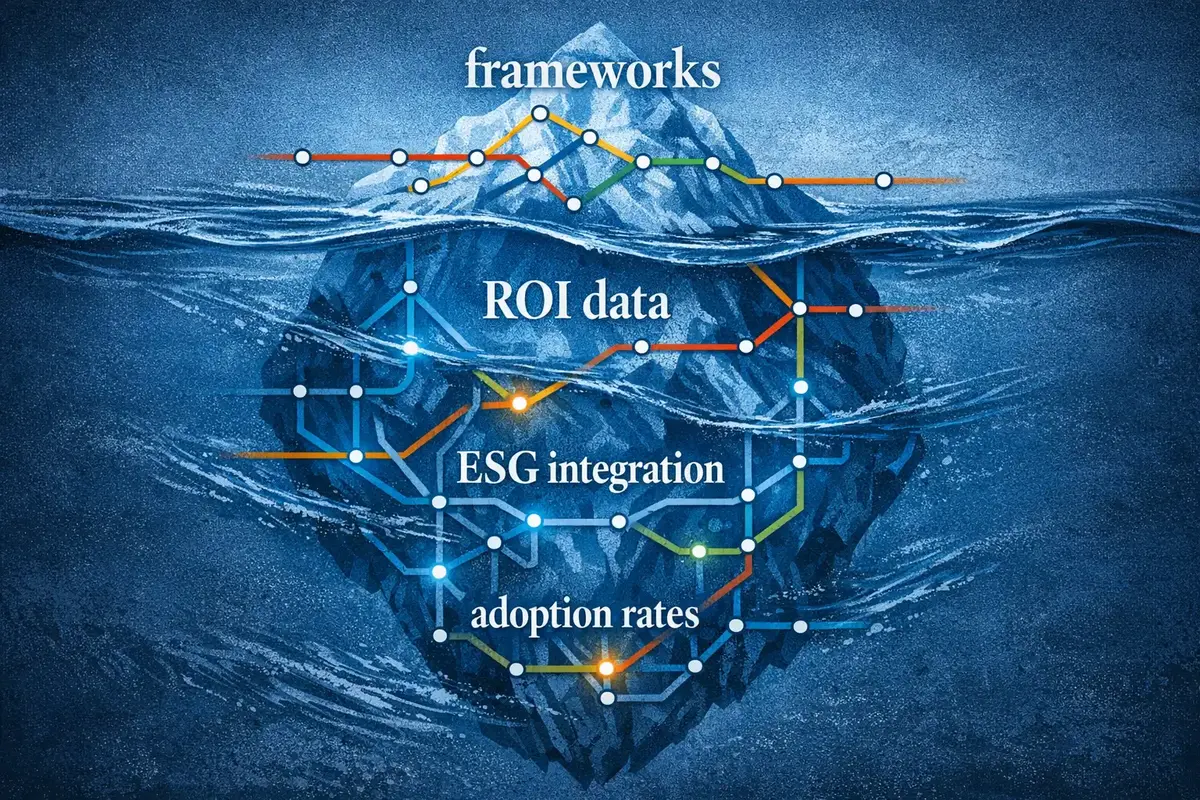
A useful comparison framework separates four things: purpose, audience, governance burden, and value-creation mechanism.
For CSR, the purpose is directional: define commitments and improve conduct in areas the organization can influence. The audience is broad—employees, communities, customers, and partners. The governance burden is moderate but often diffuse, because ownership sits across functions. The value mechanism is usually indirect: trust, talent, license to operate, and reduced friction.
For ESG, the purpose is comparability and oversight. The audience is narrower but more demanding—boards, investors, lenders, regulators. Governance burden is highest here because controls, definitions, auditability, and reporting discipline all matter. ESG does not usually create value by itself. It makes performance legible.
| Lens | Purpose | Audience | Governance burden | Value-creation mechanism |
|---|---|---|---|---|
| CSR | Directional commitments and improved conduct | Employees, communities, customers, partners | Moderate but often diffuse | Trust, talent, license to operate, reduced friction |
| ESG | Comparability and oversight | Boards, investors, lenders, regulators | Highest | Makes performance legible |
Where Growth Enters the Picture
A sustainable business model has a different ambition: change how the company wins. That is why the upside can be larger. Boston Consulting Group found that top performers were three times more likely than other companies to expand the value chain of their industry and twice as likely to nudge sustainable consumption (Boston Consulting Group, 2025).
The companies that win on sustainability are rarely the ones with the best story. They are the ones that changed how the business actually makes money.
That evidence matters because it shifts the conversation from compliance to growth. The strongest lens is not the most fashionable one. It is the one that matches the company’s maturity, reporting obligations, and strategic ambition.
Get that match wrong, and the organization overbuilds governance for a small program—or underbuilds execution for a model change. And when that mismatch shows up after the launch announcement, where do most efforts start to break?
Why Most CSR Programs Stall After the Launch Announcement
Global employee engagement fell to 20% in 2025. That should change how leaders read a CSR launch, because most organizations still assume a strong announcement creates momentum when the evidence suggests the opposite in a disengaged workforce (Gallup, 2025).
The common belief is simple: define the initiative, assign a sponsor, communicate the purpose, and execution will follow. In practice, many programs stall because nothing important inside the company actually changes. The meeting cadence stays the same. Incentives stay the same. Decision rights stay fuzzy. CSR gets added to the narrative, not built into the management system.
The Launch Looks Strong. The System Does Not.
Picture a regional retail company in the first quarter after announcing a responsible sourcing initiative. The CEO mentions it at town hall. Marketing updates the website. Store teams get a slide deck. By the next budget review, procurement is still judged mainly on unit cost, operations is still rewarded for speed, and no one can say who has authority to approve trade-offs when the two collide.
That is where drift begins.
Not because people oppose the goal. Because leadership behavior tells the organization what is real. If senior leaders do not change how they review performance, escalate conflicts, and make exceptions under pressure, employees learn quickly that CSR is optional language around mandatory targets. This is why ethical decision-making matters less as a statement of values than as a repeatable operating practice inside ordinary trade-offs—supplier selection, staffing, pricing, and timing (ethical decision-making).
The Hidden Cost Is Internal Credibility
Weak CSR rarely fails in one dramatic moment. It decays through mixed signals.
Gallup estimates that disengagement cost the global economy about $10 trillion in lost productivity (Gallup, 2025). Inside a company, that same pattern shows up as slower follow-through, passive compliance, and teams waiting for someone else to own the hard parts. Employees do not need perfect strategy to stay committed. They do need evidence that leaders mean what they say.
This is where integral leadership becomes practical, not philosophical. If the initiative requires cross-functional cooperation, leaders must redesign the forums where trade-offs are made and the behaviors that get rewarded (integral leadership). Otherwise the organization fragments: communications celebrates progress, managers improvise locally, and frontline teams grow cynical.
The result is not only weak impact. It is confusion about priorities.
And once credibility starts to erode, what exactly should be measured—more activity, or the few signals that show whether the system itself is changing?
How Do You Measure CSR Impact Without Overengineering It?
91% of companies by market capitalisation disclosed sustainability-related information in 2024. For an executive team, that means disclosure is no longer proof of progress; it is just the price of entry (OECD, 2025).
If disclosure is already widespread, why do so many organizations still struggle to show whether CSR is actually working? Because they build measurement systems for reporting volume, not for management judgment.
Measure What Changes a Decision
In a quarterly review at a regional financial services firm, the sustainability director arrives with 28 metrics, six dashboards, and no clear answer to the CFO’s question: which three numbers should change next quarter’s decisions? That is the failure mode. Not too little data. Too little hierarchy.
Good measurement design starts by separating three levels. Outputs track activity: suppliers assessed, employees trained, sites audited. Outcomes show whether behavior or operating conditions changed: lower incident rates, better retention in targeted groups, fewer supply disruptions. Strategic value creation asks the hardest question: did any of this improve resilience, trust, margin protection, or growth options?
Most companies need fewer indicators than they think. A small set of decision-useful measures—reviewed at the right cadence by the right forum—beats a sprawling system nobody uses. Monthly for operational signals. Quarterly for management trade-offs. Annually for board-level pattern recognition. That is usually enough.
A practical rule helps: if a metric cannot trigger an action, escalate a risk, or confirm a strategic bet, it probably belongs outside the core scorecard. That is the discipline behind credible impact measurement.
Assurance Builds Trust—It Does Not Replace Judgment
88% of those disclosures received third-party assurance (OECD, 2025).
That matters. Assurance improves comparability, reduces internal gaming, and gives boards more confidence that the numbers are real. But assurance is a trust mechanism, not the end goal.
A perfectly assured metric can still be strategically useless. Teams often spend months tightening definitions for indicators that never influence capital allocation, supplier choices, or product decisions. The test is simple: does the reporting discipline help leaders choose, stop, or scale?
Research consistently shows that measurement works best when it is tied to decision rights, not just disclosure calendars. If the system only proves that activity happened, it will satisfy reporting teams and frustrate operators. If it distinguishes outputs from outcomes and value creation, it becomes a management tool.
That creates the next challenge. Once you know what is working, can the model actually travel across business units and markets—or does it break the moment growth begins?
What Makes Sustainable Business Models Scale in the Real World?
39% of workers’ core skills are expected to change by 2030. If you assume sustainable business models fail mainly because the strategy is weak, that number should stop you (World Economic Forum, 2025).
Why do some models scale while others remain pilots that never survive the first operational test? Most leaders still look first at the idea—new materials, circular offers, lower-emission products, responsible sourcing. The harder question is whether the organization can actually absorb the change.
Scaling Starts in the Operating Model
A sustainable model scales when it is built into value chains, product design, and customer behavior. Not when it is added after the fact.
That distinction shows up quickly in practice. In a budget-cycle review at an enterprise technology company, the chief product officer backs an energy-efficient software architecture, but the sales team is still paid on short-term bookings and customer success is not trained to sell lower-usage configurations. The model looks strong on paper. It breaks in the handoff.
63% of employers identify skill gaps as a major barrier to business transformation (World Economic Forum, 2025).
That is the real scaling constraint. If procurement cannot evaluate new supplier trade-offs, if product teams cannot redesign for durability or lower resource intensity, and if commercial teams cannot shape customer adoption, the business does not have a scalable model. It has a promising pilot.
The Three-Part Test for Real-World Scale
The pattern is usually clearer than leaders want to admit. Sustainable business models scale when three conditions hold.
First, incentives match the ambition. Managers cannot be told to reduce waste, redesign offerings, or deepen supplier standards while being rewarded only for speed, volume, or quarterly margin.
Second, capability-building happens early. The World Economic Forum’s skills data matters here because transformation is now a workforce issue, not just a strategic one (World Economic Forum, 2025). Reskilling is not support work. It is core execution.
Third, stakeholder partnerships are treated as operating infrastructure, not external relations. Local suppliers, channel partners, municipalities, and customers often determine whether a model travels across regions. Strong stakeholder partnerships reduce friction where headquarters has the least visibility.
Context Changes the Right Sequence
A mid-market manufacturer does not need the same governance as a global bank. A regional services firm cannot copy the sequencing of a multinational retailer.
That is why industry and company-size considerations matter. In asset-heavy sectors, value-chain redesign may come first. In service businesses, workforce capability and customer adoption may matter more than formal reporting layers. Smaller firms often need tighter priorities and fewer controls; larger firms need stronger coordination to prevent local variation from diluting the model.
Scale is not just growth. It is repeatability under pressure.
And that raises the final test: when trade-offs sharpen—cost versus capability, speed versus credibility—does the organization actually decide differently, or does the old logic quietly take over?
The Real Test of CSR Is Whether It Changes How the Organization Decides
A weak CSR strategy does real damage. It burns management time, erodes trust when promises do not survive pressure, and pushes good people out the door when they see that stated priorities have no weight in actual decisions.
That is the closing test. If a CSR strategy does not change incentives, priorities, and tradeoffs, what exactly has been transformed?
Where Credibility Becomes Visible
The strongest CSR models do not win because the narrative is polished. They win because people can see the operating consequences. A sourcing team chooses a supplier differently. A product leader delays a launch to fix a material risk. A finance review accepts a slower payback because the downside exposure is clearer and owned.
In a budget-cycle meeting at a regional services company, the COO backs a workforce well-being initiative until margins tighten and hiring freezes begin. The turning point is not whether the leadership team still says the right things. It is whether the initiative remains protected, whether managers are still expected to act on it, and whether exceptions require explanation. That is where credibility either compounds or collapses.
This is why long-term trust comes less from declarations than from governance. Decision rights matter. Review forums matter. Escalation paths matter. When those mechanisms are clear, employees do not have to guess whether sustainability is real. They can see how tradeoffs are made in daily operations.
The Endgame Is Organizational Coherence
Most organizations do not fail because they lack ambition. They fail because the strategy says one thing, the culture rewards another, and execution follows a third logic.
Sustainable business models reduce that drift. They create coherence between what leaders say matters, what managers are measured on, and what teams are asked to do when conditions get harder. That is the practical standard for judging whether a model is worth scaling: does it make the organization more internally consistent under pressure?
Research consistently shows that leadership behavior sets the ceiling here. Policies can point. Metrics can clarify. But people watch what gets approved, what gets challenged, and what gets waived when tradeoffs become uncomfortable.
So the final evaluation lens is simple. Is your approach embedded, measurable, and leadership-led—or is it still mostly narrative?
For leaders who want a low-friction way to pressure-test where their strategy is still narrative rather than operating discipline, our sister platform AI Coach System offers AI-guided tools worth exploring.
That is the decision standard. Not whether the company has a CSR story, but whether the story now changes how the company decides.
Key Takeaways
- CSR is no longer just a communications or reporting exercise; it is a business-model decision tied to operating design.
- Executives test CSR proposals for evidence, ownership, downside protection, and a believable path to scale.
- CSR, ESG, and sustainable business models serve different purposes and should be governed differently.
- Sustainable impact lasts when it changes incentives, measurement, and day-to-day decisions.
Frequently Asked Questions
Why is CSR now considered a business-model decision instead of a side program?
CSR is now judged by whether it changes how a company creates value, manages risk, and allocates resources. If it only lives in communications or reporting, it is vulnerable to budget pressure and usually fails to influence real operating decisions.
What do executives evaluate before funding a CSR initiative?
Executives typically test whether the proposal has credible evidence, clear ownership, downside protection, and a realistic path to scale. They also look for a defensible case on cost, ROI, operational impact, and whether the initiative fits the current operating model.
What is the difference between CSR, ESG, and a sustainable business model?
CSR refers to programmatic responsibility such as community, workforce, or supplier initiatives. ESG is the governance and disclosure framework used to measure and oversee those efforts, while a sustainable business model embeds environmental or social performance into revenue, cost, product, or ecosystem design.
Why do many CSR programs stall after launch?
They often stall because the organization announces the initiative without changing incentives, decision rights, review forums, or accountability. When day-to-day management still rewards the old priorities, employees quickly learn that CSR is optional rather than operational.
How should CSR impact be measured without overcomplicating it?
Measure a small set of decision-useful indicators that track outputs, outcomes, and strategic value creation. The best metrics are those that can trigger action, escalate risk, or confirm whether the initiative is improving resilience, trust, margin protection, or growth options.