

Balancing family values and performance metrics in second and third-generation leadership development is the deliberate practice of aligning generational traditions—such as unity, legacy, and ethical conduct—with transparent, quantitative key performance indicators (KPIs) and professional management standards. This approach is critical for C-Suite leaders in family businesses who want to sustain their legacy, foster harmony, and ensure long-term organizational vitality. By the end of this exploration, you’ll understand why most family enterprises struggle after the founder era, and how a blended, practical framework rooted in both story and metrics can unlock sustainable success across generations.
Family business values form the shared DNA that drives purpose, direction, and resilience through market cycles and generational change. These values—unity, stewardship, trust, reputation, and ethical conduct—are not just “beliefs on a wall.” They set the tone for decisions that prioritize employees in a crisis, steer innovation within safe boundaries, or determine the handling of sensitive succession planning.
“Only 12% of family businesses survive to a third generation, with value and performance misalignment cited as a recurring root cause.” (Source: Family Business Magazine, 2023)
Yet, measuring the true influence of family values remains elusive. Many boards and C-Suite leaders rely on stories and anecdotes, while day-to-day pressures silently shift focus toward revenue, market share, and ROI. As a result, values risk fading into rhetoric instead of becoming operational—something actively “lived” in behavior and appreciated at every level.
In the transition from founder to 2nd or 3rd generation, these issues become starkly visible. Gaps emerge as younger leaders seek clarity: What does “unity” look like when cousins disagree on budget allocations? How is “stewardship” practiced when balancing innovation with risk?
To explore practical answers, it’s useful to ground the conversation in frameworks such as Socioemotional Wealth (SEW), which quantifies the non-financial priorities central to family firms—like reputation or legacy—alongside classic business goals. Drawing on The Integral Institute’s multi-level methodology, families can bring structure to the conversation by linking their values directly to KPIs and robust governance.
For a deep dive into values integration and performance in family business leadership, see Leadership Development for Family Business C-Suite (2nd & 3rd Generation).
Succession is where family values and business metrics collide most dramatically. Data consistently shows that while over 80% of family businesses want the next generation to lead, fewer than 30% transition smoothly to the second, and only 12% make it to the third (Source: Family Business Magazine, 2023).
Three factors complicate the transition:
- Legacy Tension: Founders often lead by instinct and charisma. Successors inherit not just a business but the mythology of their forebear—making it difficult to define their approach while staying true to tradition.
- Relationship Complexity: Family ties can cloud objective decision-making, especially when sibling rivalry, in-law dynamics, or generational rifts surface around roles or strategy.
- Metrics Ambiguity: Professional managers expect clear KPIs and performance feedback, while family members sometimes substitute “loyalty” or “sacrificial effort” for measurable deliverables.
The crucible of succession testing demands both structure and empathy. Research-backed frameworks, like SEW and performance dashboards, illuminate a path for leaders to honor the past while making tough, future-facing calls. In practice, this means moving from informal, founder-driven governance to transparent systems: formalized board structures, clarified role definitions, regular performance reviews, and explicit, measurable standards for “values in action.”
Boards and C-Suite leaders aiming for multi-generational impact can find targeted tools, scenario guides, and frameworks through Family Business Governance and Charter Resources.
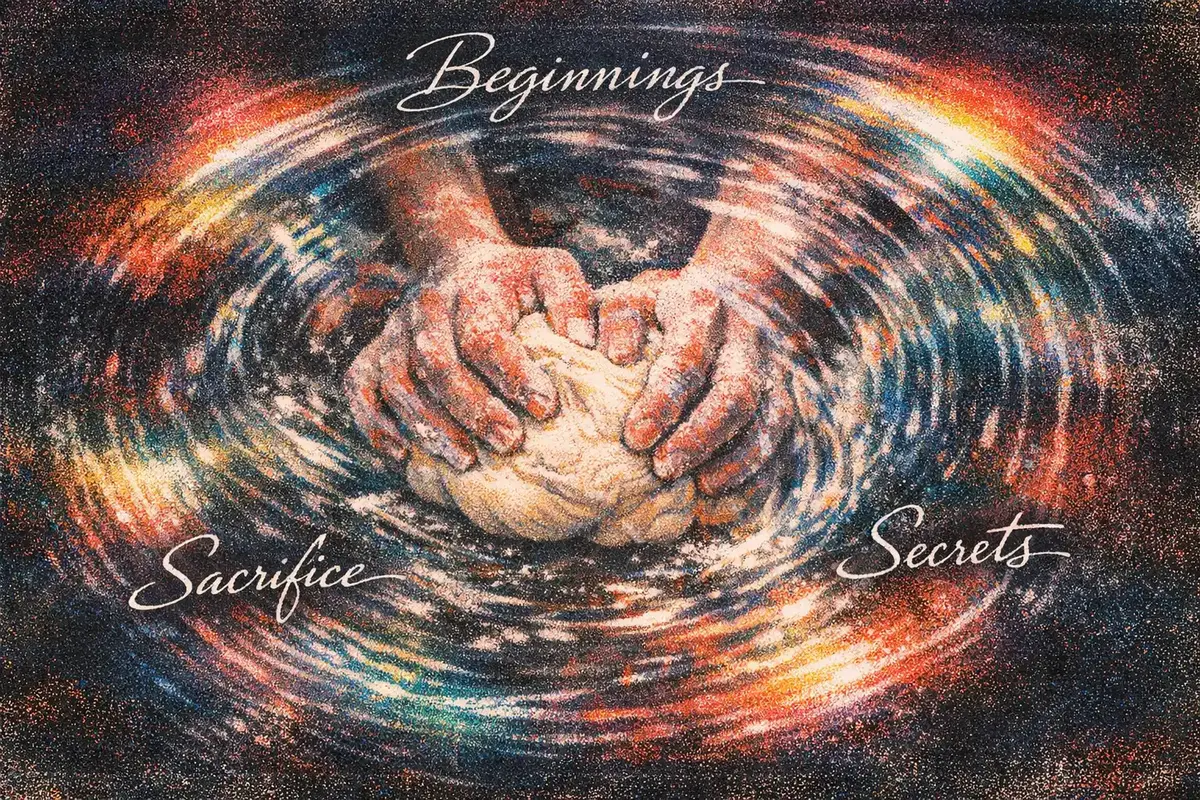
One of the central challenges in multi-generational family businesses is bridging the gap between cherished values and daily operational reality. The question is no longer “should we have both values and metrics?” but “how do we integrate them into one coherent system?”
Enter the Dashboard of Legacy—a living framework that blends quantitative KPIs with qualitative value checkpoints:
- Map Core Values to Observable Behaviors:
- Example: “Respect” as a value is mapped to annual employee satisfaction survey results (e.g., target NPS ≥ 8.0), turnover rates, and frequency of internal conflicts reported.
- Example: “Quality” links to customer Net Promoter Scores, return rates, and testimonials.
- Blend Financial and Non-Financial Metrics:
- Align traditional metrics (profit growth, ROI, market share) with indicators like brand reputation scores, ESG benchmarks, incident-free safety days, and community engagement indexes.
- Operationalize Values Into Policy and Practice:
- Update job descriptions, compensation models, onboarding processes, and leadership training to explicitly reference both types of KPIs.
- Implement regular reviews by a multi-generational governance board to ensure that values drift—the slow erosion of core principles—is detected and addressed early.
- Run Periodic Value Audits:
- Schedule regular (e.g., annual or semi-annual) “value audits” using confidential peer surveys, 360° reviews, and targeted interviews to assess if values are genuinely being experienced by stakeholders.
The “Dashboard of Legacy” transforms abstract principles into actionable, trackable, and reviewable objectives—trusted by both longstanding family members and new professional managers.
For a deeper understanding of purpose-driven value integration and its measurement, visit Purpose-Driven Leadership and Values Integration.
Performance measurement in family businesses must account for the dual bottom line: maintaining family cohesion and legacy while delivering predictable, objective business results. C-Suite leaders should select KPIs that reflect:
- Financial health (e.g., EBITDA growth, liquidity ratios)
- Governance effectiveness (frequency and depth of board review cycles)
- Family harmony and engagement (measured via confidential family surveys, retention of next-generation talent)
- Stakeholder trust (reputation and brand scores, NPS, ESG or CSR ratings)
- Innovation capability (number of new products, speed-to-market metrics, R&D ROI)
“Balanced KPIs act as a neutral ground where fact-based decisions can curb emotional bias, reducing family conflict during critical business moments.” (Source: Family Business Magazine, 2023)
Critically, winner-family businesses use multi-layer KPI dashboards that allow them to spot both leading and lagging indicators. This enables early response to cultural drift, degeneration of trust, or underinvestment in next-gen leadership. Drawing on over 40,000 hours of certified coaching practice and grounded in the Integral Model’s rigorous approach, boards can foster a culture that prizes both transparency and tradition.
For C-Suite leaders ready to explore advanced, AI-enabled approaches to measuring organizational health across qualitative and quantitative dimensions, AI Multi-Quadrant Analysis offers innovative resources.
Second and third-generation leaders face an increasingly complex landscape: external professional managers join the fold, cousins with divergent career paths reunite at the board table, and the family’s narrative becomes global—subject to scrutiny by partners, regulators, and prospective talent.
To strike this balance:
- Clarify Decision Rights: Design modular governance blueprints that define who decides what—board vs. management, family vs. non-family C-Suite, shareholders vs. operators. This clarity reduces ambiguity and friction.
- Onboard Professional Managers as Steward-Leaders: Integrate non-family C-Suite members into the values journey through formal induction, value-centered leadership programs, and clear performance review cycles.
- Foster Transparent Communication: Regularly update family and leadership groups about decision rationales, especially when strategic shifts are required by market reality.
A thriving hybrid model leverages the best of both worlds: agility and deep-rooted loyalty from the family side, paired with rigorous process optimization, risk management, and innovation championed by professionals.
Explore strategies for integrating non-family leadership while preserving legacy at Engaging Non-Family C-Suite in Family Business.
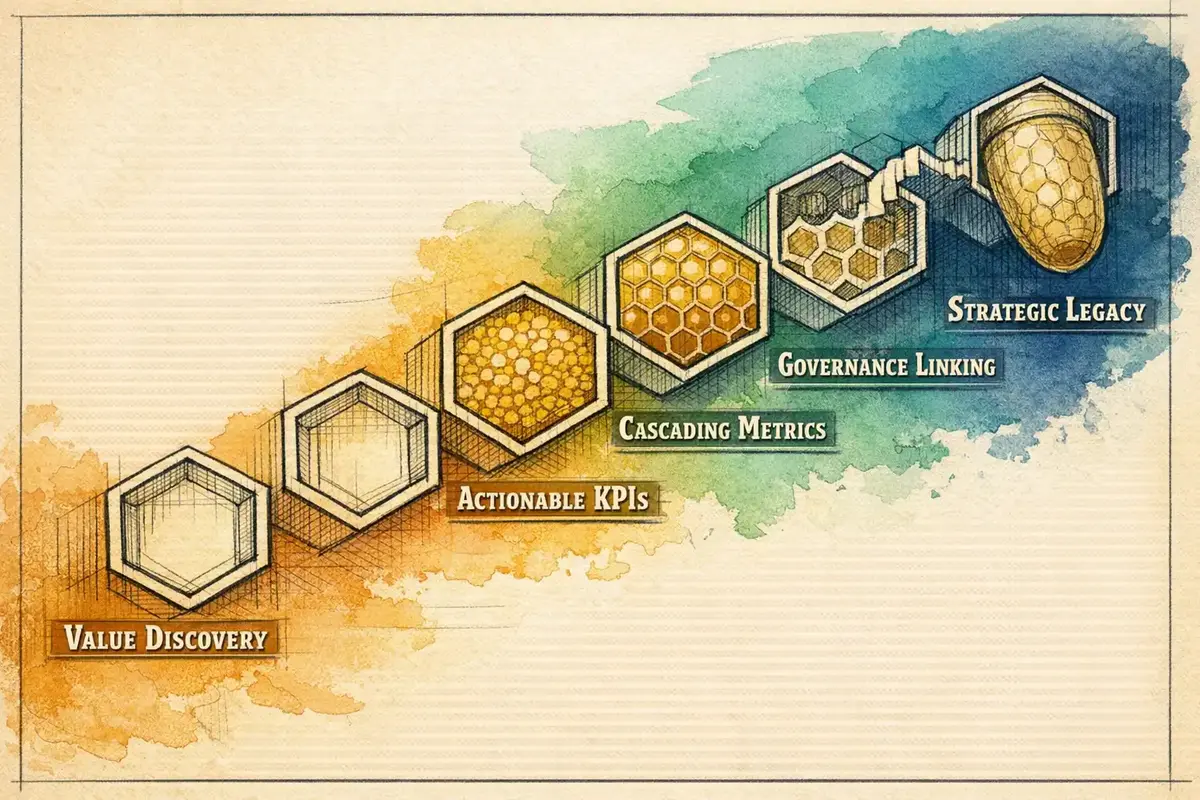
Governance in the founder era is often personality-driven and informal. As business and family complexity increase, robust, adaptive governance structures become essential for conflict prevention, generational growth, and transparent oversight.
Multi-Generational Governance Blueprint:
- Family Charter: A codified “constitution” that defines roles, rights, and responsibilities for all family and non-family leaders. It clarifies succession plans, board composition, and values-review protocols.
- Board Structures: Establish boards that include independent, external directors with experience in both family dynamics and sectoral know-how. Rotate board seats to blend generational perspectives.
- Conflict-Resilient Cycles: Schedule fixed “review windows” (quarterly/bi-annual) for reassessing alignment with values and KPIs, using structured surveys and behavioral audits. Add “early warning systems” (e.g., whistleblower mechanisms, anonymous feedback) to monitor values drift.
Efficient governance is not about controlling succession as much as about enabling continuous learning, adaptation, and transparent stewardship—qualities critical to navigating disruption, digitalization, and new market dynamics.
C-Suite readers looking for sample family charters, board policies, and governance toolkits will find practical direction in Family Charter, Governance & Leadership.
Even well-intentioned families stumble when:
- Assuming Shared Values Are Understood: Language evolves fast—what “prudence” meant to founders may sound like “caution” or “risk-aversion” to a third generation. If values aren’t regularly discussed, clarified, and updated, they become stale or divisive.
- Confusing Recognition for Accountability: Sometimes “family loyalty” is rewarded over actual performance, eroding trust and creating resentment among both family and professional managers. Establishing clear, fair accountability structures is non-negotiable.
- Failing to Recalibrate KPIs and Values: High-growth phases, crises (e.g., 2008 financial crash, the pandemic), and major transitions require periodic recalibration of both metric dashboards and core values. Rigid adherence to yesterday’s standards can stifle innovation or risk strategic drift.
“The highest performers treat values as a living system—measurable, discussable, and adaptable. This approach is directly correlated with lasting legacy.” (Source: Family Business Consulting Group, 2022)
For an expert guide to avoiding common transition mistakes and resolving generational conflict, refer to Intergenerational Conflict in Family Business.

No matter how thoughtful your dashboard, conflicting priorities will emerge. For example:
- A family value of “community stewardship” prompts costly layoffs to be avoided in a downturn; KPIs demand cost-cutting for survival.
- “Transparency” values clash with confidentiality requirements in strategic partnerships or acquisitions.
Effective recalibration:
- Name the Tension: Set structured forums (e.g., quarterly retreats, off-sites) where awkward trade-offs can be openly discussed, guided by facilitators skilled in both behavioral psychology and business acumen.
- Return to the Dashboard: Use your legacy dashboard to weigh both “soft” (employee morale, trust) and “hard” (financial ratios, growth targets) impacts transparently.
- Document Decision Pathways: Keep a clear, accessible record of how conflicts were managed—critical learning material for the next generational wave.
If the organization is international or cross-cultural, regularly assess how regional or cultural values impact the interpretation of both family principles and KPIs, updating frameworks as needed.
Curious about systemic leadership frameworks that can elegantly integrate tradition and performance? Integral Leadership Frameworks & Methodologies offers hands-on approaches for this delicate harmonization.
Sometimes, values become ceremonial—cited but not reflected in behavior. The most resilient businesses invest in “values drift” detection, an early warning system for cultural decay:
- Look for Behavioral Gaps: Patterns such as rising compliance complaints, persistent rumor-mongering, or increased voluntary departures of high-potential “insider-outsiders.”
- Monitor the Storyline: Family sagas and internal narratives either reinforce or contradict espoused values. Regularly surface these stories in town halls and board reviews.
- Conduct Behavioral Audits: Employ anonymous pulse surveys, NPS-style feedback, and peer reviews tied to specific value statements.
When patterns emerge, trigger recalibration events—discussions, training, policy updates—to realign the lived experience with the family’s desired legacy.
Family businesses outperform non-family peers in resilience and longevity, but risk losing market edge if innovation stalls. The art is selectively refreshing tradition, not ejecting it. Techniques include:
- Pilot New Approaches in “Safe Zones”: Test innovations within divisions or markets less central to the core brand.
- Create Intergenerational Innovation Councils: Blend young digital natives and seasoned leaders to pilot, test, and measure new KPIs alongside established value markers.
- Retire or Evolve Old Rituals: Encourage open conversations about which traditions empower versus constrain, giving permission to phase out rituals that no longer serve.
The family identity becomes a platform for meaningful adaptation—infusing innovation with legacy, not replacing one with the other.
For insights on balancing immediate profit pressures with long-range stewardship, C-Suite leaders can examine Balancing Short-Term Profit and Long-Term Growth.
FAQ: Balancing Family Values and Performance Metrics in 2nd & 3rd Generation Leadership
What is socioemotional wealth, and why does it matter for family businesses?
Socioemotional Wealth (SEW) refers to the non-financial assets—like reputation, legacy, family identity, and long-term relationships—that family businesses consider alongside profit and growth. SEW drives many decisions that seem “irrational” by traditional business logic but are vital for sustaining trust, engagement, and a sense of purpose.
How often should family businesses review their values and KPIs?
Ideally, review cycles should align with major business milestones or generational transitions—at least annually for operational KPIs and biannually or during key transitions for core values. Regular audits and surveys help ensure that both remain relevant and genuinely lived.
Can you give an example of a “values in action” KPI?
Absolutely. If “integrity” is a stated core value, a values in action KPI might be the number of whistleblower cases reported and resolved, internal compliance ratings, or the percentage of employees who feel safe reporting concerns (measured via anonymous pulse surveys).
What role does the family charter play in governance?
A family charter provides clarity on the family’s mission, decision-making protocols, values, conflict-resolution processes, and succession planning. It’s a living document, ensuring continuity even as the business landscape and family dynamics evolve.
How do family businesses avoid favoritism or “participation trophies”?
By tethering rewards and career advancement to both objective KPIs and observed value-aligned behaviors—not simply to family membership or relationships. Transparent review cycles, objective metrics, and multi-stakeholder input reset expectations and reduce the perception (or reality) of favoritism.
What’s the best first step for a business that suspects it’s suffering from values drift?
Conduct a values audit—use anonymous surveys, town halls, and peer reviews to map out where the espoused values align (or not) with actual employee experiences and stakeholder perceptions.
How can conflict between different generations be resolved constructively?
Establish intergenerational councils, structured dialogue forums, and use external facilitators or coaches to surface differing perspectives—supported by structured analytics (such as behavioral audits and value-based KPI reviews) to ground discussions in facts, not just stories.
What are the risks of ignoring either side—values or metrics?
Overemphasizing metrics can erode trust, alienate talented next-generation leaders, and risk sudden culture shocks. Neglecting metrics inhibits adaptation, weakens competitiveness, and can turn the business into a heritage symbol rather than a viable enterprise.
Balancing family values and performance metrics is not about picking sides—it’s about equipping the next generation to walk the tightrope between tradition and transformation. For C-Suite leaders, the ongoing challenge is to treat both the dashboard and the story as living documents: subject to review, conversation, and respectful renewal. As you reflect on your own journey, consider: Where do your family’s values show up in the daily numbers—and what stories do those numbers really tell about your legacy in the making?
Continue Your Leadership Journey
- Leadership Development for Family Business C-Suite (2nd & 3rd Generation) — Explore targeted insights and resources for next-generation family business leadership.
- Family Charter, Governance & Leadership — Practical guides and templates for structuring governance in multi-generational family enterprises.
- Purpose-Driven Leadership and Values Integration — Learn how to authentically integrate and measure purpose and values in your organization.
- Intergenerational Conflict in Family Business — Actionable frameworks for resolving the interpersonal and strategic tensions unique to family enterprises.