
Key Facts
Imagine this scenario: It is the quarterly board meeting. The CFO stands up and presents a slide deck dense with EBITDA, cash flow analysis, and revenue projections. The board nods; the language is universal, the metrics are hard, and the ROI is explicit.
Then, it is your turn. As the CHRO, you present the latest data on employee engagement scores, cultural initiatives, and leadership development participation. The atmosphere changes. The board members, primarily fluent in the language of finance and risk, start asking the difficult questions: “That’s nice, but how does better engagement impact our bottom line this quarter?” or “We are spending millions on training—what is the tangible return?”
If you have ever felt a disconnect in that moment—a gap between the immense value you know HR provides and the board’s ability to perceive it—you are not alone. This is the fundamental challenge of modern Human Resources: Translation.
The shift from HR as an administrative cost center to a strategic partner requires more than just better programs; it requires a new communication architecture. It demands that CHROs learn to articulate the Return on Investment (ROI) of human capital in the financial and strategic terms that resonate in the boardroom.
Redefining Human Capital ROI: Beyond the Formula
To communicate effectively, we must first agree on what we are measuring. Traditionally, HR metrics have been retrospective: turnover rates from last year, time-to-fill averages from last quarter. While these are useful operational metrics, they are not strategic assets in a board presentation.
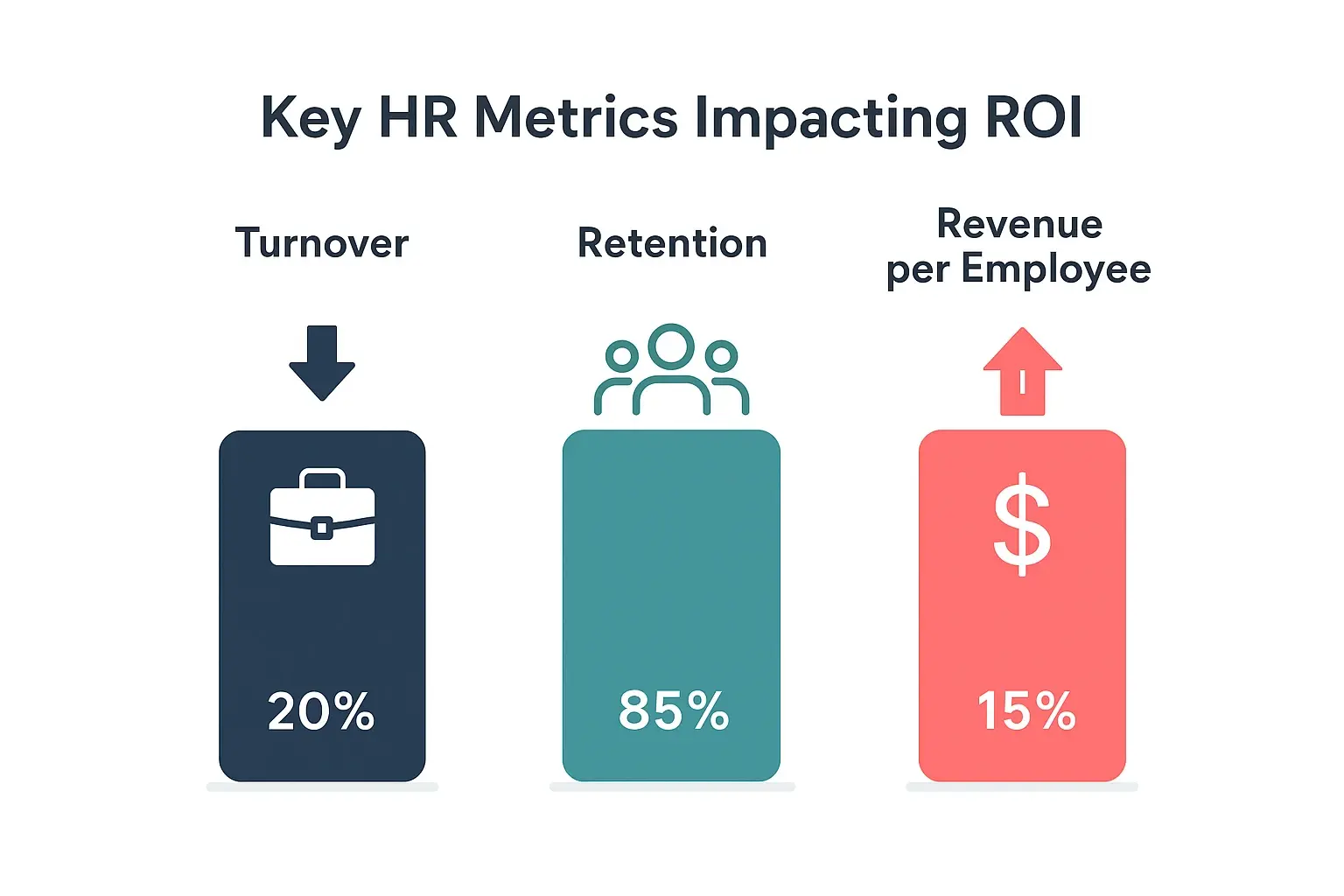
Human Capital ROI (HCROI) is a method of quantifying the financial value added by your workforce relative to the cost of maintaining it. While formulas vary, the core concept is simple:
For every dollar invested in talent (salaries, benefits, training), how much value is returned to the organization?
However, for the CHRO, the “math” is only 20% of the job. The other 80% is the narrative that explains why the math looks the way it does. The goal is to move the conversation from “Headcount Expense” to “Talent Asset Management.”
This shift aligns closely with integral leadership, which emphasizes a holistic view of organizational health, recognizing that financial performance is inextricably linked to the developmental maturity and cohesion of the people driving it.
The Boardroom Gap: Why the Message Gets Lost
Why do compelling HR initiatives often fall flat in executive summaries? The issue rarely lies in the quality of the initiative, but rather in the “currency” used to describe it.
Board members are fiduciaries. Their primary currency is Risk and Growth.
- The CFO cares about predictability, cost containment, and capital allocation.
- The CEO cares about execution capability, agility, and competitive advantage.
- The Board cares about shareholder value, reputation, and long-term sustainability.
When a CHRO speaks exclusively in terms of “happiness,” “culture,” or “satisfaction,” they are using a currency the board cannot easily spend. The strategic pivot involves translating “soft” people metrics into “hard” business outcomes.
The Translation Matrix
- Instead of: “We need to improve employee engagement scores.”
- Try: “Low engagement in our sales division is currently a leading indicator of revenue slippage. By targeting specific engagement drivers, we project a 5% stabilization in Q3 pipeline conversion.”
- Instead of: “We need a budget for a wellness program.”
- Try: “Rising healthcare premiums and burnout-related absenteeism are eroding our operating margins by $X. This initiative is a cost-mitigation strategy designed to recover $Y in lost productivity.”
Structuring the Narrative: A Framework for Influence
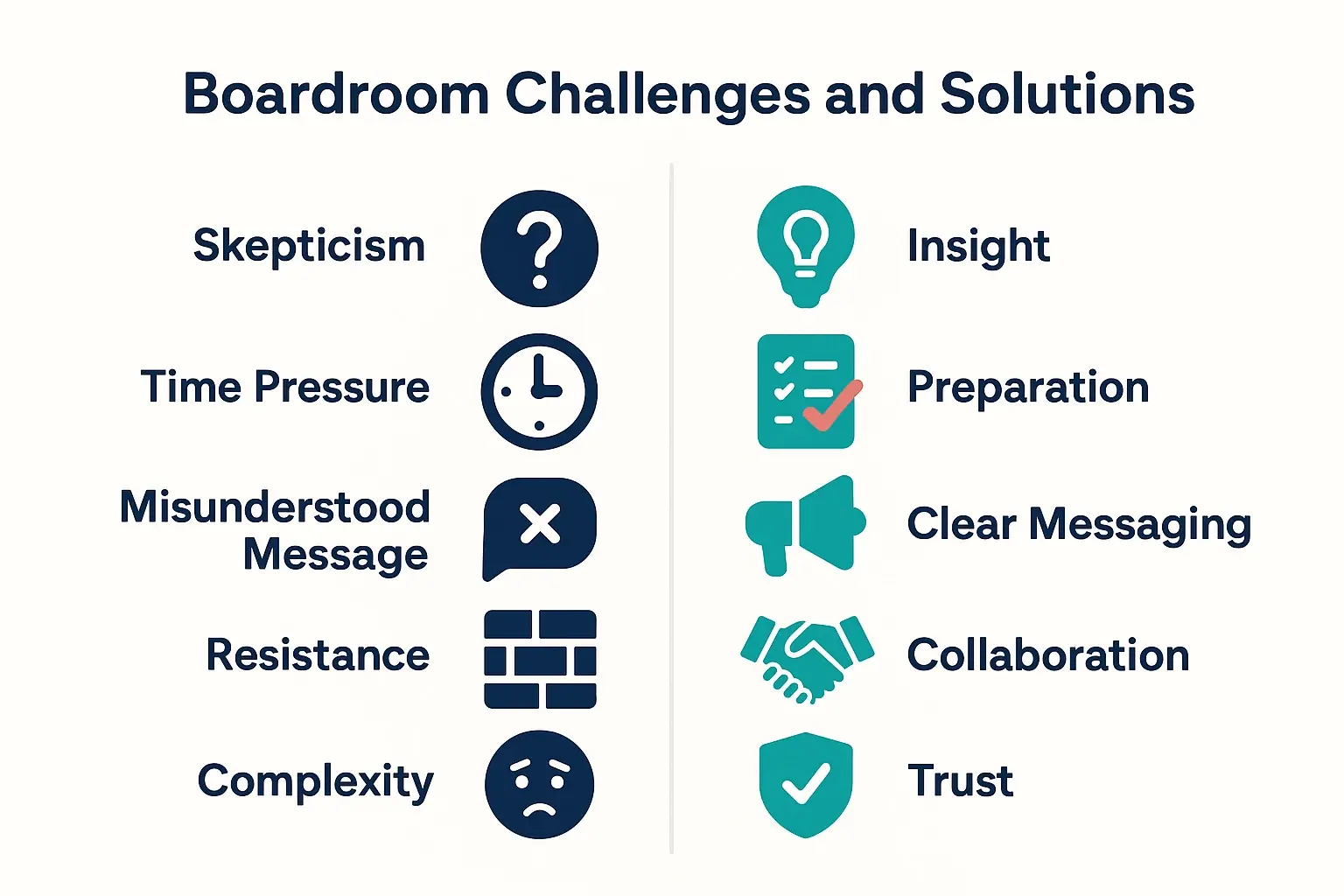
Data without a story is just noise. To capture attention and drive alignment, CHROs should structure their boardroom communications using a strategic framework that connects human potential to business performance.
1. The Strategic Hook (The “So What?”)
Start with the business problem, not the HR solution. If the company’s goal is to expand into Asian markets, your opening should not be about “recruitment metrics,” but about “Sales Readiness and Market Entry Speed.”
2. The Leading Indicators
Financial statements look backward; human capital data looks forward. Use this to your advantage. A high turnover rate in R&D isn’t just an HR cost issue; it is a competitive intelligence warning sign that your product roadmap is at risk.
In an era where ai-driven competitive intelligence is reshaping how CEOs make decisions, the CHRO must provide the internal intelligence—the human data—that completes the picture.
3. The Financial Bridge
This is where you show the ROI. Connect the initiative to revenue protection, cost avoidance, or asset appreciation.
- Revenue Protection: “Retaining these 10 key engineers protects $50M in intellectual property and projected product revenue.”
- Cost Avoidance: “Our internal mobility program has reduced external recruiting agency spend by 30%, saving $200k annually.”
4. The Risk Mitigation
Boards are risk-averse. Frame inaction as a risk. “If we do not address the succession gap in the executive team, we face a governance risk that could impact shareholder confidence.”
Delivering the Message with Presence
Even the best data can be ignored if the messenger lacks authority. Developing executive presence and influence is critical for the CHRO. This doesn’t mean being the loudest voice in the room; it means demonstrating composure, conviction, and a deep understanding of the business mechanics beyond the HR silo.
When you present, anticipate the skepticism. The board should be skeptical—that is their job. Do not take questions about ROI as attacks on your competence; view them as invitations to demonstrate the rigor of your strategy.
Common Challenges and Strategic Solutions
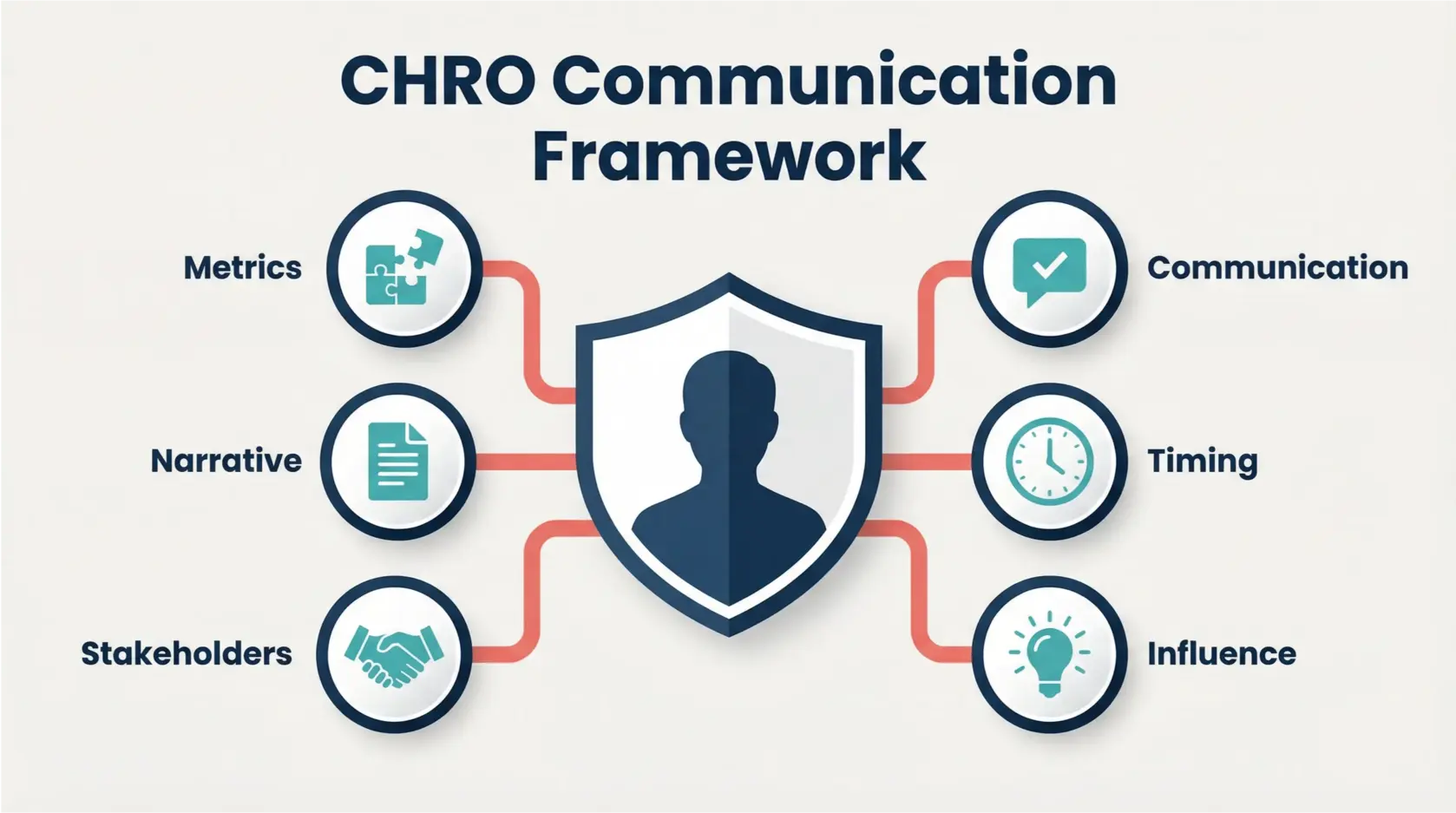
The “Soft Skills” Stigma
Challenge: A board member dismisses leadership training as “fluff.”Solution: Pivot to a leadership blueprint approach. Explain that leadership consistency is a scalability requirement. Just as you need consistent software code to scale a tech product, you need consistent leadership protocols (values, decision-making frameworks) to scale the organization without breaking the culture.
The Long-Term Horizon
Challenge: The board focuses on quarterly results, but HR initiatives often take years to bear fruit.Solution: utilize “milestone reporting.” Break down long-term cultural transformation into quarterly leading indicators (e.g., eNPS scores, internal promotion rates) that predict the long-term payout.
Frequently Asked Questions
What is the simplest formula for Human Capital ROI?
The standard calculation is: (Revenue - (Operating Expenses - Human Capital Costs)) / Human Capital Costs.Essentially, this tells you the profit obtained for every dollar invested in your people. However, use this carefully—it is a lagging indicator. It is often better to calculate ROI on specific initiatives (e.g., the cost of a sales training program vs. the increase in sales volume per participant).
How often should CHROs report on HCROI to the board?
While financial reports are quarterly, deep-dive human capital reports often work best bi-annually or annually, or when triggering a major strategic shift. However, a “people dashboard” with 3-5 critical leading indicators (like key talent retention risk) should be part of every board pack.
How do I get the CFO on my side?
Build the model with them. Before the board meeting, sit down with the CFO to review your logic and your data. If the CFO validates your methodology beforehand, they become your ally in the boardroom. When the CFO nods during your presentation, the rest of the board follows.
Can culture really be measured in ROI terms?
Yes, but usually through the lens of risk or efficiency. A toxic culture drives up recruitment costs (replacement premiums) and legal risks. A strong culture lowers the cost of acquisition (talent comes to you) and increases discretionary effort (productivity). Frame culture as an “efficiency multiplier.”
Taking the Next Step in Your Strategic Journey
Articulating Human Capital ROI is not about turning employees into numbers. It is about ensuring that the immense potential of your people is recognized, funded, and steered correctly at the highest level of the organization.
When a CHRO successfully bridges the gap between human potential and business performance, the organization changes. HR stops being the “Department of No” or the “Department of Parties” and becomes the “Department of Competitive Advantage.”
This transition requires patience, financial literacy, and a willingness to view your own department through the lens of a shareholder. By mastering these communication strategies, you do not just secure budget for your initiatives—you secure the future capability of your organization to win.