

Strategic execution that goes beyond mandates requires general managers (GMs) to intentionally bridge the gap between top-down directives and authentic, team-driven initiative adoption. For leaders managing business units, the real challenge lies in moving from compliance to commitment—creating conditions where teams genuinely embrace, execute, and sustain strategic change. By understanding both the mechanics and mindsets of empowered adoption, GMs can drive execution that lasts well beyond the initial announcement.
It’s a scenario nearly every GM has faced: A corporate strategy is rolled out with clear objectives, a timeline, and perhaps a polished slide deck—but six months later, progress is patchy and energy is waning. Teams appear to be “on board” during meetings, but the initiative stalls or quietly unravels in day-to-day operations. The difference between a mandated initiative and one that is adopted is the difference between surface-level agreement and deep organizational transformation.
Research consistently shows that nearly 70% of strategic initiatives fail to achieve their objectives, with lack of team buy-in—not flawed strategy—cited as the dominant cause.
(Source: Harvard Business School, Leading Change and Organizational Renewal, 2019)
Simply put, issuing a mandate creates an obligation, while fostering adoption builds a movement. GMs seeking sustainable impact must embrace both the art and science of empowering teams beyond compliance.
What is the AQAL model and how does it apply to leadership development?
At the heart of effective initiative adoption is the capacity to see the full complexity of an organization: its systems, its culture, and its people. The AQAL model (All Quadrants, All Levels), pioneered by Ken Wilber, provides a holistic lens for this. By integrating perspectives from individual mindsets to organizational structure, AQAL frames strategy execution not just as a set of tasks, but as a multi-dimensional journey.
For a GM, this means addressing not just what must get done (processes, KPIs, goals) but also how people feel about the work (beliefs, fears, trust), and how teams interact (culture, norms, communication).
Drawing on TII’s two-decade integral methodology, leadership development utilizing AQAL empowers leaders to:
- Diagnose where resistance or disengagement really sits—within individual attitudes, group dynamics, or organizational systems
- Design interventions that address both surface behaviors and deeper cultural patterns
- Cultivate self-organizing, adaptive teams capable of sustaining change even amid uncertainty
This approach moves strategy out of organizational silos and into daily team behavior, making adoption a lived, evolving process.
Key Concepts: Mandates, Adoption, Empowerment, Ownership, and Resistance
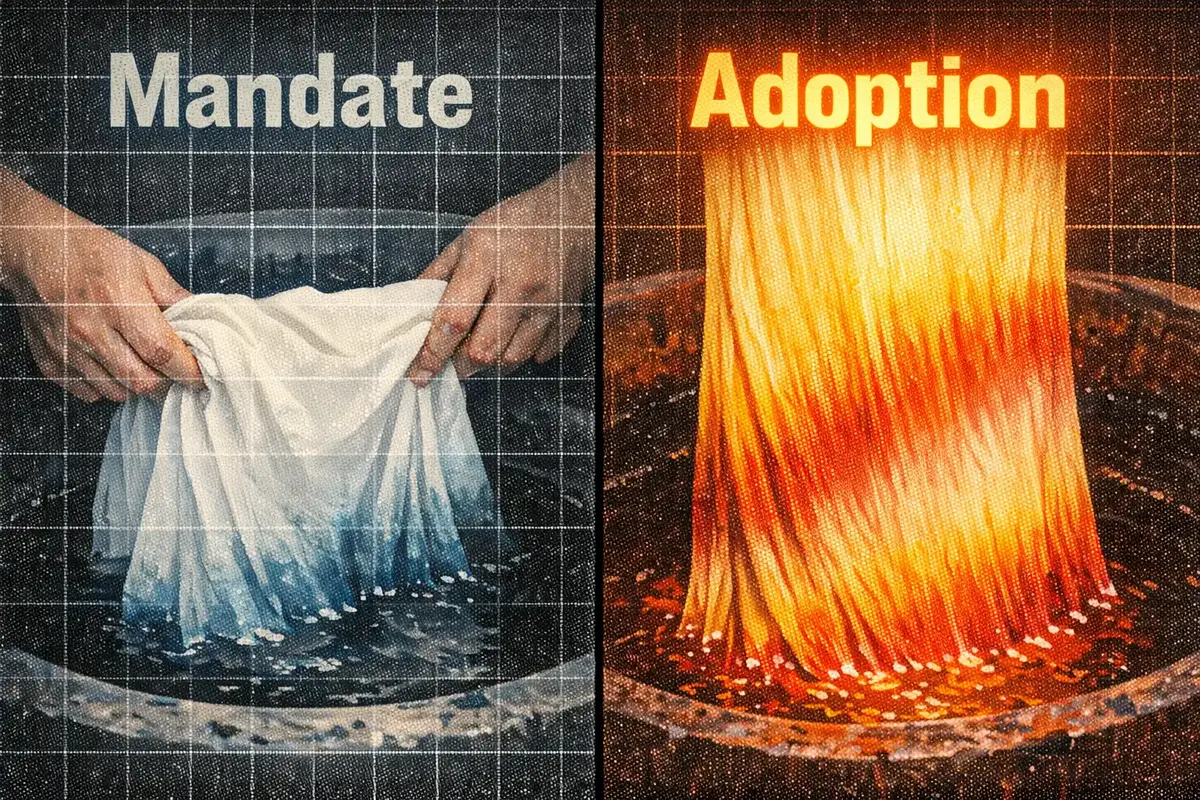
Mandate is procedural power—the GM sets the direction, allocates resources, and tracks compliance. Adoption is psychological and cultural—it occurs when teams internalize initiative purpose, reframe their priorities, and self-direct toward shared outcomes.
- Empowerment means teams have a real say and shoulder real responsibility for outcomes, not just tasks.
- Ownership develops when individuals and teams feel personally connected to an initiative’s success.
- Resistance is natural; it appears as skepticism, avoidance, or passive inertia, often masked as agreement.
The critical insight for GMs: Resistance is rarely just a lack of willpower. It’s often a signal of deeper misalignment—uncertainty about purpose, lack of psychological safety, or disconnect between initiative and local realities.
The Anatomy of True Initiative Adoption—Diagnostic Models & Stages
How can leaders tell whether an initiative is being merely implemented or truly adopted? It helps to use a “Compliance to Commitment” diagnostic framework—a maturity ladder for initiative adoption:
Strategy Adoption Maturity Ladder:
- Mandate: Instructions are issued; teams mechanically comply.
- Participation: Teams attend, report, and perform basic tasks; engagement is minimal.
- Buy-In: Teams vocalize support and begin aligning their work, but real ownership is fragile.
- Commitment: Teams proactively problem-solve around initiative obstacles, making the change their own.
- Ownership: Teams adapt, improve, and champion the initiative, innovating beyond initial expectations.
The “invisible adoption gap” occurs between steps 2 and 4—it’s often hidden by outward agreement but shows up in lagging results or stalled energy.
GMs can diagnose their own organizations using blended KPIs: project metrics (on-time, on-budget), feedback from team pulse surveys, and behavioral indicators like spontaneous idea-sharing or cross-functional collaboration.
Why is addressing root causes important in organizational transformation initiatives?
Many transformation efforts falter because they chase symptoms—missed targets, slow adoption, negative feedback—without addressing the root causes. True change occurs only when leaders surface and respond to the underlying drivers of resistance, misalignment, and disengagement.
- Psychological safety is often the hidden engine for adoption; without it, teams “go through the motions” but withhold innovation or hard truths
- Siloed communication leads to fractured ownership, as departmental mandates crowd out broader strategic purpose
- Systemic resistance mapping enables GMs to visualize where initiative drag originates—be it at the individual, team, department, or leadership level—and calibrate solutions accordingly
One multinational found that diagnostic interviews revealed 68% of “implementation failures” were actually rooted in fear of conflict, not capability gaps.
Transformation requires feedback-rich cultures where the causes of friction can be openly discussed and addressed, not swept under the rug. Root-cause analysis tools—such as regular retrospectives, “blame-free” feedback sessions, and cultural inventories—help keep change on track.
How can integral coaching improve executive and team performance in complex business environments?
Integral coaching—a multi-level, developmental methodology—accelerates both leader and team performance by aligning skills, mindset, and systems toward a unified direction. In complex business environments characterized by rapid disruption and cultural diversity, this approach proves especially powerful.
Backed by over 40,000 hours of certified coaching practice, integral coaching helps leaders:
- Identify and challenge the assumptions sustaining compliance or skepticism
- Develop resilience and adaptive capacity in the face of ambiguity or rapid change
- Build team empowerment in decentralized settings, fostering accountable yet autonomous units (team empowerment)
For teams, regular coaching cycles embed initiative adoption as a continuous learning process—not a one-time event. Adaptive learning, reflection checkpoints, and explicit accountability rituals keep teams moving from “mandated” to “owned” initiatives, regardless of shifting market conditions.
Which best practices are effective for building high-performing leadership teams?
High-performing leadership teams intentionally blend clarity of direction with high psychological safety and distributed ownership. Leading organizations—drawing on grounded frameworks—elevate three core routines:
- Clarity Alignment: GMs over-communicate not only the “what” but the “why” to create coherence between strategy, values, and day-to-day objectives.
- Trust-Building Routines: Teams establish explicit feedback protocols, roundtable ambiguity clinics, or “adoption retrospectives” to make it safe to surface doubts or suggest improvements (psychological safety).
- Micro-Interventions: Leaders embed small but powerful rituals (e.g., peer-to-peer coaching, role-shadowing, shared problem-solving sprints) to reinforce new behaviors and break down silos.
Crucially, high-performing teams avoid the trap of equating busyness with buy-in. They regularly assess whether team energy is aligned to the real goals of the initiative, not just its visible outputs.
Can organizational assessments help diagnose cultural barriers to change?
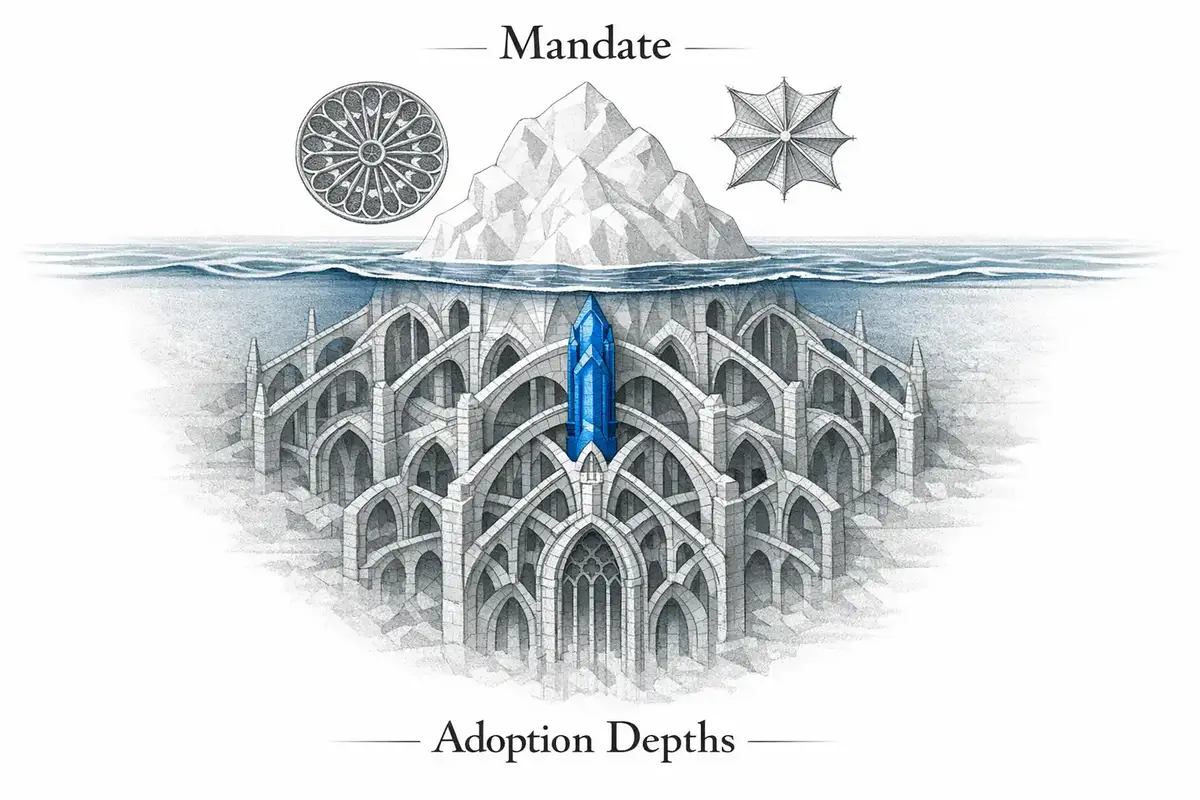
Yes—organizational assessments are essential in surfacing “below the waterline” factors that shape adoption and resistance. Effective assessments integrate quantitative benchmarks (engagement surveys, initiative KPIs) with qualitative insights (focus groups, facilitated dialogue).
Common cultural barriers include:
- Fear of failure or blame
- Historical silos and lack of cross-team trust
- Change fatigue from “initiative overload”
- Unclear link between the initiative and local realities
An effective change assessment often reveals not just if teams are resisting, but why—and what levers (trust, transparency, role clarity) will move them toward true ownership.
Regular cultural inventories, pulse surveys, and leadership 360s, when combined, guide targeted interventions that tackle the precise friction points impeding adoption.
Practical Playbook: Micro-Interventions for Strategic Adoption
True initiative adoption is forged not in one-off events, but in the micro-moments and conversations that accumulate over time (initiative adoption). GMs and business unit leaders have powerful yet underused tools at their disposal:
- Roundtable Ambiguity Clinics: Scheduled sessions where teams can safely name uncertainties or misalignments about new initiatives, which leaders then address openly.
- Adoption Retrospectives: After each project phase, reflect—What worked? Where did compliance masquerade as adoption? What will we change moving forward?
- Peer Feedback Loops: Establish routines for peer observations, feedback, and quick wins, linked to both process metrics and team mood indicators (feedback loops).
- Systemic Resistance Mapping Workshops: Visualize where resistance is concentrated, then co-design antidotes—such as clarifying roles, cross-training, or shifting meeting structures.
Each micro-intervention, grounded in research-backed frameworks, helps to close the invisible adoption gap while building a culture where new initiatives are embraced, not endured.
How do integrated development interventions sustain long-term transformation in multinational companies?
Sustaining transformation across borders means more than rolling out a “one size fits all” playbook. Integrated development interventions—spanning training, coaching, assessment, and cross-functional workshops—keep momentum alive, especially in multinational firms navigating diverse markets and cultures.
Grounded in the Integral Model’s multi-level framework, best-in-class interventions:
- Sequence leadership workshops, regular coaching, and localized change management sprints (change management)
- Calibrate for cultural nuances—what catalyzes empowerment in one region may be a source of resistance in another
- Create ongoing learning communities where GMs and frontline teams share lessons, failures, and adaptations in real time
“One-off trainings shifted our compliance needle, but it was regular, cross-market feedback and targeted coaching that drove sustainable adoption.”
(Fortune 500 Regional GM, 2022)
When transformation is treated as an ongoing journey—supported by diagnostics, adaptive KPIs, and iterative learning—multinational organizations move from mandate-heavy strategies to empowered, self-correcting execution.
FAQ: Strategic Execution Beyond Mandates
What’s the single biggest mistake GMs make when driving initiative adoption?
The most common error is assuming that initial energy or vocal agreement equals commitment. Teams often “nod along” to new mandates but privately harbor doubts, competing priorities, or a lack of connection to the initiative’s purpose. Genuine adoption requires surfacing hidden concerns and co-creating relevance with those who must execute.
How do you measure adoption versus compliance?
Compliance can be measured by simple participation metrics (attendance, completion rates, reporting). Adoption requires more depth: Look for proactive idea generation, cross-functional collaboration, problem-solving efforts related to the initiative, and upward feedback questioning the initiative’s design or direction—signals of true engagement.
How can GMs foster psychological safety for more open adoption?
Psychological safety is built through repeated actions: admitting mistakes as a leader, inviting critical feedback, setting norms that feedback is for learning—not blame—and modeling curiosity over certainty. Even small gestures, such as openly asking “What have I missed?” set a tone for real dialogue.
What are progressive leading indicators of true initiative adoption?
- Early signs include cross-team peer coaching, informal “ambassadors” emerging from within teams, creative workarounds that advance the spirit of the initiative, and willingness to challenge the status quo constructively.
- Lagging indicators, in contrast, often involve flat engagement scores, quiet disengagement, or initiative “work” being treated as extra rather than core.
How long does sustainable adoption usually take?
There is no set timeline, but research and case evidence suggest that meaningful adoption—where ownership and adaptation occur—frequently takes 6–18 months, depending on initiative complexity, culture, and the degree of change required.
Which is more effective: top-down mandates or bottom-up adoption strategies?
Mandates provide clarity and scale, but on their own rarely create sustained results. Bottom-up adoption strategies—where teams shape how an initiative “lands” in their context—builds ownership, adaptability, and durability, especially when blended with top-down clarity and support.
Do high-performing organizations ever fail at initiative adoption? Why?
Yes, even top brands struggle when they misread team culture, under-resource change management, or rely too heavily on dashboards over dialogue. Success results from balancing decisive direction with humility, feedback, and honest surface-to-root analysis of friction points.
How do you avoid change fatigue when driving multiple strategic initiatives at once?
Prioritize initiatives ruthlessly—share the “why” behind this initiative now, and sequence efforts to allow for mastery and recuperation. Build routines for genuine celebration, reflection, and “retiring” legacy projects to conserve energy and maintain trust.
Moving beyond mandates to drive real adoption is not just a managerial skill; it’s a leadership art rooted in respect for people, systems, and context. As a GM, the opportunity is to transform your unit from compliance-focused to commitment-fueled—a shift that benefits performance, culture, and long-term impact. Every conversation and every small intervention moves the needle. Where could a single honest dialogue, feedback loop, or co-created solution shift your team from mandatory action to inspired ownership?
Continue Your Leadership Journey
- team empowerment — Understand frameworks for balancing empowerment and accountability across decentralized business units.
- initiative adoption — Explore practical strategies for regional leaders to drive authentic community and initiative buy-in.
- psychological safety — Learn how fostering safety and trust supports leadership, accountability, and transformation.
- change management — Dive into field coaching methodologies for building collaboration and facilitating team change.