

Imagine stepping into a bustling Jakarta boardroom after steering operations in Paris—armed with confidence, global playbooks, and what you thought was a universally admired leadership style. Within months, familiar tactics falter. Local teams seem hesitant, compliance hurdles mount, and a competitor you had barely noticed suddenly surges ahead. You quickly sense: what worked “back home” could be holding you back.
This situation isn’t rare. In fact, it’s the norm—prompting the world’s best General Managers (GMs) to ask not, “How do I lead?” but, “How do I lead here?”
Today’s global GMs face a paradox: global expansion creates career-defining opportunities, but success nearly always hinges on market-specific leadership adaptation—an ongoing process that demands humility, agility, and deeply contextual strategy. Yet, most resources stop at platitudes or dizzying frameworks with few practical bridges to everyday GM decisions.
Let’s break that pattern. This guide is for leaders navigating new regional terrains—where adapting isn’t a sign of uncertainty, but of the expertise needed to win far from home.
Foundations: What Is Market-Specific Leadership Adaptation?
Market-specific leadership adaptation is the art and science of intentionally reshaping your leadership style, strategic decision-making, and operating model in response to the distinct contexts of regional markets. It’s not just about personal flexibility—it’s a disciplined practice of learning, unlearning, and aligning both your behaviors and your organization’s structures to local realities.
As outlined by The Integral Institute, true adaptation means engaging with “the full diversity of human systems—culture, regulation, competition, organizational design, and individual motivation—to co-create success in every market.” (market-specific leadership adaptation)
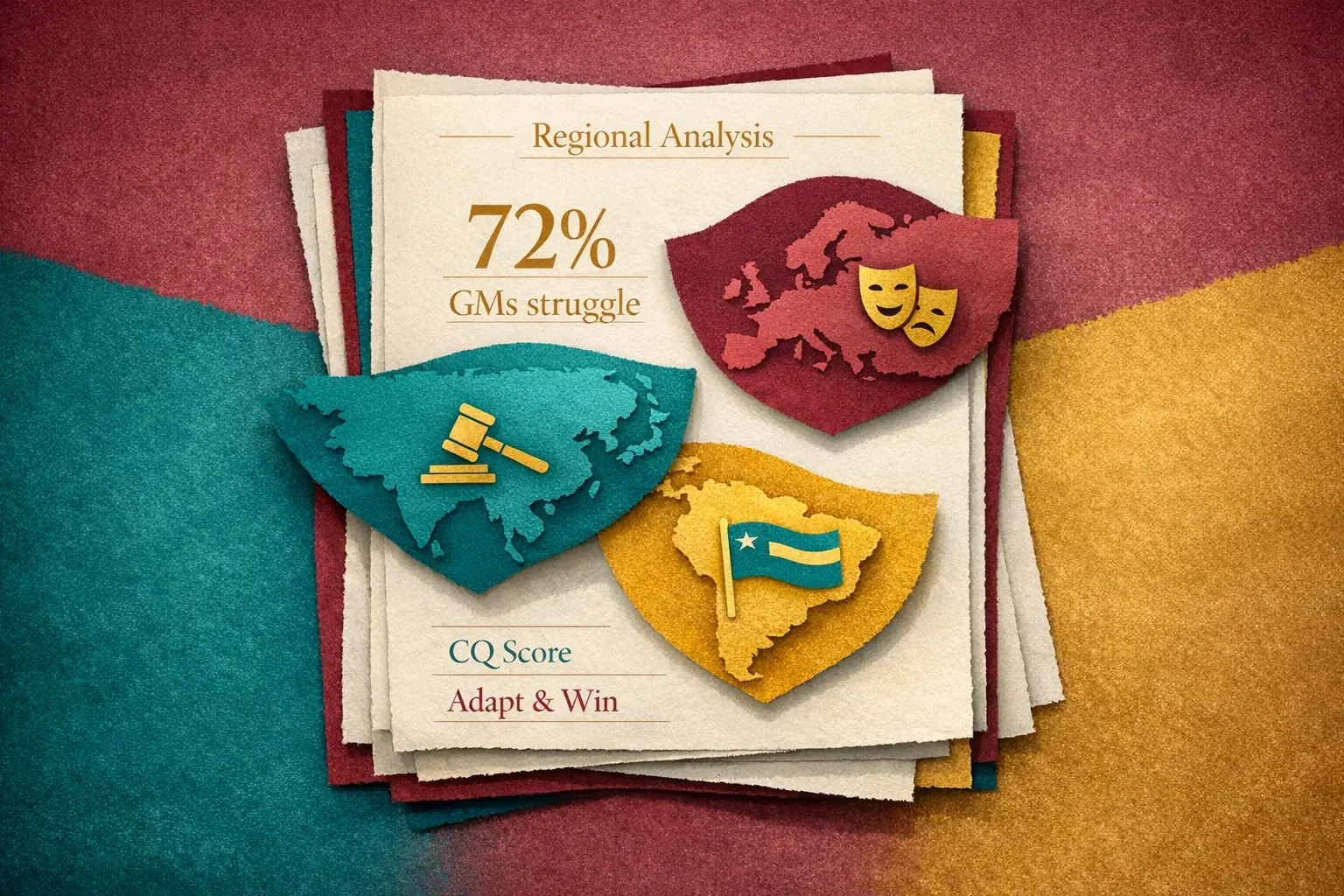
Only 18% of multinational firms feel truly equipped to lead contextually—leaving a majority exposed to costly missteps, false starts, and missed opportunities.
(Source: Center for Creative Leadership, “Global Leaders: The Reality of Multiple Complexities,” 2022)
Let’s anchor on why this matters. Regional dynamics are more than colorful backgrounds—they define the playing field:
- Cultural norms drive everything from how teams challenge ideas to what “success” looks like.
- Regulatory frameworks set guardrails, sometimes upending familiar business models overnight.
- Local competitors can disrupt even the most prepared global brands, leveraging networks and narratives outsiders rarely see coming.
Failing to adapt isn’t simply inefficient—it’s the root cause behind headline-grabbing failures, from retail giants shrinking in China to tech platforms stumbling in Africa.
The Global–Local Tension: Beyond “One Size Fits All”
Picture the challenge as a tightrope: global directives and brand promise on one side, granularity of local tactics and relationships on the other. The classic question—how much consistency, how much customization?—echoes louder as markets grow more complex and the world more BANI: brittle, anxious, non-linear, and often incomprehensible.
The outdated “copy-paste” leadership model breaks down fast:
- Global mandates can stifle frontline invention, especially where quick pivots and local nuance are vital.
- Total local autonomy risks diluting standards, confounding headquarters, and missing out on shared learning.
Savvy GMs learn to see this as a creative tension, not a problem to “solve once and for all.” Instead, the most adaptive leaders:
- Act as context interpreters—bridging global ambitions with unique local truths.
- Balance core values with nuanced leadership calibration—knowing when to signal stability and when to ignite innovation.
- Use adaptive leadership frameworks like those explored in Integral Leadership approaches to continuously assess and align their approach.
Table Stakes: Core Skills and Mindsets for Adaptive GMs
What underpins those who thrive across markets? Hard skills help, but soft skills—and organizational fluency—truly differentiate.
- Cultural Intelligence: Not generic “awareness,” but practiced fluency in reading local cues, adapting feedback styles, and building trust in ways that actually land.
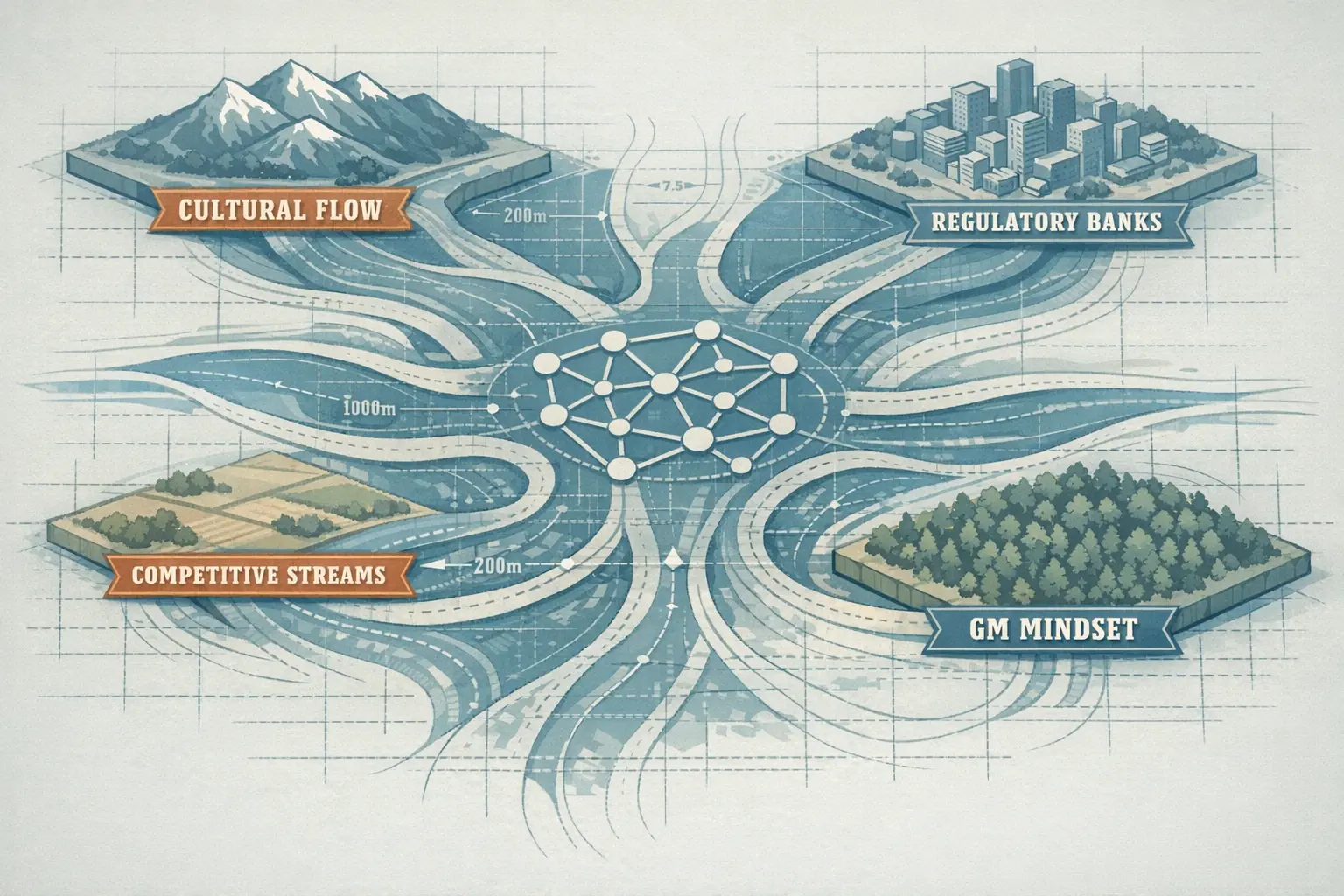
- Systems Thinking: Ability to grasp how changes in one “quadrant” (team dynamics, compliance rules, customer expectations, etc.) ripple through the whole.
- Adaptive Decision-Making: Comfort operating with incomplete information, iteratively learning by doing, and calibrating risk appetite by market.
“Context doesn’t just modify leadership—it transforms it. The best GMs don’t just scan for differences; they turn local insight into distinctive advantage.”
(Source: HBR, “Regional Strategies for Global Leadership,” 2021)
Consider the regional strategy playbook: it isn’t just about where to deploy resources, but which leadership stance enables your strategy to thrive. For example, a “mandate” strategy (tight central control) may work for highly regulated sectors in developed economies, while a “portfolio” strategy (high local autonomy) unlocks agility in diverse consumer markets.
Practical Tools: Frameworks and Diagnostic Models
Most educational guides nod to “glocal” leadership but rarely show how to build it. Here’s how GMs can translate theory into action—without losing their footing or stalling out in complexity.
The Regional Strategy Menu
Drawing inspiration from HBR’s archetypes, and enhanced by The Integral Institute’s region-focused models, think of your options as a menu:
- Home Base—Minimal adjustment; mainly global processes (often North American/EU markets).
- Portfolio—Many independent local units driving market decisions (think fast-moving consumer goods in Africa).
- Hub—Regional centers synthesizing local insight and global standards (common in APAC or Middle East).
- Mandate—Local units with a clear, narrowly defined mission from HQ (pharma, high-compliance sectors).
- Platform—A flexible, shared infrastructure where local adaptation is baked in (software/SaaS, digital gaming).
Each choice shapes—not just reflects—your leadership stance. Operationalizing these requires clear diagnostic tools:
- Market Adaptation Continuum: Map regional markets on a spectrum from “highly standardized” to “deeply customized.” Are you flexing enough—or too much?
- Organizational Health Check: Does your structure empower local teams? Or do hidden bottlenecks (approvals, reporting lines, budget constraints) create silent friction?
For real-world examples, localized growth and strategy frameworks reveal how companies blend local insight and global alignment through decision rights, talent strategy, and community engagement.
Quick Assessment Tool: “Is My Style Fit for This Market?”
Consider these checkpoints:
- Do local teams feel empowered to tailor solutions, or do they wait for HQ signoff?
- Have regulatory or cultural surprises cost you time or reputation in the last 12 months?
- where does local innovation get rewarded—and does your performance review system recognize it?
- What feedback loops exist to surface “what works here” and share those learnings back to the global team?
If these spark discomfort, that’s a pointer—not a rebuke. The most respected global leaders are constantly tuning their approach, knowing that “being right” globally may not matter if it falls flat locally.
“Glocal” Is Not a Buzzword: What Actually Enables (or Blocks) Local Adaptation?
Let’s challenge a widespread myth: Leadership adaptation is not just about the heroics of a GM “learning” a new culture. It is about the whole system enabling or blocking that adaptation.
The Organizational Foundation
- HR Policies: Are hiring, promotion, and development pathways regionally relevant? Or do global frameworks subtly disadvantage non-HQ markets?
- Incentive Systems: Is risk-taking rewarded in Vietnam the same way as in Germany—or is it viewed as recklessness elsewhere?
- Reporting Structures: Does information flow both ways, or are local signals filtered out long before they reach decision-makers?
Misconceptions abound. Many believe flexible GMs can “fix” adaptation gaps through extra effort alone. In reality, organizational rigidity—HQ-mandated playbooks, inflexible IT, slow budgeting—silently sabotages even the most adaptive leaders (leadership accountability in decentralized units).
“Too often, failed adaptation isn’t the GM’s lack of cultural sensitivity—it’s the organization’s inability (or unwillingness) to decentralize authority and afford real trust at the edge.”
(Source: Center for Creative Leadership, 2022)
Adaptive Failure as Teacher: What Goes Wrong, and What Can We Learn?
It’s easy to dissect successes. But lasting lessons—especially for new GMs—emerge from “adaptive misfires.” Here’s how (and why) even experienced leaders struggle, and what their journeys teach about sustainable improvement.
Systemic Barriers
- HQ Rigidity: Mandated processes that constrain local experimentation, or bonus structures rewarding global uniformity over regional learning.
- Invisible Biases: Assumptions (often unconscious) that “our way is superior,” undermining local expertise and credibility.
- Timing Mismatches: Deploying global innovation too quickly (or too late), mismatched to local customer readiness or partner ecosystems.
A striking pattern: “Failure to localize” is rarely an issue of intelligence—it is a breakdown in systems, communication, or mindsets.
Stories from the Field
Consider a U.S.-based retailer’s failed entry into Brazil: standardized product lines that ignored local tastes, combined with rigid supply chains, led to rapid market exit. Only after empowering local teams to use regional vendors and tailor marketing did the company regain relevance—years later, through a bottom-up re-entry.
Or the global consumer electronics brand that stumbled in India, initially delivering customer service exclusively in English. After investing in regional language support and flexible return policies, NPS scores soared and market share rebounded.
Turning failures into learning loops is essential—great GMs systematically capture not just “what failed,” but why—and how new tools, cultural awareness, and structure can lay groundwork for the next attempt.
Hybrid and Digital Frontiers: Remote Teams, Digital Pivots, and the Next Evolution
The digital transformation wave is no respecter of regional borders. Yet, managing distributed or hybrid teams (many in regions you’ve never visited) adds new layers to adaptive leadership.
- Communication Norms: How does “direct feedback” land in cultures preferring high-context communication? Are digital channels (Zoom, Slack) universally accessible—or do usage habits differ dramatically?
- Performance Management: Can you translate global KPIs to markets with entirely different customer lifecycles, regulatory gating, or digital readiness?
- Technology and Privacy: Data laws in the EU, mobile-first realities in East Africa, and digital literacy gaps in Latin America all demand fresh approaches to operational and ethical leadership.
High-performing GMs draw on hybrid leadership models (as explored in Hybrid Teams success guides) and leverage digital analytics to spot patterns that may not be visible in the old “gut feel” management. Incorporating multi-quadrant analysis allows for a multidimensional grasp of team dynamics, cultural overlays, and operational blockages, especially when integrating AI-driven tools.
Remember, the future will belong to those who can adapt leadership—digitally and interpersonally—at regional speed.

Progress Map: From Novice to Adaptive GM
Wherever you or your organization stand on the adaptation journey, intentional progression matters:
- Awareness: Recognize that “global playbooks” may only be a starting point, not the destination.
- Assessment: Use diagnostic tools to map organizational systems—where do they enable or constrain adaptive behavior?
- Action: Invest in local insights, enable feedback loops, test and iterate with quick wins (market pilot, local partnership, customer interviews).
- Reflection: Ritualize after-action analyses—what did we learn, and how can we scale it to other markets?
- Sustainability: Build into HR and operating structures the expectation of continuous local learning, not one-off “onboarding” to new markets.
“The path to effective, regionally adaptive leadership is neither straight nor smooth—but every step expands your system’s capacity to thrive amidst complexity, surprise, and opportunity.”
(Source: The Integral Institute, Market-Specific Leadership Adaptation)
FAQ: Market-Specific Leadership Adaptation
What exactly is “market-specific leadership adaptation” for GMs?
Market-specific leadership adaptation is the process where a General Manager customizes their leadership style, business strategies, and operational models in response to the unique demands of a regional market. This means going beyond global best practices to engage deeply with local culture, regulations, and competitive context to deliver sustainable results.
Why can’t GMs just “be themselves” everywhere?
The leadership approach that succeeds in one market can fail dramatically in another due to variations in trust-building, communication, risk tolerance, and consumer expectations. Adaptation isn’t about abandoning your leadership identity—it’s about amplifying its impact by aligning with local signals and systems.
How do organizations enable (or inhibit) effective adaptation?
Organizations play a pivotal role. Well-designed systems (HR, incentives, reporting) empower GMs to be contextually responsive. Rigidity—such as enforcing HQ-centric playbooks or uniform KPIs—often stifles local creativity and undermines market relevance.
What are some warning signs that a GM’s approach isn’t adapting well?
Common indicators include high employee turnover, declining market share, repeated regulatory compliance issues, and slow reactions to local consumer shifts. If local teams hesitate to offer feedback or “wait for HQ” to make decisions, that’s also a red flag.
Can digital transformation help or hinder market adaptation?
Digital tools can accelerate learning, analytics, and team collaboration—but only if tailored to local user habits, tech adoption rates, and compliance norms. GMs must adapt digital strategies just as intentionally as face-to-face management styles.
A final reflection: Becoming an effective, adaptive GM is as much about curiosity and humility as it is about technical skill. The most respected leaders don’t see adaptation as a box to check—but as an ongoing journey, in which every new market is both a challenge and an opportunity to grow.
What surfaces for you when you consider your own (or your team’s) readiness to adapt, not just at the edges, but at the center of how you operate?
Continue Your Leadership Journey
- Market-Specific Leadership Adaptation — Unpack frameworks and real-world case studies for achieving exceptional regional leadership alignment.
- Integral Leadership frameworks and methodologies — Explore adaptive models and diagnostic tools for mastering leadership in complex environments.
- Localized growth and GM strategies — See how tailored, community-driven strategies drive sustained regional growth and engagement.
- Spinning success in hybrid teams — Discover principles and playbooks for leading distributed teams across global contexts.