
Key Facts
Imagine it is Monday morning. You receive an urgent calendar invite from your VP of Operations, a key leader in your organization. Within ten minutes, you learn they are leaving for a competitor. In the past, this scenario would trigger a reactive scramble: an immediate search for interim solutions, a frantic review of the “high-potential” spreadsheet that hasn’t been updated in six months, and the inevitable anxiety of a leadership vacuum.
But imagine a different scenario. Six months ago, your dashboard flagged a “retention risk” based on subtle shifts in engagement data and market demand for operations experts. You had already initiated a retention conversation, but simultaneously, you accelerated the readiness of two potential successors through targeted mentoring. Today, you aren’t panicking. You are executing a plan that was already in motion.
This is the shift from reactive management to strategic foresight. For Chief Human Resources Officers (CHROs), the ability to predict future leadership needs isn’t just a competitive advantage; it is the new baseline for organizational resilience.
Moving Beyond “Descriptive” to “Predictive”
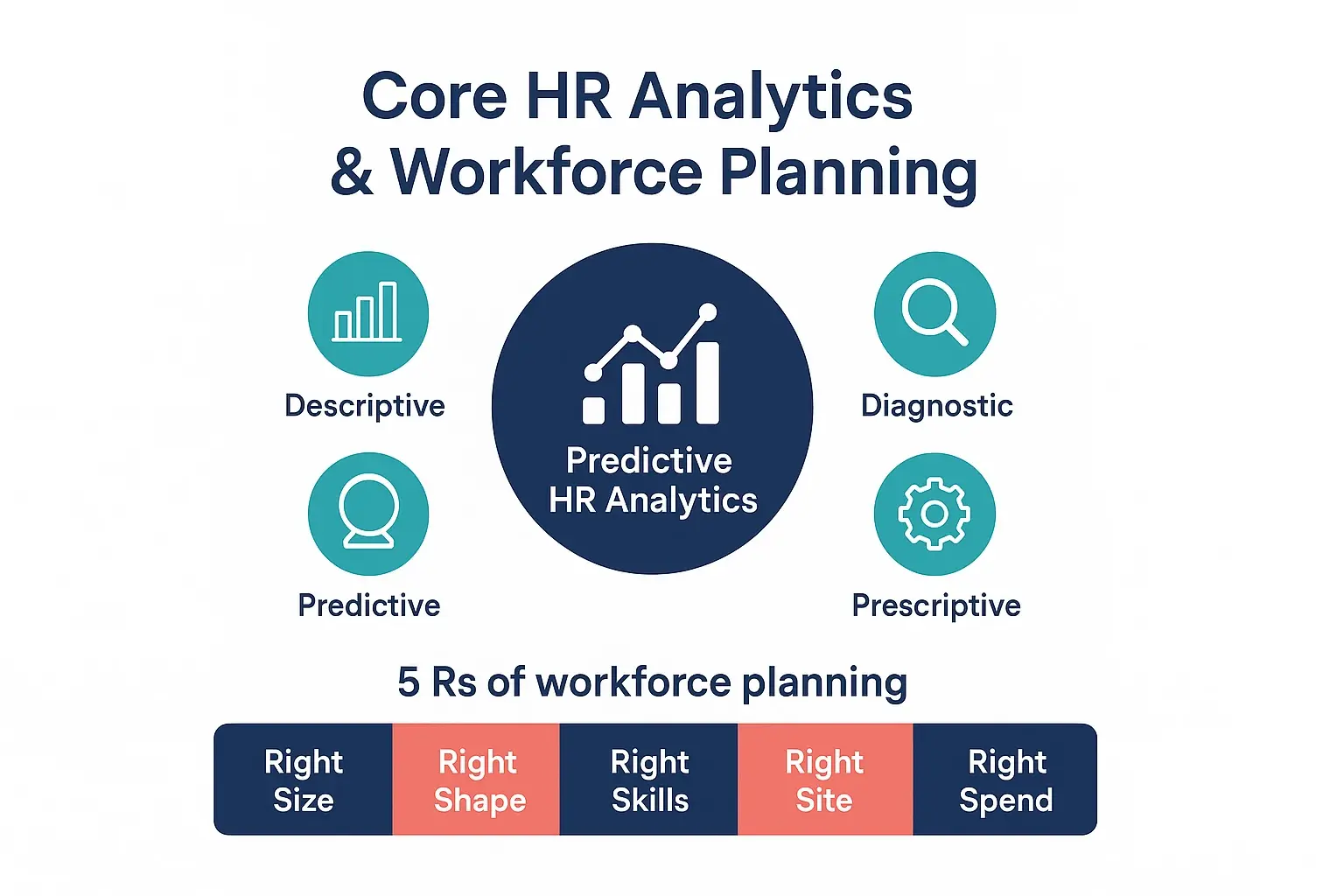
To understand predictive pipeline planning, we must first look at how HR data has evolved. Most organizations are comfortable with Descriptive Analytics—knowing what happened (e.g., “Our turnover rate was 12% last year”). Some have moved to Diagnostic Analytics—understanding why it happened (e.g., “Turnover was high because of dissatisfaction with career progression”).
Predictive Analytics takes the next leap: What is likely to happen? By applying statistical algorithms and machine learning techniques to historical data, CHROs can forecast future outcomes.
For leadership pipelines, this means asking:
- Who is at risk of leaving in the next 12 months?
- Which middle managers display the behavioral markers of successful C-suite leaders?
- Where will we face a skills gap in our executive team two years from now?
The Core Framework: The 5 Rs
Effective workforce planning isn’t just about filling seats; it is about holistic alignment. As you begin integrating data into your strategy, consider the “5 Rs” of workforce planning:
- Right Size: Do we have the correct number of leaders?
- Right Shape: Is our hierarchy optimized, or is it top-heavy?
- Right Skills: Do our leaders possess the competencies needed for future market challenges?
- Right Site: Are our leaders located where the business growth is happening?
- Right Spend: Are we investing efficiently in development and compensation?
Why the “Tap on the Shoulder” No Longer Works
Historically, succession planning was often an informal process reliant on intuition and tenure—the “tap on the shoulder.” While intuition remains valuable, relying on it exclusively creates blind spots. Research indicates that organizations leveraging analytics improve workforce assessments for leadership potential by up to 66%.
The “5 Ds” of Succession Risk
A robust pipeline must account for more than just retirement. Predictive modeling helps CHROs prepare for the “5 Ds” of leadership vacancy:
- Death
- Disability
- Divorce (impacting relocation or availability)
- Disagreement (cultural misalignment)
- Distress (burnout or ethical lapses)
Predictive analytics allows you to stress-test your pipeline against these variables. For instance, if your succession plan relies heavily on a single “Crown Prince” or “Crown Princess,” data modeling can show you the catastrophic risk if that one individual leaves or fails. This insight drives the development of a broader, more diverse pool of talent—a core tenet of integral leadership.
Building the Predictive Model: A Step-by-Step Approach
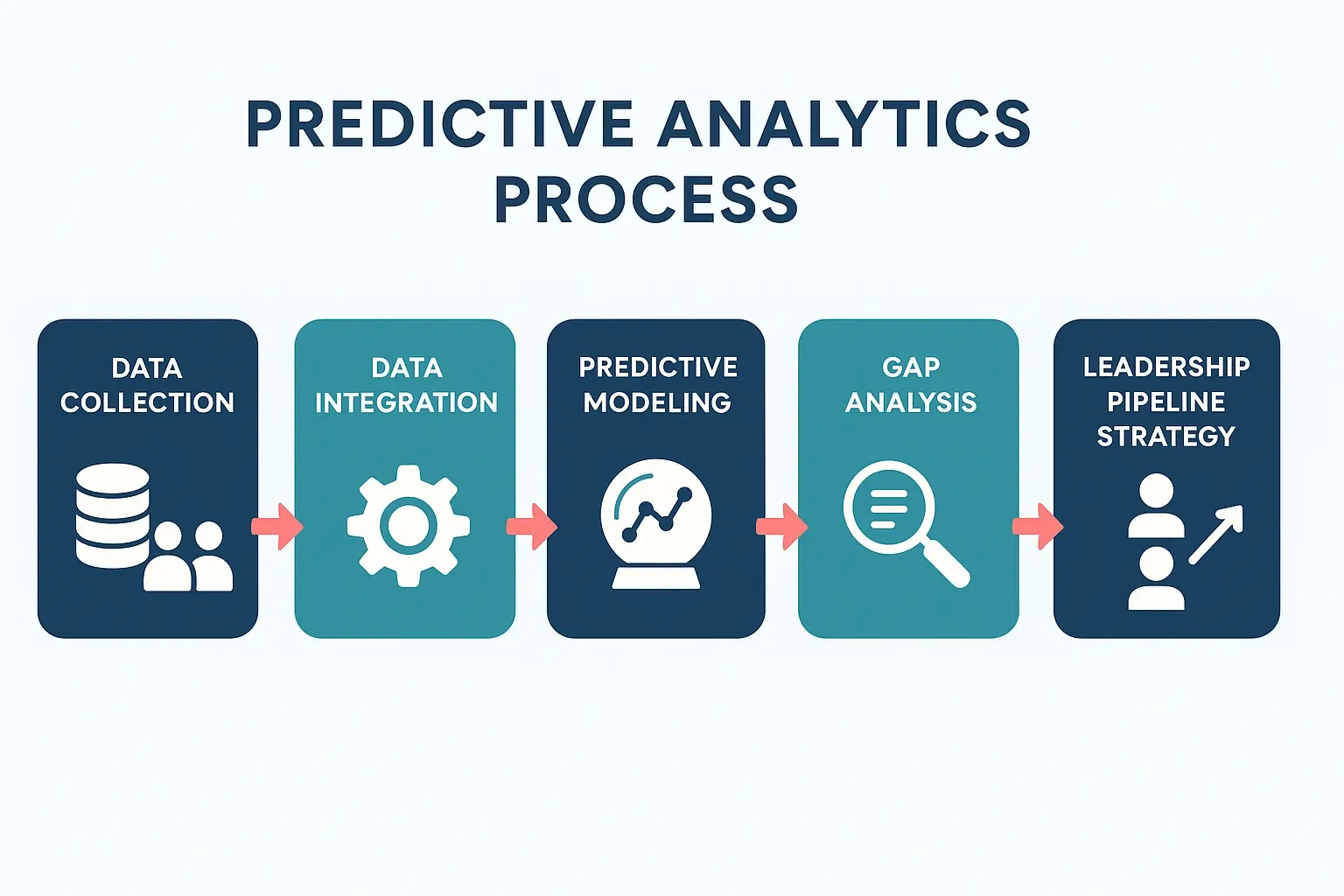
You do not need to be a data scientist to lead this initiative, but you do need to understand the architecture of the solution.
1. Data Aggregation and Hygiene
The model is only as good as the data it consumes. For leadership planning, you need to integrate data points that are often siloed:
- Demographics: Age, tenure, location.
- Performance: Historical ratings, project outcomes.
- Potential: Psychometric assessments, learning agility scores.
- Engagement: Pulse survey results, sentiment analysis.
- Market Data: External talent supply, competitor movement.
2. Identifying “High-Potential” Signifiers
Algorithms can analyze the career paths of your most successful past leaders to identify common denominators. Did they all rotate through a specific department? Did they score high on emotional intelligence assessments?
By identifying these markers, you can scan your current workforce for hidden gems who fit the profile but may have been overlooked due to unconscious bias. This objective view is essential for purpose-driven leadership, ensuring that advancement is based on merit and capability rather than visibility alone.
3. Gap Analysis and Scenario Planning
Once you know who you have and who you might lose, you can perform a Gap Analysis.
- Scenario A: The company grows by 20% in Asia. Do we have leaders ready for that market?
- Scenario B: A disruptive technology renders a current business unit obsolete. Can the leaders there be reskilled?
This level of foresight allows for executive presence and influence in the boardroom. Instead of reporting problems, the CHRO presents data-backed scenarios and mitigation strategies.
The Human Side of Data: Ethics and Culture
A common fear is that analytics will reduce people to numbers. However, when used correctly, predictive analytics humanizes the workplace by reducing bias. Traditional succession planning is often rife with “like-me” bias, where leaders select successors who remind them of themselves.
Predictive models, if audited for fairness, can surface candidates from underrepresented groups who possess the requisite skills and potential but lack the network or sponsorship. This contributes to a healthier, more inclusive culture.
Furthermore, in an era of hybrid leadership, where visibility is reduced, data helps ensure that remote high-performers are not forgotten during pipeline discussions.
Measuring Success: ROI and Impact
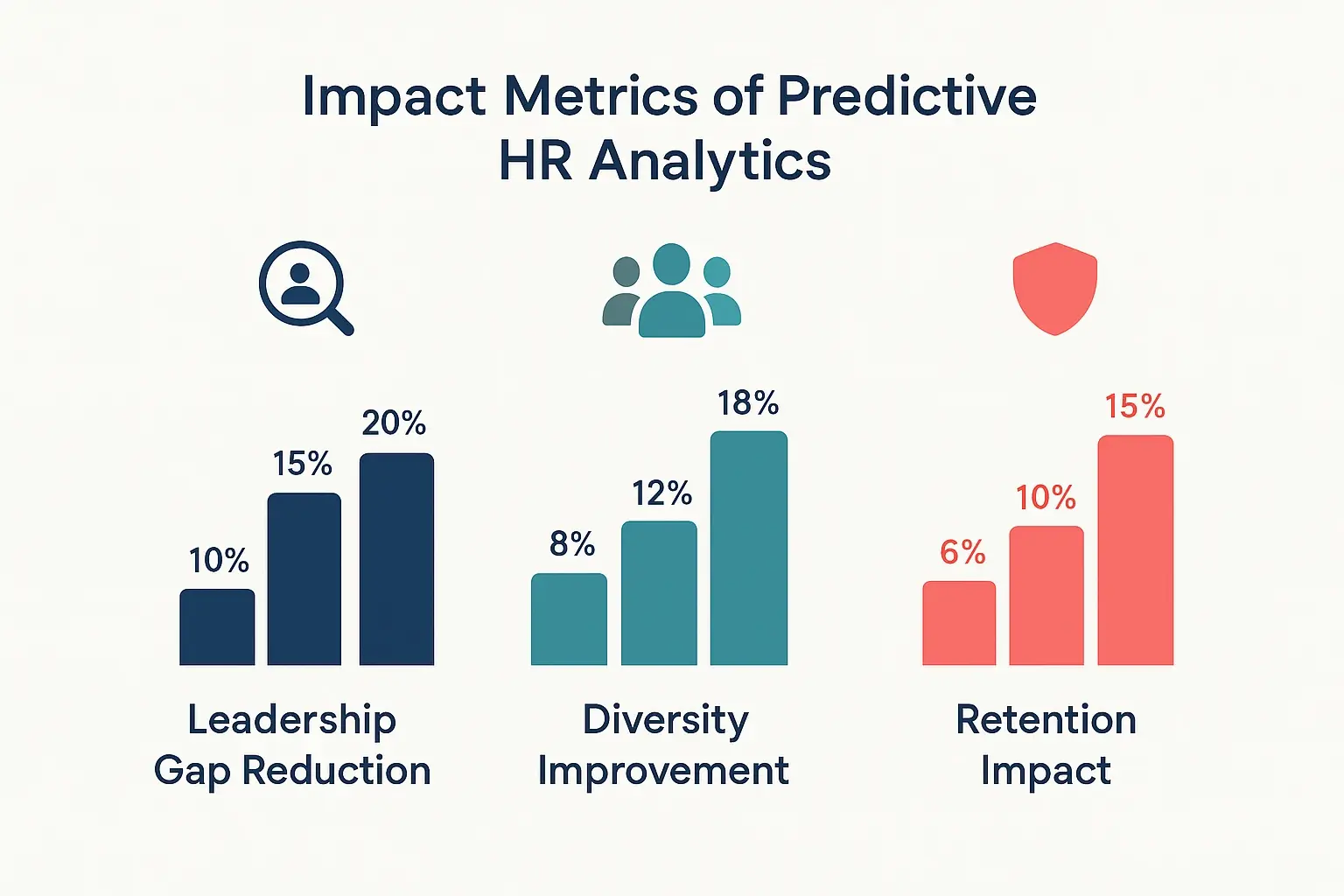
How do you know if your predictive planning is working? The metrics shift from “activity” to “impact.”
Success looks like:
- Increased Readiness: The percentage of critical roles with a “Ready Now” successor increases.
- Reduction in External Hires for C-Suite: Promoting from within costs less and typically results in higher retention.
- Improved Leadership Diversity: Objective data often leads to more diverse candidate slates.
- Retention of High-Potentials: Proactive intervention prevents your best talent from leaving.
Frequently Asked Questions
Q: Do we need a massive budget and a team of data scientists to start?A: Not necessarily. Many modern HRIS platforms have built-in predictive modules. You can start small by analyzing a single critical department or role before scaling up.
Q: Is predictive analytics legal? What about privacy?A: Compliance is paramount. Data must be anonymized where possible during the modeling phase, and transparency is key. Employees should understand how data is used to support their development, not just for assessment.
Q: Can a computer really predict leadership potential?A: An algorithm can predict probability based on historical patterns, but it cannot measure heart or spirit. Analytics should be used as a decision-support tool, not a decision-maker. The final judgment requires human nuance and integral understanding.
Q: What if our data is “messy”?A: This is the most common starting point. Begin with a “data health check.” Even imperfect data can reveal trends. Don’t wait for perfection to begin looking for insights.
The Road Ahead
Predictive HR analytics is not about replacing the human element of leadership; it is about empowering it. By leveraging data, CHROs can move from firefighting to architectural planning, building a leadership pipeline that is robust, diverse, and ready for the future.

About Sami Bugay
MCC-ICF | 9,999+ Coaching Hours | Coaches Leaders & Teams | Amazon Bestselling Author
Sami Bugay is a Master Certified Coach (MCC-ICF) with over 9,999 coaching hours and the founder of both The Integral Institute (est. 2004) and AI Coach System. An Amazon bestselling author of "Better Leaders Better Teams" and Lifetime Achievement Award recipient from Gestalt OSD Center Cleveland USA, Sami brings a unique blend of technology leadership and coaching mastery. He has coached senior executives across Europe, Middle East, Far East, and North America for over two decades.