

Why AI in performance decisions changes CHRO credibility overnight
39% of organizations already have AI adopted in HR functions. That means the question facing CHROs is no longer whether AI will enter people decisions, but whether it will enter them before governance does (SHRM, 2026).
You have seen the meeting. A division VP asks why a high-potential manager was flagged as “not ready” for promotion, and the HR team can describe the workflow but not the reasoning. In that moment, the issue is not system performance. It is leadership legitimacy.
That tension is rising fast because AI is no longer sitting at the edge of HR as a pilot or a vendor demo. It is moving into the systems that shape development plans, performance narratives, succession signals, and advancement decisions. Once those recommendations start influencing who gets coached, who gets stretched, and who gets rated more harshly, the CHRO is no longer managing a technology rollout. The CHRO is managing the credibility of the employment bargain.
62% of organizations are already using AI somewhere in their operations, and 46% expect to use AI in HR (SHRM, 2026)
Efficiency is not the ethical test
In a regional healthcare system, a mid-market employer under budget pressure can save hours by using AI to summarize manager feedback before quarterly talent reviews. Useful? Absolutely. But if that summary quietly shapes who is seen as “ready,” “risky,” or “average,” then speed has crossed into judgment.
This is where many executive teams get the framing wrong. The ethical question is not whether AI makes HR more efficient. It is whether human judgment remains active, informed, and accountable when the decision affects pay, reputation, development, or career mobility. High-stakes people decisions need more than output. They need explainability, challenge, and context.
This article is about that line — where assistance ends and delegated judgment begins.
The trust impact lands on the CHRO
Employees do not experience AI as a technical architecture. They experience it as a pattern: who gets opportunities, whose performance gets questioned, whose manager suddenly sounds more certain than the evidence supports. Trust erodes that way — quietly at first, then all at once.
That is why this is a governance test for CHROs. Accountability does not sit with the vendor, the model, or the implementation team. It sits with the executive who allowed AI into decisions that shape careers. If the process feels opaque or unfair, the damage is not limited to one cycle of reviews. It reaches manager confidence, employee belief in advancement, and the perceived integrity of HR itself.
The hard question comes next: what, exactly, makes AI in HR ethical when the recommendation looks reasonable but the reasoning cannot be defended?
What does ethical AI actually mean in HR decisions?
The Responsible AI governance framework matters here because it gives CHROs a usable test for people decisions. Without it, “ethical AI” collapses into vendor language, and employees are left to trust outcomes no one can clearly defend.
The six tests that make ethics operational
In HR, fairness does not mean every employee gets the same output. It means the system does not systematically disadvantage groups, roles, or career paths without a job-related reason. Transparency means people know where AI is being used, what input it sees, and where its influence stops. Accountability means a named leader owns the decision logic, the controls, and the consequences — not the software provider.
Privacy is simpler than many teams make it. If the data would feel intrusive in a manager’s hands, it does not become acceptable because a model can process it at scale. UNESCO frames this as a rights issue, not just a compliance issue, which is exactly how CHROs should read it (UNESCO, 2021).
Explainability means HR can answer a practical question: Why did this recommendation appear, and what evidence supports it? Not with code. With reasons a manager, employee, and legal partner can all understand. Human oversight means a person with authority can challenge, override, or stop the recommendation before it becomes a career consequence. Cornell ILR’s CHRO principles push this point clearly: responsibility stays with leadership, even when technology is involved (Cornell ILR, 2024).
Ethical AI in HR is not “the model works.” It is “the process remains fair, visible, contestable, and owned” (UNESCO, 2021).
Assistance is not the same as authority
In a quarterly review at a regional manufacturing company, an HR director uses AI to summarize 120 manager comments before calibration. That is AI-assisted work. It saves time and reduces administrative drag.
The line is crossed when the same system starts ranking employees as “promotion ready” or “low potential,” and those labels move into pay, succession, or development decisions without a meaningful human challenge. That is an AI-decided outcome, even if a manager technically clicks approve.
Spencer Stuart argues for people-centered AI for exactly this reason: the design of the decision process matters more than the elegance of the tool (Spencer Stuart, 2024). The strongest governance question is not “Can the model predict?” It is “Who is still exercising judgment?”
Ethics is a design choice
This is why ethical AI is a governance design problem, not a product feature. You do not buy fairness off a shelf. You build it through decision rights, escalation paths, audit routines, and clear boundaries around where AI can advise and where humans must decide.
That distinction matters even more in leadership development, where the language of growth can hide weak controls. If AI is only suggesting coaching themes, the risk looks manageable. But what happens when development signals start shaping who gets seen as future leadership material — and who quietly disappears from the integral leadership pipeline?
Why leadership development is the safest place to start — and where it still goes wrong
57% of organizations where AI has been deployed report frequent upskilling or reskilling opportunities for employees. So if AI seems safest in leadership development, is that because the risk is truly lower — or because the consequences are easier to miss (SHRM, 2026)?
That question matters more than most teams admit. Development feels benign. No one is cutting pay, issuing ratings, or denying a bonus. But leadership development still allocates scarce goods: visibility, coaching time, stretch assignments, and access to the integral leadership pipeline.
This is why it is often the right place to start with AI — and still a place where weak governance does real damage.
Lower stakes do not mean low impact
In a quarterly talent discussion at a regional financial services firm, a VP asks for help identifying first-line leaders who would benefit from coaching before a reorganization. An AI tool scans feedback themes, learning histories, and manager comments, then groups employees by likely development needs. Used well, that is practical support. It helps HR see patterns at scale that would otherwise stay buried in notes and spreadsheets.
The problem starts when pattern detection quietly becomes opportunity allocation. If the underlying data reflects years of uneven sponsorship, narrow ideas of “executive presence,” or manager bias in who was deemed “ready,” the model can reproduce those assumptions with impressive efficiency. It does not need to predict promotion directly to shape who gets prepared for it.
Development data often looks neutral because it is framed as support. In practice, it can become a record of who was previously seen, backed, and invested in.
Use AI to surface needs, not to define potential
This is where Responsible AI earns its keep. PwC found that 58% of executives say Responsible AI initiatives improve return on investment and organizational efficiency (PwC, 2025). In leadership development, that payoff comes from discipline: use AI to identify themes, skill gaps, and coaching triggers, but keep the decision about developmental action with accountable humans.
That means asking harder questions than vendors usually invite. Is the system flagging communication gaps because the role requires them, or because past leaders were rewarded for one style? Is it recommending fewer stretch assignments for employees who had fewer prior opportunities? Is “leadership potential” being inferred from historical access rather than demonstrated capacity?
The safest starting point is still a test. If AI can influence who gets developed today, it can influence who is considered promotable tomorrow. And once development signals begin to harden into performance judgments — support tool or shadow evaluator?
What makes performance management the real ethical stress test?
50% of executives say the hardest part of Responsible AI is turning principles into operating process — and in performance management, that gap is where trust breaks, top performers leave, and weak decisions get dressed up as rigor (PwC, 2025).
Picture a quarterly calibration meeting at a global technology enterprise. A director asks why one team lead was pushed into the “solid but not exceptional” box while another was marked “ready now” for promotion. The manager points to the system’s synthesis of feedback, sentiment patterns, and goal attainment signals. Then the room goes quiet, because no one can explain how those inputs became a career-shaping judgment.
That is the ethical stress test. In leadership development, AI can still do damage, but the consequences often arrive indirectly. In performance management, the output is tied to ratings, pay, promotion slates, and sometimes exits. The employee does not experience the model as assistance. They experience it as consequence.
When support becomes decision power
The distinction that matters is simple: AI that informs helps a manager see patterns they still must interpret. AI that decides narrows the range of outcomes so much that human review becomes ceremonial.
A manager who reads an AI summary before writing a review is still exercising judgment. A manager who accepts a recommended rating because the model appears more consistent than their own reasoning has already ceded judgment — whether the policy says so or not. That is why explainability is not a technical preference. It is the minimum condition for fairness.
If a rating cannot be explained in plain language, challenged by a credible reviewer, and tested after the fact, it is not ready for high-stakes use.
This is where many organizations overestimate control. They assume a human in the workflow means meaningful oversight. It does not. Oversight counts only when the manager has enough evidence, authority, and confidence to disagree.
The minimum standard is contestability
Performance systems need three things before AI should influence outcomes: explainability, contestability, and accountability. Explainability means HR can show what drove the recommendation. Contestability means a manager, employee, or review panel can challenge it with real effect. Accountability means a named leader owns the process when the output harms someone unfairly.
PwC reports that 87% of leaders expect AI agents to reshape governance within the next year (PwC, 2025). That should concern CHROs for one reason above all: governance is being pressured to evolve faster than most performance processes were designed to withstand.
And performance management does not stay contained. Today’s rating becomes tomorrow’s promotion case, succession signal, or access point into integral leadership. So the real question is not whether the tool is useful. It is whether the vendor’s logic is now sitting inside your employment decisions — and if it is, who exactly is still accountable?
How should CHROs govern vendor tools without outsourcing accountability?
The decision-rights framework is what keeps vendor AI in its place: a tool inside HR governance, not a substitute for it. Without that framework, the first challenged promotion or rating exposes the real gap — the vendor can explain the product, but only the CHRO owns the employment decision.
That is the operating reality Cornell ILR points to in its CHRO principles: responsibility for AI use does not transfer just because a third party built the system (Cornell ILR, 2024). UNESCO makes the same point from a rights perspective. Accountability, transparency, and human determination are not optional controls layered on after procurement; they are the conditions for legitimate use in the first place (UNESCO, 2021).
Build governance around named owners
In a quarterly review at a regional retail company, a VP asks why a store director disappeared from the promotion slate after a vendor platform rescored leadership signals. HR cannot answer quickly because implementation was treated as an IT purchase, not a governed decision process.
That failure is common. PwC found that only 36% of companies say they have fully embedded Responsible AI into how they do business (PwC, 2025). In HR, that usually means no one has explicit ownership for four things that matter when a decision is challenged: model review, escalation, documentation, and periodic audit.
One owner should approve the use case. Another should review whether outputs remain job-related and defensible. Legal and HR operations should know when a case must be escalated. And every material change — new data source, new scoring logic, new workflow — should be documented before it reaches managers.
Set hard boundaries before the tool scales
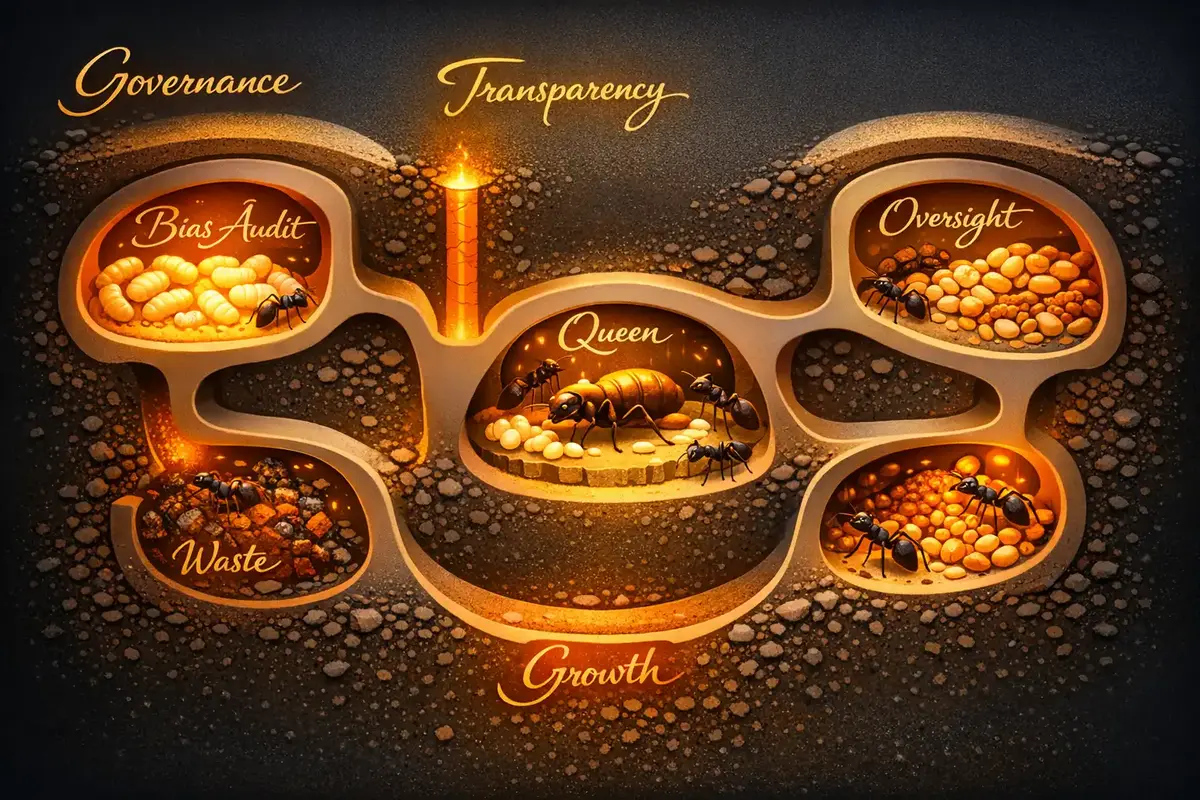
Good governance is specific. It defines what the system may recommend — summarize feedback, flag missing evidence, cluster development themes. It defines what humans must review — promotion readiness, performance ratings, succession placement. And it defines what should never be automated — final decisions on pay, termination risk, or labels that can quietly harden into career ceilings.
This is where many CHROs need more backbone with vendors. “Bias tested” is not a control. “Explainable” is not enough if your managers still cannot defend an outcome in plain language. If the tool influences a people decision, your governance has to show who reviewed it, who could challenge it, and who signed off.
That creates the next pressure point. Once ownership is clear, what exactly should be disclosed, audited, and monitored before the system touches more employees — minimal compliance, or real oversight?
What should CHROs disclose, audit, and monitor before scaling AI?
A CHRO hears the same question twice in one week. First from a manager in calibration — did the system influence this rating? Then from an employee after a succession review — was AI part of that decision?
Those are not edge cases anymore. 88% of respondents say their organizations are regularly using AI in at least one business function (McKinsey, 2025). Once AI is normalized at that scale, silence stops looking neutral. It starts looking evasive.
Disclosure has to be specific enough to be useful
Employee disclosure should do three things plainly. It should state where AI is used, what it influences, and where human review still applies. Anything softer than that — vague policy language, buried FAQs, generic references to innovation — leaves managers to improvise explanations they cannot defend.
In a mid-market services company during year-end talent review, a division VP may accept AI-generated summaries as administrative support. The reaction changes when those summaries affect promotion slates or who enters the integral leadership pipeline. Employees do not need source code. They need a clear account of whether AI helped summarize evidence, flagged patterns, or shaped a recommendation that a human could override.
That distinction protects the organization as much as the employee. McKinsey reports that 32% expect their organization’s total workforce to decrease by 3% or more in the year ahead, while only 13% expect an increase of 3% or more (McKinsey, 2025). In a workforce climate shaped by restructuring pressure, opaque AI use will be read through the lens of job risk.
Audits and monitoring should follow the risk, not the rollout plan
A launch review is not an audit strategy. Audits should test for bias, model drift, and unintended consequences over time — especially when the tool touches performance ratings, promotion readiness, or succession pools. A system that looked stable in quarter one can behave very differently after new manager data, a reorg, or a change in role profiles.
The right question is not whether the model passed testing once. It is whether its people impact still holds up six months later.
Monitoring should be tiered. Low-risk uses such as note summarization may need periodic review. High-risk uses need tighter controls — outcome checks by group, override rates, escalation patterns, and evidence that humans are not simply rubber-stamping outputs.
Because scale is not the real milestone. Trust is. And when the first hard decision lands, will employees see governed judgment — or a black box with HR’s logo on it?
Ethical AI in HR lasts only when trust survives the first hard decision
A single opaque decision can cost a company more than a failed tool. It can drain manager credibility, push strong people out the door, and turn HR from a trusted steward into a function employees work around.
That is why the real test comes after implementation. What determines whether AI becomes a leadership advantage or a trust liability is not the launch, the demo, or the policy memo. It is what happens when a respected employee challenges an outcome and the organization has to show that the process was fair, explainable, and still led by humans where judgment mattered most.
Trust is built in the moment of challenge
Picture a mid-market technology company in the middle of a team restructure. A director learns that an AI-informed review process contributed to her being passed over for a broader role. She is not asking for source code. She is asking a simpler question: Who decided this, on what basis, and could anyone meaningfully disagree with the system?
If the answer is vague, trust collapses fast. Not only for her. For the managers who now have to defend decisions they did not fully make, and for the peers who start to wonder whether development, performance, and advancement are still connected to visible evidence.
This is where ethical AI either becomes real or reveals itself as branding. Spencer Stuart argues for people-centered AI because adoption succeeds only when technology strengthens human judgment rather than displacing it (Spencer Stuart). In HR, that means employees should be able to see that AI helped organize information, not quietly determine their standing.
The first contested decision is the moment employees decide whether your governance is real.
Ethics has to become a leadership habit
The stronger CHROs treat ethics as an operating discipline, not a gate at the start of procurement. They revisit use cases when business conditions change. They ask whether managers are overriding recommendations thoughtfully or simply deferring to them. They watch for a subtler failure too: when a system designed to support development starts narrowing who is seen as leadership material.
That matters for any organization trying to build a credible integral leadership pipeline. Developmental intent should widen possibility, not harden old patterns into cleaner-looking outputs.
Cornell ILR’s CHRO principles make the standard plain: leaders remain responsible for the human consequences of AI use in organizations (Cornell ILR, 2024). That is the durable model — innovation with oversight, and oversight in service of people.
The question for your own context is not whether AI belongs in HR. It is whether, when the first hard call is challenged, your employees will see disciplined judgment — or institutional distance.
Key Takeaways
- AI in HR changes CHRO credibility when it enters people decisions before governance does.
- Ethical AI in HR requires fairness, transparency, accountability, privacy, explainability, and human oversight.
- Leadership development is a practical starting point, but weak governance can still reproduce bias and shape future opportunity.
- Performance management is the real stress test because AI outputs can affect ratings, pay, promotion, and exits.
Frequently Asked Questions
What makes AI use in HR ethically acceptable for leadership development and performance management?
AI use in HR is ethically acceptable when it remains fair, transparent, accountable, privacy-preserving, explainable, and subject to human oversight. The key test is whether people can understand, challenge, and override the recommendation before it affects pay, promotion, development, or career mobility.
Why is leadership development often considered a safer starting point for AI in HR?
Leadership development is often a safer starting point because it usually influences opportunities rather than immediate compensation or termination. However, it can still create harm if AI reproduces past bias, narrows access to stretch assignments, or quietly shapes who is seen as leadership material.
Why is performance management the highest ethical risk area for AI in HR?
Performance management is the highest-risk area because AI outputs can directly affect ratings, pay, promotion, succession, and exits. If the reasoning behind a rating cannot be explained and challenged in plain language, the process is not ready for high-stakes use.
How should CHROs govern vendor AI tools without outsourcing accountability?
CHROs should keep clear decision rights, named owners, escalation paths, documentation, and periodic audits in place before any tool is used in people decisions. A vendor can supply the technology, but the organization must own the logic, the review process, and the consequences of the outcome.
What should employees be told when AI is used in leadership development or performance decisions?
Employees should be told where AI is used, what it influences, and where human review still applies. Disclosure should be specific enough to explain whether AI only summarizes information or also shapes recommendations that managers can override.