

Why leadership development is now a risk-management decision, not a training expense
Continuity-risk leadership development starts with a hard number: trust in managers fell from 46% to 29%, and without a way to assess, quantify, and de-risk leadership capacity, operating stability breaks fast (DDI, 2025). That is the board-level shift. Leadership development is no longer a discretionary learning line; it is a control mechanism for execution risk.
The cost shows up before a successor slate ever reaches the board. In a quarterly review at a mid-market technology company, a VP can still hit the revenue number while losing the room—decisions slow, escalation traffic rises, and strong managers stop taking visible risks because they no longer trust how judgment will be received. That pattern is not anecdotal. DDI reports that 71% of leaders saw increased stress, which means the people expected to create clarity are often operating with less of it (DDI, 2025). Add the fact that 80% of CEOs see employee skill gaps as a direct threat to the business, and the issue stops looking like a training need and starts looking like exposure on continuity, execution, and bench strength (Korn Ferry, 2024). This article answers that problem by treating assessment, ROI, and succession as one executive decision system rather than three HR conversations.
Leadership instability rarely announces itself dramatically at first. It appears as thinner judgment under pressure, lower confidence in frontline managers, and a growing gap between the roles the business needs and the leaders it actually has.
From learning activity to continuity insurance
Seen this way, leadership development is better understood as continuity insurance. You are not simply funding workshops, coaching hours, or high-potential programs. You are reducing the odds that a stressed, underprepared layer of management becomes the weak point in strategy execution.
That distinction matters because many organizations still separate the questions that should be linked. Assessment sits with talent. ROI sits with finance. Succession sits with the board or CHRO. The result is fragmented decision-making: companies measure participation, discuss potential in broad terms, and approve succession plans that look orderly on paper but rest on untested assumptions. A more credible approach ties these together through evidence—what capability exists now, what gaps matter most, and what business risk remains if nothing changes. That is the logic behind serious leadership development metrics: not activity counts, but signals of readiness and resilience.
One executive framework, not three separate programs
The practical question is blunt: if trust is falling, stress is rising, and skill gaps are already seen as a business threat, what exactly are you buying when you fund leadership development?
The answer depends on the quality of your assessment. If you cannot tell the difference between visible confidence and real leadership capacity—between a promotable profile and a succession-ready one—you are not investing. You are guessing.
Which assessment tools actually reveal leadership potential and gaps?
$564 billion. That is where the leadership development market is projected to go by 2035, up from nearly $90 billion in 2025 — a useful reminder that spending on leaders is expanding much faster than most organizations’ ability to judge who is actually ready for more scope (SHRM, 2025).
If assessment is supposed to improve decisions, why is it still treated as a one-time HR event?
The first mistake is using one tool to answer three different questions. 360 feedback shows how a leader is experienced by others. That makes it valuable, but narrow. It can reveal whether a director creates clarity, listens under pressure, or shuts down dissent — the kind of observed behavior that colleagues live with every day. It cannot, on its own, tell you whether that same person can handle a larger role with more ambiguity, political complexity, and enterprise trade-offs. That is why strong organizations use 360-degree leadership assessments as evidence of current impact, not as a proxy for future capacity.
Self-discovery inventories answer a different question: how people see themselves. Used well, they help leaders name preferences, stress patterns, and default reactions. Used badly, they become flattering shorthand. A senior leader who says, “I’m naturally direct,” may be describing a style; the team may be experiencing avoidance, impatience, or poor calibration. Self-perception matters because insight is part of growth. It is still only one data point.
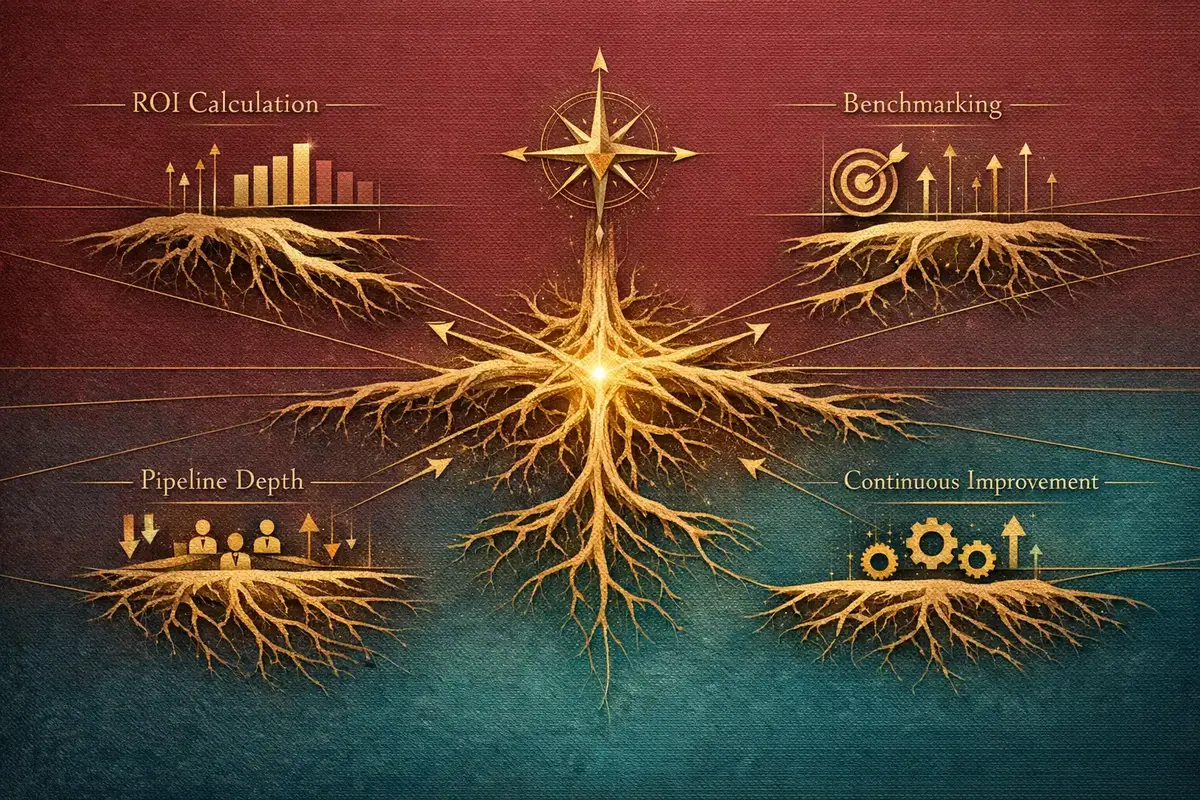
What broader assessment systems add
The real decision value comes from broader assessment batteries — structured combinations of simulations, interviews, cognitive or judgment measures, and role-fit criteria. These are not better because they are more elaborate. They are better because they test readiness against the demands of a specific job. In a quarterly review at a regional healthcare provider, a high-performing operations director looked promotable on reputation alone. A fuller assessment showed something more useful: strong execution discipline, weak stakeholder navigation, and inconsistent judgment when priorities collided. That did not disqualify her. It changed the development plan and delayed a risky succession move.
This is the point many companies miss. Assessment should identify strengths and blind spots, not sort people into a flattering “high-potential” box. DDI’s 2025 Global Leadership Forecast draws on 10,796 leaders and 2,014 organizations worldwide, which matters because it reflects the scale of the challenge: leadership decisions are being made across large systems, not isolated teams (DDI, 2025). Labels travel fast. Evidence travels better.
From diagnosis to decision
The best leadership assessment tools do not end with a report. They trigger action — coaching priorities, stretch assignments, role moves, and succession judgments. Otherwise, the organization learns something interesting and changes nothing.
That is where assessment either earns its keep or becomes expensive theater. The next question is unavoidable: when development follows, how do you know it changed business outcomes — or just generated more activity?
How do you calculate the ROI of leadership development without confusing activity with impact?
A regional services firm is in budget review, and the CFO asks a familiar question: “We funded leadership development last year—what changed?” The CHRO has participation rates, satisfaction scores, and a stack of coaching summaries, but nothing that cleanly ties the spend to business performance.
That gap is common. 41% of HR leaders lack clear metrics to measure the ROI of training programs (Korn Ferry, 2024). It matters because organizations are not debating a trivial line item: global spending on leadership development is about $60 billion annually (PubMed / PMC, 2024). And yet the headline case for investment is strong.
Every $1 spent on leadership development programs returns an average of $7 to the company (SHRM, 2025)
If the average return is so compelling, why do so many programs still struggle in budget review? Because most ROI discussions start with activity. They should start with a baseline.
The CFO-readable logic chain
A credible ROI of leadership development model is simple enough to survive scrutiny: baseline -> intervention -> business outcome -> cost avoidance -> net value. Before a program begins, define the few measures that matter for the role population involved. For frontline managers, that may be retention, team performance, internal mobility, and time-to-productivity after promotion. For senior leaders, it may be span effectiveness, cross-functional execution, or reduced escalation load.
Then separate leading indicators from lagging indicators. Leading indicators show whether behavior is changing soon enough to matter: manager effectiveness scores, quality of decision cadence, promotion-readiness ratings, or coaching follow-through. Lagging indicators show whether the business felt the change: lower regrettable attrition, stronger promotion success, fewer failed transitions, better operating results.
This is where many teams lose credibility. They report that 120 leaders completed a program, 96% rated it highly, and coaching utilization rose. None of that is ROI. It is evidence that something happened, not that value was created.
Count the value you did not have to lose
The strongest business case often sits in cost avoidance, not just revenue lift. In a mid-market manufacturing company, a plant director promotion looked urgent because a retirement date was fixed. Assessment and targeted development delayed the move by six months. That sounds slow until you compare it with the alternative: a failed promotion, a backfilled vacancy, disrupted throughput, and another search.
Avoided mistakes have economic value. So does reduced vacancy risk. So does preventing a high-potential manager from leaving after being set up to fail in a role they were not ready to hold. This is why serious teams connect development data to promotion outcomes and transition success rates, not just to learning completion. The same discipline applies when evaluating executive coaching ROI: the question is not whether leaders liked the process, but whether judgment, retention, and execution improved enough to change business results.
A disciplined ROI of leadership development approach does not need perfect attribution. It needs a defensible comparison between before and after, plus a clear view of what costs were avoided.
Most organizations do not have an ROI problem. They have a measurement discipline problem. And if you cannot show which leaders are more likely to succeed after development—ready now, or merely impressive on paper—how confident should anyone be in the succession slate built on top of them?
Why succession planning works only when assessment data drives readiness decisions
Readiness-by-Criticality is the discipline that matters here: judge successor readiness, role criticality, and development gaps together, or pay for the mistake in lost momentum, damaged trust, and preventable exits. What happens when a critical leader leaves and the succession chart looks full but the bench is not actually ready? Revenue stalls for a quarter, decisions bottleneck, and the strongest internal candidates start returning recruiter calls.
A regional retail company learned this during a market shift. Its COO resigned with six weeks’ notice, and the board packet showed three “ready” successors. On paper, the bench looked healthy. In practice, one candidate knew the operation but not enterprise trade-offs, one had influence without execution range, and one was respected but untested in crisis. The slate had been built on reputation and annual calibration, not current evidence.
That is the core failure in many succession plans. They answer who is visible, not who can carry the role now, under these conditions.
From succession chart to live risk system
Reliable succession planning is not a naming exercise. It is a decision system that updates as strategy changes. A role that looked stable last year may become far more exposed after an acquisition, a margin squeeze, or a product reset. That is why readiness has to be evaluated alongside role criticality and the specific gaps that would break performance in the next role.
Research consistently shows that development works better when it is tied to concrete role demands rather than generic leadership labels. A 2024 review in PubMed / PMC proposed 65 evidence-informed strategies to improve leadership development impact and ROI — a useful reminder that stronger outcomes come from disciplined design, not from declaring someone “high potential” and hoping experience fills the gaps (PubMed / PMC, 2024).
The practical implication is blunt. Assessment data should change promotion timing, internal mobility, and even the decision to hire externally. If a successor is strong on operating control but weak on stakeholder alignment, the right move may be a cross-functional assignment, not an immediate promotion. If no internal candidate can close a critical gap fast enough, external hiring is not a failure of development; it is a risk response. Good succession planning strategies make those trade-offs explicit.
Continuous pipeline decisions, not annual theater
This also explains why the strongest pipelines are built continuously. 80% of CEOs see employee skill gaps as a direct threat to the business (Korn Ferry, 2024). If the threat moves, the bench has to be re-read against new demands. Annual reviews are too static for that.
A credible leadership pipeline is not a polished slate. It is a current view of who is ready now, ready later, and not likely to be ready for this role at all.
That distinction decides whether succession is resilient or cosmetic — and whether the organization can tell the difference before a vacancy forces the truth. But what metrics actually reveal a strong bench, and which ones merely make it look organized?
What metrics separate a healthy leadership pipeline from a polished but fragile one?
A pipeline is fragile when it can name successors but cannot absorb a real transition. You see it in the meeting where a finance VP resigns, the slate looks reassuring for five minutes, and then the room starts asking who can actually step in without slowing decisions, losing key people, or overloading peers.
That is the right test. Harvard Business Impact found that leaders increasingly need a wider range of behaviors to meet current and future business needs (Harvard Business Impact, 2024). So a full-looking bench is not enough; the question is whether your metrics show range, durability, and role fit under changing conditions.
The metrics that show real bench strength
Start with readiness depth. Not whether each critical role has a name beside it, but whether there is credible coverage at different time horizons and whether those candidates have been tested against the actual demands of the role. A pipeline with shallow depth is highly exposed: one resignation, one failed move, or one strategy shift can empty the bench fast.
Then look at internal fill rate and time to fill together. On their own, both can mislead. A high internal fill rate may simply mean the company prefers insiders, even when they are not ready. A fast time to fill can reflect urgency rather than strength. Read together, they show whether the organization can move decisively without lowering the quality bar. This is where disciplined leadership development metrics start to matter: they connect pipeline claims to actual staffing outcomes.
Coverage is not resilience
The most revealing measures often appear after the promotion.
Track retention after promotion. If newly promoted leaders leave, stall, or burn out quickly, the issue is rarely just individual fit. It usually points to weak assessment, poor transition support, or inflated readiness judgments. Add post-promotion performance, and the picture sharpens further. Did the leader sustain team output, improve decision quality, and earn trust at the new level — or merely occupy the role?
This is the distinction many boards miss: short-term coverage answers whether someone is available now; long-term resilience answers whether the system keeps producing capable leaders as demands change. A polished pipeline can cover vacancies. A healthy one improves with use.
Benchmark continuously, not annually
Pipeline metrics should move with the business. In a regional healthcare system during a restructuring, a director who looked ready for broader scope six months earlier was suddenly misaligned when stakeholder complexity increased and operating pressure tightened. The person had not declined. The role had changed.
That is why benchmarking cannot be an annual ritual. It has to be continuous, comparative, and tied to evolving role expectations. Strong teams revisit succession planning metrics as strategy shifts, not after a vacancy exposes the gap.
If your metrics show only who is available, you still do not know whether your pipeline is strong — or just well presented. And when the next promotion decision arrives, what matters more: the chart, or the judgment it changes?
The real test of leadership investment is whether it changes future decisions
Nearly $90 billion is being spent on leadership development in 2025, with the market projected to exceed $564 billion by 2035 (SHRM, 2025). If investment is rising that fast while trust, execution, and retention still break under pressure, the problem is not spend. It is whether the spend changes decisions that matter.
That is the contrast boards should care about. A leadership program is easy to approve. A promotion delayed because the evidence says “not yet” is harder. An external hire made because no internal candidate can carry the role safely is harder still. But those are the moments when leadership development becomes defensible.
When development earns the right to influence decisions
In a budget-cycle discussion at an enterprise finance company, the CHRO presented strong completion rates and positive feedback from senior managers. The CFO’s question was sharper: Which decisions are different now? Who was promoted because readiness was proven? Who was held back because risk was still too high? Which role was filled externally because the internal bench would not hold?
That is the right standard.
Trust in managers fell from 46% to 29% since 2022 (DDI, 2025). When trust erodes, the cost is not abstract. Teams escalate more. Decisions slow. Strong people leave sooner than the org chart suggests. In that environment, leadership development should not be judged by participation or enthusiasm. It should be judged by whether it improves judgment about talent.
One operating rhythm, not three separate conversations
The most useful model links assessment, ROI, and succession into one management rhythm. Assessment shows current capability and likely risk. ROI shows whether targeted development changed business-relevant outcomes. Succession uses both to decide readiness, timing, and coverage.
Separate those streams, and each one weakens. Assessment becomes diagnosis without consequence. ROI becomes a reporting exercise. Succession becomes optimism arranged in boxes.
Integrated, they become an operating discipline. The organization learns faster. It invests more selectively. It gets more honest about where development can close a gap — and where it cannot. That is the practical core behind strong succession planning best practices: not cleaner charts, but better talent decisions under real business constraints.
Recalibrate as the business changes
This system has to stay live. A successor who looked credible before a restructuring, acquisition, or margin shock may no longer fit the role that now exists. A development plan that made sense six months ago may be too slow for today’s risk.
So the real outcome of leadership investment is not a stronger learning calendar. It is a better pattern of future choices — who gets developed, who gets promoted, who waits, and when the company chooses to buy capability from the market instead.
That is the test of continuity. Not whether leadership development looked active, but whether it made your next people decision smarter. If you reviewed your last three promotion calls today, would the evidence support them — or just explain them?
Key Takeaways
- Leadership development is increasingly a risk-management decision tied to continuity, execution, and bench strength.
- Assessment works best when it distinguishes current impact, self-perception, and role readiness.
- ROI should be measured through baseline-to-outcome logic, including cost avoidance and transition success.
- Succession planning is strongest when readiness, role criticality, and pipeline metrics are updated continuously.
Frequently Asked Questions
Why is leadership development considered a risk-management decision?
Leadership development is a risk-management decision because weak management capacity can disrupt execution, increase escalation, and undermine trust before a formal succession problem appears. When organizations assess and strengthen leadership capability, they reduce continuity risk, improve decision quality, and protect business stability.
Which assessment methods best identify leadership potential and readiness?
The most useful approach combines multiple methods, such as 360 feedback, self-assessments, simulations, structured interviews, and role-fit criteria. 360 feedback shows how a leader is experienced by others, while broader assessment batteries are better for judging whether someone can handle the complexity of a larger role.
How can the ROI of leadership development be measured credibly?
Credible ROI measurement starts with a baseline and tracks changes in business outcomes, not just participation or satisfaction. Useful measures include retention, promotion success, time to productivity, decision quality, and cost avoidance from preventing failed transitions or vacancies.
What makes succession planning effective?
Succession planning works best when readiness, role criticality, and development gaps are evaluated together using current evidence. A strong plan distinguishes who is ready now, who may be ready later, and where external hiring is the safer response.
Which metrics show whether a leadership pipeline is truly healthy?
A healthy pipeline shows more than named successors; it demonstrates readiness depth, internal fill rate, time to fill, retention after promotion, and post-promotion performance. These metrics reveal whether the organization can fill critical roles without lowering standards or creating hidden fragility.