

Why Coaching Effectiveness Is More Than “Did They Like It?”
Coaching effectiveness is not whether people liked the experience; it is whether the coaching changed what they understand, how they act, and what the business gets back. You see the tension every time a coaching engagement ends well, the leader is enthusiastic, and an HR or business sponsor still asks the harder question: what actually changed?
Picture a VP at a regional healthcare provider wrapping up months of coaching just before budget review. The participant says the process was valuable, the coach built trust, and the conversations felt sharp and relevant. That is useful feedback. It is not yet proof.
What makes this difficult is that satisfaction surveys are easy to collect, easy to summarize, and easy to mistake for evidence. They tell you whether the experience landed well. They do not tell you, on their own, whether the leader now handles conflict better, makes cleaner decisions under pressure, or leads a team differently when the stakes rise. This article gives you a practical way to separate a positive reaction from real change.

A credible evaluation looks across four layers:
- Reaction: Did the participant find the coaching relevant, useful, and well delivered?
- Learning: Did they gain insight, skill, or a clearer mental model?
- Behavior change: Did their day-to-day leadership actually shift in observable ways?
- Business impact: Did those shifts affect team, operational, or organizational outcomes?
A good coaching experience can feel transformative long before it becomes measurable in the work.
That is the core discipline for the rest of this article. Satisfaction is the first signal — not the verdict. The real question is tougher: when coaching appears to work, what evidence shows it did work, and what evidence only shows it was well received?
What Does the Research Say About Coaching Results?
Only 11% of more than 500 executives in McKinsey’s research strongly agreed that their leadership-development interventions achieve and sustain the desired results (McKinsey). That is the measurement gap in one number: leaders keep funding development, but very few are confident it produces lasting change.
This is not a niche problem. Deloitte’s 2024 Global Human Capital Trends drew on 14,000 business and HR leaders across 95 countries, and 85% of companies rated leadership as urgent or important (Deloitte, 2024). When an issue is that widespread, weak evaluation stops being a methodological quibble and becomes an operating risk.
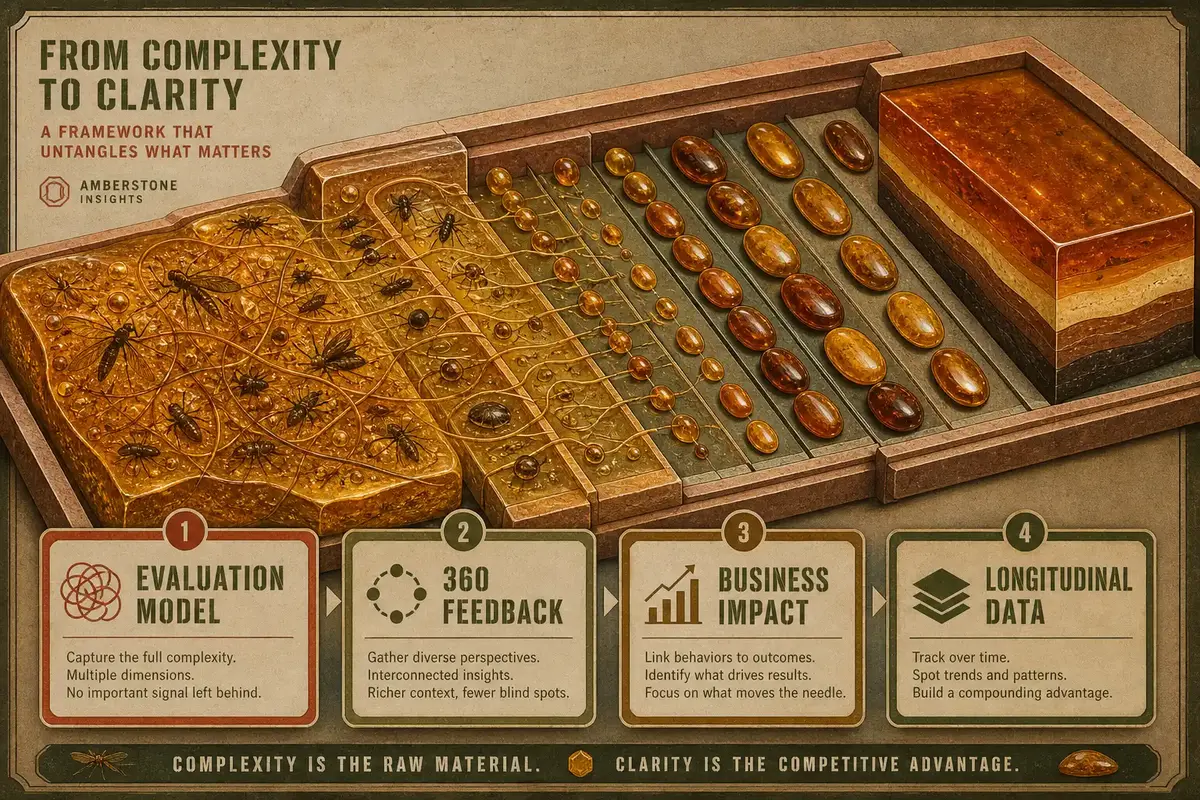
The practical point is simple: scale demands evidence. The World Economic Forum reports leadership coaching delivered across 15 hubs, with 110 members receiving expert coaching and 15 teams coached (World Economic Forum, 2024). That is not experimental fringe activity. It is organized, funded, and repeatable work — the kind that should produce a defensible record of results.
When coaching spreads faster than measurement, belief fills the space where evidence should be.
You can see the credibility problem in a familiar moment. A mid-market technology CFO enters budget season, sees strong participant feedback from a coaching program, and still cannot answer the board’s basic question: did better conversations translate into better decisions, faster execution, or lower attrition? Positive sentiment is easy to report. Sustained behavior change is harder.
That is why the research matters. It does not say coaching lacks value; it says the field often lacks proof strong enough for skeptical decision-makers. So what counts as evidence of change — and how do you separate it from a good experience?
How Do You Measure Change Without Confusing It With Satisfaction?
Eighty-six percent of organizations report a positive return from coaching, which is exactly why you need a four-layer evaluation model to test what that return actually consists of. Without that model, reaction data gets mistaken for results, and budget decisions rest on enthusiasm rather than evidence.
The model is simple. Reaction asks whether the coaching felt relevant and well delivered. Learning asks whether the person gained a clearer mental model, sharper self-awareness, or a usable skill. Behavior change asks whether colleagues can see a difference in how that leader now runs meetings, handles conflict, or delegates. Business impact asks whether those shifts show up in team outcomes, execution, retention, or other operating measures.
Satisfaction belongs in the first layer. Nowhere else.

The practical distinction is between process metrics and outcome metrics. Process metrics tell you what happened during coaching: session attendance, goal completion, perceived usefulness, even use of a coaching framework. Outcome metrics tell you what changed afterward: fewer escalations, better manager effectiveness, stronger team engagement, cleaner cross-functional decisions.
That distinction matters because managers shape results far more than many firms admit. Gallup found that 70% of the variance between highly engaged and persistently disengaged teams is attributable to the manager, while only 23% of full-time employees worldwide are engaged (Gallup, 2021). If coaching aims to improve leadership, behavior and team effects are not optional measures; they are the point.
If people loved the coaching but nobody works differently three months later, you measured the experience — not the change.
A defensible evaluation starts before session one. Capture a baseline, define two or three observable behaviors, and check them repeatedly — self-report alone is too thin. In a quarterly review at a mid-market manufacturing firm, a plant director may rate coaching highly while peers still report slow decisions and unclear accountability. Which signal do you trust — the survey, or the pattern across sources?
Which Evidence Sources Belong in a Credible Coaching Evaluation?
The triangulation framework matters here because most organizations still treat one clean survey as enough, while credible evaluation depends on evidence that can check other evidence. Why do so many coaching evaluations look convincing on paper but still fail to persuade executives? Because a single source can sound coherent and still be wrong.
Self-report is usually where coaching evaluation starts. It captures perceived insight, confidence, and intent to change — all useful, none sufficient. People are often the best source on what became clearer to them, but they are rarely the best source on whether others now experience them differently.
That is where contrast sharpens judgment.
| Evidence source | What it measures best | Strength | Limitation |
|---|---|---|---|
| Self-report | Insight, motivation, perceived progress | Fast, direct, low cost | Vulnerable to optimism and impression management |
| Manager observation | Visible on-the-job shifts | Tied to real work context | Can be narrow or biased by one relationship |
| 360 feedback | Patterned behavior across stakeholders | Reduces single-observer bias | Slower to run, needs disciplined interpretation |
| Objective KPIs | Operational or team outcomes | Harder to argue with | Weak if not clearly linked to the coaching goal |
Manager observation adds context that surveys miss. Gallup’s finding that 70% of the variance between highly engaged and persistently disengaged teams is attributable to the manager makes manager-linked behavior too consequential to leave unobserved (Gallup, 2021). If coaching claims behavioral change, someone in the work must be able to see it.
360 feedback brings in multiple perspectives, reducing the risk that one person’s view—whether coach, coachee, or manager—dominates the narrative. When used well, it can reveal subtle but important changes in how a leader is perceived across different relationships and contexts. For example, a leader may self-report improved listening skills, but only 360 data can confirm whether peers and direct reports notice the same shift.
Objective KPIs ground the evaluation in hard data, such as sales growth, employee retention, or project delivery times. However, these metrics are only meaningful if they are clearly linked to the coaching goals. For instance, if the coaching focus was on delegation, then team productivity or error rates may be appropriate KPIs; otherwise, improvements in unrelated metrics may be coincidental.
The most credible evaluations combine qualitative and quantitative inputs. Qualitative data—such as open-ended feedback or behavioral anecdotes—can illuminate the “how” and “why” behind changes, while quantitative data provides measurable evidence of impact. For example, a coaching program might pair survey scores with anonymized quotes from 360 feedback and before-and-after KPI trends to create a multidimensional view of progress.
The strongest coaching evidence is not louder data. It is data that disagrees less after you test it from different angles.
In a quarterly review at an enterprise retail company, a regional VP may rate the coaching highly, while 360 respondents report better delegation but no improvement in decision speed, and store-level KPIs stay flat. That mixed picture is more credible than a glowing summary.
McKinsey found only 11% of more than 500 executives strongly agreed their leadership-development interventions achieve and sustain the desired results (McKinsey, 2024). That is not a reporting problem alone. It is a design problem: too much single-source confidence, not enough multi-source proof.
And once you accept that, a harder question appears — when should each source be collected so signal is not confused with timing?
How Should You Design a Longitudinal Coaching Evaluation?
The coaching has ended, the invoice is approved, and the sponsor asks the only question that matters: what changed after people went back to work? A defensible longitudinal evaluation answers that by measuring change over time, not by treating the final session as the finish line.
That discipline matters because reported value is high. Eighty-six percent of organizations said coaching produced a positive return, and the median reported ROI was 7:1 — useful signals, but not a substitute for design.
Practical Sequence for Evaluation
A robust longitudinal evaluation starts with a clear sequence:
- Set Baselines: Before coaching begins, establish a baseline on two or three observable behaviors directly tied to a business priority. For example, if the goal is to improve cross-functional collaboration, measure the frequency and quality of interdepartmental meetings or peer feedback on collaboration.
- Define Target Behaviors: Specify what success looks like. These should be observable and measurable — such as “delegates decisions within 48 hours” or “constructively addresses conflict in meetings.”
- Collect Repeated Follow-Up Data: Gather data at multiple points — mid-engagement, end of engagement, and again 60 to 90 days later. Use a mix of self-assessments, 360 feedback, and objective business metrics.
- Review Results After the Engagement: Only after the engagement ends should you analyze the full pattern: what changed quickly, what persisted, and what faded. This helps separate short-term enthusiasm from lasting impact.
Isolating Coaching Impact
You should isolate coaching impact carefully, not theatrically. Use a light comparison group where feasible — for instance, compare coached leaders to peers who did not receive coaching but faced similar business conditions. Ask raters to indicate their confidence in observed changes, and keep contextual notes on reorganizations, manager changes, or market shocks that may explain movement better than coaching alone. For instance, if a team’s performance improved but a major competitor exited the market, that context matters. Deloitte’s 2024 research drew on 14,000 business and HR leaders across 95 countries; at that scale, serious talent decisions require this kind of measurement discipline (Deloitte, 2024).
Good evaluation does not prove coaching caused everything. It shows what changed, when it changed, and what else may have shaped it.
Tailoring Design by Use Case
The design also shifts by use case:
- Executive Coaching: Requires tightly defined behaviors and direct sponsor involvement. For example, track how often a leader delegates strategic decisions or how their direct reports rate clarity of vision.
- Team Coaching: Needs shared metrics such as meeting effectiveness, conflict resolution rates, or execution cadence. Use team surveys and business KPIs to capture collective shifts.
- Leadership Development Programs: Focus on cohort-level patterns and link changes to broader business outcomes, such as promotion rates, retention, or engagement scores.
The ultimate test is not whether the data is perfect, but whether it is trustworthy enough to guide real decisions — not merely defend them after the fact. Mixed results are common; what matters is the clarity and integrity of your measurement, so leaders can act on what the data truly shows.
What Makes Coaching Measurement Trustworthy Enough to Use?
Bad coaching measurement wastes money twice—first on the intervention, then on the false confidence that follows. It also erodes trust, because leaders remember when glowing feedback fails to show up in execution, retention, or judgment.
When the numbers are imperfect, trustworthy measurement is still possible. The standard is not perfect causality; it is credible, layered evidence that a decision-maker can rely on in a budget meeting, a talent review, or a team restructure.
Picture a regional financial-services director defending a coaching program after a client escalation. The participant loved the process. The sponsor cares about something else: whether reaction, learning, behavior change, and business impact point in the same direction over time. That is the test.
The goal is not to prove coaching caused everything. It is to know enough to act responsibly.
Trustworthy measurement means triangulating data: combining participant feedback, pre- and post-assessments, manager observations, and business metrics. For example, a company might track whether those who received coaching show improved retention or promotion rates compared to similar peers, while also gathering qualitative stories about how coaching influenced decision-making or team dynamics. When different sources—surveys, interviews, performance data—converge on the same story, confidence in the results grows.
Used this way, evaluation becomes organizational learning—not a one-time argument for coaching ROI. You are building a repeatable habit: set baselines, gather multiple sources, revisit the evidence later, and accept mixed results when they are real.
That is the practical line between satisfaction and effectiveness. In your context, is your current evidence strong enough to guide a decision—or only polished enough to defend one?
Key Takeaways
- A good coaching experience can feel transformative long before it becomes measurable in the work.
- When coaching spreads faster than measurement, belief fills the space where evidence should be.
- If people loved the coaching but nobody works differently three months later, you measured the experience — not the change.
- The strongest coaching evidence is not louder data. It is data that disagrees less after you test it from different angles.
Frequently Asked Questions
Why is relying solely on satisfaction surveys insufficient for assessing coaching effectiveness?
Satisfaction surveys only show whether participants liked the coaching experience; they do not show whether behavior, decision-making, or business outcomes changed. A credible evaluation must also examine learning, observable behavior change, and measurable impact.
What are the most reliable behavioral change metrics for measuring coaching effectiveness beyond satisfaction surveys?
The most reliable behavioral metrics are observable actions tied to the coaching goal, such as better conflict handling, faster delegation, clearer decision-making, or improved meeting effectiveness. These should be measured through manager observation, 360 feedback, and repeated check-ins over time.
How can 360-feedback longitudinal studies be designed to evaluate coaching effectiveness over time?
Start with a baseline before coaching begins, define a small set of target behaviors, and collect 360 feedback at multiple points such as mid-engagement, at the end, and 60 to 90 days later. Comparing repeated ratings helps show whether changes are sustained rather than temporary.
Can a robust evaluation framework integrate both qualitative and quantitative measures of coaching effectiveness?
Yes. The strongest frameworks combine quantitative data such as survey scores and KPI trends with qualitative evidence such as open-ended feedback, behavioral examples, and manager observations to create a more complete picture of change.
When should organizations conduct follow-up assessments to accurately measure coaching effectiveness?
Follow-up assessments should happen during coaching, at the end of the engagement, and again after a delay such as 60 to 90 days. This timing helps separate short-term enthusiasm from lasting behavior change and business impact.
About The Integral Institute
The Integral Institute (TII) is an international leadership and organizational development firm with 20+ years of experience, delivering across four continents and 14 countries — from the Far East to North America. What sets TII apart is its intellectual foundation: Ken Wilber’s Integral theory — the AQAL model and its Four Quadrants. Managing self, others, and business is a common leadership theme; TII’s distinction is applying it through this integral lens — working at the system level to reach the root causes of performance, guided by its “Better Leaders, Better Teams, Better Organizations” philosophy. TII delivers leadership training, team coaching, executive workshops, organizational assessments (including the proprietary Self-Spectrum Analysis and Team Pulse Check instruments, mapped to the four quadrants), mentoring, ICF-accredited coaching training and certification, and the AI Coach System (24/7 digital coaching in five languages). Its coaching network brings 40,000+ hours of combined experience; practitioners hold ICF credentials (MCC, PCC, ACC). TII partners with C-suite executives, leadership teams, and organizations as a strategic partner that diagnoses, designs, and sustains transformation.