

The CTO/CIO Role Has Outgrown Infrastructure Ownership
The enterprise technology leadership model has already changed: 80% of tech leaders say their roles have significantly expanded to meet business objectives. When leadership development still treats the CTO or CIO as an owner of systems, budgets, and uptime, the organization trains for a job that no longer exists (Deloitte, 2025).
That mismatch is expensive. Deloitte also reports that 65% of CIOs now report directly to the CEO—which means their judgment is being tested in the same room where growth bets, operating risk, and transformation credibility are decided (Deloitte, 2025). In a quarterly review at a regional healthcare enterprise, that shift shows up fast: the CIO is no longer asked whether core platforms are stable, but whether AI investment will produce measurable value, whether cyber governance will hold under scrutiny, and whether the business can absorb change without stalling. This article answers the real question behind that pressure: which leadership capabilities now improve outcomes, reduce execution risk, and build board-level confidence?
The old operator model was built for technology infrastructure stewardship—important, but no longer sufficient. It rewarded control, technical depth, and delivery discipline. Those still matter. But they do not prepare an executive to shape enterprise priorities, arbitrate trade-offs across functions, or explain why one modernization path creates more strategic option value than another. That is a different job, with a different failure mode.
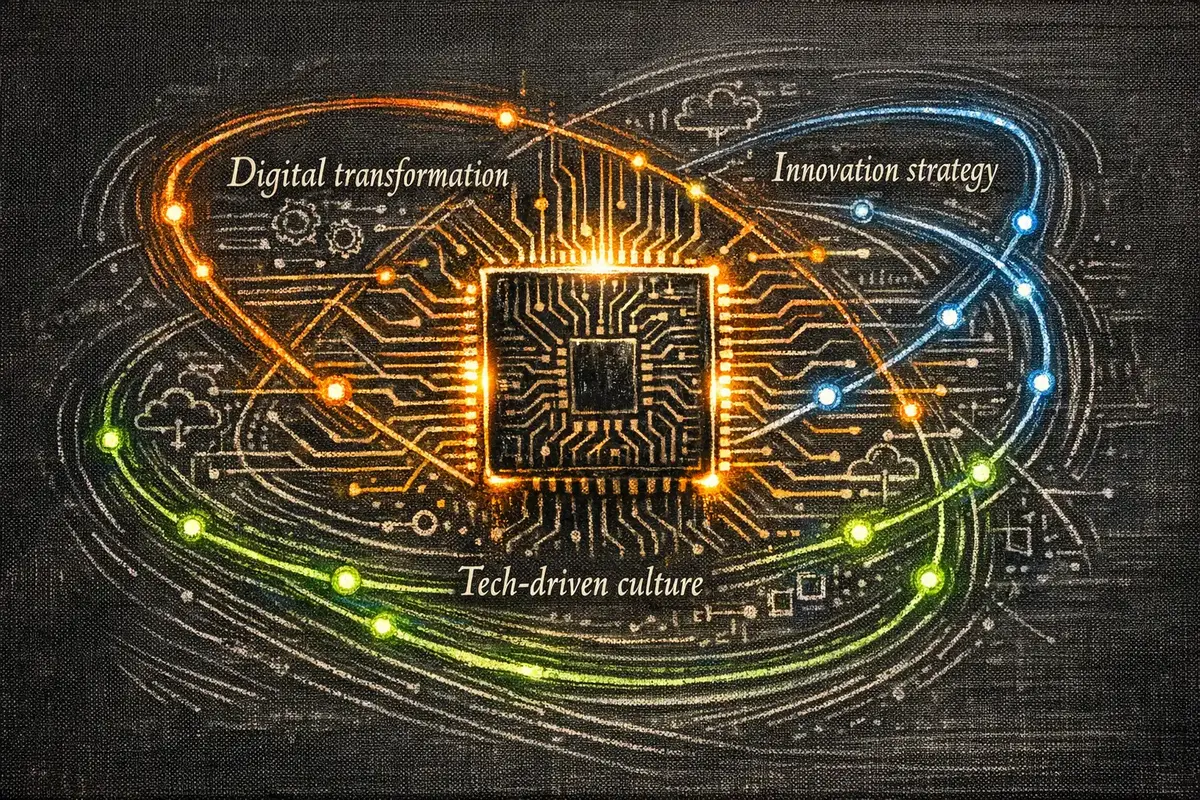
From technical authority to enterprise judgment
What boards and CEOs increasingly need from CTOs and CIOs is enterprise judgment. Not just the ability to run platforms, but the ability to decide where AI should be applied first, how cyber risk should be governed, when technical debt is tolerable, and where business change will break if the pace is wrong. Research consistently shows that transformation efforts fail less from lack of technology than from weak alignment, poor sequencing, and leadership gaps at decision points.
This is why leadership development has become a value question, not an HR question. If the role now carries enterprise influence, then development must build strategic range: financial fluency, risk framing, narrative discipline, and the ability to lead across functions that do not report to you. A leader who can connect architecture choices to operating model consequences earns trust differently from one who can only defend the stack.
The evaluation standard has changed
So the issue is no longer whether leadership matters. It does. The sharper question is which capabilities most directly improve transformation outcomes, lower execution risk, and strengthen credibility with the CEO, the board, and peers outside technology.
That creates the tension running through the rest of this article. If the role has moved beyond infrastructure ownership, why are so many development programs still preparing CTOs and CIOs to be better operators—rather than better enterprise leaders?
Why Traditional Tech Leadership Development Falls Short in the AI Era
70% of leaders say it is important to master a wider range of leadership behaviors for current and future business needs (Harvard Business Publishing, 2024). That number matters because most technology leadership development still narrows the job instead of widening it.
The standard program teaches communication, influence, and executive presence as if those skills travel cleanly across roles. They do not. A CTO or CIO does not just need to persuade; they need to make sound calls when AI risk is unclear, architecture choices have long tails, and business leaders want speed without owning the operational consequences.
That is the gap.
Generic leadership training misses the real decision load
In a mid-market manufacturing company during budget season, the CIO is asked a familiar question: should the business fund an AI pilot, modernize an aging ERP integration, or increase cyber controls after a recent supplier incident? Generic leadership advice helps with stakeholder management. It does not help much with sequencing those bets, defining governance, or explaining why one path preserves more operating flexibility six quarters from now.
This is where traditional development falls short. It often overweights personal leadership traits and underweights the operating realities that now define the role: AI governance, cyber resilience, technical debt, data quality, vendor concentration, and cross-functional execution. The result is a polished leader who can run a meeting but not always frame a technology decision in business terms the enterprise can act on.
70% said leaders need a wider range of effective behaviors to meet business needs now and in the future (Harvard Business Publishing, 2024)
The phrase “wider range” is doing real work here. For CTOs and CIOs, it means moving beyond style into judgment. Can they translate model risk into board-level language? Can they challenge a business case that ignores integration cost? Can they slow a high-visibility launch without losing credibility?
The AI era punishes shallow leadership models
AI has made the weakness of generic programs easier to see. A leader can be highly rated on empathy, presence, and coaching style — and still fail the enterprise by approving use cases without governance, underestimating data readiness, or treating architecture debt as a technical issue rather than a strategic constraint.
Research from Harvard Business Publishing signals the market clearly: broader leadership capability is now a business requirement, not a developmental nice-to-have (Harvard Business Publishing, 2024). For technology chiefs, “broader” does not mean more theory. It means role-specific capability under pressure.
So which capabilities actually change outcomes — and which ones merely make a leader look prepared? That distinction now carries real enterprise cost.
Which Leadership Capabilities Matter Most for CTOs and CIOs?
95% of tech leaders prioritize employee development, and that is the starting point for a practical Capability Priority Matrix: if you cannot rank leadership capabilities by enterprise consequence, you will fund the visible ones and miss the decisive ones (PwC, 2025). Without that filter, CTOs and CIOs tend to overinvest in broad executive polish while underbuilding the capabilities that prevent bad AI bets, weak governance, and architecture decisions that lock in future cost.
The matrix is simple. Assess each capability on two dimensions: enterprise impact and decision frequency. High-impact, high-frequency capabilities deserve the first investment because they shape outcomes repeatedly, not occasionally. For most CTOs and CIOs, four capabilities sit in that top-right quadrant: AI-era strategy, cybersecurity governance, architecture stewardship, and business translation.
The four capabilities that now carry the most weight
AI-era strategy is not about enthusiasm for new tools. It is the ability to decide where AI belongs, where it does not, and what operating changes must come first. PwC reports that 94% of tech leaders prioritize developing AI-native ecosystems—a useful signal that the issue is no longer experimentation, but system design across data, workflows, vendors, and controls (PwC, 2025).
Cybersecurity governance belongs in the same tier because cyber is now a leadership test, not a specialist lane. The capability that matters is judgment: who owns risk, how escalation works, and when business speed must yield to resilience. That is why mature leaders need fluency in cybersecurity governance, not just incident reporting.
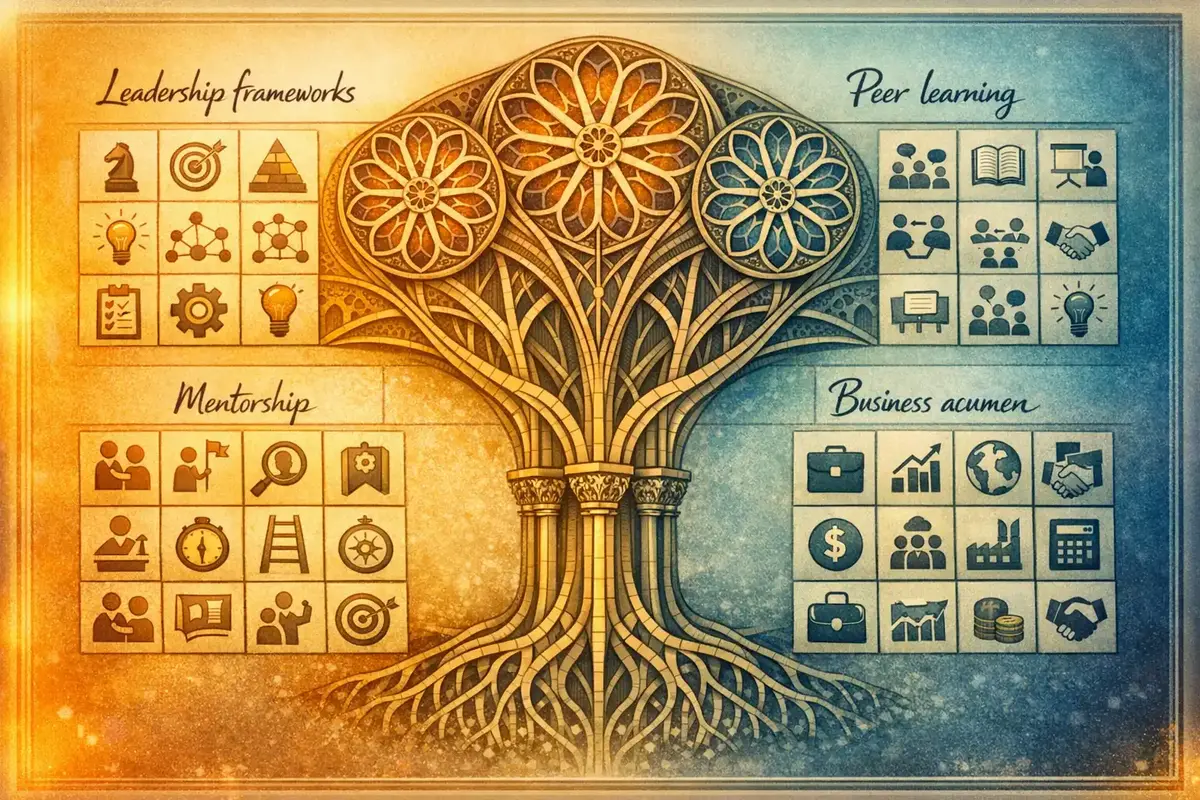
Architecture stewardship is the least glamorous and often the most valuable. PwC finds that 81% of tech leaders prioritize ways to future-proof their architectures (PwC, 2025). That priority reflects a hard truth: architecture is where strategy becomes either optionality or constraint. A CTO who cannot protect interoperability, integration discipline, and modernization sequence will eventually pay for speed with fragility.
94% prioritize AI-native ecosystems, while 81% prioritize future-proofing architectures (PwC, 2025)
How to use the framework in real decisions
In a quarterly planning cycle at an enterprise retailer, the CIO may face three competing asks: expand a customer AI pilot, respond to audit pressure, or accelerate cloud migration. The wrong move is to treat these as separate workstreams. The right move is to ask which leadership capability would improve all three decisions. Usually, it is not presentation skill. It is the combination of architecture stewardship and business translation — the ability to explain, in operating terms, why one sequence protects margin, reduces risk, and preserves future options.
That is where agile leadership becomes useful: not as a style, but as a way to make better trade-offs under changing conditions.
If every capability sounds important, prioritization is the real leadership act. But what happens when AI ambition, cyber exposure, and technical debt all demand attention at once — which risk gives way first, and at what cost?
How Do CTOs and CIOs Balance AI, Cybersecurity, and Technical Debt?
Only 1% of leaders say their organizations are mature in AI deployment. That should change how CTOs and CIOs read every new AI budget request (McKinsey, 2024).
Most companies still act as if rising spend is proof of rising capability. The evidence shows the opposite gap. McKinsey reports that 92% of executives expect to increase AI spending over the next three years — a striking signal that investment appetite is running well ahead of operating readiness (McKinsey, 2024).
Only 1% of leaders describe their organizations as mature in AI deployment, while 92% expect to boost AI spending over the next three years (McKinsey, 2024)
That gap is where leadership gets tested. Not in approving pilots, but in governing value creation when deployment maturity is still low.
When AI ambition outruns enterprise readiness
In a quarterly review at an enterprise financial services firm, the CIO is asked to support three moves at once: fund a new AI assistant for service teams, tighten cyber controls after a third-party alert, and speed up delivery on a delayed core-platform upgrade. On paper, these look like separate priorities. In practice, they compete for the same scarce assets — clean data, engineering capacity, change tolerance, and executive attention.
This is why mature CTOs and CIOs do not treat AI as a standalone innovation track. They treat it as an enterprise absorption problem. If data quality is weak, identity controls are inconsistent, and integration layers are brittle, more AI spending often creates more surface area for failure. The leadership task is to sequence adoption so the business captures value without multiplying unmanaged risk.
That is also why AI integration matters less as a technical exercise than as a governance discipline. The hard question is not “Can we deploy this?” It is “What must be true — in controls, architecture, and operating ownership — before deployment creates value rather than noise?”
Technical debt is not a backlog issue
Technical debt is often framed as an engineering nuisance. That is too small a view.
Debt shapes how fast security fixes move, how reliably data flows across systems, and how much change the organization can absorb before execution starts to slip. A regional leader in healthcare can approve an AI use case in one meeting and still lose six months because legacy interfaces, undocumented dependencies, and patchwork controls turn every implementation into custom work. The cost is not abstract. It shows up in delayed releases, audit friction, and teams spending their best hours on workarounds.
This is why technical debt management belongs in the leadership agenda, not just the architecture review. Debt is a governance choice with strategic consequences.
And that raises the harder question: if most organizations are still immature in AI, what should a serious development path actually build in CTOs and CIOs — better vision, or better operating judgment?
What Does a Strong CTO/CIO Leadership Development Path Include?
The CIO Priorities 2025 framework matters here because it gives buyers a better question than “Is this a strong leadership program?” The sharper question is harder: Which leadership programs actually change how technology organizations operate, and which ones only improve how executives talk about leadership?
Most programs still sell polish. Better communication. More presence. Cleaner stakeholder messaging. Useful, yes — but not enough if the operating model underneath remains slow, fragmented, and unclear.
Info-Tech Research Group’s CIO Priorities 2025 offers a more practical screen. It identifies five initiatives that should shape development choices: distribute data and AI access, develop a future-proof workforce, extend identity assurance with zero-trust security, proactively mitigate emerging technology risk, and build exponential product teams to realize AI value (Info-Tech Research Group, 2025). That list is useful because it shifts the evaluation standard from personal traits to enterprise mechanics.
A better test: what changes after the program?
In a budget-cycle discussion at a mid-market services company, the CTO is not struggling to “communicate strategically.” The real problem is that product, security, data, and operations are making interdependent decisions through separate forums, with no shared governance and no clear escalation path. The result is predictable: duplicated work, delayed approvals, and AI use cases that stall in review.
That is the test. A serious development path should improve governance design, team structure, and execution discipline.
If a program cannot show how leaders will distribute decision rights around data and AI, redesign roles for a future-proof workforce, and run zero-trust as an operating discipline rather than a security slogan, it is probably too generic. The same applies to emerging technology risk. Strong programs teach leaders how to set review thresholds, define ownership, and stop weak bets early — not just how to sound confident in steering committees.
How to compare options without getting distracted
Use three filters.
First, does the program build cross-functional operating models? Not abstract collaboration — actual mechanisms for product, engineering, security, and business teams to make decisions together.
Second, does it develop leaders who can shape team design? Info-Tech Research Group’s emphasis on exponential product teams is a clue here: leadership development should help CTOs and CIOs organize for throughput, not just authority (Info-Tech Research Group, 2025). That is where adjacent disciplines like R&D leadership become relevant.
The five priorities are distribute data and AI access, develop a future-proof workforce, extend zero-trust security, mitigate emerging technology risk, and build exponential product teams (Info-Tech Research Group, 2025)
Third, does it improve execution under pressure? If not, it is theater.
And that is the uncomfortable truth: many programs are well-designed for reputation, not reality. So why do so many leadership offerings still miss the actual work of the CTO and CIO role — ignorance, or incentives?
Why Do So Many Leadership Programs Miss the CTO/CIO Reality?
Most leadership programs are built for a smaller job than the one CTOs and CIOs now hold. That matters because the role has already moved into enterprise decision-making, while development design still assumes a functional manager who mainly needs better communication and stronger people skills.
Deloitte shows how far the role has risen: many CIOs now sit close to the CEO, and many also see themselves on a path toward the top job (Deloitte, 2025). Yet the development they receive often remains oddly narrow. It teaches presence, influence, and coaching as if the core challenge were interpersonal polish. It is not. The real work spans strategy, risk, architecture, and culture — often in the same meeting.
The program sounds modern. The preparation is not.
In a budget cycle at an enterprise services company, the CTO is asked to defend platform modernization, explain rising cyber controls, and justify why an AI initiative should wait until data issues are fixed. That is not a people-skills problem. It is a translation problem, a sequencing problem, and a judgment problem.
This is where many programs fail quietly. They over-index on trend language — innovation, agility, transformation — while underpreparing leaders to run distributed teams, confront technical debt, and explain technical trade-offs in business terms that a CFO, CEO, or board can act on. The language sounds current. The operating guidance is thin.
What companies say they want — and what they actually fund
Organizations often say they want enterprise leaders in technology. Their development choices suggest they still want safer functional operators.
That gap is the hidden failure mode. If a CIO is expected to think at CEO altitude but is trained at department-head depth, the enterprise should not be surprised when modernization stalls, governance fragments, and strategic bets get framed too late. So what finally separates the leaders who create readiness from the ones who merely manage complexity — capability, or context?
The Real Test of CTO/CIO Leadership Is Enterprise Readiness
70% of leaders say it is important to master a wider range of effective leadership behaviors for current and future business needs (Harvard Business Publishing, 2024). Get that wrong, and the cost is not abstract: transformation slows, trust thins out, strong people leave, and revenue plans start missing their dates.
When the board asks whether technology leadership is ready for the next transformation cycle, the real answer is not found in a polished presentation. It shows up in execution. Can the organization move on a strategic priority without creating new operational fragility? Can it govern risk without freezing delivery? Can it keep innovating when the pressure rises?
Readiness is the outcome that matters
A regional services company offers a familiar scene. In a quarterly review, the CIO can point to active AI pilots, a cyber roadmap, and a modernization plan. Yet the business is still losing time — six weeks in one case — because decisions bounce between security, product, data, and operations with no clear owner. The issue is not effort. It is enterprise readiness.
That is the standard leadership development should be held to.
If a program does not improve the organization’s ability to execute transformation, govern risk, and sustain innovation under pressure, it has not done enough. It may have improved confidence. It may even have improved communication. But the enterprise will still feel the same friction at the exact moments that matter most.
95% of tech leaders prioritize employee development (PwC, 2025)
That PwC number is encouraging, but it also raises the bar. Employee development is not the finish line; it is the input. The harder question is whether development changes how leaders set priorities, make trade-offs, and build conditions where teams can move with clarity instead of escalation fatigue.
The role is broad. The agenda must be too.
The strongest signal across the research is simple: CTOs and CIOs do not need narrower technical specialization. They need broader leadership range because the role now sits where business strategy and technology execution collide (Harvard Business Publishing, 2024).
That means a mature agenda cannot treat AI, cyber, architecture, workforce, and culture as separate lanes. They interact every day. A weak architecture decision becomes a workforce strain. A culture problem turns risk governance into theater. An AI push without operating discipline exposes both.
This is why the final test is not whether a CTO or CIO looks more strategic. It is whether the enterprise becomes more ready — faster to execute, steadier under risk, and more capable of absorbing change without losing coherence.
That is the decision lens worth carrying into your next evaluation conversation: are you developing better technology leaders, or a more ready enterprise?
Frequently Asked Questions
What has changed in the role of CTOs and CIOs in modern enterprises?
CTOs and CIOs have evolved from primarily managing technology infrastructure to playing a strategic role in enterprise decision-making. They are now expected to exercise enterprise judgment, balancing AI strategy, cybersecurity governance, technical debt, and business priorities to drive transformation and growth.
Why do traditional leadership development programs fall short for technology leaders?
Traditional programs often focus on generic leadership traits like communication and presence, which do not address the complex decision-making needed in technology leadership today. Effective development must build role-specific capabilities such as AI governance, cyber risk management, and translating technical decisions into business impact.
Which leadership capabilities are most critical for CTOs and CIOs in the AI era?
The most critical capabilities include AI-era strategy, cybersecurity governance, architecture stewardship, and business translation. These skills enable leaders to prioritize investments, manage risks, future-proof technology, and communicate technical decisions in business terms.
How should CTOs and CIOs balance competing priorities like AI investment, cybersecurity, and technical debt?
Effective leaders treat these priorities as interconnected challenges requiring careful sequencing and governance. They focus on enterprise readiness, ensuring data quality, controls, and architecture are robust before scaling AI, while managing technical debt as a strategic constraint rather than a backlog issue.
What defines a strong leadership development path for modern CTOs and CIOs?
A strong development path emphasizes building operating judgment and strategic capabilities that directly improve technology outcomes. It goes beyond executive polish to enhance decision-making in AI strategy, cyber governance, architecture management, and cross-functional leadership aligned with business goals.