

Why Human Capital ROI Is a Board Decision, Not an HR Report
If top-quartile organizations deliver EPS growth 2.6 times higher than below-average peers, what exactly is your board supposed to hear from the CHRO—an HR update, or an investment case? That gap is not academic. Gallup tied stronger employee engagement to materially better earnings performance (Gallup, 2007), yet many board discussions still treat workforce data as operating detail rather than enterprise value.
That is where the cost starts. In a quarterly review at a mid-market manufacturing company, the CFO asks whether rising turnover in critical roles will delay a plant expansion, pressure margins, or weaken delivery reliability. The CHRO answers with hiring volume, training hours, and engagement scores. None of it is useless. None of it resolves the decision. When people data stays trapped inside HR language, the board cannot price the risk, compare trade-offs, or back the right move with confidence. This article is about fixing that translation problem.
Human capital ROI is rarely lost because the workforce strategy is weak. It is lost because the story is incomplete.
The Board Does Not Fund Activity. It Funds Outcomes.
Boards do not govern HR programs. They govern performance, risk, and capital allocation. So the CHRO’s job in the boardroom is not to report more activity; it is to show how workforce conditions change the company’s ability to grow, execute, and absorb shocks.
That requires a sequence. People metrics must first become business outcomes: vacancy rates become slower product launches, manager quality becomes productivity variance, regrettable attrition becomes client instability. Then those outcomes must become financial implications: delayed revenue, higher operating cost, weaker margin, greater execution risk. Only then do they become board decisions: invest, pause, restructure, acquire, automate, or change leadership attention.
This is why a strong people metrics discussion is not a dashboard exercise. It is a decision architecture.
Fewer Metrics, Better Signals
Most boards do not need more workforce data. They need fewer metrics with sharper meaning. A board-ready CHRO does not walk in with twenty slides of talent activity and hope the pattern is obvious. They isolate the handful of indicators that answer three questions: Where are we exposed? Where can we grow faster? What will constrain execution if we do nothing?
Top-quartile organizations achieved EPS growth rates 2.6 times those of below-average organizations (Gallup, 2007)
That statistic matters less as proof that engagement is “important” and more as a discipline test. Can the CHRO explain which workforce conditions in this business are likely to widen or close that performance gap?
The standard for HR strategy is higher than operational reporting. It is strategic translation under scrutiny.
And that raises the real boardroom question: when directors hear your workforce story, do they hear evidence they can act on—or activity they have to interpret for themselves?
What Does Board-Ready Communication Actually Mean for a CHRO?
212 CHROs informed SHRM’s latest priorities report. That should mean the function is getting sharper about enterprise communication, yet many board updates still sound like internal status reports (SHRM, 2025).
Most organizations believe “board-ready” means cleaner slides, fewer acronyms, and a tighter meeting cadence. The evidence points somewhere else. The standard is not presentation polish. It is whether the CHRO can turn workforce signals into a clear strategic choice the board can evaluate.
Board-ready means decision-ready
Board-ready communication is concise, decision-oriented language that answers three questions fast: What is changing in the workforce? Why does it matter to the business now? What choice does management want the board to support?
That is a different discipline from reporting. Reporting says turnover rose, hiring slowed, and engagement dipped in one division. Board-ready communication says the company is losing experienced implementation managers in a growth segment, which will likely constrain client onboarding capacity in the next two quarters unless leadership funds retention in that role family and delays lower-priority hiring elsewhere.
A regional healthcare provider offers a familiar example. In the middle of budget season, the CHRO tells directors that time-to-fill for specialized clinical roles has increased and internal mobility remains below target. Accurate, but incomplete. The board needs the translation: staffing gaps are reducing service-line capacity, increasing overtime exposure, and forcing a trade-off between near-term margin protection and patient access growth.
That is what a strong HR strategy sounds like in the boardroom.
The three metric layers directors actually hear
The fastest way to improve board communication is to separate activity metrics, outcome metrics, and decision metrics.
| Metric layer | What it shows | Board use |
|---|---|---|
| Activity metrics | What HR did | Operating management |
| Outcome metrics | What changed in the business because of workforce conditions | Business performance and risk |
| Decision metrics | What management wants the board to weigh | Governance and capital allocation |
Activity metrics track what HR did: number of hires, training completions, performance review rates, program participation. Useful for operating management. Weak on their own in a board setting.
Outcome metrics show what changed in the business because of workforce conditions: productivity variance, regrettable attrition in critical roles, bench strength for expansion markets, manager-driven retention gaps, vacancy impact on revenue capacity.
Decision metrics go one step further. They frame the choice. If attrition in revenue-generating roles stays at current levels, what growth target becomes less credible? If leadership invests in manager capability instead of broad-based hiring, what capacity is protected, and what risk remains?
The benchmark comes from insights gathered from 212 CHROs across industries and organization sizes — a useful reminder that communication quality is now part of the role, not a side skill (SHRM, 2025)
Why directors respond to trade-offs, not process detail
Finance-minded directors are trained to compare uses of capital under uncertainty. They listen for trade-offs, risk, and capacity. They do not need a tour of HR process unless process failure is the issue.
So when a CHRO says, “We improved succession planning completion,” directors may nod and move on. When the CHRO says, “We still lack ready-now leaders for two expansion-critical roles, which raises execution risk if the market turns faster than expected,” the conversation changes.
That shift matters. Because once the board understands the business outcome, a harder question appears: which narrative should the CHRO lead with — the people activity, or the enterprise consequence it creates?
Why the Best CHRO Narratives Start with Business Outcomes, Not HR Activity
Only 13% of employees strongly agree that leadership communicates effectively with the rest of the organization. If communication is this weak inside the business, why would we assume the board is hearing a clear workforce story from management (Gallup)?
That is the hidden problem in many CHRO updates. The data may be accurate. The board still cannot tell what changes in the workforce will do to execution, retention, or performance.
In a quarterly review at a regional technology company, the CHRO presents rising turnover in product and implementation roles, a dip in employee engagement, and slower manager completion rates on development plans. A director leans forward and asks the question that ends weak narratives: So what? Not because the board dismisses people issues. Because it is still waiting for the business consequence.
The narrative chain boards can actually use
A strong human capital narrative moves in a simple chain: people metric → business outcome → financial implication.
Turnover in implementation roles is not the story. The story is that fewer experienced people are available to onboard new clients, which slows time to value, increases escalation risk, and puts renewal quality under pressure. The financial implication follows: delayed revenue recognition, higher service cost, and weaker confidence in the quarter’s growth assumptions.
That is the standard. Not “we lost 12 high performers.” But “we lost capacity in the role that converts bookings into realized revenue.”
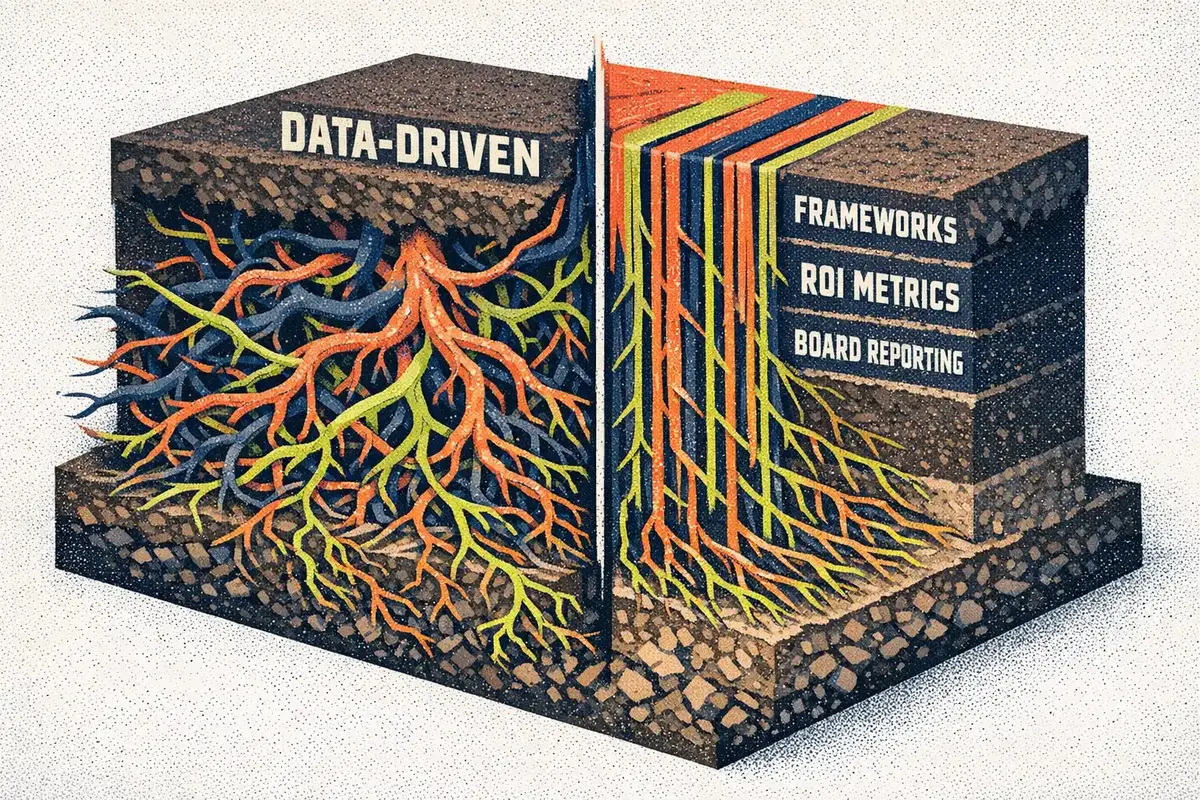
The same logic applies to communication and capability. Gallup reports that employees who strongly agree they get enough information to do their job well are 2.9 times more likely to be engaged (Gallup). For a board, that should not trigger a culture discussion first. It should trigger an execution discussion. If frontline managers and critical teams lack the information to act quickly, operating rhythm slows, errors rise, and coordination costs spread across functions.
Employees who strongly agree they get enough information to do their job well are 2.9 times more likely to be engaged (Gallup)
Frame people as capacity, not sentiment
This is where many CHROs lose altitude. They present workforce issues as morale, culture, or experience topics when the board needs to understand execution capacity.
Capability gaps are capacity gaps. Poor manager communication is a coordination gap. Regrettable attrition in a revenue-critical role is a throughput problem.
That framing changes the room. Directors stop hearing HR as a support function and start hearing management describe a constraint on strategy delivery. It also sharpens the ask. If the issue is execution capacity, then the board can weigh whether to fund retention in a narrow role segment, slow expansion, redesign work, or accept the risk.
The hard part is not finding more metrics. It is choosing the few that explain whether the business can actually deliver what the plan promises.
And once that discipline is in place, another question gets harder to avoid: which workforce measures belong in the boardroom at all—and which ones only create noise?
Which Human Capital Metrics Actually Belong in the Boardroom?
87% of CHROs are evaluating new ways to deliver HR value at lower cost. That is not a reporting problem. It is a selection problem — too many board decks still bury the few workforce signals that actually explain lost revenue, eroding trust, and avoidable talent exits (PwC, 2023).
If most CHROs are already under pressure to prove value at lower cost, why do many board decks still overload directors with too many HR numbers?
Start by cutting what the board cannot act on
A board does not need a broad HR dashboard. It needs a short list of decision-grade metrics.
The cleanest way to get there is to separate three categories. Activity metrics show what HR did: hires made, courses completed, review cycles finished. Outcome metrics show what changed in the business: productivity by role segment, regrettable attrition in critical jobs, vacancy drag on delivery, internal fill rates for scarce capabilities. Decision metrics show what management wants the board to weigh: where to invest, where to slow hiring, where capability risk now threatens the plan.
That distinction matters in practice. During a budget-cycle review at a regional services company, the CHRO presented 22 workforce indicators to the board. Directors asked three questions anyway: Which roles are constraining growth? What is the margin effect? What risk gets worse if we wait? The deck had data. It lacked hierarchy.
That is why strong people metrics are not comprehensive. They are selective.
The 5–7 metrics that usually earn their place
Most boards can govern well with five to seven metrics, provided each one connects workforce conditions to enterprise performance.
A useful mix often includes: critical-role vacancy rate, regrettable attrition in value-creating roles, productivity or revenue per FTE in key functions, internal fill rate for priority positions, bench strength for business-critical leadership roles, labor cost efficiency in constrained areas, and a forward-looking capability measure tied to strategy execution. Not every company needs the same seven. Every company does need a logic for why each metric belongs.
84% of CHROs are increasing investments in skills-based talent architecture — a strong signal that role labels alone no longer explain where capability sits or where execution risk is building (PwC, 2023)
That last point is becoming more important. If the strategy depends on redeploying skills across units, the board should see at least one metric that reflects capability mobility, not just headcount. A mature skills-based talent architecture helps the CHRO show whether the company can fill emerging work with existing talent before defaulting to expensive external hiring.
Fewer metrics create better governance
More numbers do not create more confidence. They create more interpretation.
A shorter metric set forces management to make choices in advance: what matters, what moved, and what decision now sits in front of the board. That improves governance because directors can test assumptions instead of hunting for the signal themselves. It also exposes weak logic quickly. If a metric cannot be tied to margin, productivity, retention, or risk, it probably belongs in the operating review — not the board pack.
And once the board sees the right metrics, a harder issue surfaces. Are these numbers describing manageable workforce risk — or revealing that management has been underestimating it?
How Do You Frame Workforce Risk So Directors Take It Seriously?
74% of HR leaders expect to use GenAI to support new business models in the next 12 to 18 months (PwC, 2023). That should change how a board hears workforce updates: not as staffing commentary, but as a read on whether the company has the capability, leadership depth, and role design to execute a changing strategy without breaking it.
That is the real shift. Workforce risk is not just attrition risk. It is the board-level view of where capability gaps, succession fragility, and execution disruption could impair the plan.
The risk frame directors actually respond to
A CHRO gets more traction when risk is framed in the same language directors use elsewhere: concentration, dependency, readiness, and downside exposure. If a growth initiative depends on three AI product leaders, one legacy systems architect, and a thin bench of change-capable managers, that is not a talent pipeline issue. It is a concentration risk.
In a quarterly review at an enterprise financial services firm, the CHRO faced a familiar moment. Management wanted approval to accelerate an AI-enabled service rollout, but the workforce picture was brittle: one critical transformation leader was nearing retirement, two business units were competing for the same scarce data talent, and frontline managers had not yet been trained to absorb redesigned workflows. The board did not need a warning about “talent challenges.” It needed a risk map.
This is where workforce risk becomes useful as a governance lens. It lets the CHRO show which roles are single points of failure, where succession is too shallow for strategic bets, and which capability gaps could turn a technology investment into an execution miss.
Use scenarios to show exposure, not to create drama
The most effective CHROs do not dramatize risk. They model it.
A simple three-part scenario frame works well: if this role family remains underfilled, if this successor is not ready, if this technology adoption curve outpaces manager capability — then what slips? Product launch timing? Client migration quality? Control effectiveness? Cost takeout? Scenario thinking keeps the discussion concrete and keeps the CHRO out of the alarmist trap.
For example, consider a manufacturing firm planning to automate key production lines with AI-enabled robotics. The CHRO can present a scenario: If the robotics engineering team remains understaffed and frontline supervisors lack upskilling in digital maintenance, the automation rollout will stall, delaying cost savings and risking operational continuity. This approach directly links workforce gaps to business outcomes, making risk tangible for directors.
The Conference Board ranked Leading AI and Technology Transformation as the number one CHRO priority for the rest of 2025 (The Conference Board, 2025)
That ranking matters because it widens the board’s question. Not “Do we have an AI plan?” But “Do we have a workforce architecture that can absorb AI, redeploy talent, and sustain control as work changes?”
Talent architecture is now a resilience issue
This is why talent architecture belongs in the risk conversation. Role clarity, skills visibility, internal mobility pathways, and succession depth are no longer HR design choices at the margin. They are resilience mechanisms.
For boards, this means that oversight of talent architecture is as critical as oversight of financial controls or cybersecurity. For example, if a company lacks a clear map of critical roles and their succession pipelines, it may be unable to respond quickly to leadership departures or market pivots, exposing it to strategic execution risk. On the other hand, organizations that invest in robust skills inventories and internal mobility can quickly redeploy talent to high-priority initiatives, reducing dependency on external hires and increasing agility.
When AI changes work faster than org charts change, companies with weak capability visibility make slow, expensive decisions. Companies with stronger talent architecture can redeploy, reskill, and reduce dependency on a few overstretched experts. Research and board practice are converging here: future capability is becoming a strategic resilience test, not a development aspiration (PwC, 2023); (The Conference Board, 2025).
In practice, boards should expect CHROs to provide workforce risk dashboards that highlight single points of failure, succession exposure, and the readiness of critical teams to absorb technological change. This shifts the conversation from anecdotal updates to actionable risk oversight—raising the standard for both HR and the board.
And once directors start hearing workforce risk this way, the standard rises fast. Are your claims grounded enough to survive challenge — or do they still sound like informed opinion dressed up as strategy?
What Makes a CHRO Board Narrative Credible Under Scrutiny?
The CFO has just asked the question you knew was coming: What assumption in this talent plan should the board believe, and what breaks if it is wrong? In that moment, a polished workforce update stops being useful unless it can survive cross-examination.
Board exposure is rising, and so is the standard. Nearly 70% of public companies surveyed report that CHRO engagement with the board has increased over the past three years (The Conference Board). That changes the job. More access does not simply give the CHRO a bigger platform; it creates sharper accountability for the logic behind every workforce claim.
Credibility comes from showing your math
A credible board narrative does three things in sequence: it states the outcome, names the assumption, and surfaces the trade-off.
In a budget-cycle discussion at an enterprise retail company, the CHRO argues for targeted retention investment in store manager roles rather than broad hiring expansion. A finance-minded director will not challenge the intent. They will challenge the chain of reasoning. Which stores are underperforming because manager turnover is disrupting conversion and labor productivity? What is management assuming about time to stabilize those locations? If retention spending is approved, what other workforce investment gets deferred?
That is the difference between advocacy and evidence. Human capital ROI becomes credible when the CHRO makes assumptions explicit enough for directors to test, not merely accept.
A stronger board narrative does not say, “manager quality matters.” It says, “if manager churn stays at this level for two more quarters, same-store execution weakens, and this margin assumption becomes harder to defend.”
The CHRO’s role is interpretation, not transmission
This matters even more because the agenda itself is changing. The Conference Board ranked Leading AI and Technology Transformation as the number one CHRO priority for the rest of 2025 (The Conference Board, 2025). As workforce questions move closer to strategy, technology, and execution risk, the board needs interpretation — not a recap of HR activity.
So the CHRO’s real task is to translate scattered workforce signals into a decision frame directors can use. Not more metrics. Better judgment. Not “here is what HR did,” but “here is what the business can now do, what it still cannot do, and what that means for capital allocation.”
Under scrutiny, that distinction is obvious. Are you giving the board a story to admire — or an argument it can govern against?
The Real Goal Is Better Decisions About People, Performance, and Resilience
Companies that develop employee strengths see 14% to 29% higher profit, 10% to 19% higher sales, and 6% to 72% lower turnover. If your board still hears workforce discussion as soft context rather than operating evidence, those gains stay theoretical — and the costs show up elsewhere: missed revenue, weaker execution, and talent walking out the door (Gallup, 2021).
That is the point to keep in view at the end of this discussion. The goal is not to make HR sound strategic. It is to make strategic decisions visible through people data.
The translation layer is the work
In a market-shift review at a mid-market technology company, the CEO wants to push harder into enterprise accounts. The CHRO has two ways to frame the issue. One is familiar: hiring is slower than planned, manager capability is uneven, and retention in customer-facing roles needs attention. Accurate, but not useful enough.
The better version is harder and far more valuable: critical account roles remain underfilled, which will slow implementation quality and stretch top performers; that raises renewal risk and delays revenue conversion; management therefore needs the board to choose between targeted retention investment, a slower expansion pace, or a reset of the growth assumption.
That is the enduring mental model:
people metrics → business outcomes → financial implications → board decision
Simple. Not easy.
Human capital becomes an asset when it can be explained
Boards do not create value from workforce data by receiving more of it. They create value when management can explain, consistently and under pressure, what the workforce enables, where it constrains performance, and what choice follows.
That is why the Gallup finding matters beyond engagement alone. When companies deliberately develop people, they do not just improve sentiment; they improve profit, sales, and retention in ways boards can govern against (Gallup, 2021). The asset is not merely the talent itself. The asset is the organization’s ability to understand and direct that talent with clarity.
A CHRO who can do that changes the conversation in the room. Directors stop asking for an HR update and start weighing trade-offs in capital, timing, risk, and resilience. People strategy stops sitting beside the business strategy. It becomes part of how the business strategy is judged.
That is the real standard.
If you are preparing for your next board discussion, start there. Which workforce fact in your deck actually changes a decision — and which one is still waiting to be translated?
Key Takeaways
- Human capital ROI becomes board-relevant when workforce data is translated into business outcomes, financial implications, and decisions.
- Board-ready CHRO communication is concise, decision-oriented, and focused on trade-offs directors can govern.
- The most useful workforce metrics are selective, tied to enterprise performance, and framed around risk, capacity, and execution.
- Credible board narratives show assumptions, scenarios, and the logic behind the recommendation under scrutiny.
Frequently Asked Questions
What does human capital ROI mean in a boardroom context?
Human capital ROI in a boardroom context means showing how workforce conditions affect revenue, cost, risk, and strategic execution. It translates people data into business outcomes and financial implications so directors can make capital allocation and governance decisions.
What makes CHRO communication board-ready rather than just an HR update?
Board-ready communication is decision-oriented, concise, and focused on trade-offs the board can evaluate. It answers what is changing, why it matters now, and what choice management wants directors to support.
Which workforce metrics belong in the boardroom?
The board should usually see a small set of decision-grade metrics tied to enterprise performance, such as critical-role vacancy, regrettable attrition in key roles, productivity or revenue per FTE, internal fill rates, and succession depth. Metrics that do not connect to margin, risk, capacity, or execution are better kept in operating reviews.
How should a CHRO frame workforce risk for directors?
Workforce risk should be framed like other board risks: as concentration, dependency, readiness, and downside exposure. The most effective approach uses scenarios to show what slips if critical roles stay unfilled, successors are not ready, or capability lags behind strategy.
Why should CHRO narratives start with business outcomes instead of HR activity?
Boards govern performance, not process, so they need to hear how workforce conditions affect execution, retention, and financial results. Starting with business outcomes helps directors understand the real consequence of turnover, capability gaps, or weak manager quality and makes the recommended action easier to evaluate.