

The CFO Role Has Shifted From Stewardship to Enterprise Leadership
74% of CFOs are more optimistic about their company’s financial prospects—yet the role feels harder to lead, not easier (Deloitte, 2026). You see it in the quarterly review: the CEO wants faster growth, business unit leaders want investment, and the board wants discipline, all before the numbers are fully settled.
Then the harder part starts. You are not only expected to defend the forecast; you are expected to translate it into choices people can act on, absorb the political friction that follows, and keep judgment intact when the facts are still moving.
48% of CFOs say it is a good time to take greater risks (Deloitte, 2026)
That is the tension. Confidence is up, but so is the burden of interpretation. In practice, this changes the cost of weak CFO development: slower capital decisions, misaligned operating teams, and avoidable drift between strategy and execution. When a regional manufacturing CFO spends six weeks reworking investment assumptions because operations, sales, and finance are reading the same demand signals differently, the issue is not technical finance. It is enterprise leadership. This article examines why leadership development now belongs in the same conversation as capital allocation and financial strategy.

Why the evaluation standard has changed
For years, many firms treated CFO development as a generic executive topic—communication, presence, stakeholder management. Useful, but incomplete. The modern CFO is judged on whether those capabilities improve enterprise decisions under pressure.
That is a different standard. It means the finance leader must connect three things at once: a credible economic view, organizational alignment, and ethical judgment. Not in sequence. In the same moment.
Deloitte’s CFO Signals data points to the scale of that demand. A reading of 6.3 on the relevant survey measure suggests a leadership environment shaped by confidence, but not simplicity (Deloitte, 2026). Optimism does not remove ambiguity; it raises the stakes of acting inside it. When more leaders believe opportunity is available, the CFO becomes the person who must distinguish disciplined risk from expensive enthusiasm.
From scorekeeper to cross-functional decision leader
This is why serious companies now assess CFO leadership development as a strategic capability. The question is no longer whether the CFO can report performance accurately. It is whether the CFO can help the enterprise decide well when trade-offs are real, incentives are uneven, and time is short.
The old model rewarded stewardship. The current one demands integration—growth leader, risk steward, capital allocator, and cross-functional translator in one seat.
Few CFOs fail because they cannot read the numbers. The harder question is whether they have built the capability stack to turn financial insight into enterprise movement—or whether they remain exceptional operators in a role that now requires leadership.
What Capability Stack Separates Strategic CFOs From Financial Operators?
The Strategic CFO Capability Stack forces an uncomfortable question: when management layers disappear, are you still developing CFOs as expert finance operators—or as enterprise leaders who can carry more organizational load?
It sounds like a talent question. It is really a value-creation question.
As structures flatten, the CFO is pulled closer to operating friction: unresolved trade-offs, weaker managerial buffers, faster escalation paths. Korn Ferry reports that 41% of employees said their organization has slashed management layers (Korn Ferry, 2025). That changes the job. A CFO no longer influences the business mainly through formal review cycles; the role now depends on judgment expressed in real time, across functions, with fewer intermediaries to absorb confusion.
The four-part stack most development models miss
The useful frame is not a checklist of soft and hard skills. It is an integrated system with four parts: financial acumen, enterprise influence, talent leadership, and ethical judgment.
| Capability | What it does |
|---|---|
| Financial acumen | Assesses cash, margins, capital structure, and scenario assumptions |
| Enterprise influence | Converts analysis into decisions people will support |
| Talent leadership | Builds decision quality through the team |
| Ethical judgment | Holds performance pressure and principle together |
Financial acumen remains the entry ticket. But it is no longer the differentiator. Most CFOs can assess cash, margins, capital structure, and scenario assumptions. The gap appears when those insights must be converted into decisions other people will actually support.
That is where enterprise influence matters. In a quarterly review at a mid-market healthcare company, a CFO may have the right answer on cost pressure and investment pacing, yet still lose the room because operations hears constraint, commercial leaders hear delay, and HR hears another unfunded priority. The technical analysis is sound. The enterprise outcome is weak.
Why technical excellence is not enough
Traditional CFO development often overweights precision and underweights human systems. It assumes that if the model is rigorous, alignment will follow. In practice, alignment is built through interpretation, sequencing, and trust.
SHRM found that only 42% of U.S. workers said their organizations were effective or very effective at leadership and manager development (SHRM, 2025). That matters for CFOs because weak manager benches push more conflict, ambiguity, and decision fatigue upward. The finance chief inherits not just financial complexity, but organizational fragility.
This is why talent leadership belongs inside the CFO capability stack. A strategic CFO builds decision quality through the team—by setting standards, developing judgment below the top table, and reducing dependency on personal heroics. And without ethical judgment, speed becomes dangerous. The real test is whether the CFO can hold performance pressure and principle together, especially when incentives diverge. That is the core of ethical financial leadership.
The distinction is sharp: isolated competencies create capable operators; integrated capabilities create strategic CFOs.
And when volatility rises, which profile holds—technical expert, or enterprise stabilizer? The answer gets expensive fast.
Why Do CFOs Need to Lead Through Volatility, Not Just Model It?
52% of CFOs cite supply chain disruption as a top external risk in Deloitte’s CFO Signals data, which is why the useful model now is volatility leadership, not forecast management (Deloitte, 2026). Without that model, the board gets numbers without judgment—and the business mistakes motion for control.
Traditional forecasting asks, What is most likely? Volatility leadership asks, What decision still holds if conditions move again next month? That is a harder standard. It shifts the CFO’s job from defending a single view of the future to protecting decision quality while the facts keep changing.
A board rarely needs perfect prediction. It needs a finance leader who can separate signal from noise, show the range of plausible outcomes, and state what the company will do under each one. That is where scenario discipline matters. Not as an academic exercise, but as a way to keep capital, operations, and risk choices tied together when confidence drops.
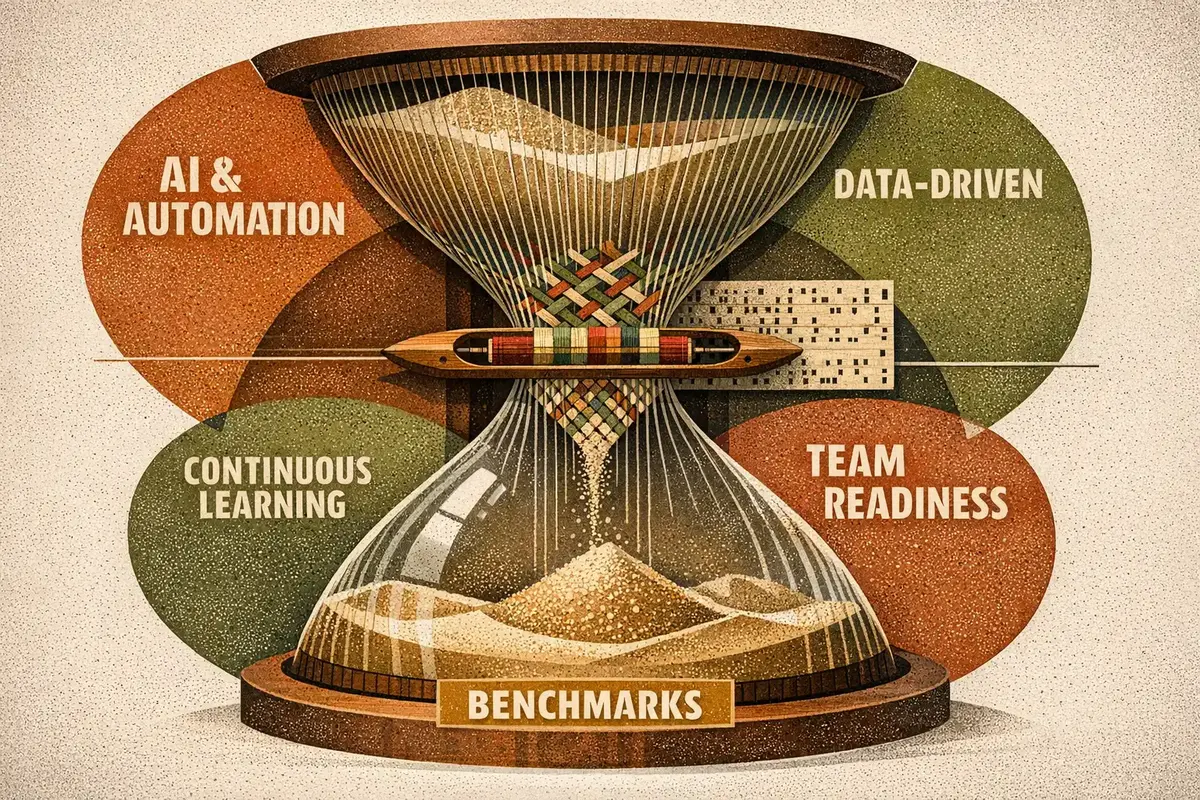
Risk stewardship now reaches beyond the balance sheet
The risk map is wider than many CFO development models assume. Deloitte reports that 37% of CFOs cite cybersecurity as a top external risk (Deloitte, 2026). PwC adds another pressure point: 58% of CFOs were spending more time on tech investment and implementation (PwC, 2024).
58% of CFOs were spending more time on tech investment and implementation (PwC, 2024)
That combination matters. The CFO is no longer only weighing liquidity, margins, and debt capacity. The role now includes judging whether a delayed systems upgrade increases cyber exposure, whether a supplier concentration creates operational fragility, and whether today’s capital allocation choice narrows tomorrow’s strategic options. Good risk management is no longer a control function at the edge. It sits inside enterprise decision-making.
The behavior test comes under pressure
In a quarterly review at an enterprise retail company, the CFO may face three simultaneous shocks: inventory delays, a security incident, and a demand slowdown. The spreadsheet is not the bottleneck. The bottleneck is leadership behavior.
Calm communication matters because teams borrow emotional cues from the CFO. Prioritization matters because not every risk deserves the same executive attention. And scenario discipline matters because reassurance without decision rules is just tone management.
This is the real divide: a CFO who models volatility, or one who leads through it. When conditions stay unstable, which development path actually builds that kind of judgment—and which one only improves executive polish?
Which Development Path Fits a CFO: Executive Education, Peer Networks, or Integral Leadership?
The development-fit matrix is the right way to evaluate CFO development, because most organizations still buy prestige first and ask about transfer later. The evidence points somewhere harder: if the CFO role is now a credible route to CEO, the real question is not which option looks strongest on a bio, but which one changes enterprise judgment under pressure.
Harvard Business Review notes that 8.4% of CEO vacancies at Fortune 500 and S&P 500 firms were filled by CFOs in 2023 (Harvard Business Review, 2024). That is a useful signal. CFO development is no longer a narrow finance decision; it is succession architecture.
Four paths, four different jobs
Executive education is strongest when a CFO needs strategic breadth fast. It can widen perspective on geopolitics, transformation, governance, and market structure. It also carries external credibility, which matters when a newly promoted CFO needs to signal readiness to the board. What it rarely does on its own is rewire behavior back inside the company.
Peer networks and summit-style communities solve a different problem. They reduce isolation. They let CFOs test assumptions with people facing similar board dynamics, activist pressure, or operating friction. For a first-time public-company CFO handling tougher investor relations, that peer calibration can be more useful than another classroom.
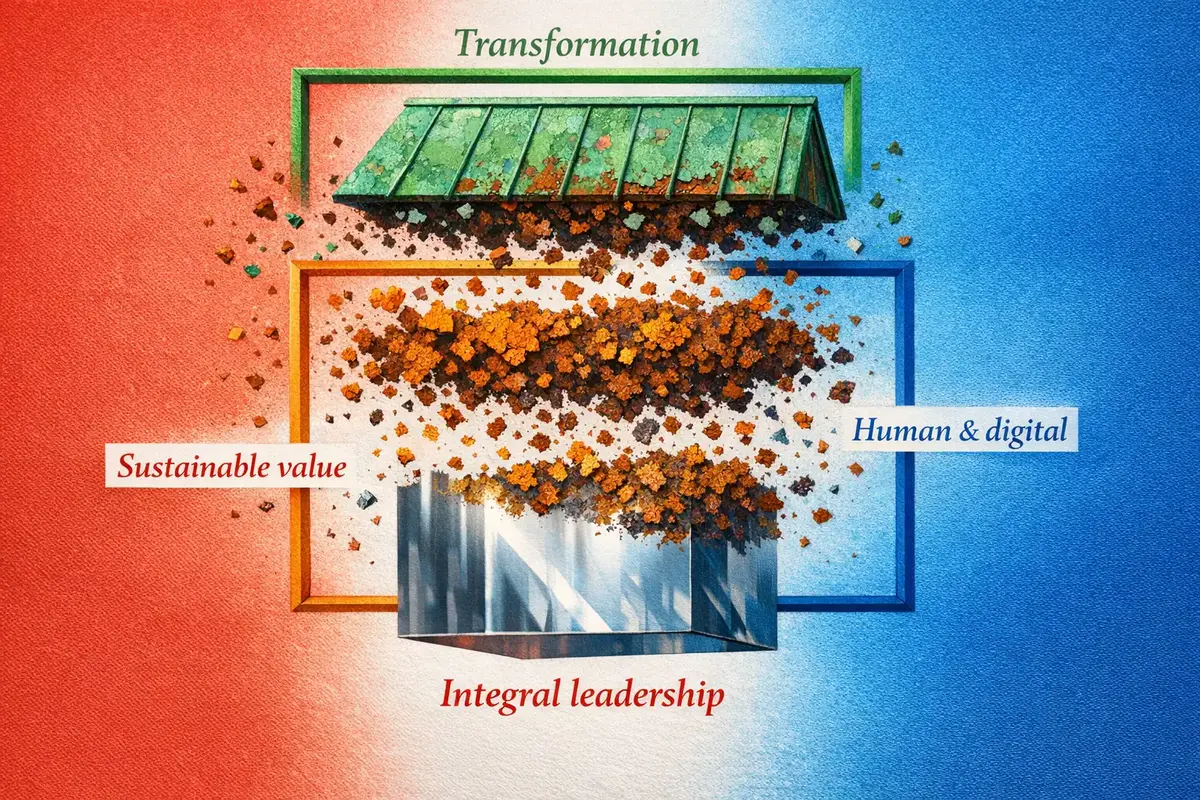
Specialist finance training is narrower and often underrated. It is the right choice when the gap is technical adjacency: AI economics, treasury complexity, deal modeling, or post-deal M&A integration. McKinsey found that 44% of CFOs said they used gen AI for more than five use cases in 2025 (McKinsey, 2025). That kind of shift creates a practical need for targeted capability, not broad leadership language.
| Development path | Best for | Main limit |
|---|---|---|
| Executive education | Strategic breadth and external credibility | Rarely rewires behavior inside the company |
| Peer networks | Reducing isolation and testing assumptions | Does not by itself change day-to-day behavior |
| Specialist finance training | Technical adjacency and targeted capability | Narrower than broader leadership development |
Where behavior change actually happens
The limit of all three paths is familiar. They can improve knowledge, confidence, and network access without changing how a CFO shows up in conflict, ambiguity, or cross-functional tension.
That is where Integral Leadership earns attention. Its value is not prestige. Its value is behavioral range: how the CFO listens when the room is polarized, how they hold authority without closing debate, how they adapt communication across operators, investors, and the board. In a budget-cycle dispute at a regional services company, a CFO may not need more strategy content; they may need a different way to intervene so the commercial leader, CHRO, and COO stop defending turf and start making trade-offs.
This is why the best leadership development choice depends on the actual gap. Transition support, or strategic breadth? Technical expansion, or durable behavior change?
Because the next question is sharper than most firms admit: are CFOs using AI and new tools to improve decision quality—or just to move faster with the same old blind spots?
What Does the Evidence Say About AI, Engagement, and CFO Leadership Readiness?
In the Monday operating review, the dashboard is sharper than it was six months ago, but the room is less certain. The CFO can see faster outputs from new AI tools, yet the harder questions keep surfacing: who owns the model logic, which decisions still require human judgment, and whether the team actually knows how to work differently.
The data explains why this gap persists. McKinsey found that 44% of CFOs said they used gen AI for more than five use cases in 2025 (McKinsey, 2025). At the same time, the World Economic Forum reports that 84% of financial organizations are implementing or planning an AI governance framework (World Economic Forum, 2025).
84% of financial organizations are implementing or planning an AI governance framework (World Economic Forum, 2025)
That sounds encouraging. It is also revealing. Adoption is moving quickly because finance can see the productivity upside; governance is rising because leaders know speed without control creates new exposure. The real issue is that many organizations are trying to scale both at once, which puts the CFO in a familiar but uncomfortable position: approving technology investment before operating discipline is fully built.
The readiness gap is not technical first
The deeper constraint is people. The World Economic Forum found that 90% said their reskilling strategy needs significant adjustment or total transformation (World Economic Forum, 2025). Gallup, meanwhile, reported an 11-year low in U.S. employee engagement in 2024 (Gallup, 2025).
That combination should worry any CFO. A low-engagement environment absorbs change badly. A weak reskilling model means teams may use new tools without improving decision quality, escalation standards, or control habits. In a mid-market technology company during budget season, a CFO may approve AI spend for forecasting and reporting, only to find three months later that finance managers are producing more analysis, not better analysis—and spending extra hours reconciling outputs they do not fully trust.
This is why leadership readiness matters more than tool adoption. The CFO has to turn AI from a software line item into a managed operating capability. That means setting decision rights, defining where human review is non-negotiable, and building team confidence around data-driven decision-making rather than dashboard theater.
What strong CFOs do differently
Strong CFOs treat AI as an organizational design issue. They ask which workflows should change, which roles need new judgment standards, and where control points must tighten as automation expands. They do not confuse experimentation with capability.
The test is simple: does AI reduce friction and improve judgment—or just accelerate noise? And if the CFO cannot convert technical momentum into disciplined execution, how does financial performance become durable enterprise value?
How Do CFOs Turn Financial Performance Into Sustainable Value Creation?
Strong quarterly performance can hide weak value creation. That matters because a CFO can improve the numbers and still leave the enterprise more fragile than it looks.
So what separates a good financial outcome from durable value? If margins rise, cash improves, and the market responds well, isn’t that enough? Not always. The harder test is whether those gains were produced in a way the business can repeat without eroding trust, strategic options, or execution capacity.
Value is built at the intersection of three decisions
Sustainable value creation starts when the CFO links capital allocation, investor communication, and operating choices into one coherent story. Most companies treat these as adjacent activities. The better CFO treats them as one system.
A capital decision tells the business what matters. Investor communication tells the market how management thinks. Operating choices show whether leadership can actually deliver what it has implied. When those three drift apart, performance becomes expensive to defend. Deloitte’s latest CFO Signals work captures the backdrop: optimism is up, and many finance leaders see room for greater risk-taking (Deloitte, 2026). That makes coherence more important, not less.
In a mid-market manufacturing company during the annual planning cycle, the CFO approves automation spend, signals margin discipline to investors, and asks plant leaders to protect service levels during the transition. Each decision is reasonable on its own. Together, they can still fail if the operating model cannot absorb the change. The issue is not the spreadsheet. It is whether the financial logic has been translated into execution reality.
Ethics shows up when the pressure gets real
This is where ethical financial leadership stops being abstract. When pressure to hit targets rises, the temptation is rarely dramatic misconduct. It is quieter than that—delaying necessary investment, pushing working-capital tactics too hard, or framing temporary gains as structural improvement.
Those choices may help the quarter. They also teach the organization what kind of truth is welcome.
The CFO sets that tone. A credible finance leader can tell the board and investors, in plain language, what is improving, what is still uncertain, and what trade-offs management is choosing to make. That is how trust compounds. It is also the discipline behind ethical financial leadership and balancing short-term profit long-term growth.
Post-deal performance is where the claim gets tested
Nothing exposes this faster than acquisition activity. A deal model can look compelling before close and still destroy value afterward if incentives, decision rights, and operating rhythms remain misaligned.
Post-deal execution is the real exam. The CFO has to convert synergy logic into shared priorities, integration sequencing, and honest reporting on what is actually happening inside the business. That is why M&A integration is not an operational afterthought; it is a leadership test.
And that leaves one final question. When boards assess CFO development, are they rewarding visible credentials—or the judgment that keeps performance real when the story gets harder?
The Best CFO Development Decisions Are Built for Judgment, Not Just Credentials
Bad CFO development choices do not fail quietly. They show up in delayed investment calls, eroded trust in the executive team, and strong finance talent walking out because the function keeps producing analysis without producing clarity.
If most leadership development fails to change managers, CFO buyers should stop buying for prestige and start buying for transfer.
What to evaluate before you approve anything
The first test is strategic relevance. Does the development path match the actual pressure of the role, or does it simply offer broad executive polish? A CFO facing a team restructure in an enterprise technology company does not need another abstract session on influence if the real challenge is aligning product, sales, and finance around a slower growth plan without breaking confidence.
The second test is implementation support. Insight is cheap; changed operating behavior is not. SHRM reports that organizations are often not effective at leadership and manager development, which should make any board or CEO more skeptical about programs that sound impressive but leave no mechanism for application back on the job (SHRM, 2025). If the learning cannot survive the next budget cycle, it is not development. It is an event.
The third test is behavioral change. This is where many decisions go soft. The useful question is not whether the CFO liked the experience. It is whether people around that CFO now experience more clarity, better trade-off conversations, and steadier judgment under pressure.
The evidence you actually want to see
Look for proof of cross-functional translation. Can the CFO explain a capital constraint in language that a commercial leader can use, not just tolerate? Can they turn a risk signal into an operating decision without creating defensive behavior across the room? That is the practical standard behind serious leadership development.
Then look for ethical judgment. Not slogans. Behavior. In a quarterly review at a regional healthcare provider, a CFO may have to decide whether to defend a short-term margin improvement that came from delaying necessary hiring. The technical case may be easy. The leadership case is harder: what truth gets told, what trade-off gets named, and what precedent gets set.
Flat structures make weak judgment visible faster.
Korn Ferry notes that many organizations have cut management layers (Korn Ferry, 2025). That means fewer buffers, faster escalation, and more moments when the CFO must translate ambiguity in real time. So the final screen is volatility readiness: does this path build better judgment when facts are incomplete, incentives are mixed, and the room wants certainty too early? That is as much a risk management question as a talent one.
In the end, the best decision is rarely the most decorated one. It is the one that changes how the CFO thinks, speaks, and decides when the stakes are real.
So before you approve the next program, ask the harder question—are you buying a credential, or better enterprise judgment?
Key Takeaways
- The CFO role has shifted from stewardship to enterprise leadership, with judgment now central to performance.
- Strategic CFOs combine financial acumen, enterprise influence, talent leadership, and ethical judgment.
- Volatility, AI adoption, and flatter organizations all raise the need for stronger leadership readiness.
- The best CFO development choice is the one that changes behavior, not just credentials.
Frequently Asked Questions
How has the CFO role changed in modern organizations?
The CFO role has expanded from financial stewardship to enterprise leadership. Today, CFOs are expected to translate financial insight into decisions, align cross-functional leaders, and maintain ethical judgment while the business is under pressure.
What capabilities make a CFO strategic rather than purely technical?
A strategic CFO combines financial acumen, enterprise influence, talent leadership, and ethical judgment. Technical expertise is necessary, but the differentiator is the ability to turn analysis into decisions that others support and execute.
Why is volatility leadership important for CFOs?
Volatility leadership helps CFOs protect decision quality when conditions keep changing. Instead of relying on a single forecast, it uses scenario discipline, prioritization, and calm communication to guide the business through uncertainty.
What type of development is most effective for CFO leadership growth?
The best development path depends on the gap: executive education builds breadth, peer networks reduce isolation, and specialist training strengthens targeted technical areas. Lasting behavior change usually requires development that improves how a CFO leads in conflict, ambiguity, and cross-functional tension.
How can CFOs use AI without weakening leadership effectiveness?
CFOs should treat AI as an operating capability, not just a technology purchase. That means setting decision rights, defining where human review is required, and ensuring the team uses AI to improve judgment rather than simply produce more output.