

{‘rendered’: ‘
If you’ve ever watched a promising initiative stall because team members held back their real opinions, or seen talented people quietly disengage after a tough meeting, you’ve probably sensed the invisible barriers that stifle performance. For Chief Human Resources Officers (CHROs), the challenge isn’t just about hiring great people—it’s about creating an environment where everyone feels safe to contribute, challenge, and innovate. By the end of this guide, you’ll understand how CHROs, through integral leadership, can embed psychological safety as a foundational element of high-performance cultures—unlocking honest feedback, accelerating innovation, and sustaining resilient teams. According to DDI World research, only 14% of CEOs believe they have the leadership talent needed to drive growth, making structured leadership development a strategic imperative.
\n
\n
Why Is Psychological Safety the Hidden Engine of High-Performance Cultures?
\n
Most organizations assume that high performance comes from hiring the best talent and setting ambitious targets. But here’s the thing: even the most skilled teams can underperform if people don’t feel safe to speak up, admit mistakes, or challenge the status quo. Psychological safety—the shared belief that it’s safe to take interpersonal risks—has emerged as a critical driver of team effectiveness, innovation, and retention. The ICF/PwC Global Coaching Study confirms that executive coaching delivers an average ROI of 529%, with organizations reporting measurable improvements in leadership effectiveness and business outcomes.
\n
\n
In a study of nearly 300 leaders over 2.5 years, teams with high degrees of psychological safety reported higher levels of performance and lower levels of interpersonal conflict. (Center for Creative Leadership, 2024)
\n
\n
For CHROs, psychological safety isn’t a “nice-to-have” or a side project. It’s a strategic lever that shapes everything from recruitment to retention, from DEI to crisis response. The question isn’t whether psychological safety matters—it’s how to make it a lived reality at scale.
\n
\n
What Is Psychological Safety—and Why Does It Matter for Teams and Organizations?
\n
Let’s cut through the jargon: psychological safety means people feel comfortable expressing ideas, asking questions, admitting mistakes, and challenging others—without fear of humiliation or retaliation. It’s not about being “nice” or avoiding conflict; it’s about creating an environment where candor and learning are possible.
\n
Research consistently demonstrates that psychological safety fuels:
\n
- \n
- Innovation: When people aren’t afraid to propose bold ideas or question assumptions, creativity flourishes.
- Learning and adaptability: Teams learn from failures and adapt quickly when mistakes aren’t hidden.
- Retention and engagement: Employees are more likely to stay and thrive when they feel heard and respected.
\n
\n
\n
\n
Yet, the gap between aspiration and reality is wide. According to a 2019 Gallup poll, just 3 out of 10 employees strongly agreed that their opinions count at work (Gallup, 2019). That means most organizations are running on a fraction of their collective intelligence.
\n
Most teams assume that psychological safety is a “soft” issue best left to individual managers. But research shows that variability in psychological safety often starts at the top: 62% of senior leadership teams in a CCL sample demonstrated significant variability in perceived psychological safety, impacting innovation and collaboration (Center for Creative Leadership, 2024). This means CHROs can’t delegate psychological safety to middle management—they need to architect it systemically.
\n
\n
How Do CHROs Embed Psychological Safety into Organizational Systems and Culture?
\n
So, what does it look like when CHROs move beyond workshops and slogans to make psychological safety a core tenet of high-performance cultures? The answer lies in treating psychological safety as a systemic design challenge, not a one-off intervention.
\n
1. Integrating Psychological Safety into HR Systems
\n
- \n
- Recruitment and Onboarding: CHROs can embed psychological safety by evaluating candidates not just for skills, but for openness, curiosity, and feedback orientation. Onboarding should explicitly set expectations for candor and learning, making it clear that speaking up is valued from day one.
- Performance Management: Traditional systems often reward conformity and penalize mistakes. High-impact CHROs redesign appraisal processes to recognize constructive dissent, learning from failure, and peer feedback.
- DEI and Inclusion: Psychological safety is the bedrock of meaningful diversity, equity, and inclusion. Without it, underrepresented voices remain silent—even in diverse teams. Nearly half of female business leaders face difficulties speaking up in virtual meetings, and 1 in 5 reported feeling overlooked or ignored during video calls (Catalyst, 2021). CHROs can use this data to audit meeting norms, sponsorship programs, and promotion criteria for hidden barriers.
\n
\n
\n
\n
2. Leadership Development and Integral Leadership
\n
Embedding psychological safety requires more than policy tweaks; it demands a shift in leadership mindsets and behaviors. Drawing on integral leadership frameworks, CHROs can equip leaders at every level to:
\n
- \n
- Model vulnerability and curiosity
- Encourage dissent and debate
- Respond non-defensively to feedback
- Hold space for both challenge and support
\n
\n
\n
\n
\n
This approach, grounded in TII’s two-decade integral methodology, ensures that psychological safety isn’t just a talking point, but a lived experience across the organization.
\n
\n
\n
\n
What Are the Four Stages of Psychological Safety—and How Can CHROs Use Them?
\n
One of the most practical frameworks for understanding psychological safety is the Four Stages Model, popularized by the Center for Creative Leadership and other research-backed organizations. The stages are:
\n
- \n
- Inclusion Safety: People feel accepted for who they are.
- Learner Safety: People feel safe to ask questions and experiment.
- Contributor Safety: People feel safe to contribute ideas and take initiative.
- Challenger Safety: People feel safe to challenge the status quo and suggest changes.
\n
\n
\n
\n
\n
Most organizations stop at the first two stages, assuming that a friendly, supportive environment is enough. But high-performance cultures require moving all the way to challenger safety—where disagreement is not just tolerated, but welcomed as a source of innovation.
\n
CHROs can use this model to audit where their organization stands and design targeted interventions. For example, if teams are polite but avoid tough conversations, it’s a sign that challenger safety is missing—and that’s where real growth happens.
\n
\n
How Can Psychological Safety Be Measured and Sustained at Scale?
\n
It’s one thing to talk about psychological safety; it’s another to measure and sustain it across diverse teams, functions, and geographies. CHROs need reliable tools and feedback loops to track progress and course-correct.
\n
Measurement Tools
\n
- \n
- Pulse Surveys: Regular, anonymous surveys can gauge whether employees feel safe to speak up, admit mistakes, and challenge decisions.
- Focus Groups and Listening Sessions: Qualitative data provides context for survey results and surfaces hidden issues.
- 360° Feedback: Multi-rater feedback helps leaders see blind spots in their behavior.
\n
\n
\n
\n
\n
According to a 2019 Gallup poll, just 3 out of 10 employees strongly agreed that their opinions count at work (Gallup, 2019). This underscores the need for ongoing measurement and intervention.
\n
\n
Sustaining Psychological Safety Through Change and Crisis
\n
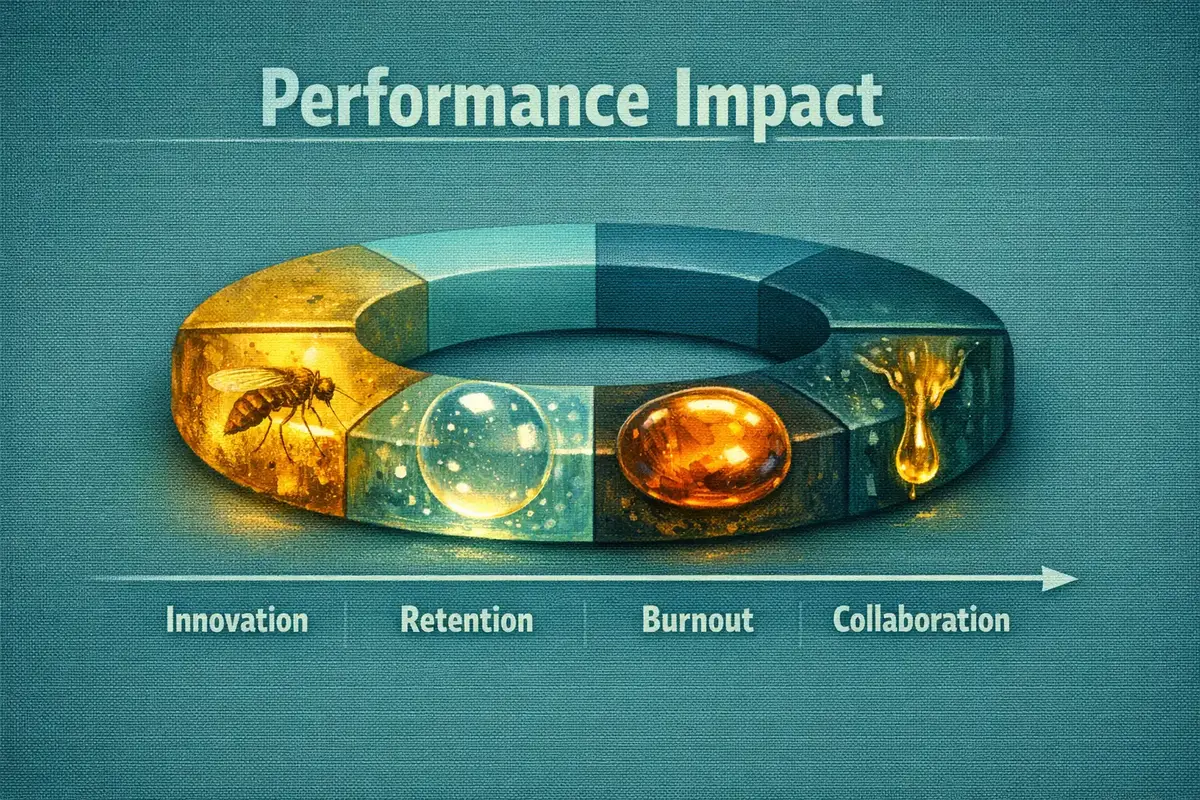
Most organizations assume that psychological safety is a “peacetime” advantage. But research shows it’s even more critical during periods of crisis, restructuring, or rapid change. In a study of over 27,000 U.S. healthcare workers, higher psychological safety was associated with lower burnout and greater retention, even amid crisis (Harvard T.H. Chan School of Public Health, 2024). For CHROs, this means investing in psychological safety isn’t just about engagement—it’s about resilience and continuity.
\n
\n
\n
\n
What Are the Common Misconceptions About Psychological Safety?
\n
Let’s address a few myths that often derail well-intentioned efforts:
\n
- \n
- Myth 1: Psychological safety means no accountability.
- Reality: True psychological safety enables higher standards by making it safe to admit mistakes and learn from them. Teams with both high psychological safety and high accountability outperform those with only one or neither.
- Myth 2: Psychological safety is about being “nice.”
- Reality: It’s about candor, not comfort. The goal is to create space for honest feedback, robust debate, and constructive disagreement.
- Myth 3: Psychological safety is a “soft” issue.
- Reality: The business case is clear—psychological safety drives innovation, retention, and resilience, especially in uncertain environments.
\n
\n
\n
\n
\n
\n
\n
Why do these misconceptions persist? Most organizations equate psychological safety with harmony, missing the fact that real growth happens at the edge of discomfort—where people feel safe enough to challenge and be challenged.
\n
\n
How Do CHROs Balance Psychological Safety with High Standards and Accountability?
\n
One of the toughest balancing acts for CHROs is ensuring that psychological safety doesn’t come at the expense of performance. The key is to pair safety with clear expectations and feedback loops.
\n
- \n
- Set clear, ambitious goals—and make it safe to discuss setbacks and failures.
- Reward learning and experimentation, not just results.
- Model “challenge with care”—leaders should invite dissent and respond thoughtfully, not defensively.
- Use integral leadership to weave together empathy, candor, and accountability.
\n
\n
\n
\n
\n
This balance is what distinguishes high-performance cultures from merely “nice” ones. It’s also where the CHRO’s influence is most visible: shaping the systems, rituals, and norms that make both safety and excellence possible.
\n
\n
\n
\n
How Does Psychological Safety Intersect with DEI, Hybrid Work, and Innovation?
\n
The modern workplace is more diverse, distributed, and dynamic than ever. Psychological safety is the connective tissue that enables these realities to become strengths, not sources of friction.
\n
- \n
- DEI: Without psychological safety, DEI efforts stall. Underrepresented groups may be present but not heard. Linking psychological safety to inclusive leadership is essential for real progress.
- Hybrid/Remote Work: Virtual environments can amplify power dynamics and silence voices. Nearly half of female business leaders face difficulties speaking up in virtual meetings, and 1 in 5 reported feeling overlooked or ignored during video calls (Catalyst, 2021). CHROs must design digital rituals and norms that foster inclusion and trust.
- Innovation: Innovation thrives where dissent is safe. Embedding psychological safety into leadership communication and team rituals unlocks new ideas and accelerates problem-solving.
\n
\n
\n
\n
If you’re wondering whether psychological safety is just another HR trend, consider this: organizations that get it right don’t just outperform—they outlast.
\n
\n
What Practical Steps Can CHROs Take to Champion Psychological Safety?
\n
Let’s get specific. Here are actionable moves CHROs can make, drawing on integral leadership and systemic design:
\n
- \n
- Diagnose the Current State: Use pulse surveys, focus groups, and 360° feedback to map psychological safety across teams and functions.
- Model Vulnerability at the Top: Encourage C-suite leaders to share failures, invite feedback, and admit when they don’t have all the answers.
- Redesign HR Processes: Audit recruitment, onboarding, performance management, and DEI initiatives for alignment with psychological safety.
- Build Feedback Loops: Train leaders to give and receive feedback constructively, using real-time examples and role-play.
- Sustain Through Change: During restructuring, crisis, or rapid growth, double down on psychological safety rituals—open forums, listening sessions, and transparent communication.
- Measure and Adjust: Track progress with quantitative and qualitative data, and be ready to iterate.
\n
\n
\n
\n
\n
\n
\n
For CHROs, the goal isn’t perfection—it’s progress. Psychological safety is a journey, not a destination, and it requires continuous attention and adaptation.
\n
\n
How Does Psychological Safety Drive Measurable Business Outcomes?
\n
The ROI of psychological safety is no longer a matter of debate. Research links it to key business metrics:
\n
- \n
- Performance: Teams with high psychological safety outperform peers on complex, collaborative tasks.
- Innovation: Safe environments produce more new ideas and faster problem-solving.
- Retention: Employees are more likely to stay when they feel their voices matter. In high-stress contexts, psychological safety reduces burnout and turnover (Harvard T.H. Chan School of Public Health, 2024).
- Collaboration: Variability in psychological safety at the leadership level directly impacts cross-functional collaboration and organizational agility (Center for Creative Leadership, 2024).
\n
\n
\n
\n
\n
The implication? Psychological safety isn’t just a cultural “nice-to-have”—it’s a business imperative, especially when the stakes are high and the pace is relentless.
\n
\n
What Are the Risks of Mandating Psychological Safety?
\n
It’s tempting to try to “mandate” psychological safety through policies or compliance checklists. But here’s where many organizations go wrong: psychological safety can’t be forced. It must be modeled, reinforced, and embedded into everyday behaviors.
\n
- \n
- Pitfall 1: Over-reliance on training without changing systems or incentives.
- Pitfall 2: Confusing silence with agreement—if people aren’t speaking up, it may signal fear, not consensus.
- Pitfall 3: Treating psychological safety as a one-off initiative rather than a continuous practice.
\n
\n
\n
\n
For CHROs, the lesson is clear: focus on systemic change, not just surface-level fixes.
\n
\n
How Can CHROs Lead the Way in Building High-Performance Cultures?
\n
Ultimately, the CHRO’s role is to act as a systemic architect—embedding psychological safety into every aspect of the employee experience, from recruitment to retirement. This means:
\n
- \n
- Championing integral leadership at all levels
- Designing HR systems that reward candor, learning, and inclusion
- Equipping leaders to hold space for both challenge and support
- Measuring progress and sustaining momentum through change
\n
\n
\n
\n
\n
By doing so, CHROs don’t just foster high-performance cultures—they future-proof their organizations for whatever comes next.
\n
\n
FAQ: CHRO’s Role in Fostering Psychological Safety
\n
What is psychological safety, and how is it different from trust?
\n
Psychological safety refers to a group-level belief that it’s safe to take interpersonal risks—such as speaking up, asking questions, or admitting mistakes—without fear of negative consequences. Trust, on the other hand, is more about the reliability of individuals. While trust is “I believe you’ll do what you say,” psychological safety is “I believe I can be myself here.”
\n
How can CHROs measure psychological safety across the organization?
\n
CHROs can use a mix of pulse surveys, focus groups, and 360° feedback tools to assess psychological safety. These tools ask employees whether they feel comfortable speaking up, admitting mistakes, and challenging the status quo. Regular measurement helps identify areas for improvement and track progress over time.
\n
What are the biggest barriers to psychological safety in hybrid or remote teams?
\n
Hybrid and remote teams often struggle with power dynamics, lack of informal connection, and “Zoom fatigue.” These factors can silence voices, especially from underrepresented groups. CHROs can address this by setting clear norms for participation, rotating meeting facilitation, and using anonymous input tools to ensure everyone is heard.
\n
How does psychological safety support diversity, equity, and inclusion (DEI) goals?
\n
Psychological safety is foundational for DEI because it ensures that all voices—not just the majority—are welcomed and valued. Without psychological safety, underrepresented employees may remain silent, undermining the benefits of a diverse workforce. CHROs can link psychological safety to inclusive leadership and mentoring programs to drive real progress.
\n
Can an organization have too much psychological safety?
\n
While psychological safety is critical, it should be balanced with clear expectations and accountability. Too much focus on comfort without challenge can lead to groupthink or complacency. The goal is to create an environment where it’s safe to take risks and challenge ideas, but where high standards and feedback are the norm.
\n
What role do middle managers play in sustaining psychological safety?
\n
Middle managers are crucial “translators” of CHRO strategy into daily practice. They model vulnerability, facilitate open dialogue, and respond constructively to feedback. CHROs should equip managers with training, coaching, and support to reinforce psychological safety at the team level.
\n
How can psychological safety be maintained during organizational change or crisis?
\n
During change or crisis, psychological safety is often at risk—but also most needed. CHROs can maintain it by increasing transparency, holding regular listening sessions, acknowledging uncertainty, and doubling down on leadership behaviors that invite candor and learning.
\n
\n
By weaving psychological safety into the fabric of organizational life, CHROs unlock the full potential of their people and position their organizations for sustained success—no matter what challenges lie ahead.
\n’, ‘protected’: False}


