

HR Leadership This approach is central to developing leaders who can navigate complexity and drive measurable business results. Executive coaching delivers ROI of 529% (ICF/PwC).
The Evolving Role of Functional Leaders
Today’s business landscape demands more from functional leaders than technical expertise. As organizations face rapid technological change, increased complexity, and shifting stakeholder expectations, leaders in HR, finance, operations, and innovation are being called upon to act as strategic partners, not just functional experts. The most effective organizations are those where functional leaders bridge their domain knowledge with enterprise-wide vision, enabling cross-functional agility and data-driven decision making.
This shift is not theoretical—it’s grounded in measurable business outcomes. Research consistently demonstrates that organizations investing in function-specific leadership development outperform those relying on generic training. Yet, most companies still struggle to move beyond siloed approaches, leaving untapped potential on the table.
Why Functional Leadership Matters Across Domains
Functional leadership is the engine that translates business strategy into operational reality. HR leaders shape culture, talent, and engagement; finance executives manage resources and risk; operations leaders optimize processes and delivery; innovation heads drive transformation and growth. When these leaders excel, the entire organization benefits.
-
HR Leadership: Modern HR leaders are expected to align people strategies with business objectives, championing diversity, engagement, and development. They are no longer just policy enforcers but architects of organizational culture and resilience. For a deeper dive into empathetic leadership in HR, see this resource on HR leadership.
-
Finance Leadership: The finance-to-CEO pipeline is gaining traction as organizations recognize the value of financially literate leaders who can balance growth with risk management. Finance leaders are increasingly called to drive digital transformation, scenario planning, and enterprise value creation. Explore actionable frameworks for finance leadership.
-
Operations Leadership: Operational leaders ensure that strategy is executed efficiently, safely, and sustainably. Their ability to adapt processes, manage cross-functional teams, and leverage technology is central to organizational agility.
-
Innovation Leadership: Innovation leaders foster a culture of experimentation and continuous improvement, often acting as the connective tissue between R&D, product, and commercial teams.
“Companies with higher employee engagement levels experience 21% higher profitability and 17% higher productivity.” (Gallup, 2024)
This data highlights the direct link between functional leadership and business outcomes. Engagement, productivity, and profitability are not abstract goals—they are the result of empowered leaders in every function.
The State of Leadership Development: What the Data Shows
Despite widespread recognition of its importance, leadership development remains inconsistent across functions and organizations. According to Harvard Business School, “86% of organizations offer leadership development programs, but only 57% assess leadership strengths and gaps.” (Harvard Business School, 2023) This gap between offering programs and actually measuring their impact is a critical vulnerability.
Further, only 24% of senior executives consider their firms’ leadership development programs successful, and just 13% express confidence in emerging leaders at their firms (Harvard Business Review, 2017). This “leadership development paradox” reveals that while organizations invest heavily in training, they often do so late in a leader’s career, missing the highest ROI period—early and broad-based investment, especially in functionally critical roles.
Retention is another area where expectations and reality diverge. “83% of organizations expect leadership development programs to increase employee retention, but only 10% rate their programs as excellent.” (SHRM, 2024) The disconnect between intent and execution suggests a need for more targeted, outcome-based approaches.
From Silo to Strategy: Cross-Functional Leadership in Practice
The shift from functional silos to cross-domain leadership is both a necessity and a challenge. While organizations recognize the importance of collaboration, the reality on the ground is sobering: “75% of cross-functional teams are dysfunctional, failing on at least three of five criteria (meeting a planned budget, staying on schedule, adhering to specifications, meeting customer expectations, and maintaining alignment with company goals).” (Harvard Business Review, 2015)
Why do so many cross-functional efforts fall short? Research and practice point to three core issues:
- Misaligned Incentives: Functional leaders are often measured by their own domain’s KPIs, not enterprise-wide success.
- Communication Barriers: Jargon, priorities, and processes differ across functions, leading to misunderstandings and delays.
- Lack of Shared Accountability: Without clear joint ownership, teams default to finger-pointing when challenges arise.
Addressing these dysfunctions requires more than team-building workshops. It demands the development of leaders who can navigate ambiguity, build trust across domains, and drive collective outcomes. Drawing on TII’s two-decade integral methodology, organizations can embed cross-functional leadership as a core capability, not an afterthought. For practical frameworks and case studies, see cross-functional leadership.
AI and Digital Transformation in Functional Leadership
AI is fundamentally reshaping the nature of functional leadership. No longer the exclusive domain of IT or innovation teams, AI fluency is now a baseline expectation for leaders in HR, finance, and operations. The integration of AI-powered analytics, decision support tools, and automation platforms is enabling functional leaders to make faster, more informed decisions and to unlock new sources of value.
- HR: AI-driven talent analytics are transforming workforce planning, diversity initiatives, and engagement strategies.
- Finance: Predictive modeling and scenario analysis powered by AI are enhancing risk management and capital allocation.
- Operations: Intelligent automation and process mining streamline workflows, reduce errors, and improve customer satisfaction.
- Innovation: AI accelerates product development cycles and enables rapid prototyping and market testing.
Yet, the real opportunity lies in cross-domain AI adoption—where functional leaders leverage shared data and tools to solve enterprise-wide challenges. This requires a new breed of leader: one who is as comfortable with digital platforms as with traditional management levers. For a deeper exploration of these trends, visit AI in leadership.
Decision-Making Excellence: Tools and Models
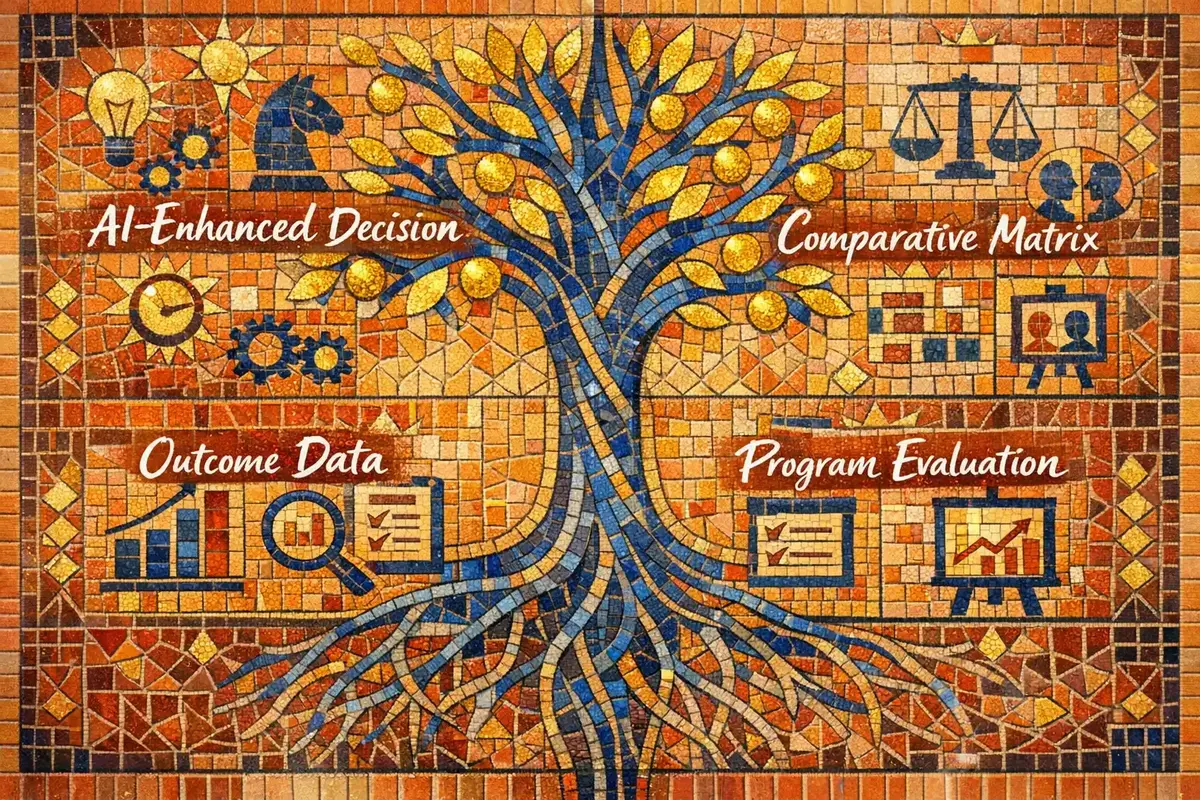
Effective decision making is the hallmark of functional leadership excellence. But as complexity increases, traditional models often fall short. Leading organizations are adopting integrative frameworks that support both functional depth and cross-domain agility.
Some of the most effective decision-making models include:
- Cynefin Framework: Helps leaders diagnose the complexity of their environment and adapt their approach accordingly—distinguishing between simple, complicated, complex, and chaotic contexts.
- MARCO Model: Emphasizes Mapping, Analysis, Recommendation, Communication, and Ownership, ensuring that decisions are both data-driven and actionable.
- CDIF (Context, Data, Insight, Forward Action): Guides leaders to ground decisions in real-world context, supported by robust data and actionable insights.
What sets high-performing functional leaders apart is their ability to apply these frameworks not just within their domain, but across the organization—balancing local optimization with enterprise value. For a synthesis of top frameworks, see leadership decision making.
Program Evaluation Matrix: What to Look for in Leadership Development
Selecting the right leadership development program is a critical decision for any organization. Yet, with so many options—ranging from business school certificates to in-house workshops and digital platforms—how can you evaluate what truly delivers?
A robust evaluation matrix should include:
- Function-Specific Content: Does the program address the unique challenges of HR, finance, operations, or innovation leaders?
- Cross-Functional Integration: Are there modules or experiences that foster collaboration across domains?
- AI and Digital Fluency: Is there a focus on emerging technologies and data-driven decision making?
- Outcome Measurement: Does the program track improvements in engagement, retention, productivity, or profitability?
- Coaching and Feedback: Are there opportunities for individualized coaching and real-time feedback?
- Alumni Impact: What evidence exists of program graduates driving measurable business outcomes?
“86% of CCL program participants saw significant improvements in their overall leadership effectiveness after completing a program.” (Center for Creative Leadership, 2025)
For organizations seeking to benchmark or evaluate their own programs, targeted leadership program evaluation resources can help clarify strengths, gaps, and ROI.

Original Angles: What Most Programs Miss
Functional Leadership as the New Strategic Lever
Most leadership development content treats the topic generically, missing the multiplier effect that comes from function-specific excellence. When HR, finance, operations, and innovation leaders are developed in alignment with their unique business contexts, the impact ripples across the organization—accelerating transformation, improving retention, and driving sustainable growth.
Bridging the Cross-Functional Gap with AI and Data
Despite the well-documented dysfunction of cross-functional teams, few programs equip leaders with the AI-powered analytics and collaborative tools needed to break down silos. The next frontier is not just digital literacy, but digital fluency—where leaders use data to make faster, more transparent, and more accountable decisions across domains.
The Leadership Development Paradox
Organizations tend to invest in leadership development late in a leader’s career, missing the window where early, broad-based investment yields the highest returns. Democratizing access to development—especially in functionally critical roles—can resolve this paradox and build a deeper, more resilient leadership pipeline.
Outcome-Based Leadership Development
The future of leadership development is transparent, measurable, and directly linked to business KPIs. Programs that move beyond testimonials to provide clear evidence of impact—on profitability, engagement, innovation, and retention—will set the new standard.
Conclusion: Building a Future-Ready Functional Leadership Pipeline
Functional leadership excellence is not a luxury—it is the foundation of organizational resilience and growth. By investing in targeted development for HR, finance, operations, and innovation leaders, organizations position themselves to thrive in complexity, adapt to disruption, and unlock new sources of value. The challenge is not just to train leaders, but to empower them as strategic partners who drive cross-domain outcomes and steward the business into the future.
As you consider your own context, what would it look like to make functional leadership the centerpiece of your strategy? Which domains in your organization are ready for transformation—and what steps will you take to build a future-ready pipeline?
FAQ: Functional Leadership Excellence Across Domains
How does functional leadership differ from general leadership?
Functional leadership focuses on developing domain-specific expertise and strategic influence within HR, finance, operations, or innovation. While general leadership emphasizes universal skills like communication and vision, functional leadership ensures leaders can translate business strategy into actionable plans that drive results in their specific area, while also collaborating across domains.
What are the biggest barriers to effective cross-functional leadership?
The main barriers include misaligned incentives, communication gaps, and lack of shared accountability. Functional leaders often operate within silos, making it difficult to align goals and processes. Overcoming these barriers requires intentional development of cross-domain skills, shared KPIs, and a culture that rewards collaboration as much as individual achievement.
Why is AI integration critical for functional leadership today?
AI integration enables functional leaders to leverage data-driven insights for faster, more accurate decision making. In HR, finance, and operations, AI can automate routine tasks, surface trends, and support predictive planning. Leaders who embrace AI are better equipped to drive innovation and respond to market shifts, making it a core competency in modern organizations.
How can organizations measure the ROI of leadership development programs?
Organizations should track improvements in key business outcomes such as employee engagement, retention, productivity, and profitability. Effective programs also provide pre- and post-assessments of leadership competencies, gather feedback from participants and stakeholders, and monitor the career progression of program alumni to assess long-term impact.
What should be included in a function-specific leadership development program?
A robust program should offer tailored content addressing the unique challenges of each function, opportunities for cross-functional collaboration, modules on digital and AI fluency, and access to coaching and feedback. It should also include clear metrics for measuring success and provide real-world case studies relevant to each domain.
How can functional leaders become strategic business partners?
By developing enterprise-wide perspective, mastering cross-domain collaboration, and leveraging data and technology, functional leaders can move beyond operational execution to influence business strategy. This shift requires ongoing development, exposure to other functions, and support from senior leadership to break down silos and foster shared accountability.
Is early investment in leadership development more effective than late-stage training?
Research and industry evidence suggest that early, broad-based investment in leadership development—especially for functionally critical roles—delivers higher ROI than waiting until leaders reach senior positions. Early development builds a deeper, more adaptable leadership pipeline and accelerates readiness for strategic roles.
Explore Further
- Finance leadership development for COOs — Discover actionable strategies for building the finance-to-CEO pipeline and operational leadership excellence.
- HR leadership for business strategy — Learn how empathetic HR leadership can drive culture, engagement, and strategic business outcomes.
- AI in leadership and digital transformation — Explore how functional leaders can leverage AI to enhance decision making and organizational agility.
- Cross-functional leadership frameworks — Access models and best practices to overcome cross-domain dysfunction and build high-performing teams.


