

Why the Modern CMO Must Lead Beyond Marketing Execution
4.3 years. That is the average Fortune 500 CMO tenure in 2024, which means many marketing leaders are being judged before they have time to hide behind activity or narrative (Spencer Stuart, 2025).
You know the meeting. The quarterly review shifts from pipeline and campaign metrics to pricing pressure, product adoption, customer friction, and whether the company is actually learning faster than the market. In that moment, the CMO is no longer being evaluated as the head of marketing. The role is being tested as an enterprise leadership seat.
That is where many strong marketers get exposed. Not because they cannot run demand generation, brand, media, or content teams, but because the business now expects them to connect brand, customer experience, innovation, data, and commercial strategy into one coherent point of view.
The Role Expanded Faster Than the Development Model
The pressure is not theoretical. PwC found that 48% of CMOs said becoming more involved in business strategy decisions was a top-three priority in the next 12 months, while 45% said demonstrating marketing ROI was also a top-three priority (PwC, 2022). That combination matters. It means the CMO is being pulled upward into strategy while still being pushed downward into proof.
48% of CMOs prioritized greater involvement in business strategy, while 45% prioritized proving ROI (PwC, 2022)
The cost is predictable: short tenures, defensive reporting, and leadership conversations where marketing is present but not decisive. A CMO who spends budget season explaining activity instead of shaping trade-offs is already behind. This article is for leaders deciding whether their approach to leadership development is building enterprise influence—or just refining functional execution.
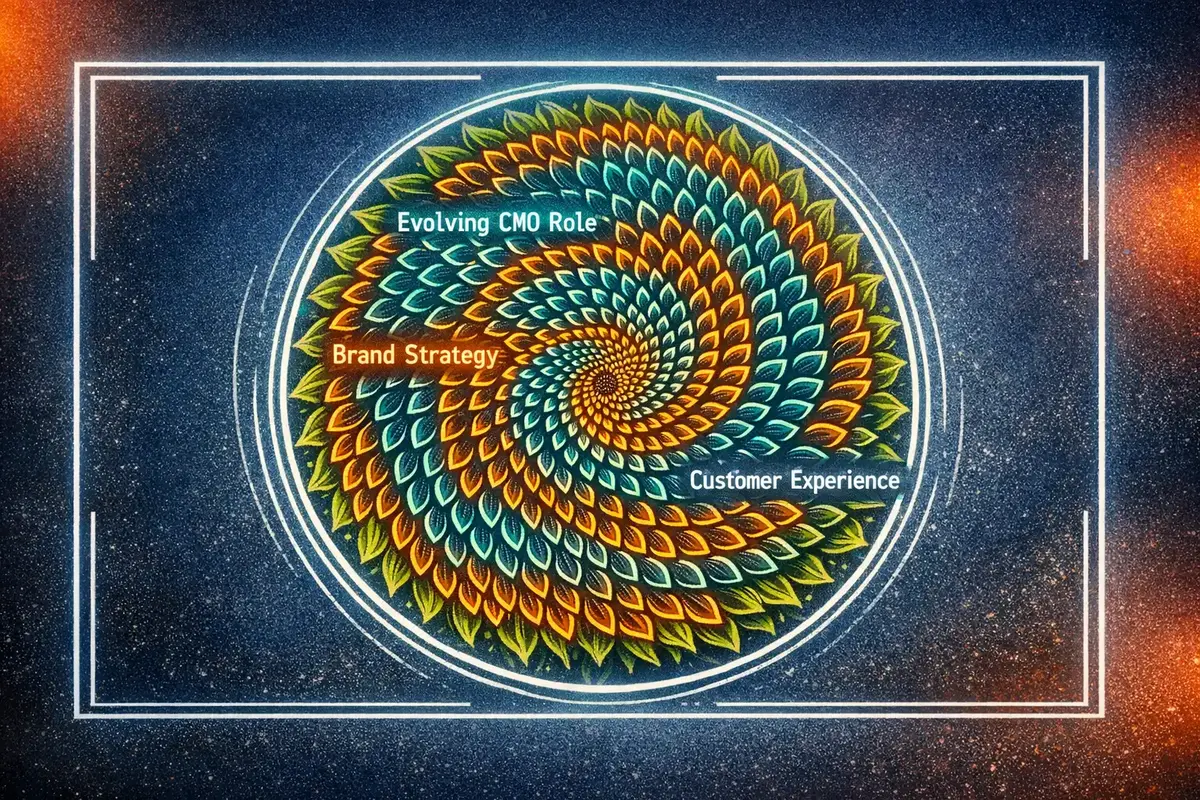
Functional Excellence Is No Longer the Finish Line
Consider a mid-market technology company in annual planning. The CMO arrives with a solid growth plan, efficient channel performance, and a credible brand story. The CEO and CFO still ask harder questions: Which customer signals should change product priorities? Where is friction destroying retention? What should the company stop funding? Those are not marketing questions. They are business questions, and the modern CMO is expected to answer them.
This is why CMO development can no longer be treated as a narrow marketing upgrade. It has become a test of whether a leader can move from specialist credibility to board-relevant judgment. Programs that sharpen messaging but ignore enterprise decision-making miss the real job.
The real evaluation question is simple: can this CMO translate market insight into company direction—or are they still being rewarded mainly for execution? That divide separates the enterprise leaders from the functional specialists.
Why Do Some CMOs Become Enterprise Leaders While Others Stay Functional Specialists?
65% of exiting Fortune 500 CMOs moved into promotions, lateral roles, or step-up positions rather than simply disappearing from the leadership map. If that is true, why are so many CMO development plans still built as if the job ends at brand stewardship rather than expands into enterprise leadership (Spencer Stuart, 2025)?
That question matters because many boards and CEOs still carry an outdated mental model. They see the CMO as the executive who protects narrative, sharpens positioning, and manages growth engines. Useful, but bounded. The emerging reality is different: the role is increasingly a proving ground for broader leadership judgment.
The Real Divide Is Not Talent. It Is Readiness.
The traditional path rewards functional excellence. Better campaigns. Better segmentation. Better performance management. Those skills still matter, but they do not explain who gets trusted with bigger mandates.
What separates the enterprise-ready CMO is simpler and harder: can this person make sound decisions outside the comfort zone of marketing? Can they weigh trade-offs across product, sales, operations, and capital allocation without retreating into channel language or attribution debates?
A regional healthcare company in a budget reset offers a familiar example. The CMO arrives with a disciplined plan to improve acquisition efficiency. The CEO does not challenge the math. Instead, she asks whether patient drop-off is a messaging problem, an onboarding problem, or a service design problem—and which investment should move first. In that moment, the CMO is not being tested on marketing craft. The test is enterprise judgment.
That is why development built only around deeper specialization often stalls careers. It creates stronger marketers, not necessarily stronger executives. The difference is material.
Marketing Experience Is Closer to the CEO Path Than Many Assume
One statistic should change how companies judge CMO development: 37% of Fortune 500 CEOs had some amount of functional experience in marketing on their route to the top (Spencer Stuart, 2025).
37% of Fortune 500 CEOs had some marketing experience on the way to the top (Spencer Stuart, 2025)
That does not mean every CMO is a CEO candidate. It does mean marketing is not a side corridor in the leadership pipeline. It is part of the route more often than many executive teams admit.
So the standard for development has to rise. A serious path should build fluency in commercial trade-offs, operating cadence, investor-facing logic, and cross-functional trust—not just sharper command of functional excellence. If a CMO cannot earn credibility in rooms where marketing is not the main topic, the ceiling arrives early.
And once that ceiling appears, performance is no longer the only question. What capabilities actually convert market insight into enterprise influence—or leave it trapped inside the function?
What Capabilities Separate Strategic CMOs From High-Performing Marketers?
The Strategic CMO Capability Stack is the right lens here because it shifts the conversation from résumé strength to decision range. Most organizations still develop CMOs by deepening marketing craft; the evidence points somewhere else: the leaders who scale their influence are the ones who can learn across domains, not just perform within one.
A useful diagnostic starts with five capabilities that have to work together, not as isolated strengths. First, brand strategy: not campaign stewardship, but the ability to define what the company should mean in the market and what trade-offs that positioning requires. Second, customer experience: seeing where promise breaks in onboarding, service, pricing, or product use. Third, market innovation: translating weak signals into bets before the rest of the business is comfortable. Fourth, digital engagement: understanding how behavior, channels, and platform shifts change the customer relationship. Fifth, data-driven decision-making: not dashboard fluency, but the judgment to separate signal from noise and act under uncertainty.
Most high-performing marketers are strong in two or three of these. Strategic CMOs can integrate all five.
The Capability That Changes Everything: Learning Agility
This is where many assessments go wrong. They measure experience, polish, and communication style, then miss the variable that predicts whether a leader can keep up when the market rewrites the rules.
60% of the World’s Most Admired Companies say learning agility is the top characteristic they look for when hiring leaders (Korn Ferry, 2025)
That matters more now because the CMO role is being reshaped by AI, fragmented attention, and faster shifts in customer behavior. A leader who built a career on pattern recognition alone may struggle when the old patterns stop holding. A leader with learning agility can update faster — and bring the organization with them.
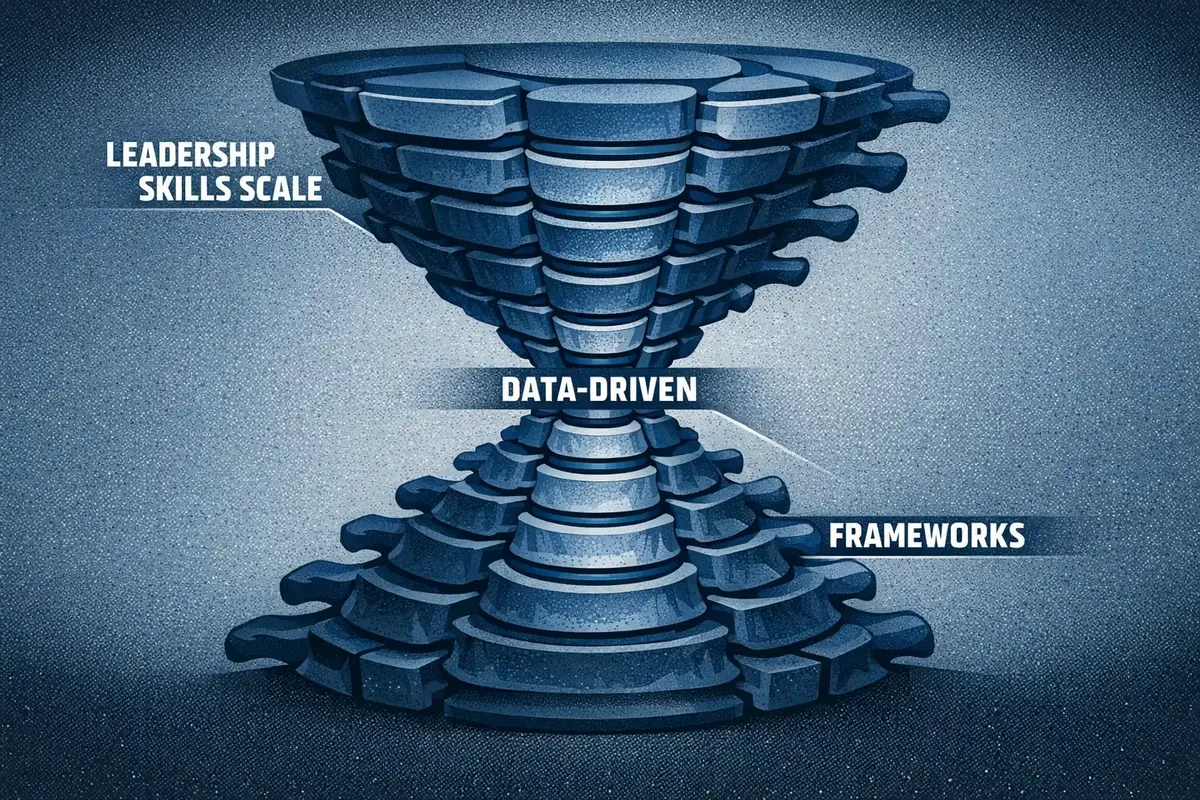
Take a retail enterprise in a quarterly review. The CMO has solid acquisition numbers, but store traffic is soft and repeat purchase is slipping. The real test is not whether they can defend media efficiency. It is whether they can reframe the issue across merchandising, loyalty design, digital journey friction, and pricing perception — then help peers decide what changes first.
That is a capability problem, not a communications problem.
Judge Development by Expanded Range, Not Better Presence
This is why leadership development should be evaluated differently. The question is not whether a program makes a CMO more confident in the boardroom. The question is whether it expands judgment, adaptability, and cross-functional influence.
SHRM reports that more than 51% of CHROs listed leadership and manager development among their top 2025 priorities (SHRM, 2025). That should push companies to raise the bar on what “development” means. If the process does not improve how a CMO reads ambiguity, influences non-marketing peers, and reallocates attention when conditions change, it is polishing the surface.
And surface is expensive. If marketing is expected to shape growth, how does a CMO prove that contribution in terms the rest of the enterprise will trust — as a growth driver, or still as a cost center?
How Can CMOs Prove Marketing Is a Growth Driver, Not a Cost Center?
45% of CMOs say demonstrating marketing ROI is a top-three priority, which tells you the cost of failure is already on the table: growth gets discounted, trust erodes, and the function gets managed like overhead (PwC, 2022). When a CMO cannot connect spend to business movement the CEO believes, revenue is not the only thing at risk; credibility leaves first, and strong talent usually follows it.
The Board Is Not Asking for More Activity
Picture a regional financial services firm in a quarterly board review. The CMO arrives with healthy campaign performance, lower acquisition costs, and strong engagement numbers. Then the chair asks the only question that matters: What did marketing change in the business?
That is the moment many capable leaders lose the room. Not because the work is weak, but because the translation is. Pipeline contribution, retention lift, pricing resilience, sales velocity, product adoption — these are enterprise outcomes. If marketing is reported mainly through channel metrics, the board hears effort, not impact.
This is why ROI pressure is not a dashboard problem. It is a leadership credibility problem.
PwC found that 48% of CMOs named greater involvement in business strategy decisions as a top-three priority, while 45% said the same about proving ROI (PwC, 2022). Those two numbers belong together. A CMO who wants a stronger voice in strategy must show that marketing does more than communicate strategy after the fact; it must shape where growth comes from, which customers are worth serving, and where friction is destroying value.
48% of CMOs prioritized greater involvement in business strategy decisions, while 45% prioritized demonstrating ROI (PwC, 2022)
Measure Translation, Not Presentation
This has a practical implication for development. The wrong programs make executives sound sharper in the room. The right ones improve how they convert market evidence into commercial choices.
A serious test is simple. After development, can the CMO explain why one segment deserves more investment than another? Can they tie brand work to win rates, customer experience to retention, and demand quality to sales efficiency? Can they defend trade-offs in language a CFO would accept? That is what leadership development ROI should look like in practice.
Polish helps. Translation wins.
If a CMO still needs the CEO to reinterpret marketing’s value for the rest of the enterprise, the role has not matured — it has been staged. And if the leader improves faster than the team around them, what happens when the organization cannot execute at the new level?
What Should You Evaluate in CMO Coaching or Executive Education?
The Enterprise Readiness Filter is the right test here because most programs sound credible until a CMO has to use them in a real decision. You see it in the executive committee meeting: the discussion turns from campaign performance to pricing pressure, service breakdowns, and where the company should place its next bet, and the CMO suddenly has to influence people who do not care about marketing language.
That is why buying development on reputation alone is a mistake. SHRM reports that more than 51% of CHROs listed leadership and manager development among their top 2025 priorities, which means the market is crowded with serious-looking offers and uneven substance (SHRM, 2025).
A Practical Evaluation Framework
Start with one question: does the program build cross-functional influence, or just sharper self-presentation?
Weak programs usually major in communication mechanics. Better storytelling. Better board slides. Better stage presence. Useful, but incomplete. Strong programs build the harder capabilities underneath: faster decision-making under ambiguity, cleaner judgment in trade-off conversations, and the kind of executive presence that comes from substance, not polish.
A mid-market manufacturing CMO in an annual planning cycle offers a useful example. She is not struggling to speak clearly. She is struggling to align sales, operations, and product around what the market is actually saying — and to do it before the budget hardens. If the program cannot help in that moment, it is not really leadership development. It is performance coaching.
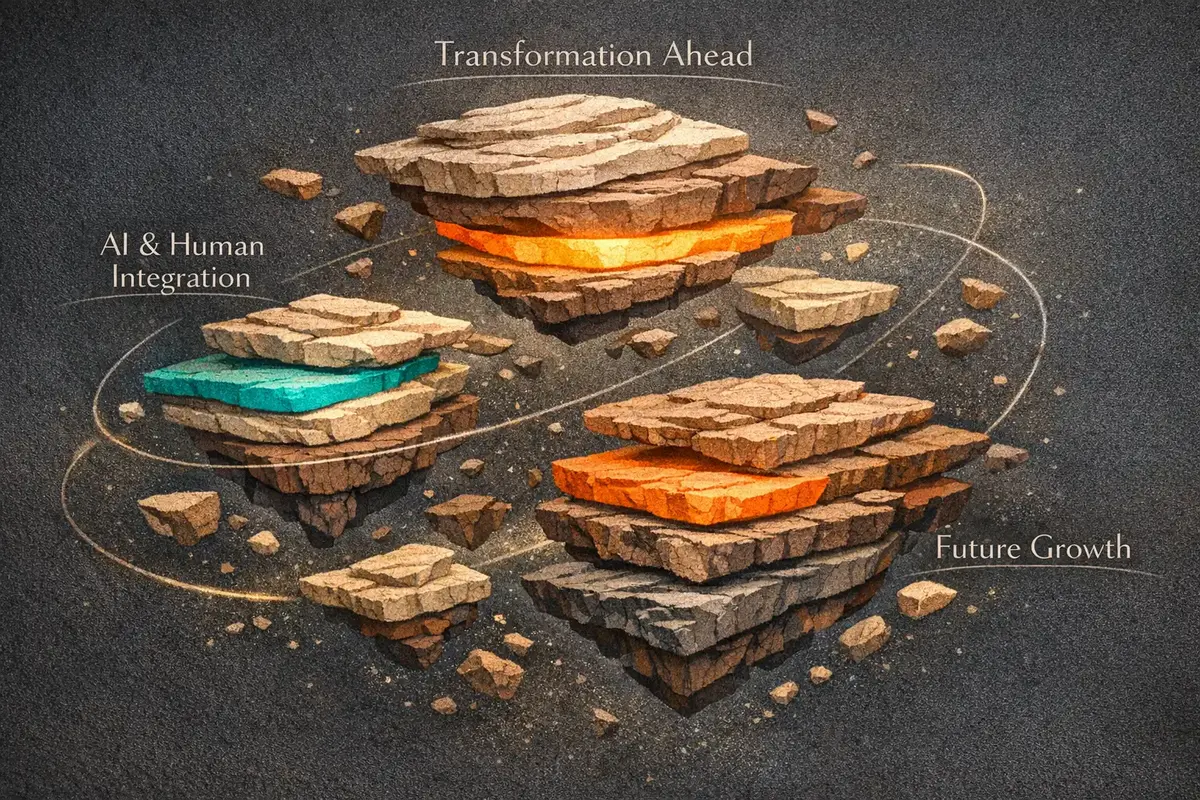
What Strong Programs Actually Change
The next filter is integration. Can the program help the CMO align brand, customer experience, and business vision into one operating logic?
This is where superficial executive education often fails. It treats brand as narrative, customer experience as a service issue, and strategy as the CEO’s domain. Stronger executive coaching closes those gaps. It helps a leader decide what the company should promise, where that promise breaks in the customer journey, and what cross-functional action should follow.
Look for evidence of behavior change in high-stakes settings. Not course satisfaction. Not faculty prestige. Ask whether past participants became more effective in budget reviews, conflict-heavy alignment meetings, board conversations, and moments where speed mattered more than certainty.
That is the real standard. Does the program change how the CMO leads under pressure — or just how they sound afterward?
Because even the right development can outrun the organization around it. And when the leader grows faster than the team, the next constraint becomes impossible to ignore.
Why Do High-Performing CMOs Still Fail When the Team Cannot Keep Up?
20%. If global employee engagement is sitting there, how much leadership value is lost before a sound strategy ever reaches the market (Gallup, 2026)? And if the CMO is strong, is that enough — or does the real constraint sit one layer lower, in the managers translating strategy into daily decisions?
This is where many companies misread the problem. They invest in the CMO as if leadership were an individual asset, then act surprised when execution stalls in the middle of the organization. The strategy is clear. The market logic is sound. The handoff fails anyway.
The Hidden Bottleneck Is the Management Layer
Gallup reports that manager engagement fell from 27% in 2024 to 22% in 2025 (Gallup, 2026).
Manager engagement dropped from 27% to 22% in one year (Gallup, 2026)
That number should worry any CEO expecting marketing transformation at speed. In most organizations, the CMO does not scale through personal brilliance. The role scales through directors, VPs, and team leads who set priorities, coach judgment, resolve trade-offs, and keep standards from fragmenting across brand, demand, content, analytics, and customer experience.
Take a mid-market services company during a team restructure. The CMO has reset the go-to-market model, clarified segment priorities, and aligned with sales on account focus. But the directors underneath are still running old scorecards, protecting channel silos, and escalating routine conflicts upward. The result is predictable: weeks lost in rework, slower launches, and a strategy that looks weaker than it is because the team system cannot carry it.
That is not an HR issue. It is an operating issue.
Strong CMOs Need a Team Leadership System
The contrast with best-practice organizations is stark. In those companies, 79% of managers were engaged at work in 2025 (Gallup, 2026). That gap explains why some marketing functions absorb change while others turn every shift into friction.
A high-performing marketing organization runs on three things: coaching, alignment, and shared accountability. Managers need to coach for decision quality, not just task completion. Teams need shared definitions of success, so brand and performance are not fighting different wars. Accountability has to sit across the system, not die in functional handoffs. That is what building a high-performing marketing team actually requires.
If development stops with the CMO, the enterprise gets a stronger leader and the same old drag. So when CMO leadership is truly working, what does the organization look like — and how obvious is the difference?
What Does Strong CMO Leadership Look Like When It Is Working?
Weak CMO leadership costs more than missed campaigns. It shows up in delayed product bets, confused priorities, lost revenue, and the quiet exit of strong people who no longer trust how decisions get made.
The Signal Is Organizational, Not Personal
When strong CMO leadership is working, marketing stops behaving like a separate function with a louder voice. It becomes a point of integration.
You see it in an enterprise technology company during a market shift. The CMO is in the room with the CEO, product chief, and CFO. The discussion is not about defending spend. It is about what the company is learning from customers, which signals matter, where the brand promise is no longer matched by the experience, and which innovation bets deserve protection even under pressure. Brand, customer insight, innovation, data, and people leadership are not managed as parallel tracks. They are turned into one enterprise agenda.
That is the real marker. Not a more visible marketer. A more coherent business.
Influence Without Dilution
The best development paths do not produce CMOs who sound more executive by becoming less rigorous about marketing. They produce leaders who can hold both levels at once: functional depth and enterprise judgment.
That matters because the route upward is real. Spencer Stuart notes that marketing experience appears in the backgrounds of many Fortune 500 CEOs, which should change how seriously companies treat CMO development (Spencer Stuart, 2025). If marketing can be part of the CEO path, then development has to prepare leaders to influence the board, challenge peers constructively, and shape company direction without losing command of positioning, demand, and customer behavior.
This is where purpose-driven branding becomes practical rather than philosophical. A strong CMO helps the company decide what it stands for, where that promise breaks, and what the organization must change to make the promise true.
The Final Test
In the end, the question is not whether the CMO knows more marketing.
It is whether the business becomes more aligned, more adaptive, and more capable of acting on what the market is saying. Teams move faster. Trade-offs get clearer. The board hears logic, not translation. Peers treat marketing as a source of judgment, not just support.
That is the standard worth using in your own context. Is your CMO development building a stronger function — or a more adaptive enterprise?
Key Takeaways
- The modern CMO is increasingly judged as an enterprise leader, not just a marketing operator.
- Strategic CMOs connect brand, customer experience, innovation, data, and commercial strategy.
- Development should be measured by judgment, adaptability, cross-functional influence, and translation of insight into business action.
- Strong CMO leadership depends on a capable management layer and an aligned team system.
Frequently Asked Questions
What is leadership development for a Chief Marketing Officer?
Leadership development for a CMO is the process of expanding a marketing leader’s ability to make enterprise-level decisions, not just run campaigns. It focuses on judgment, cross-functional influence, and the ability to connect brand, customer experience, data, and commercial strategy.
Why do many CMOs struggle to become enterprise leaders?
Many CMOs are developed mainly for functional excellence, so they become strong marketers but not always strong enterprise decision-makers. The gap appears when they must weigh trade-offs across product, sales, operations, and capital allocation without relying on marketing language alone.
What capabilities distinguish a strategic CMO from a high-performing marketer?
A strategic CMO can integrate brand strategy, customer experience, market innovation, digital engagement, and data-driven decision-making. Learning agility is especially important because it helps the leader adapt quickly when market conditions, technology, or customer behavior change.
How can a CMO prove marketing is a growth driver rather than a cost center?
A CMO proves value by translating marketing activity into business outcomes such as retention, sales velocity, pricing resilience, product adoption, and revenue quality. The key is to show how marketing changes the business, not just how much activity it produced.
What should organizations evaluate in CMO coaching or executive education?
They should evaluate whether the program improves cross-functional influence, decision-making under ambiguity, and the ability to align brand, customer experience, and business strategy. Strong development changes how the CMO leads in budget reviews, conflict-heavy meetings, and board discussions, not just how they present.