

Mindfulness and stress management are essential tools for leaders and teams facing high-pressure environments, offering proven techniques to enhance mental clarity, resilience, and decision-making. Leaders who prioritize these practices not only reduce burnout but also foster stronger, more adaptive teams. By the end of this article, you will understand the scientific foundation, business impact, and actionable strategies for integrating mindfulness and stress management into your leadership and team culture. According to DDI World research, only 14% of CEOs believe they have the leadership talent needed to drive growth, making structured leadership development a strategic imperative.
The New Imperative for Mindful Leadership
In a landscape defined by constant change, rapid disruption, and escalating complexity, leaders and teams are under unprecedented stress. The ability to remain focused, adaptable, and emotionally balanced is no longer a luxury—it’s a strategic necessity. Research consistently demonstrates that organizations investing in mindfulness and stress management see tangible business benefits, from improved productivity to higher retention rates. The ICF/PwC Global Coaching Study confirms that executive coaching delivers an average ROI of 529%, with organizations reporting measurable improvements in leadership effectiveness and business outcomes.
81% of workers prioritize companies that care about their well-being, driving the adoption of mindfulness programs as a workplace staple. (The Mindfulness App, 2026)
The challenge for today’s decision-makers is not whether to address stress, but how to do so in a way that is evidence-based, scalable, and relevant across diverse, international teams. The following sections break down the science, ROI, and practical frameworks that define world-class mindfulness and stress management programs for leaders and teams.
The Science of Mindfulness for Leaders & Teams
Mindfulness, at its core, is the practice of paying deliberate, non-judgmental attention to the present moment. For leaders and teams, this translates into greater self-awareness, emotional regulation, and the ability to respond—rather than react—to workplace challenges. The scientific foundation for mindfulness is robust, drawing from neuroscience, psychology, and organizational behavior.
How Does Mindfulness Impact Leadership and Team Performance?
Research shows that mindfulness activates the parasympathetic nervous system, reducing physiological stress and enabling clearer thinking under pressure. For leaders, this means improved decision-making, enhanced empathy, and a greater capacity to navigate complex interpersonal dynamics. For teams, collective mindfulness fosters psychological safety, open communication, and resilience in the face of adversity.
Teams with high collective mindfulness showed significantly stronger positive responses to challenge stressors. (Mindful Leader, 2024)
These benefits are not theoretical. Organizations that have embedded mindfulness practices report measurable reductions in absenteeism, increased engagement, and a more adaptive culture. The key is moving from individual to team-level interventions, ensuring that mindfulness is not just a personal habit but a shared organizational value.
The Business Case: ROI, Productivity, and Retention
For leaders evaluating mindfulness and stress management initiatives, the business case is compelling. Beyond anecdotal benefits, data from global organizations quantifies the impact on the bottom line.
What ROI Can Organizations Expect from Mindfulness Programs?
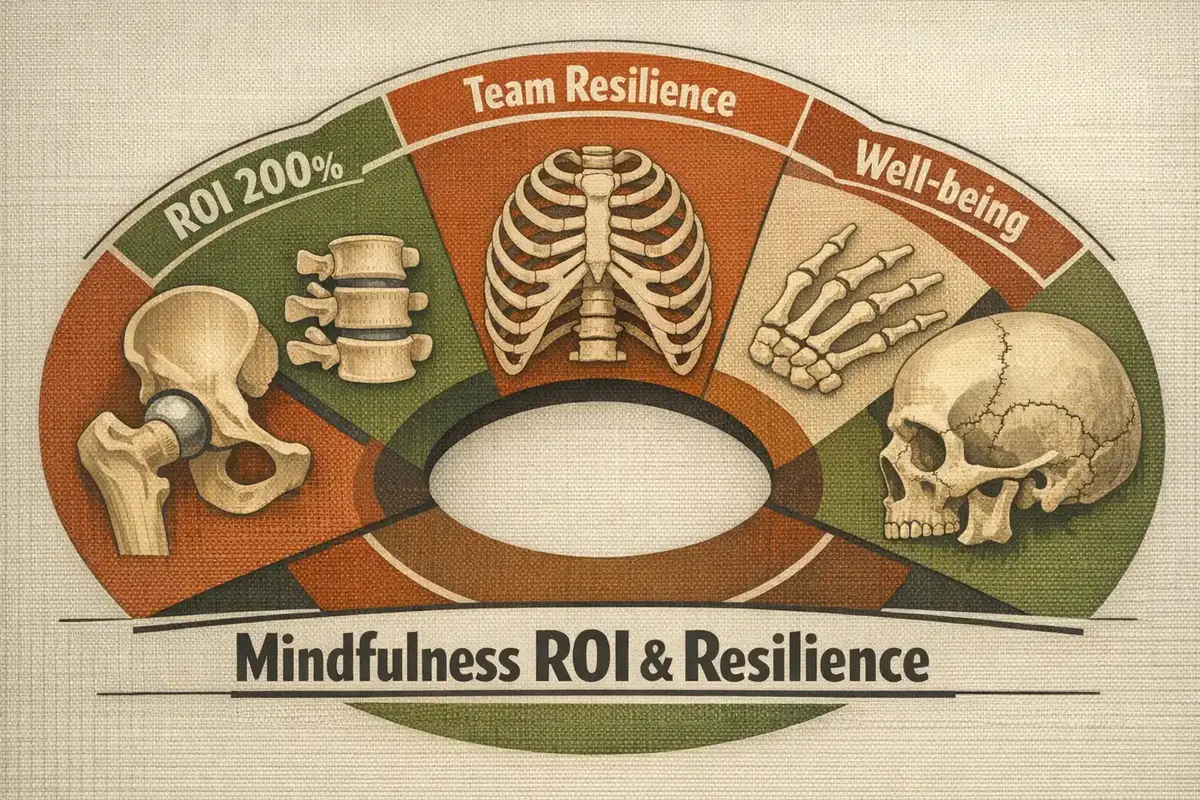
Companies like SAP have seen a 200% return on investment from mindfulness programs, with measurable improvements in engagement and reduced absences. (The Mindfulness App, 2026)
This ROI is realized through several channels:
- Decreased healthcare and absenteeism costs due to reduced stress-related illnesses
- Increased productivity as employees report higher focus and energy levels
- Enhanced retention, as employees are less likely to leave organizations that support their well-being
The demand for such programs is not just top-down. A significant majority of employees—across industries and geographies—now expect their employers to invest in well-being initiatives. This shift is reshaping the employer value proposition and influencing talent attraction and retention.
How Do Mindfulness and Stress Management Affect Team Resilience?
Teams that practice mindfulness together develop a shared language for stress, enabling them to support one another and recover more quickly from setbacks. This collective resilience is especially critical in high-pressure sectors where rapid adaptation is a competitive advantage.
From Individual to Team: Multi-Level Mindfulness Strategies
The most effective mindfulness and stress management programs operate at multiple levels—individual, team, and organizational. While personal meditation or breathing techniques are foundational, the real transformation occurs when leaders model these behaviors and embed them into team rituals.
How Can Leaders Model Mindfulness for Their Teams?
Leader modeling is a powerful lever for cultural change. When leaders openly prioritize their own well-being, set boundaries, and demonstrate mindful decision-making, they give teams permission to do the same. This can be as simple as starting meetings with a brief moment of silence, sharing personal stress management strategies, or encouraging regular check-ins about workload and well-being.
- Leaders who consistently model mindful behaviors set the tone for psychological safety and trust.
- Team rituals—such as collective gratitude practices or mindful listening exercises—reinforce these values and make them a visible part of daily work.
For those seeking to deepen their practice, foundational mindfulness practices such as guided meditation, body scans, or focused breathing can be introduced in both individual and group settings.
What Are Practical Steps for Team-Wide Adoption?
- Begin with leadership commitment and visible participation
- Integrate micro-practices into existing workflows (e.g., mindful transitions between meetings)
- Use digital tools and apps to support asynchronous or remote teams
- Establish regular check-ins to assess stress levels and adapt interventions
- Encourage peer support and normalize conversations about mental well-being
Drawing on TII’s two-decade integral methodology, these strategies are designed to be scalable and adaptable across diverse organizational contexts.
Emotional Intelligence: The Missing Link
Mindfulness and emotional intelligence (EQ) are deeply intertwined. While mindfulness cultivates self-awareness and presence, emotional intelligence enables leaders and teams to recognize, understand, and manage emotions—both their own and others’. The gap in emotional intelligence among leaders is striking and has direct implications for organizational performance.
Why Does Emotional Intelligence Matter for Leaders and Teams?
Only 22% of 155,000 leaders have strong emotional intelligence. (Niagara Institute, 2023)
This deficit is costly. Managers with high EQ are four times less likely to have employees leave than those with low EQ. High emotional intelligence in leadership correlates with better team cohesion, higher engagement, and a healthier workplace culture.
Companies that prioritize emotional intelligence in their culture and leadership have a 21% higher profitability than those that do not. (SFNet, 2025)
For teams, developing collective EQ means moving beyond individual skill-building to shared norms of empathy, feedback, and conflict resolution. Assessing and growing emotional intelligence at the team level can be supported by tools like emotional intelligence assessments and facilitated conversations.
How Does Mindfulness Enhance Emotional Intelligence?
Mindfulness practices increase self-regulation, reduce impulsivity, and create space for thoughtful responses. This, in turn, strengthens the core competencies of emotional intelligence: self-awareness, self-management, social awareness, and relationship management. Leaders who integrate mindfulness into their daily routines are better equipped to handle difficult conversations, manage stress, and inspire their teams.
Implementation Playbook: Building a Sustainable Mindfulness Program
A successful mindfulness and stress management program requires more than a single workshop or app download. It demands intentional design, leadership buy-in, and ongoing measurement.
What Are the Key Steps to Launching a Mindfulness Program?
- Secure Leadership Commitment: Programs succeed when leaders actively participate and champion the initiative.
- Assess Needs and Set Goals: Use surveys or interviews to understand current stressors and desired outcomes.
- Design Multi-Level Interventions: Combine individual practices, team rituals, and organizational policies.
- Leverage Digital Tools: For hybrid and remote teams, apps and online platforms ensure accessibility and consistency.
- Measure Impact: Track metrics such as absenteeism, engagement, and turnover to demonstrate ROI.
- Iterate and Improve: Solicit feedback, address barriers, and adapt the program to changing needs.
How Can Organizations Address Hybrid and Remote Team Challenges?
Distributed teams face unique stressors—time zone differences, digital fatigue, and reduced informal connection. Mindfulness programs for these teams should prioritize asynchronous practices, virtual group sessions, and regular check-ins. Digital solutions can bridge the gap, offering guided meditations, stress tracking, and community forums accessible across geographies.
For organizations seeking expert support, team coaching and leadership development programs provide structured pathways to embed mindfulness and resilience into the fabric of the team.
Cultural Adaptation and Global Relevance
Most mindfulness and stress management content is tailored to US or UK audiences, yet multinational organizations require solutions that respect cultural nuances. What works in one region may not translate directly to another.
How Can Mindfulness Programs Be Adapted for International Teams?
- Localize Language and Examples: Use culturally relevant metaphors, case studies, and practices.
- Respect Norms Around Mental Health: In some cultures, open discussion of stress may be stigmatized; offer private or anonymous participation options.
- Accommodate Schedules and Holidays: Design programs that align with local calendars and religious observances.
- Empower Local Champions: Identify and train ambassadors in each region to adapt and advocate for mindfulness practices.
Global organizations that succeed in this area treat mindfulness as a flexible framework, not a rigid protocol. They invite feedback from diverse teams and continually refine their approach to ensure inclusivity and resonance.
Future Trends and Continuous Improvement
The future of mindfulness and stress management in leadership is shaped by technology, evolving best practices, and a growing recognition of the human side of performance. AI-powered platforms, digital mindfulness tools, and real-time stress analytics are making these practices more accessible and personalized than ever.
Organizations at the forefront are:
- Integrating mindfulness into onboarding and leadership pipelines
- Using data to tailor interventions and demonstrate ROI
- Fostering communities of practice that sustain momentum beyond initial rollout
Backed by over 40,000 hours of certified coaching practice, these trends reflect a deep commitment to continuous improvement and lasting impact.
Conclusion: The Competitive Advantage of Mindful Teams
Mindfulness and stress management are not just wellness trends—they are strategic levers for organizational performance. Leaders who invest in these practices build teams that are more resilient, engaged, and capable of navigating complexity. The evidence is clear: mindful leadership and team-wide adoption drive measurable business outcomes and create workplaces where people thrive.
As you reflect on your own context, consider: What would it look like for your team to operate with greater clarity, empathy, and resilience? The journey toward mindful leadership begins with a single step—one that can transform not just performance, but the very experience of work itself.
FAQ: Mindfulness & Stress Management for Leaders & Teams
How can leaders measure the effectiveness of mindfulness programs?
Leaders can track key metrics such as employee engagement, absenteeism, turnover rates, and self-reported stress levels before and after implementing mindfulness initiatives. Many organizations also use pulse surveys or digital tools to gather ongoing feedback and adjust programs accordingly. Demonstrating ROI often involves linking these metrics to business outcomes like productivity and retention.
What are some quick mindfulness practices for busy teams?
Quick practices include one-minute breathing exercises, mindful check-ins at the start of meetings, and gratitude rounds. These micro-practices can be easily integrated into daily routines without requiring significant time investment, making them accessible even in high-pressure environments.
How do mindfulness programs support hybrid or remote teams?
Mindfulness programs for distributed teams leverage digital platforms, offering guided meditations, virtual group sessions, and asynchronous practices. These tools help bridge the gap created by physical distance, fostering a sense of connection and shared purpose among remote team members.
What barriers might organizations face when implementing mindfulness initiatives?
Common barriers include skepticism from leadership, lack of time, cultural resistance, and insufficient training. Overcoming these challenges requires clear communication of benefits, leadership modeling, and ongoing support to normalize mindfulness as part of the organizational culture.
Can mindfulness and emotional intelligence be developed simultaneously?
Absolutely. Mindfulness enhances self-awareness and emotional regulation, which are foundational to emotional intelligence. Integrating both into leadership development programs accelerates growth in areas such as empathy, conflict resolution, and effective communication.
How can organizations ensure mindfulness programs are culturally sensitive?
Organizations should involve local stakeholders in program design, adapt language and examples to fit cultural contexts, and remain open to feedback. Flexibility and inclusivity are key to ensuring mindfulness initiatives resonate across diverse teams.
What role does team coaching play in sustaining mindfulness practices?
Team coaching provides ongoing support, accountability, and skill development, helping teams integrate mindfulness into their daily workflows. Coaches facilitate reflection, address obstacles, and foster a culture of continuous improvement, ensuring that mindfulness becomes a lasting organizational capability.
Explore Further
- mindfulness practices — Explore foundational mindfulness techniques and meditation practices for individuals and teams.
- emotional intelligence assessments — Access tools to evaluate and develop emotional intelligence at both the individual and team level.
- team coaching — Discover structured programs for building collective resilience and mindful performance in teams.
- leadership development — Learn about comprehensive approaches to cultivating mindful, emotionally intelligent leaders for the future.
Frequently Asked Questions
What is mindfulness and how does it benefit leaders and teams?
Mindfulness is the practice of paying deliberate, non-judgmental attention to the present moment. It benefits leaders and teams by enhancing self-awareness, emotional regulation, decision-making, and fostering psychological safety, resilience, and open communication in high-pressure environments.
What measurable business impacts can organizations expect from mindfulness and stress management programs?
Organizations implementing mindfulness programs can expect reduced absenteeism, lower healthcare costs, increased productivity, enhanced employee engagement, and improved retention. Studies show returns on investment ranging from 200% to over 500%, reflecting significant improvements in leadership effectiveness and business outcomes.
How can leaders effectively model mindfulness to support team well-being?
Leaders can model mindfulness by openly prioritizing their own well-being, setting boundaries, practicing mindful decision-making, and embedding mindfulness into team rituals like moments of silence or gratitude exercises. This behavior fosters psychological safety, trust, and encourages teams to adopt similar practices.
What strategies help implement mindfulness programs across diverse and remote teams?
Effective strategies include securing leadership commitment, integrating micro-practices into workflows, using digital tools for asynchronous participation, conducting regular check-ins, and adapting content to respect cultural differences. These approaches ensure scalability, inclusivity, and relevance for hybrid and international teams.
How does mindfulness enhance emotional intelligence in leadership and teams?
Mindfulness improves emotional intelligence by increasing self-awareness, self-regulation, and social awareness, enabling leaders and teams to manage emotions thoughtfully. This strengthens relationship management skills, supports better conflict resolution, and contributes to healthier workplace cultures and higher team engagement.