

Why Mindfulness Works Best When Leaders Treat Stress as an Operating Problem
You do not need mindfulness because leadership is hard; you need it because stress distorts judgment before you notice it. Mindfulness works best as a stabilizer: it helps leaders stay clear enough to choose well in tense conditions, but it cannot fix a system that keeps generating avoidable pressure.
Picture a director at a mid-market technology company walking into a week of budget reviews, a client escalation, and a team already stretched thin. The calendar is full, the facts are incomplete, and every decision seems to carry downstream risk. In that moment, mindfulness is useful because it can create a small but critical pause between pressure and reaction.
That pause matters. It can keep a sharp question from turning into a defensive exchange, or a rushed decision from becoming rework for the whole team.
The mistake is treating that pause as the whole solution. When stress is driven by workload, role ambiguity, or weak manager capability, asking people to breathe better is not the same as helping them work better. It may steady the person, but it does not remove the source of the strain.
Mindfulness can steady the hands on the wheel; it cannot redesign the road.
That is the frame for this article. We will judge stress interventions the way leaders should judge any operating choice: by their credibility, their ease of use under real pressure, and whether they change day-to-day conditions rather than merely helping people endure them.
This is also where leadership development becomes practical, not performative. The real test is whether a practice helps leaders think, decide, and manage in ways the team can actually feel.
If that sounds obvious, consider the harder question: what if the biggest stress problem in your organization is not personal resilience at all, but the way work is being led?
Why the Stress Problem Is Bigger Than Personal Resilience
20%. That is the global employee engagement rate in 2025—the lowest Gallup has recorded since 2020—and it tells leaders the stress issue is not confined to a few overwhelmed people; it is showing up across the operating system (Gallup, 2026).
Low engagement is rarely a breathing problem. It is usually a signal that work feels unclear, overloaded, or detached from control. If leaders are already carrying more stress than individual contributors, what exactly are they supposed to mindfully absorb without changing the system? Gallup found leaders were 7 points more likely than individual contributors to say they experienced a lot of stress the previous day (Gallup, 2026).
That gap matters because leaders are the point where uncertainty gets translated into workload. In a regional healthcare provider during a restructuring, a VP may spend the morning in a staffing review, the afternoon answering anxious managers, and the evening rewriting priorities that may change again next week. The stress is not abstract. It becomes delayed decisions, mixed signals, and teams that start protecting themselves instead of coordinating.
Structural stress changes the buying logic
Job insecurity is one of the clearest signs that stress is structural, not merely personal. The American Psychological Association reported that job insecurity significantly affects the stress levels of 54% of U.S. workers, based on research conducted by The Harris Poll among 2,017 employed adults (American Psychological Association, 2025). When people are unsure what happens to their role, they do not need a softer tone; they need clearer direction.
When uncertainty stays high, mindfulness helps people hold steady—but it does not tell them what is true.
This is why smart buyers are not really shopping for “wellness.” They are looking for a credible, low-disruption intervention that can fit real work while supporting better management habits, clearer communication, and stronger emotional intelligence. A mindfulness program can help. On its own, it is incomplete.
The real question is sharper than “does it reduce stress?” It is this: what can mindfulness reliably solve—and where does it become a polite substitute for fixing the conditions creating the strain?
What Mindfulness Can Solve — and What It Cannot
A services director walks into a quarterly review already braced for conflict: one team missed targets, another wants more headcount, and everyone expects an answer in the room. In that moment, mindfulness helps if it improves attention and emotional control before the discussion turns reactive.
The boundary is simple. Mindfulness can steady perception under pressure; it cannot remove the pressure source when the source is bad workload design or weak management. That distinction matters because 69% of employees who said their workload was far too much also said their job had a negative impact on their mental health (CIPD, 2025).
That is why so many stress programs look active on paper yet fail to change how work actually feels. 64% of organisations are taking steps to identify or reduce workplace stress, but only 50% believe those efforts are effective (CIPD, 2025).
A calmer mind is useful. A chaotic system is still chaotic.
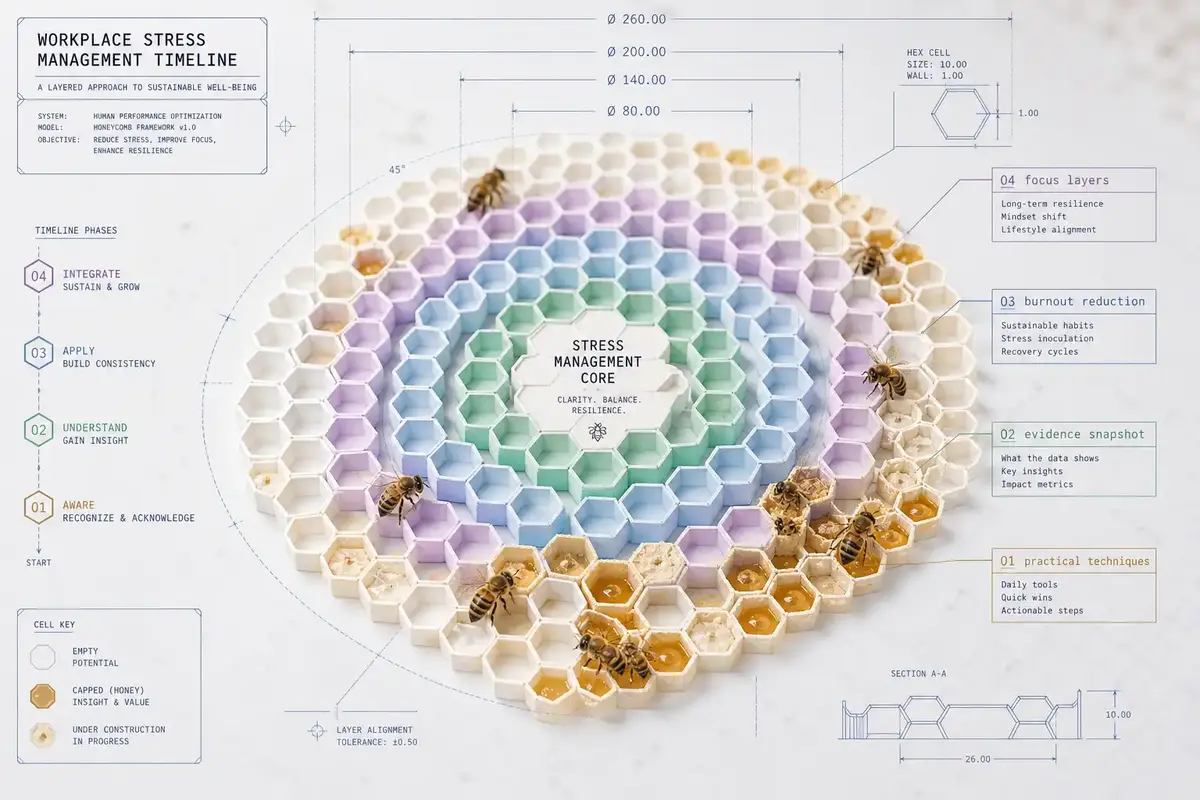
Evaluate mindfulness by use case, not by slogan
The right question is not whether mindfulness “works.” It is where it works inside real execution.
- Before a difficult meeting: to notice defensiveness early and choose a better opening move
- During conflict: to slow escalation and keep listening when stakes rise
- After overload: to reset attention so fatigue does not become sloppy judgment
- In team rituals: to create brief shared pauses that improve focus, not perform wellness theater
Used this way, mindfulness supports better burnout prevention because it is tied to decisions, meetings, and recovery points people already have. Used as a one-off event, it often becomes symbolic care.
The test is operational fit
The strongest programs do not sit outside work; they improve behavior inside work. If a practice cannot survive a tense client call, a budget trade-off, or a strained one-on-one, it is not a leadership tool yet.
So the real choice is not mindfulness or no mindfulness. It is whether leaders use practices that hold up in live pressure — or keep buying programs that sound supportive but disappear when the room gets hard.
Which Practices Actually Fit Meetings, Conflict, and Overload?
52% of full-time employees said they felt burned out because of their job in the past year, which means leaders are not managing a wellness side issue; they are managing lost judgment, eroded trust, and preventable exits. If burnout is already showing up in exhaustion, the only practices worth keeping are the ones people can still use on a normal Tuesday.
The filter is simple: choose micro-practices—brief, repeatable actions that regulate attention in under two minutes—by the moment they serve, not by how impressive they sound in a workshop.
Match the practice to the pressure
Before a meeting, the best reset is usually private and fast. A mid-market manufacturing VP walking into a budget review does not need a ten-minute exercise; she needs 60 seconds to lower speed, name the decision at hand, and notice the emotion she is bringing into the room. That is where practical mindfulness practices earn their keep.
During conflict, friction matters even more. A visible technique can feel artificial in a tense exchange, but a silent pause—one breath, relaxed jaw, slower first sentence—often changes the tone without announcing itself.
After overload, recovery has to be deliberate or fatigue simply rolls into the next decision. That matters because average absence has climbed to 9.4 days per employee per year, the highest level in more than 15 years (CIPD, 2025). Leaders should treat post-surge recovery as operating discipline, not indulgence: two minutes between calls, a cleared note of what was decided, and one explicit priority for the next block.
The best practice is not the deepest one; it is the one you can still do when your calendar turns hostile.
Use a realism test, not a purity test
A workable selection framework is straightforward:
- Pre-meeting reset: low friction, best for decision clarity
- Conflict pause: very low friction, best for tone control
- Post-overload recovery: medium friction, best for reducing error spillover
- Team transition ritual: medium friction, best for shared focus between tasks
The pattern is clear. The most useful practices fit inside the workday and often get reinforced through good coaching, not special events.
But even repeatable practices can be undermined by the culture around them. Are leaders building habits that lower stress—or staging rituals inside a system that keeps recreating it?
How Do Leaders Build a Low-Stress Culture Without Turning Wellness Into Theater?
The Culture Stack starts with a hard fact: only 25% of workers are happy at work, which means most organizations do not have an individual coping problem so much as a design problem (World Economic Forum, 2025). Without that stack, mindfulness gets reduced to a gesture—people are asked to regulate themselves inside conditions leadership has not bothered to regulate.
The model is simple. Pair mindfulness with three operating moves: workload review, clearer expectations, and stronger manager capability. If one of those is missing, the practice becomes symbolic. People may feel briefly steadier, but the work still arrives confused, late, or overloaded.
Build culture through management mechanics
In a regional retail company during a seasonal planning cycle, a director can feel the difference immediately. If weekly priorities keep changing, one-on-ones become emotional cleanup. If priorities are explicit, trade-offs are named, and managers know how to hold a tense conversation, short resets actually help people think.
That is the implementation point leaders often miss. A low-stress culture is not built by adding a standalone corporate wellness offer; it is built by changing how work gets assigned, reviewed, and escalated. Research from the World Economic Forum shows the happiness baseline is already weak (World Economic Forum, 2025). Culture-level action is not optional.
Wellness turns into theater the moment leaders sponsor calm but keep rewarding chaos.
Embed the practice where pressure already lives
The practical move is to put brief practices inside existing routines rather than around them. That usually means:
- opening key meetings with a 30-second arrival pause and the single decision to be made
- using 1:1s to clarify priorities, constraints, and what can be dropped
- training managers to notice overload early and reset team norms through team development
This is what makes mindfulness credible. It supports execution because it sits inside management behavior, not beside it.
The final test is unforgiving: can leaders repeat this under pressure—or does the whole strategy disappear the moment the quarter gets hard?
The Best Stress Strategy Is the One Leaders Can Repeat Under Pressure
Stress handled badly does not stay personal. It shows up as lost deals, thinner trust, slower decisions, and good people quietly deciding they have had enough.
If stress will always exist, the intervention that holds up is the one leaders can still use tomorrow under real pressure. That is the central judgment here: mindfulness matters most when it keeps a leader clear enough to respond well while the organization fixes workload and manager capability problems through better leadership development.
Picture an enterprise finance VP in a market shift. Forecasts are moving, the board wants answers, and her team is reading every pause as a signal. In that moment, perfect calm is irrelevant. What matters is whether she can slow the first reaction, make the trade-off explicit, and keep the room from absorbing avoidable panic.
That is also the buyer’s rule. Choose interventions that are credible, low-friction, and embedded in real work — not impressive in theory, absent in the meeting.
The goal is not serenity. The goal is steadiness when the stakes are real.
So the honest next step is simple: when pressure returns, will your strategy help leaders think better in the moment — or merely ask people to endure a system that still needs redesign?
Key Takeaways
- Mindfulness is most useful as a stabilizer, not a substitute for fixing work design.
- The best stress intervention survives live pressure, not just training sessions.
- Buyers should favor credible, low-friction practices built into everyday management.
- Better decisions and fewer avoidable stress spikes are a stronger goal than perfect calm.
Frequently Asked Questions
What are the most effective mindfulness techniques for reducing stress in high-pressure leadership roles?
Effective techniques include focused breathing, brief body scans, mindful pauses before meetings, and short daily meditation sessions. These practices help leaders lower physiological stress, improve attention, and respond more calmly under pressure.
How can emotional intelligence training improve stress management for executive teams?
Emotional intelligence training helps executive teams recognize stress signals, regulate reactions, and communicate more effectively during conflict or uncertainty. It strengthens empathy and self-awareness, which reduces escalation and supports better team resilience.
Why is mindfulness important for enhancing decision-making under stress in corporate leaders?
Mindfulness improves decision-making by reducing impulsive reactions and increasing awareness of bias, emotion, and competing priorities. Under stress, this creates more mental space for clearer judgment, better risk assessment, and more deliberate choices.
Which corporate wellness programs best support mindfulness and stress reduction for teams?
The most effective programs combine mindfulness training, stress-management workshops, access to mental health resources, and manager support for healthy workloads. Programs work best when they are practical, consistent, and integrated into the workday rather than offered as one-time events.
Is emotional regulation a critical skill for leaders managing high-stress work environments?
Yes, emotional regulation is essential because it helps leaders stay composed, think clearly, and model stable behavior for their teams. Strong regulation skills reduce reactive decision-making and support a healthier, more productive workplace culture.
About The Integral Institute
The Integral Institute (TII) is an international leadership and organizational development firm with 20+ years of experience, delivering across four continents and 14 countries — from the Far East to North America. What sets TII apart is its intellectual foundation: Ken Wilber’s Integral theory — the AQAL model and its Four Quadrants. Managing self, others, and business is a common leadership theme; TII’s distinction is applying it through this integral lens — working at the system level to reach the root causes of performance, guided by its “Better Leaders, Better Teams, Better Organizations” philosophy. TII delivers leadership training, team coaching, executive workshops, organizational assessments (including the proprietary Self-Spectrum Analysis and Team Pulse Check instruments, mapped to the four quadrants), mentoring, ICF-accredited coaching training and certification, and the AI Coach System (24/7 digital coaching in five languages). Its coaching network brings 40,000+ hours of combined experience; practitioners hold ICF credentials (MCC, PCC, ACC). TII partners with C-suite executives, leadership teams, and organizations as a strategic partner that diagnoses, designs, and sustains transformation.