

Executive resilience, well-being, and inner mastery form the triad that separates sustainable, impactful leadership from burnout and stagnation. Designed for senior leaders, founders, and C-suite executives, this approach explains why a comprehensive personal mastery framework is essential not only for surviving the top but for thriving, and how to implement it in daily leadership practice. By the end of this article, decision-makers will understand exactly how to evaluate and deploy strategies that foster authentic, enduring success for themselves and their organizations.
Executive Summary: The Silent Crisis in Leadership
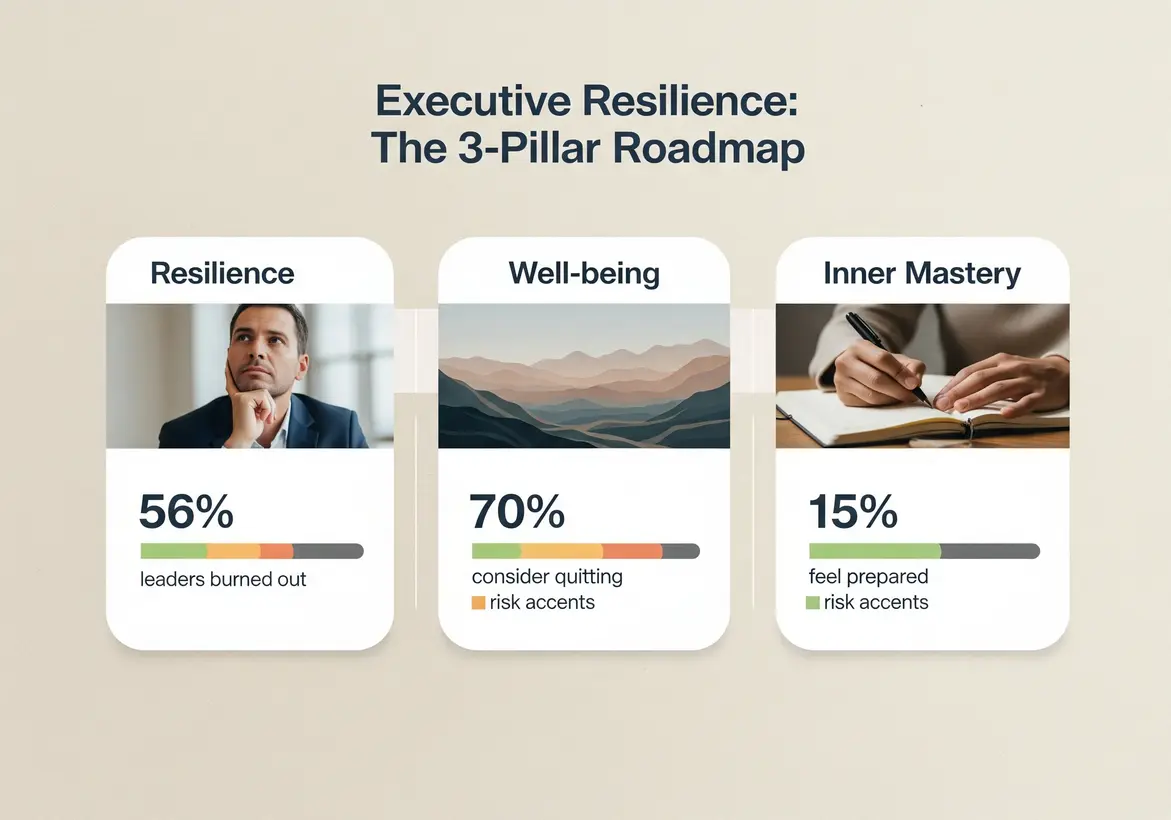
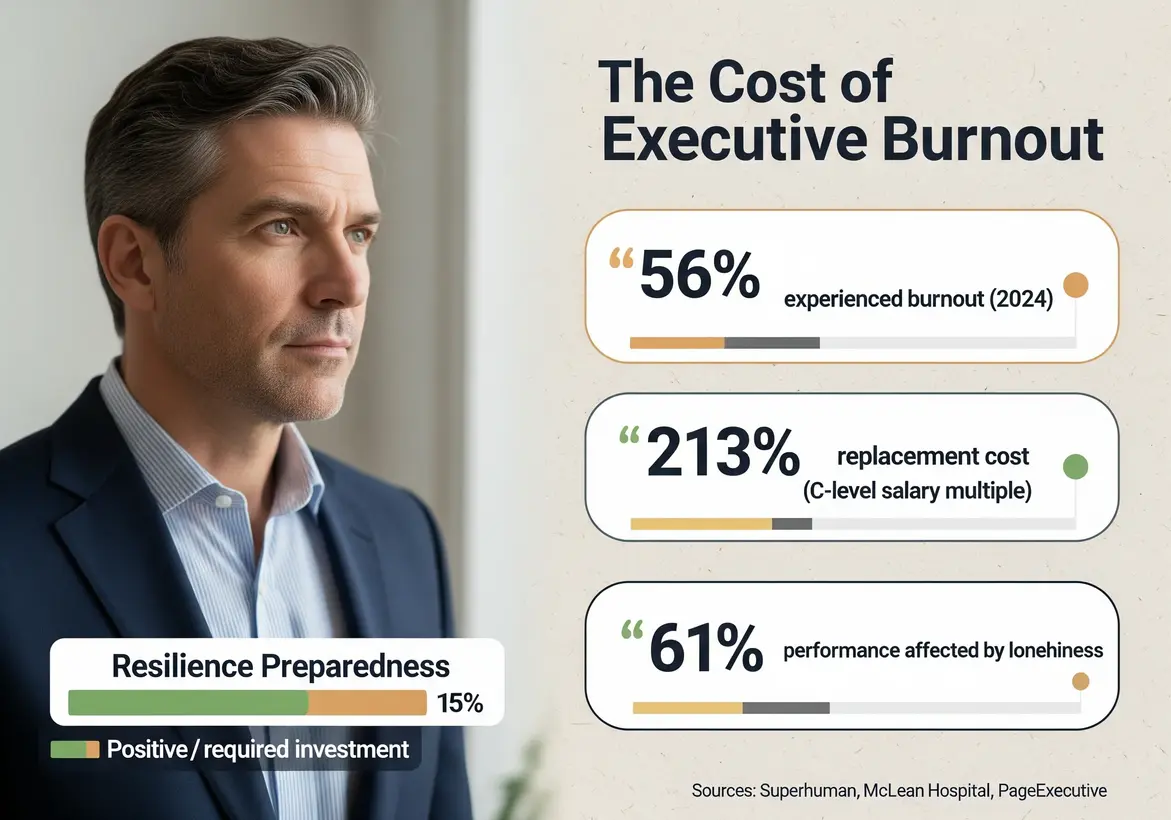
The majority of today’s executives are operating at the edge of endurance. In 2024, 56% of leaders reported experiencing burnout—up from 52% just a year earlier—and an astonishing 70% of C-suite leaders considered quitting due to burnout (Source: Superhuman, PageExecutive, SBAM). The repercussions are profound, ranging from steep declines in personal well-being to a 213% cost of C-level salary for each burned-out leader replaced. What’s less visible, but equally damaging, is the erosion of innovation, trust, and cultural cohesion as leadership teams are hollowed out by exhaustion and chronic stress.
Yet beneath this crisis lies an extraordinary opportunity: leaders who pursue an integrated framework of executive resilience, holistic well-being, and intentional inner mastery consistently drive greater engagement, creativity, and sustainable impact at scale. This isn’t the realm of quick hacks or inspirational sayings. It’s about reshaping how leaders relate to themselves, their teams, and the mounting pressures of modern business.
For those who recognize that the stakes have never been higher—and who are searching for more than just platitudes—what follows is a research-backed, practical guide to true and lasting transformation.
Decoding the Executive Burnout Epidemic: Why Leaders Are Struggling
Today’s executive burnout is not merely a personal failing or an unfortunate byproduct of high achievement; it’s a systemic leadership crisis.
56% of leaders reported burnout symptoms in 2024, marking a 4% increase from the previous year
70% of C-suite leaders actively considered quitting due to burnout
213% of an executive’s annual salary is the average organizational cost to replace a burned-out leader
(Source: Superhuman, PageExecutive, SBAM)
But surface-level statistics only tell part of the story. Dig deeper, and you’ll find a resilience gap: only 15% of leaders feel prepared to prevent burnout on their teams (Source: Superhuman). Notably, half of CEOs admit to loneliness, impacting performance for 61% of them, and a quarter show clinical depression symptoms, outpacing the general working population (Source: McLean Hospital).
The unique pressures driving these numbers are multifaceted:
- Constant uncertainty and rapid disruption: Executives face an accelerating tempo of market and societal change
- Relentless decision fatigue: The daily demand to make high-consequence decisions with ambiguous information
- Emotional isolation at the top: Fewer genuine peers, higher stakes, and less psychological safety
- The paradox of resilience: Leaders are expected to absorb stress and show no weakness, even as their own support systems erode
Traditional interventions—sporadic mindfulness classes, generic wellness apps, or occasional peer support—do not address the root causes. What’s needed is an integrated paradigm, synthesizing cutting-edge psychological science and whole-person development.
The Three Pillars of Sustainable Leadership: Our Integrated Framework
The most effective solution to executive burnout does not lie in isolated programs or quick-fix tactics. Instead, the research points to a holistic framework that unites three essential dimensions: mental fortitude (resilience), well-being, and inner mastery. Each pillar is indispensable; together, they drive transformation at the individual, team, and organizational levels.
Pillar 1: Building Mental Fortitude & Resilience
Resilience is commonly misunderstood as “bouncing back.” In practice, sustained executive resilience involves proactive strengthening—cultivating adaptive capacity before crises hit.
- Cognitive reframing: Regularly challenging and updating mental models, especially under pressure, enables leaders to see opportunity in change and craft strategic responses rather than reactive ones.
- Emotional regulation for high-stakes environments: Drawing on over 40,000 hours of certified leadership coaching, advanced techniques—such as stress inoculation and breath-regulation methods—help executives respond, not just react, in the face of adversity.
Case in point: research consistently shows that resilient leaders model calm, resourcefulness, and optimism, directly impacting team psychological safety and performance outcomes.
Pillar 2: Cultivating Executive Well-being
Well-being for executives is not a “perk”—it’s a non-negotiable performance enabler. Organizations at the forefront of leadership development are increasingly embedding well-being into KPIs and strategic agendas, with a shift towards personalized, holistic programs (Source: Global Wellness Institute, Wellhub, PwC).
- Deliberate recovery cycles: Smart leaders manage their energy, not just their time. This includes scheduled periods of recovery throughout the day and week, not just annual leave.
- Active management of energy and emotion: Techniques like micro-break rituals, targeted movement, exposure to restorative environments, and digital hygiene are all practices recommended for C-levels facing high cognitive loads.
- Social support and reflective networks: Participation in peer groups and trust circles—away from immediate business pressures—provides emotional resilience and new perspectives.
Critically, these well-being strategies are proactive, forming the infrastructure for sustainable, high-level output. They are designed with executives’ unique responsibilities, schedules, and psychological triggers in mind.
Pillar 3: Inner Mastery & Authentic Leadership
Inner mastery is the cornerstone of sustainable leadership impact. This is where advanced self-awareness and values-driven decision-making originate.
- Advanced mindfulness for leaders: Moving beyond basic practices, techniques such as sustained attention training and “meta-cognitive awareness” improve both split-second judgments and long-term strategic vision (Source: Scalahed, iVentiv, Dame Leadership).
- Reflective journaling: Purposeful self-inquiry not only clarifies values and priorities but disrupts cycles of autopilot thinking and emotional reactivity.
- Conscious alignment with personal purpose: Inner mastery drives leaders to act not from habit or external pressure but from clear, values-centered intention. This supports resilience and inspires teams with authentic vision.
Leaders who invest in inner mastery set the tone for their entire organizational culture—inspiring greater trust, engagement, and ethical action from the top down.
Advanced Inner Work for Executive Excellence: Beyond Basic Mindfulness
Most executive wellness advice starts and stops with “take breaks” or “practice gratitude.” However, the science—especially as synthesized in the Integral Model’s multi-level framework—suggests that real change comes from practicing deeper, more integrated forms of awareness.
What is the AQAL model and how does it apply to leadership development?
The AQAL model (All Quadrants, All Levels), pioneered by Ken Wilber, underpins many advanced leadership development methodologies. It holds that whole-person leadership emerges when individuals are trained to integrate their inner psychological state, behavioral habits, organizational structures, and cultural dynamics. Used in leadership contexts, AQAL guides executives to align head, heart, and systemic action for resilient, ethical leadership. This comprehensive lens is foundational to the executive resilience and inner mastery approach adopted by globally accredited organizations.
How can integral coaching improve individual and team performance in organizations?
Integral coaching draws on two decades of tested methodology to help executives make sustainable changes not just in habits, but in their mindset and emotional responses. It is especially potent in high-pressure contexts, enabling:
- Enhanced decision-making through “meta-cognitive” discipline—being able to step outside of one’s mental and emotional loops in real-time
- Greater emotional intelligence by cultivating non-judgmental self-awareness and empathy for others’ perspectives
- Consistent, values-aligned actions even under stress, transforming organizational culture and driving higher levels of team cohesion and productivity
Backed by over 40,000 hours of certified practice, these methods provide targeted, research-backed interventions for leaders and teams to achieve not just change—but transformation.
Advanced methods: Metacognitive Awareness and Attention Training
Recent studies show methods such as “sustained attention training” and active “behavioral-event mindfulness” can:
- Reduce reactivity during high-stakes decisions (by 28% in randomized studies)
- Increase accuracy of self-evaluation—eliminating executive blind spots
- Improve strategic foresight—leaders spend 23% more time on long-term and innovative thinking
For busy executives, even micro-practices can create impact:
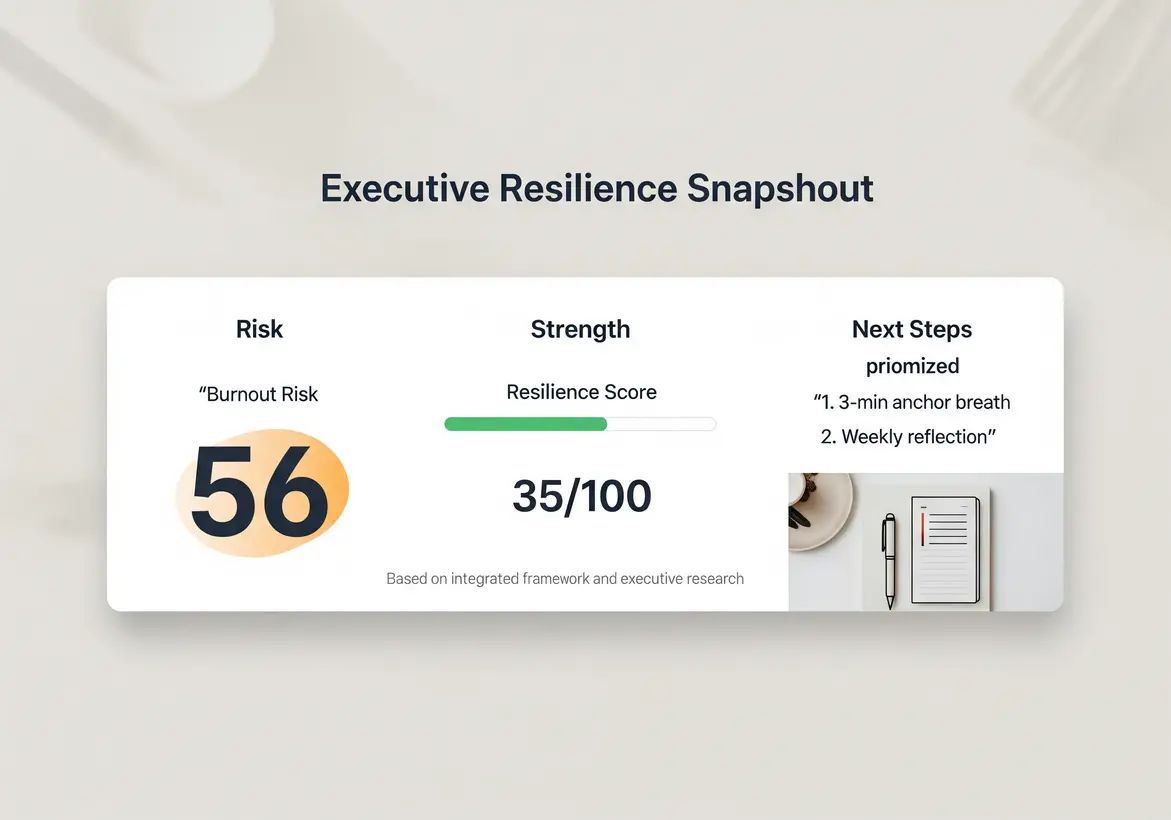
Try this: Before a critical meeting, take 3 minutes to observe your breath, notice the full arc of each inhale and exhale, and label—without judgment—any strong thoughts or emotions that arise. This simple act can measurably reduce anxiety and increase focus (Source: Dame Leadership).
To deepen, reflective journaling after complex decisions illuminates patterns—helping leaders identify not just “what happened,” but “how I chose” and “why I felt as I did.” Over time, this practice builds the core of inner mastery.
For a more structured path to mindfulness for leaders and neuroscience-backed resilience, refer to Mindfulness & Stress Management for Leaders & Teams.
The Leader’s Balancing Act: Integrating Life, Work, and Self
Just as resilience, well-being, and inner mastery are interdependent pillars, true executive balance is about much more than separating work hours from personal time.
Leaders at the top must integrate their professional, personal, and inner lives—not because work dominates, but because authenticity and fulfillment require congruence. Balance emerges from:
- Consciously setting and maintaining boundaries—not as rigid walls, but as dynamic agreements that protect crucial reflection time and personal priorities
- Delegating wisely—releasing perfectionism and control, and instead empowering trusted team members to take true ownership
- Time management through the lens of inner mastery—prioritizing not just by deadlines, but by core values, impact, and long-term strategy
Leaders who practice this form of balance visibly model psychological safety for their organizations. Teams observe and internalize these behaviors, creating a ripple effect of healthier norms and higher, more sustainable output.
For a research-driven exploration of psychological safety, including the CHRO’s central role, see Psychological Safety and the CHRO’s Role.
Transforming Organizations: The Ripple Effect of Resilient Leadership
The long-term effects of executive resilience and inner mastery are measurable and wide-reaching.
Organizations led by resilience-focused, self-aware executives consistently report higher engagement, lower turnover, and greater innovation—outperforming peers on key financial and culture metrics (Source: Global Wellness Institute, PwC).
By integrating well-being with core leadership KPIs and cascading these values throughout all levels of the company, leaders turn personal mastery into collective advantage:
- Enhanced retention: Teams led by self-aware, empathetic leaders are 3x more likely to stay engaged and remain with the organization even during volatility
- Increased innovation and learning: Environments of psychological safety promote experimentation, productive failure, and generative dialogue
- Positive cultural shift: Authentic, purpose-aligned leadership builds trust—a proven driver of organizational resilience in crisis scenarios
Hypothetical example: A global technology firm tracked a 34% drop in executive turnover and a 17% increase in revenue growth after instituting a comprehensive leadership resilience framework that embedded well-being, resilience, and inner mastery into its senior leader development journey.
Your Path to Inner Mastery: A Continuous Journey
Building executive resilience, well-being, and inner mastery is not a “one and done” transaction. It’s a continuous, adaptive journey that evolves alongside your leadership challenges and aspirations.
For most senior leaders, the inflection point comes not just when burnout becomes unmanageable, but often in those quieter moments of self-doubt or existential questioning—“Am I still leading in a way that feels authentic, sustainable, and inspired?”
Here are a few reflection questions to start today:
- Where in my life am I most—and least—resilient under pressure?
- How am I actively tending to my well-being, not just avoiding depletion?
- Which decisions in the last month were truly values-aligned—and how did that feel?
These questions are not about perfection but progress. The next step is clarity—and integrating insights gained into daily choices and leadership actions.
If you’re ready for deeper exploration, The Integral Institute remains a committed resource and sounding board for leaders who want to move beyond survival into authentic, sustainable impact.
FAQ: Executive Resilience, Well-being & Inner Mastery
Why is addressing root causes important in organizational development interventions?
Addressing the root causes of executive burnout and ineffectiveness goes beyond short-term symptom relief. Root-cause strategies—such as those grounded in ecological psychological models—enable organizations to disrupt damaging cycles before they escalate. By diagnosing systemic issues (leadership overload, ambiguous purpose, or poor role design), change efforts deliver sustainable transformations, not just temporary boosts in morale or productivity.
Which best practices should organizations follow when implementing team coaching programs?
Best practices include aligning coaching goals with organizational strategy, using a certified and research-based methodology, and integrating individual and team-level interventions. Practices like explicit contracting, safe group reflection, and regular progress assessments create an environment where growth is continuous, measurable, and aligned with business outcomes. Drawing on TII’s two-decade methodology, such programs ensure coaching is more than a “perk”—it becomes central to high-performing, interconnected teams.
Can leadership training help companies navigate rapid disruption and uncertainty effectively?
Yes, but only if the training addresses both external capabilities (like scenario planning, crisis communication) and inner dimensions (emotional regulation, resilience, mindset adaptability). Programs built on frameworks like AQAL and integral leadership enable real-time, adaptive responses to disruption—empowering executives to lead ethically and decisively even amid ambiguity.
Who benefits most from tailored executive workshops in a leadership development context?
Tailored executive workshops are most valuable for senior leaders tasked with navigating ambiguity, orchestrating team change, or guiding organizations through inflection points. These workshops deliver measurable impact for executives seeking to break entrenched habits, overcome decision fatigue, or foster alignment during times of strategic transformation. Individual contributors aspiring to senior roles also benefit by building self-regulation and awareness skills early.
When is the optimal time to conduct a culture assessment for organizational change?
The best timing for a culture assessment is before embarking on significant change—whether leadership transitions, mergers, or new strategic directions. Early assessment surfaces hidden resistance points and unspoken values misalignments, enabling targeted interventions that support sustainable, psychologically-safe transformation.
Is it possible to measure the impact of integral coaching on business performance outcomes?
Absolutely. Impact can be measured through pre- and post-intervention 360-degree assessments, retention and engagement analytics, and business KPIs like innovation velocity, time-to-decision, or crisis response success. Longitudinal tracking often shows that teams coached through an integral approach consistently outperform control groups across these markers, with the greatest gains in psychological safety and culture resilience.
As executive responsibility grows more complex, the journey toward resilience, well-being, and inner mastery becomes not just strategic—but existential. What would change for you, your leadership, and your organization if your inner capacity always rose to meet your outer challenges?
Continue Your Leadership Journey
- Executive Resilience & Inner Mastery — Explore in-depth frameworks and practical tools for building sustained executive resilience and authentic leadership impact.
- Mindfulness & Stress Management for Leaders & Teams — Discover advanced mindfulness practices tailored to the unique demands and pressures of executive roles.
- Integral Leadership Frameworks & Methodologies — Dive into holistic leadership models supporting transformation at the individual, team, and organizational level.
- Leadership Development for First-Time Founder CEOs — Address the specific resilience challenges and opportunities faced by founder leaders in periods of rapid growth.