

Imagine this scenario: Your latest diversity audit lands on your desk. The numbers at the entry and mid-manager levels are promising—your recruitment strategies are working. But as your eyes scan the upper rows of the spreadsheet—Directors, VPs, and the C-Suite—the diversity drops off precipitously.
You aren’t facing a pipeline problem; you are facing a velocity problem.
For many Chief Human Resources Officers (CHROs), this is the “broken rung” of the corporate ladder. High-potential talent from underrepresented groups often stalls in middle management, not due to a lack of capability, but due to a lack of access to the unwritten rules, networks, and advocacy that accelerate a career.
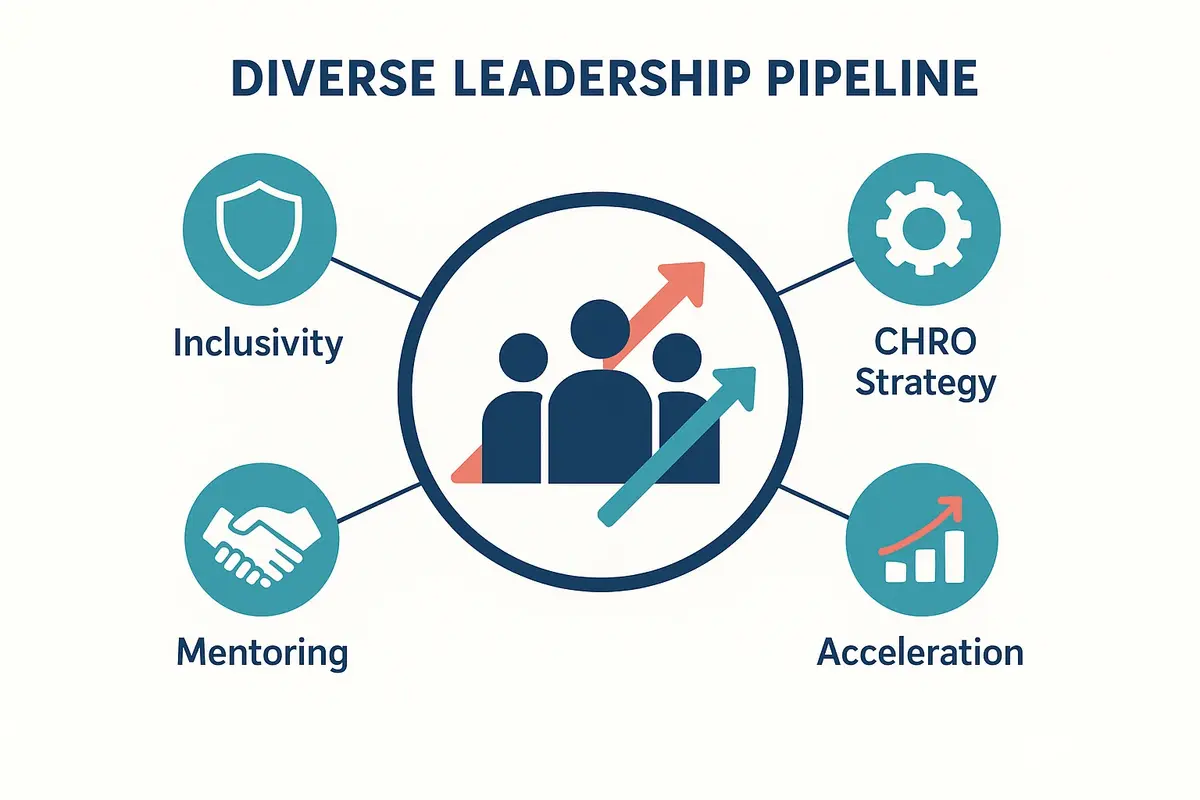
The solution isn’t just “more mentoring.” The solution lies in architecting inclusive mentoring ecosystems specifically designed for acceleration. It requires moving beyond “buddy systems” to strategic, measurable interventions that transform organizational culture and leadership composition.
Beyond the “Coffee Chat”: Defining Inclusive Mentoring
To understand how to accelerate pipelines, we must first distinguish between general mentoring and inclusive mentoring.
Traditional mentoring often relies on “chemistry,” where senior leaders pick protégés who remind them of themselves. While natural, this unconscious affinity bias reinforces the status quo. If your leadership team is homogenous, their organic mentees will be too.
Inclusive Mentoring is intentional. It is a structured approach where the organization actively bridges the gap between diverse high-potentials and senior leadership. It is designed to dismantle systemic barriers by providing access to social capital, institutional knowledge, and visibility.
From an integral leadership perspective, this isn’t just about individual career climbing; it is about harmonizing the individual’s potential with the organization’s need for diverse thought and innovation. Research consistently shows that companies with diverse leadership generate significantly higher innovation revenue, making this a business imperative, not just a cultural one.
Architecting the Program: A CHRO’s Strategic Approach
Designing a program that actually moves the needle requires a shift from passive administration to active architecture. The goal is to create a comprehensive ecosystem where development is continuous and aligned with business strategy.
1. The Strategic Audit
Before matching a single pair, successful CHROs analyze the current velocity of their talent. Where exactly do diverse candidates stall? Is it the move from Manager to Director? Or VP to SVP? Identifying these friction points allows you to tailor the mentoring intervention.
2. Selecting the Right Models
There is no “one size fits all” in corporate mentoring. Depending on your audit findings, you might deploy different modalities:
- Sponsorship vs. Mentoring: This is a critical distinction. A mentor talks to you; a sponsor talks about you. To break the glass ceiling, diverse talent needs sponsors who advocate for them behind closed doors during succession planning.
- Reverse Mentoring: Pairing junior diverse talent with senior executives. This fosters two-way learning, helping senior leaders understand the lived experience of underrepresented groups while giving junior talent access to the C-suite.
- Group Mentoring: Useful for creating cohorts of peer support, which builds a sense of belonging and psychological safety—key factors in retention.
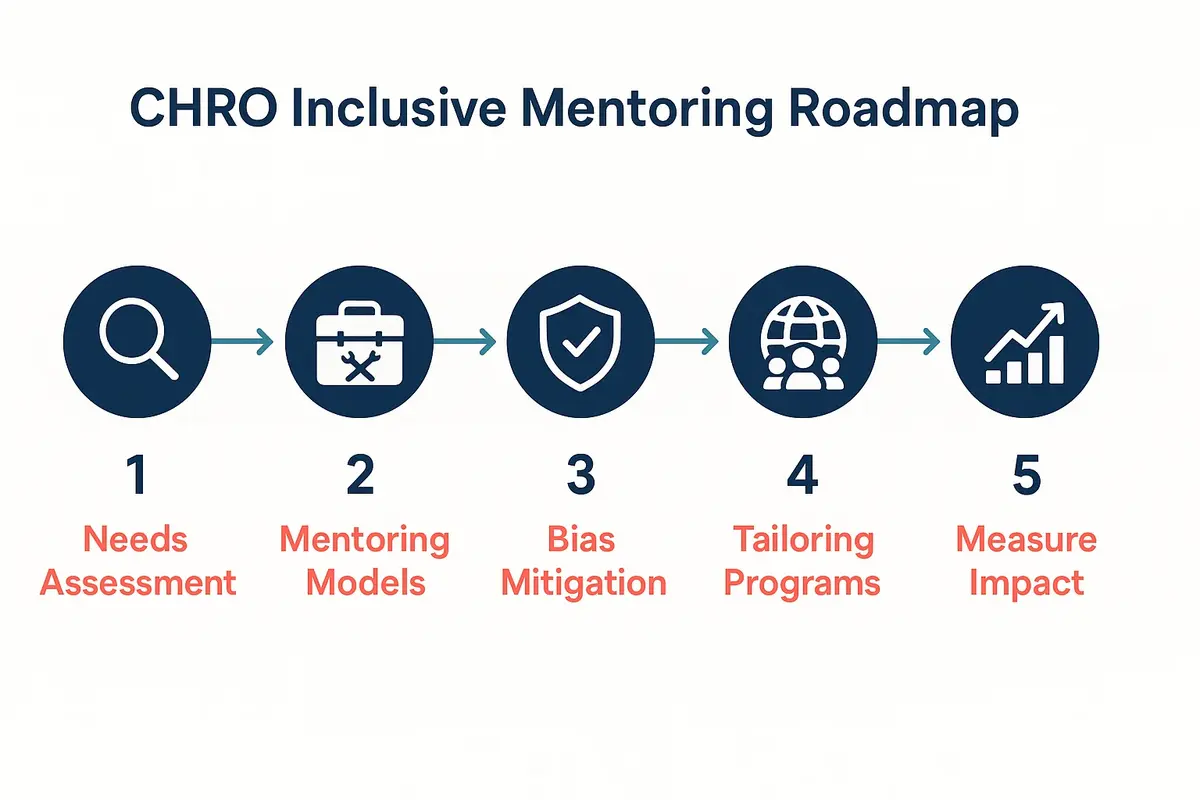
3. Bias-Proofing the Process
The most well-intentioned programs can fail if bias creeps into the matching process.
- Structured Matching: Utilizing data-driven matching (sometimes aided by technology) can help remove the “affinity bias” of manual pairing.
- Training is Non-Negotiable: Mentors must be trained on unconscious bias, empathy, and how to have sensitive conversations. A mentor who dismisses a mentee’s experience with microaggressions can do more harm than good.
- Safety First: The program must establish psychological safety. Mentees need to know that their vulnerability won’t be weaponized against their career progression.
The Acceleration Factor: Speed and Visibility
For CHROs, the metric that matters most is “time to readiness.” How quickly can we prepare a high-potential leader for a key role?
This is where modalities like speed mentoring can play a surprising strategic role. By exposing diverse talent to multiple senior leaders in short bursts, you rapidly expand their internal network and visibility. It breaks down silos and allows talent to be “seen” by a broader cross-section of the executive bench.
However, for the highest levels of the organization, deep, long-term relationships are required. C level mentoring ensures that those poised for the C-suite receive the nuanced, high-stakes guidance necessary to navigate complex political and strategic landscapes.
Measuring What Matters
If you only measure “participant satisfaction,” you are measuring the experience, not the outcome. To validate the ROI of inclusive mentoring, CHROs must look at harder metrics.
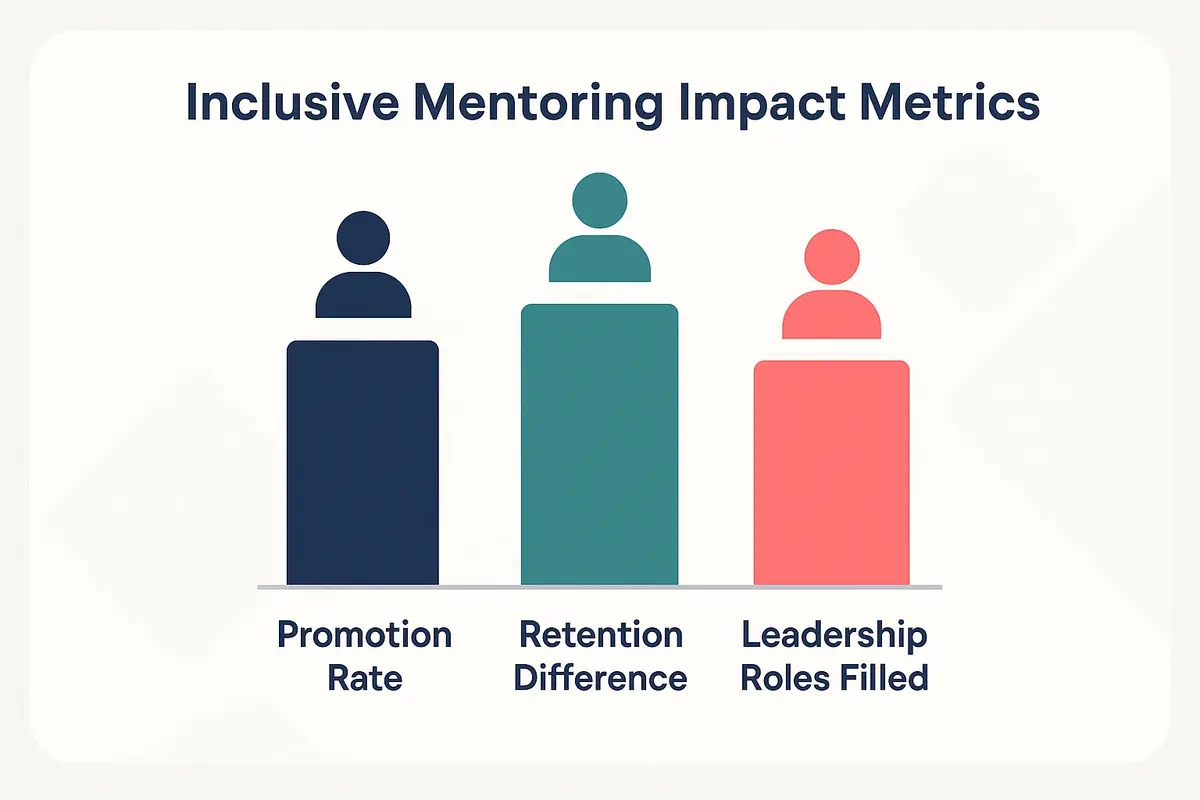
Leading organizations track:
- Promotion Velocity: Do participants move up faster than non-participants?
- Retention Differentials: Are we retaining diverse talent at higher rates?
- Cross-Functional Movement: Are mentees breaking out of silos?
- Readiness Ratings: How has the bench strength for critical roles improved?
Data from industry leaders like Lenovo has shown that sponsored leaders can see promotion rates as high as 80%, proving that when advocacy is formalized, acceleration happens.
The Cultural Ripple Effect
Implementing these programs does more than just promote individuals; it signals a cultural shift. It moves the organization toward an integral institute of learning where leadership is viewed as a collective capability rather than an individual sport.
When senior leaders engage in inclusive mentoring, they often find their own executive presence and influence enhanced. They become more empathetic, more culturally aware, and better equipped to lead in a global marketplace. The mentor grows just as much as the mentee.
FAQ: Common Questions for CHROs
Q: How do we get budget approval for a dedicated inclusive mentoring program?A: Frame it as a retention and succession strategy rather than a DEI initiative. Calculate the cost of turnover for high-potential diverse talent and compare it to the program investment. The business case for innovation revenue and market representation is also powerful.
Q: Should participation be mandatory for senior leaders?A: While “mandatory fun” rarely works, making mentorship a core competency for leadership promotion does. If you want to be an EVP, you must demonstrate a track record of developing diverse talent.
Q: How do we avoid “tokenism” in matching?A: Focus on professional goals first. Match based on the skills the mentee wants to acquire (e.g., P&L management, digital transformation) rather than demographic matching alone. However, allowing mentees to request mentors with shared lived experiences should be an option.
Q: What if we don’t have enough diverse mentors?A: This is common. It emphasizes the need for inclusive mentoring, where majority-group leaders mentor diverse talent. This is often more effective for sponsorship, as it connects diverse talent with the current holders of power.
Q: How do we scale this globally?A: Leverage technology for matching and administration, but allow for regional customization. Cultural nuances in leadership and respect for hierarchy vary significantly across geographies; a program that works in New York may need adjustment for Tokyo.
The Path Forward
Accelerating diverse leadership pipelines is not an overnight fix. It requires a sustained commitment to viewing talent development through a lens of equity and strategy. By implementing inclusive mentoring programs that are measured, managed, and deeply integrated into your integral institute of leadership development, you turn your diversity goals into a tangible, high-velocity reality.
The organizations that win in the next decade will be those that don’t just hire for diversity, but actively build the bridges for that diversity to rise.