

Building an effective succession pipeline enables General Managers (GMs) to proactively identify, develop, and mentor the next generation of business unit leaders—ensuring leadership continuity and robust performance during organizational change, growth, or unforeseen transitions. This approach is critical for any business unit that values long-term stability, strategic agility, and talent development beyond simple replacement planning. By understanding and implementing a stepwise, evidence-based methodology, GMs and their teams can transform succession from a reactive HR exercise into a strategic, culture-building process that directly drives business outcomes.
Why Succession Pipelines Matter for GMs—Beyond Replacement Planning
When a business unit thrives through seamless leadership continuity, growth compounds, and organizational memory endures. In contrast, unplanned transitions or unclear succession can create uncertainty, disrupt operations, and erode trust—costing organizations millions in lost productivity or competitive advantage. The hard truth: 86% of leaders recognize succession planning as a top-tier priority, yet only 14% rate their process as effective (Source: Harvard Business Review, 2022).
For GMs responsible for matrixed or international teams, the risks and opportunities multiply:
- The next leader must balance local market expertise with global strategy.
- “Cloning” the incumbent often fails in dynamic, evolving contexts.
- Misalignments between business unit cultures and corporate governance can derail even the most promising candidate.
Yet, within these complexities lies a major opportunity: GMs who master succession planning not only protect their unit’s future but also elevate organizational culture and performance—often becoming internal case studies for excellence.
What is the AQAL model and how does it apply to leadership development?
The AQAL model (All Quadrants, All Levels), conceived by Ken Wilber, stands as one of the most comprehensive frameworks in modern leadership theory. At its core, AQAL maps development across both internal (mindset, values) and external (structures, systems) dimensions—at the individual, team, and organizational scale. Applying AQAL to leadership development encourages GMs to assess and grow talent holistically:
- Individual Quadrants: Beyond skills and experience, do future leaders align with core values, vision, and self-awareness?
- Team Quadrants: Does the succession process build on team dynamics, emotional intelligence, and collective purpose—not just functional expertise?
- Organizational Quadrants: How do systemic policies (assessment tools, L&D programs) and cultural cues (feedback openness, innovation appetite) shape the leadership pipeline?
Effective GMs embed AQAL’s principles by not only evaluating “what” a future leader has achieved, but “how” and “why” they operate within both visible and invisible dimensions of the business.
Drawing on TII’s two-decade integral methodology, organizations that go beyond linear checklists and embrace multi-level, cross-perspective development consistently outperform their peers in leadership readiness and retention (Source: Deloitte, Global Human Capital Trends, 2023).
Succession Pipeline vs. Replacement Planning: Core Concepts Demystified
Confusing succession pipeline with “replacement planning” is one of the most common—and costly—pitfalls for mid- and large-sized organizations. Here’s the critical distinction:
- Replacement planning is about filling a vacancy fast, often with whoever’s “next in line” on an org chart.
- Succession pipeline is an ongoing, talent-centric process to identify, grow, and ready multiple candidates over time, with attention to fit, diversity, and business strategy.
A robust succession pipeline framework—such as those highlighted by predictive analytics—leverages performance data, structured feedback, internal mobility metrics, and transparent criteria to ensure the future isn’t left to chance.
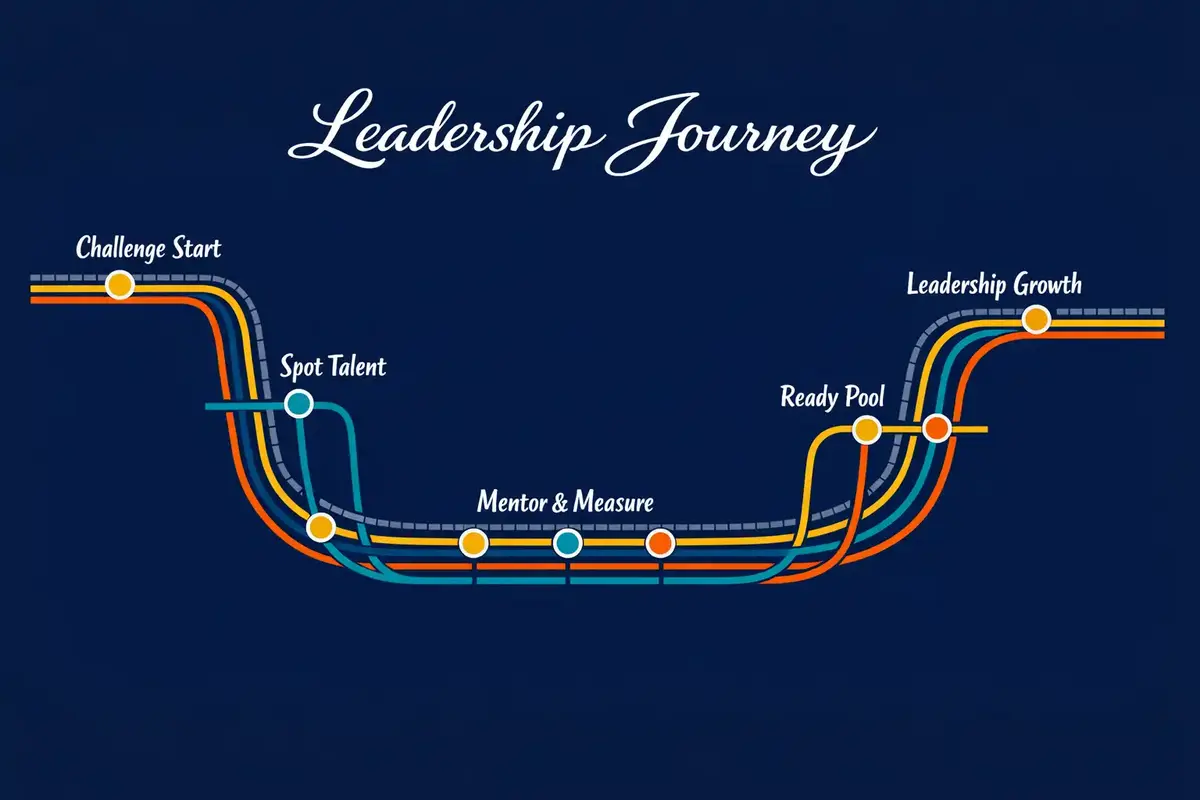
Typical succession pipeline sequence for GMs:
- Role Mapping: Define critical leadership roles, success profiles, and future needs.
- Talent Identification: Use multi-source data (assessments, 360° reviews, business KPIs) to spot high-potentials (HIPOs) with learning agility and leadership appetite.
- Development & Mentoring: Deploy tailored mentorship programs, developmental assignments, and peer or reverse mentoring cycles.
- Progress Tracking: Continuously audit readiness with measurable KPIs, not just manager perception.
- Transition & Feedback Loop: Enable staged handovers, learning reviews, and iterative talent recalibration.
How can organizational assessments help identify root causes of performance challenges?
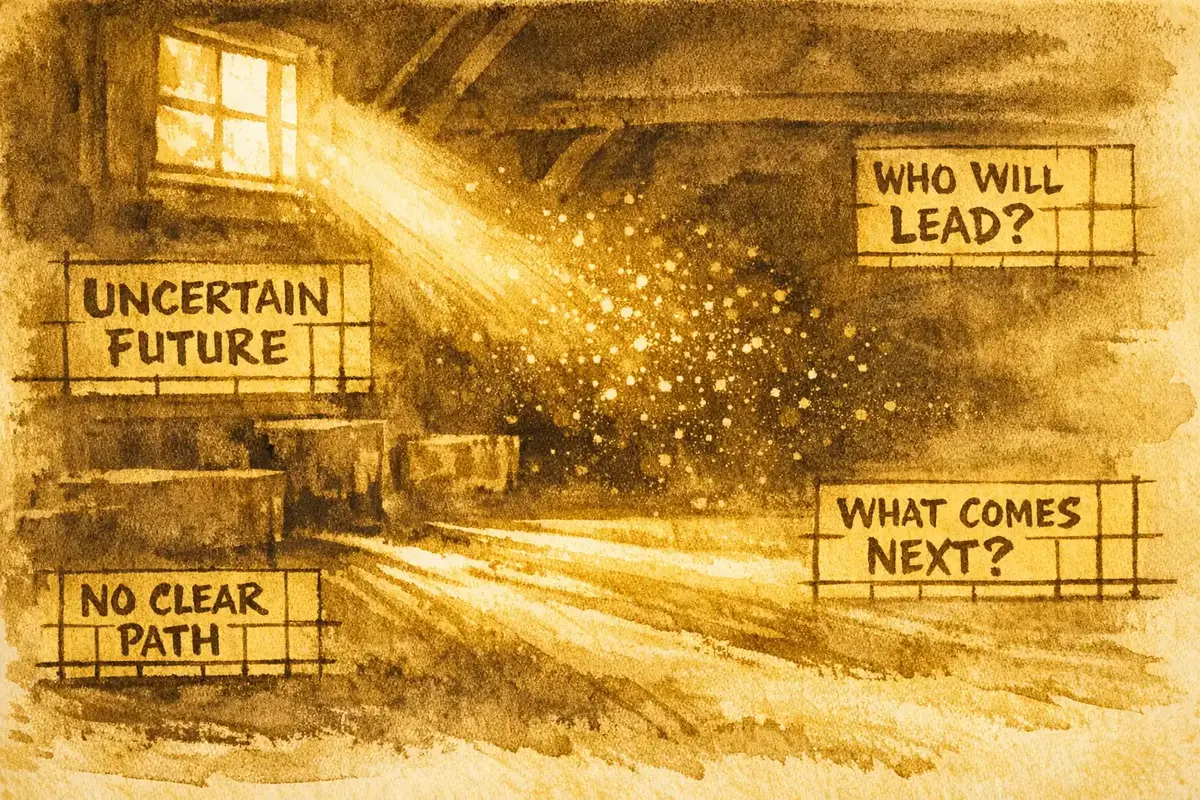
Too often, leadership pipeline initiatives stall because decision-makers misdiagnose symptoms (“we don’t have enough HIPOs”) for root causes (hidden bias, poor talent mobility, inconsistent feedback). An integral assessment process—grounded in multi-level data—enables GMs to:
- Detect systemic obstacles (opaque promotion criteria, regional favoritism, insufficient cross-unit exposure).
- Spotlight team dynamics, engagement, leadership readiness, and emerging conflicts.
- Correlate development gaps with measurable business impacts (missed targets, innovation lags, turnover spikes).
In a 2021 cross-sector study, organizations using structured, 360° assessment frameworks had 38% higher rates of successful leadership transitions versus those that relied purely on subjective nominations (Source: Deloitte, 2021).
The secret is moving beyond one-off performance reviews to aggregate both “hard” KPIs (P&L metrics, innovation rates) and “soft” signals (collaboration, adaptability, succession readiness). This assessment approach, backed by over 40,000 hours of certified coaching practice, helps to prevent the classic “Peter Principle” error—promoting high performers into roles where they struggle, with consequences for both the individual and entire business unit.
Why is integrating individual, team, and organizational levels crucial for effective leadership coaching?
Leadership transitions are rarely linear. A promising individual contributor may excel in one context but founder when thrust into new environments, especially if key dynamics are overlooked. That’s why leading GMs take an integral leadership development approach—working simultaneously at three interrelated levels:
- Individual: Fostering growth mindsets, self-leadership, ethical courage, and self-awareness.
- Team: Building trust, conflict management skills, and fostering open dialogue for cross-functional synergy.
- Organization: Aligning leadership behaviors with enterprise values, evolving strategies, and shared vision.
Frameworks grounded in the Integral Model’s multi-level perspective disrupt the outdated “star performer” focus and empower future leaders to scale their impact through others, not just solo expertise. Research shows that organizations combining team and organizational leadership development see up to a 31% uplift in overall performance compared to those focusing only on individuals (Source: McKinsey, 2023).
Which strategies are most effective for building high-performing leadership teams in complex business environments?
Leading GMs don’t just “pick” their successors—they accelerate real development by weaving together multiple, evidence-based strategies.
- Analytical Talent Mapping: Use tools (like the 9-box grid) to plot candidates across performance and potential, ensuring objectivity.
- Diverse Mentorship Models: Design interlinked mentorship programs—including peer, upward, and cross-functional mentoring.
- Developmental Stretch Assignments: Embed candidates in complex, cross-unit projects or international assignments, not just shadowing roles.
- Progressive Accountability: Define clear growth milestones, feedback loops, and KPIs tied directly to team and business outcomes.
- Cultural Calibration: Adapt approaches for multicultural or decentralized environments, crucial for global organizations.
When Toyota redefined its leadership pipeline with rotational assignments and peer coaching, it boosted readiness ratios by 28% across its EMEA units (Source: Toyota Europe Human Capital Report, 2020).
For GMs facing the added challenges of family-owned or multi-generational business units, thoughtful succession planning can address both continuity and cross-generational conflict—see real-world strategies for GM succession in family business contexts.
Can customized development interventions accelerate cultural transformation within an organization?
Standardized programs may fall short in today’s volatile conditions. Customized development interventions—tailored to business unit strategy, culture, and context—enable GMs to:
- Rapidly close leadership gaps highlighted in organizational assessments
- Strengthen trust, transparency, and accountability throughout the succession pipeline
- Increase employee buy-in for the process, reducing resistance or fear of “favorites”
A transparent, data-driven succession system doesn’t just produce better leaders; it actively builds an environment where high-potentials believe growth is possible. In high-performing organizations, 81% of HIPOs cite a clear, merit-based succession pipeline as the main driver of retention and discretionary effort (Source: CEB Global Talent Monitor, 2022).
These interventions often include:
- Tailored coaching journeys for individual high-potentials (leveraging Integral Coaching frameworks)
- Team offsites and cross-functional innovation sprints (to build lateral leadership)
- Business unit leader roundtables to benchmark, share insights, and refine approach
- Multicultural and locality-specific modules when dealing with global pipelines

Is team coaching more impactful than individual coaching for driving organizational change?
Individual coaching can unlock potential in emerging leaders, but research and lived experience show that team coaching delivers greater transformation at the organizational level. When GMs facilitate team-wide learning, feedback, and co-creation, they build:
- Cohesion and trust among potential successors—reducing rivalry and knowledge silos
- A shared vision of what future leadership should look like
- Mechanisms for cross-functional synergy and performance across business units
Backed by Integral Coaching’s multi-level framework, team coaching addresses the collective blind spots and cultural patterns that often undermine succession plans designed in isolation—boosting readiness and reducing transition risk in ways solo coaching rarely achieves.
How do facilitation and mentoring complement executive workshops in sustaining leadership transformation?
Sustained leadership transformation isn’t built in a training room—it’s forged through ongoing facilitation, real-world application, and layered executive mentoring. A holistic pipeline process often includes:
- Executive workshops for joint scenario planning and succession risk mapping
- Ongoing facilitated sessions for feedback, mindset shifts, and action plan calibration
- Senior leader mentoring (mentoring leadership) for ongoing support, challenge, and institutional knowledge transfer
- Ready access to external expertise in core areas like crisis management, culture shaping, or DEI
Organizations blending workshops with ongoing mentoring and facilitation report up to 47% greater leadership “stickiness” post-transition, and significantly outperform in business KPIs such as time-to-market and sustainable margin growth (Source: Korn Ferry, Global Talent Trends Report, 2021).
When should a company consider partnering with an external firm for leadership and organizational development?
When internal pipelines stall, outside objectivity and expertise can unlock progress. Companies should consider partnering with an external integrative firm when:
- The business unit faces leadership accountability breakdowns, stagnating results, or mounting people risks
- Internal succession processes are plagued by bias, politics, or lack of trust
- Significant transformation (merger, digitalization, crisis) requires accelerated development and new frameworks
- The organization wants to leverage new methodologies (such as the AQAL model), benefit from benchmarking, or build capacity in mentoring and coaching cultures
Crucially, a credible partner operates as a strategic collaborator—diagnosing root causes, designing tailored interventions, and nurturing an ongoing culture of leadership development and accountability, rather than dropping pre-set off-the-shelf offerings.
Common Pitfalls and How GMs Can Avoid Them
- Cloning the incumbent: Relying on a single “next-in-line” can lead to stale thinking—diversify your pool.
- Ignoring early-warning signs: High-potential does not mean “ready now”—invest in staged development and regular audits.
- Misaligning KPIs: Measure success not only by role coverage, but business impact: innovation speed, engagement, time-to-fill for successors.
- Underutilizing mentoring and coaching: Peer and upward mentoring are as valuable for readiness as top-down guidance.
- Treating succession as “HR’s job”: GMs must own the pipeline—supported by predictive analytics, cross-unit collaboration, and robust feedback.
FAQ: Developing a Succession Pipeline
What’s the difference between a succession pipeline and traditional succession planning?
A succession pipeline is a proactive, ongoing process to identify, develop, and prepare multiple future leaders for business unit roles, while traditional “succession planning” often focuses solely on documenting replacements for specific positions. The pipeline model emphasizes talent development, diversity, and strategic fit rather than just filling potential vacancies on short notice.
How do GMs identify genuine high-potentials without bias?
GMs leverage structured talent assessments, 360° feedback, multi-rater performance reviews, and tools like the 9-box grid to ensure objectivity. Blind spots are minimized by using data from business results, peer and direct-report feedback, and correlation with cultural behaviors rather than just relying on “gut feel.”
How does a lack of formal HR affect building a pipeline?
In the absence of a formal HR team, GMs can still apply structured frameworks—role mapping, peer feedback, developmental projects, and mentoring. Open documentation, transparent criteria, and external resources or advisory partners can help build credibility and mitigate risks of insular decision-making.
What is the Peter Principle and how can it be avoided in succession?
The Peter Principle describes the phenomenon where employees are promoted to their “level of incompetence.” To avoid this, GMs should focus on readiness and development—using assessments, trial assignments, and ongoing coaching—not just on-track performance or tenure.
Should business units benchmark internal candidates against external hires?
Yes. Effective GMs regularly benchmark the pipeline against external talent markets, ensuring internal development keeps pace with current and future industry standards. This includes leveraging external assessments, competitive intelligence, and targeted recruiting as checks and balances.
What KPIs should GMs use to measure succession success?
Key performance indicators include leadership readiness scores, time-to-fill for critical roles, retention and engagement rates of high-potentials, leadership diversity metrics, and direct links to unit performance measures such as innovation, margin improvement, and business continuity after transitions.
Is mentoring more effective than leadership workshops alone?
Workshops provide knowledge and frameworks, but ongoing mentoring solidifies learning, accelerates developmental feedback, and builds long-term relationships. The most robust pipelines combine both, embracing formal programs for knowledge and mentorship for sustained growth.
Succession planning—when owned and executed by GMs as a core responsibility—becomes less about risk mitigation, and more about actively shaping the future of the business unit, the team, and the wider organization. Consider what story your pipeline will tell a year or two from now. Is it one of continuity, readiness, and growing opportunity—or a scramble every time a key player moves on?
Continue Your Leadership Journey
- Predictive analytics in succession pipeline design — See how integrated data frameworks help surface and develop high-potentials for business unit leadership.
- Mentorship programs rooted in holistic development — Explore how tailored mentorship unlocks talent at every level and supports real succession momentum.
- Leadership development for GMs and emerging leaders — Learn how to align personal growth and organizational strategy in leadership development initiatives.
- Accountability in decentralized business units — Discover how GMs empower teams while maintaining performance standards and culture alignment.