

Fostering an innovation mindset in second- and third-generation leaders of traditional family businesses means helping successors deliberately integrate heritage with forward-looking adaptability. For these leaders, innovation is not about breaking with the past—it is about evolving the family’s legacy to remain relevant in a world of accelerating change. By understanding key psychological, governance, and leadership development strategies, readers will be able to identify where their family business sits on the innovation journey, recognize hidden barriers, and explore actionable frameworks for balancing tradition and transformation.
Imagine a family business handed down for three generations: the founder’s portrait is on every wall, the product line hasn’t changed in 25 years, and the annual debate at the family council is whether it’s even safe to try something new. This scenario is familiar to millions of enterprises worldwide, many of which quietly hope that tradition itself will future-proof their legacy.
More than 70% of family businesses fail to survive beyond the second generation—and the inability to adapt is a top root cause (Source: Family Firm Institute, Global Data Report, 2023).
A legacy culture provides unity, but in an era of constant disruption, tradition alone is no longer enough. Research shows that family businesses in Europe and Latin America that successfully navigate generational transfer combine innovation with intentional governance updates and candid intergenerational dialogue—not by abandoning their roots, but by redefining them for a new context (Source: IMD Global Family Business Survey, 2021).
The AQAL model (All Quadrants, All Levels) underpins many of today’s most advanced approaches to integral leadership development in family businesses. This framework uniquely considers four main perspectives:
- Individual-Interior (Mindset, self-awareness)
- Individual-Exterior (Skills, behaviors, competencies)
- Collective-Interior (Family values, culture, emotional dynamics)
- Collective-Exterior (Structures, governance, roles)
With AQAL, innovation is not treated as a single smart idea, but as a systemic shift involving personal growth, group psychology, procedural rituals, and governance reform. Drawing on TII’s two-decade integral methodology, high-impact innovation journeys help families “map” not just their products and strategies, but their emotional inheritance, communication patterns, and tacit rules. Vertical leadership development (growing from tactical problem-solver to system-level innovator) becomes the blueprint for transformative progress, connecting individual and collective strengths in a grounded way.
Equipping next-generation leaders to work across all four quadrants encourages a move from “preservation versus disruption” to “preservation through adaptive renewal.”
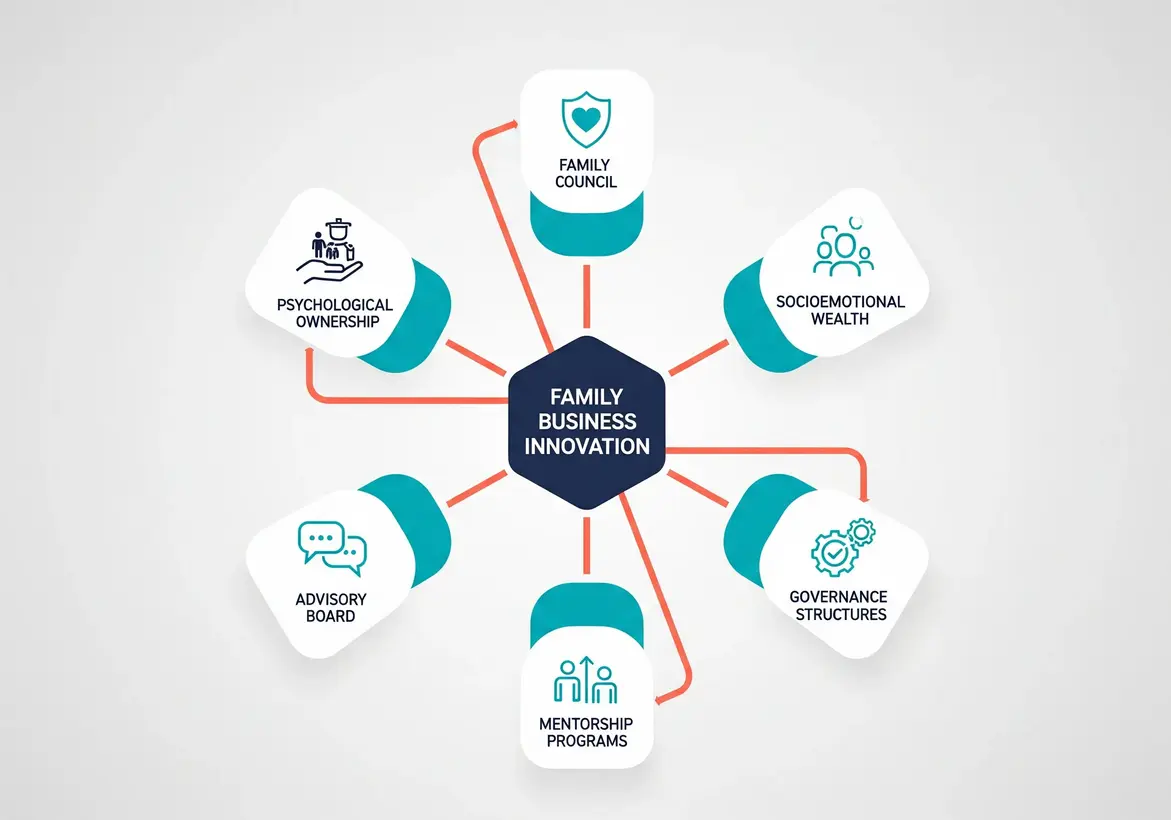
In public firms, innovation is often about market share or outpacing the competition. In family businesses, however, psychological ownership and socioemotional wealth (the family’s emotional investment in the enterprise) create unique dynamics. Leadership research finds that second-generation successors face balancing acts between “tradition traps” and the pressure to become the “rebel innovator”—a paradox that often produces stalemate rather than action (Source: Cecily Group, 2022).
An innovation mindset in this context involves:
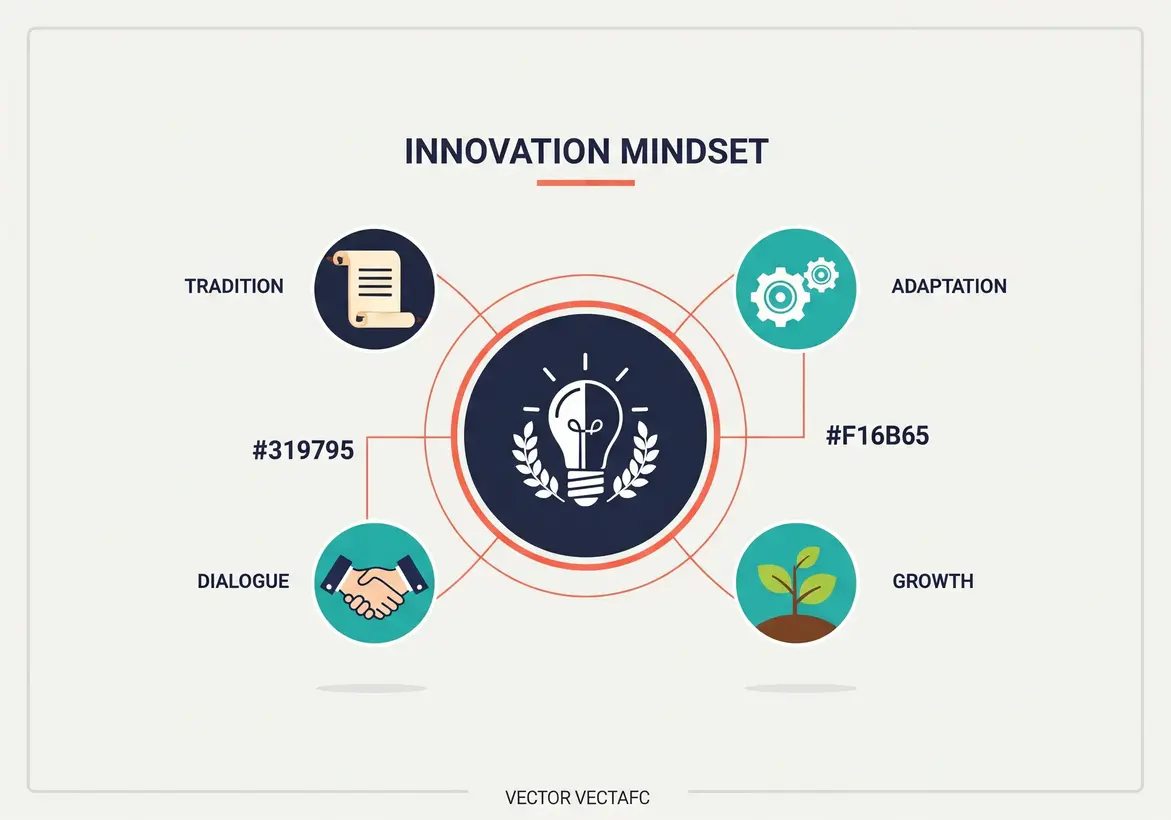
- Reframing legacy as a living asset—not a fixed museum piece
- Normalizing generational tension, treating disagreement as potential not a threat
- Experimenting in low-risk ways (pilot projects, “innovation funds,” new councils/open forums)
- Integrating non-family perspectives via strategic advisors or professional managers to create healthy challenge
Crucially, mindset is not simply about risk appetite. It’s the ongoing capacity to learn, unlearn, and weave new approaches into the fabric of tradition.
Focusing only on surface solutions—a new tech system, a branding update, sending next-gen members to an innovation course—rarely unlocks real change in family businesses. Research across 500+ multi-generational organizations shows that sustainable innovation requires uncovering root causes, not just symptoms, of performance rigidity (Source: IMD, “Family Business Fundamentals”, 2022).
Root causes almost always span three levels:
- Personal Beliefs: Is the family story about safety and stability, or risk and renewal?
- Emotional Dynamics: Are tensions and “sacred cows” discussed openly, or hidden beneath politeness?
- Structural Rituals: Are family meetings forums for real debate, or ceremonies to repeat the past?
An effective intervention integrates all three: changing a governance process while simultaneously equipping heirs with mindset tools and “permission” to question without rupture. Grounded in the Integral Model’s multi-level framework, such holistic approaches have been shown to increase the rate of successful generational transitions by 32% within five years (Source: Family Business Magazine, “Pathways to Agility”, 2023).
Barriers within family firms, particularly in established non-Western contexts, often include:
- Deference to Elders: Fear of “upsetting the founder,” or cultural prohibitions on challenging authority
- The “Tradition Trap”: The belief that innovation equals disrespect or abandonment of hard-won legacy
- Hidden Emotional Loyalties: Not wanting to “outgrow” siblings, uncles, or the family “myth”
- Decision Paralysis: Too many family decision-makers, leading to a lowest-common-denominator approach
Interestingly, research continues to debunk the myth that “breaking” with tradition is necessary. Case studies from Mars, Carvajal, and Ferrero demonstrate that families which openly integrate new rituals—like reverse mentoring breakfasts (younger members sharing tech trends, elders telling history through challenge stories)—create cultural permission for experimentation.
“The most critical innovation breakthroughs often begin in the informal family ritual zone, not the boardroom.”
—IMD Family Business Blog
For families experiencing conflict, resources such as guidance on intergenerational conflict in family business can help surface and normalize challenge into productive learning.
Classic “innovation workshops” may create temporary enthusiasm; transformation occurs when growth is layered at all three levels:
- Individual: Next-gens receive integral leadership development through coaching and peer benchmarking—going beyond attendance at courses to practice new skills in real decisions
- Team: Joint family and non-family executive retreats become forums for co-defining future strategy, facilitated by a neutral expert to bridge generational divides
- Organization: Structures like a family “innovation fund” or a governance council (with rotating young leader seats) shift innovation from a one-off task to an ongoing discipline
A study by the Family Firm Institute found that businesses whose next-gen members participated in structured, multi-level leadership training saw innovation project success rates increase by 48% year-on-year over the first five years post-succession.
The most advanced programs—backed by over 40,000 hours of certified coaching practice—support this layering to help families evolve from “inheritance of position” to “inheritance of adaptive capacity,” future-proofing the enterprise while honoring founding values. Families seeking to deepen this journey can explore integral leadership development for tailored guidance.
Innovative family businesses routinely leverage diagnostic tools to identify the invisible levers shaping (or stifling) change. These assessments provide insights into:
- Values Alignment: To what extent do current leaders interpret the founding story in ways that promote—or hinder—adaptation?
- Psychological Safety: Are next-gens valued for new thinking, or expected to simply “carry on”?
- Governance Agility: Does decision-making allow for testing new approaches, or is every move a delicate negotiation with history?
Comprehensive assessments, using instruments such as a 360° feedback or “family climate inventory,” uncover patterns like “legacy over protection” or underdeveloped innovation dialogue skills.
By diagnosing these factors at regular intervals and across roles (founder, successor, non-family executives), families can track progress from heritage preservation to innovation stewardship. For an advanced look at how diagnostics facilitate this balancing act, see tradition and innovation.
Developing an innovation mindset in family business isn’t a solo sprint; it’s a relay. Best-in-class family firms embed the following team coaching practices:
- Joint Learning: Elders and next-gen participate together in problem-solving workshops—minimizing hierarchy, maximizing insight flow
- Role Clarity Rituals: Simple but powerful tools like “innovation roundtables,” with pre-assigned challenger/defender roles
- Real-Time Feedback Loops: Rapid-cycle project pilots with family and non-family teams, followed by post-mortems focused on learning, not blame
Drawing on organizational research and over 20 years of integral methodology, successful teams co-create their own ground rules for experimentation—documenting outcomes and celebrating smart mistakes as signs of progress.
For organizations seeking instruction on how to implement and sustain these practices, guidance on innovation governance provides step-by-step structures and annual training templates.
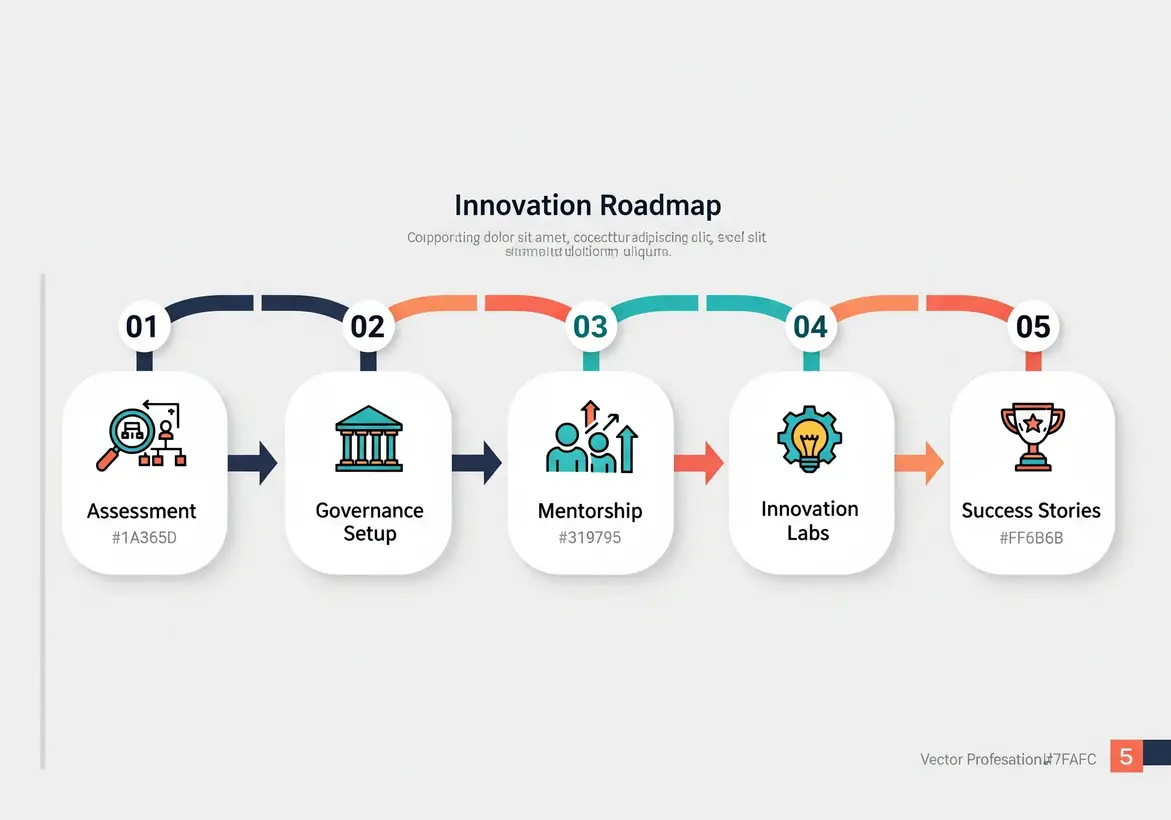
There are inflection points where external facilitation and learning interventions can fundamentally shift a family business’s trajectory:
- Post-Succession: When new leadership emerges and the need for a “shared vision” becomes acute
- Major Market Change: Entry into new sectors, adoption of digital or sustainable business models
- Persistent Tensions: When repeated family debates stall decisions, or external advisors sense “story loops” repeating each year
Integrating executive workshops at these moments does more than upskill individuals—it creates safe space, with ground rules, for generational storylines to be openly re-written. In well-documented programs, families describe these workshops as “the moment we got unstuck.”
Notably, rather than acting as a training vendor, many successful organizations leverage partners with deep family business specialization, backing their approach with methodologies such as TII’s integral frameworks and the AQAL model. This ensures that interventions honor both the visible and invisible architecture of family dynamics.
Three innovation mindsets have been identified as developmental stages in family firms:
- Legacy Protector: Views innovation as high-risk, prioritizes stability (“We must not fail on our ancestors’ watch”)
- Incrementalist: Supports small pilot changes, but struggles to scale (“Let’s experiment, but don’t make it public yet”)
- Innovation Steward: Recognizes renewal as essential stewardship (“Our legacy lives by adapting wisely—what will our next signature tradition be?”)
It’s a false choice to frame tradition and innovation as a zero-sum game. In practice, rituals like “reverse mentoring breakfasts,” rotating innovation councils, or annual “future story” competitions allow incremental shifts to take root without threatening cohesion.
“Legacy is preserved not by clinging to the past, but by selectively rewriting it in each generation.”
This progression is rarely linear. Resistance is a sign that dialogue is needed—not that failure is final.
For families unsure of where they stand, using an innovation mindset quiz or consulting with neutral facilitators for regular checkpoints can accelerate this journey and build a common language for ongoing improvement.
How can we start talking about innovation without disrespecting elders or founders?
Begin with values, not tactics. Frame innovation as a direct act of stewardship—about ensuring the family’s story continues. Use appreciative inquiry (asking “What do we want our story to become?”) and acknowledge what’s worked, before suggesting what could serve you in the future. Neutral facilitators or trusted non-family advisors can help structure these conversations constructively.
What kinds of innovation are best for traditional family businesses—incremental or breakthrough?
Most family businesses excel at incremental innovation first—small, repeatable experiments that refine existing products, processes, or customer experiences. Breakthrough innovation becomes possible as trust builds around learning from small changes and integrating feedback. “Revolution” is rare and often unnecessary; the most successful families combine both approaches over time.
How can non-family executives contribute to a more innovative culture?
Non-family executives provide outside perspective and challenge ingrained habits, especially if they are empowered through seats on innovation councils or working groups. For long-term success, engaging non-family C-suite in both governance and everyday experimentation helps create a healthy blend of tradition and transformation, preventing echo chambers and fostering learning.
How do you measure innovation in a family business?
Tracking new product launches, process improvements, or revenue from new markets is important, but so are softer metrics: number of new ideas tried, cross-generational projects launched, or the presence of “psychological safety” in family councils. Families can supplement financial reports with regular innovation “climate” assessments and qualitative review sessions.
What are “family innovation rituals,” and why do they matter?
Family innovation rituals are recurring, visible activities (like monthly roundtables, generational mentoring breakfasts, innovation awards, or rotating council seats) that embed experimentation into the culture. They bridge the gap between everyday business and strategic renewal—lowering the risk and tension of proposing new ideas by making change a normal part of the family routine.
Is it risky to hire an outside partner for leadership development—won’t they disrupt our culture?
A truly effective partner focuses not on selling a program, but on facilitating self-discovery, building family strengths, and contextualizing best practices for your unique story. Partners grounded in models like AQAL and integral leadership work as strategic allies, not disruptors, adjusting their approach to fit your rhythm and values.
When is the “right time” to start building an innovation mindset?
The best time is before a crisis, but necessity often triggers change. Any transition point—leadership succession, entering a new market, or noticing stagnation—is an ideal starting point for building mindsets, updating governance, and beginning new rituals.
What is “vertical leadership,” and how does it help?
Vertical leadership refers to developing not just new skills, but new ways of thinking—moving beyond problem-solving to sense-making and systemic innovation. In family business, it means adopting perspectives that can hold both tradition and transformation, weaving them into decision-making at all levels. For practical exploration of this path, see vertical leadership.
Building an innovation mindset in a traditional family business asks something simple but profound: can you honor where you’ve come from, while making space for the world that’s emerging? Every family’s answer will be different, but all journeys start the same way—one courageous conversation at a time. Where do you see your own family story on this journey, and what “next signature tradition” might your generation create?
Continue Your Leadership Journey
- Intergenerational conflict in family business — Unpack practical tools for surfacing and resolving cross-generational tensions that hinder innovation.
- Integral leadership development — Discover frameworks for building agile, future-ready leadership in heritage-driven enterprises.
- Vertical leadership — Explore developmental pathways to support visionary and systemic thinking in family leaders.
- Innovation governance — Learn about structures and processes that move experimentation from aspiration to family routine.