

Why Most Leadership Problems Stay Invisible Until You Map All Four Quadrants
Ken Wilber’s Four Quadrants matter because leadership problems rarely sit where leaders first see them: in 2025, global employee engagement fell for a second straight year to its lowest point since 2020 (Gallup, 2026). Without a fuller map, leaders respond to visible symptoms and miss the conditions producing them.
That mistake is expensive. PwC found that 86% of executives say they highly trust employees, while only 60% of employees feel highly trusted (PwC, 2024). In practice, that gap shows up as slower decisions, guarded communication, and change efforts that look rational on paper but stall in execution. This article addresses that exact failure: how the Four Quadrants help leaders diagnose whether the real issue sits in mindset, behavior, culture, or system design.
A regional healthcare VP sees turnover rise after a restructuring and does what competent operators often do: clarifies roles, resets targets, and adds manager check-ins. The dashboard improves for a quarter. Then informal resistance returns, high performers disengage, and cross-functional friction gets worse. Nothing about that sequence is unusual. The intervention addressed what was easiest to count, not what was actually driving the problem.
A Better Diagnostic Lens
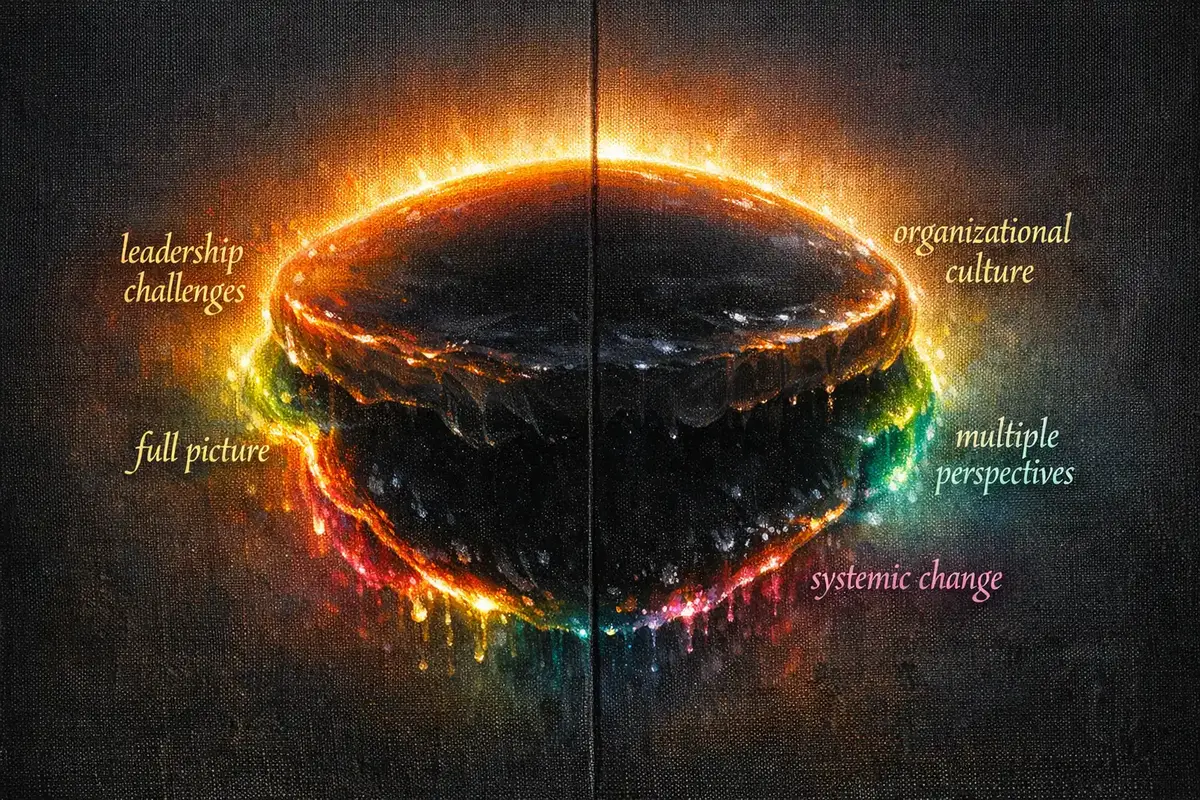
Wilber’s model gives leaders four distinct places to look. Inner experience covers what individuals believe, fear, intend, and notice. Observable behavior covers what people actually do. Shared culture covers the unwritten norms that shape belonging, conflict, and meaning. External systems cover structures, incentives, processes, reporting lines, and technology.
This is why the framework is so useful in integral leadership development. It stops the common slide into one-dimensional diagnosis. Leaders often treat a cultural problem as a performance problem, a trust problem as a communication problem, or a structural problem as a motivation problem. The result is familiar: more training, tighter metrics, cleaner org charts—and the same pattern returns.
The Point Is Location, Not Theory
A quadrant map is not a summary of philosophy. It is a practical way to locate where a problem is living in the organization.
That distinction matters. If distrust is being produced by incentive design, a values workshop will not fix it. If silence is rooted in fear, a process redesign will only formalize avoidance. If the issue is fractured meaning between teams, better individual coaching may help at the margins but miss the center. Leaders who care about trust in leadership need this kind of precision.
The hard question is not whether a problem is real. It is whether you are looking in the right quadrant—or solving the wrong one with confidence.
What Are Ken Wilber’s Four Quadrants, and Why Do Leaders Misread Them?
Ken Wilber’s Four Quadrants sound simple enough to fit on a slide. So why do smart leaders still misread them as a static 2×2 and walk away with the wrong diagnosis?
Because the diagram looks tidy while organizational reality is not. Leaders see four boxes and assume they are sorting categories. In practice, they are separating perspectives on the same problem.
Four Different Questions, Not Four Buckets
The model organizes reality along two axes: interior vs. exterior and individual vs. collective. In plain organizational language, that gives leaders four different questions to ask.
At the individual-interior level, the question is: What is this person experiencing? Beliefs, fear, motivation, attention, and intent live here. At the individual-exterior level, the question changes: What is this person actually doing? Skills, habits, communication patterns, and decision behavior belong in that view.
Then the lens widens. The collective-interior quadrant asks: What do people here take for granted together? That is culture—not the slogan on the wall, but the shared assumptions about risk, candor, status, and what gets rewarded socially. The collective-exterior quadrant asks: What is the system producing? Roles, incentives, workflows, governance, technology, and reporting lines sit there.
None of these can stand alone. A leader working from a systems thinking leadership lens usually grasps the structural side quickly, but structure alone does not explain why two teams under the same design behave differently.
Why Leaders Misread the Model
A mid-market technology director hits a quarterly review and sees product delays, rising rework, and tense handoffs between engineering and sales. The common move is to treat the quadrants like a checklist: run a training, clarify process, restate values, update metrics. Box checked. Move on.
That is the misread.
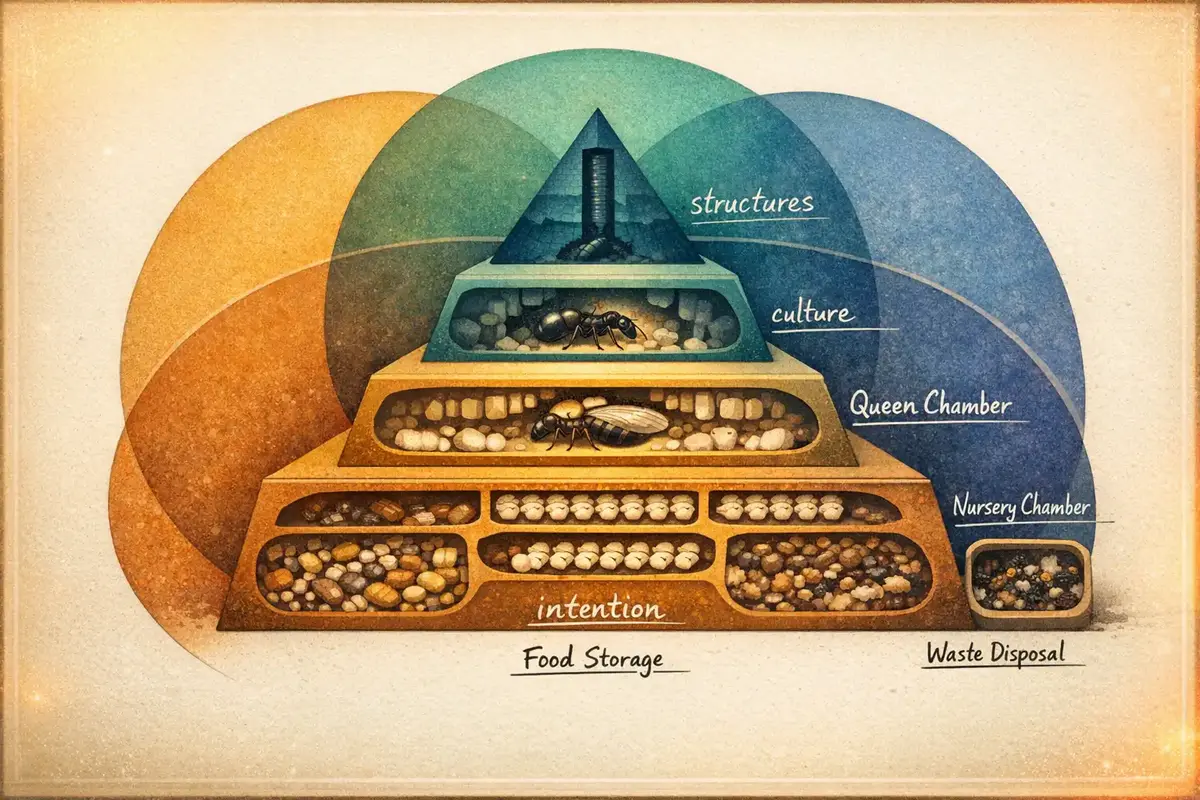
The quadrants are not four separate interventions. They are a map of simultaneous causes. A missed deadline may reflect individual avoidance, weak execution habits, a team norm against surfacing bad news, and an incentive system that rewards speed over coordination—all at once. If you treat the model as sequential or optional, you flatten the problem before you understand it.
A Diagnostic Lens Before an Action Plan
This is why the framework is diagnostic, not prescriptive. It does not tell leaders what to fix first. It tells them where to look before they decide.
That sounds modest. It is not. Most failed change efforts begin with action bias—visible motion before accurate location. The real leadership question is sharper: is the issue in experience, behavior, culture, or system design—or in the way all four reinforce each other?
Get that wrong, and culture change becomes theater. Get it right, and a harder question appears: when behavior and structure are both addressed, why do so many organizations still not change?
Why Culture Change Fails When Leaders Only Fix Behavior or Structure
Ninety-five percent of executives say organizations have a responsibility to build trust, and the Four Quadrants model matters because that responsibility breaks down the moment leaders treat trust as a slogan instead of a whole-system condition (PwC, 2024). Without that map, culture work collapses into visible fixes—new behaviors, new structures, new language—while the organization keeps producing the same experience.
That is why culture change is rarely just a values problem. It is usually a four-quadrant problem disguised as one.
Culture Is Produced, Not Announced
Leaders often act as if culture sits in the collective interior alone: shared beliefs, team norms, the story people tell about “how we work here.” That is only one part of it. Inner meaning, visible behavior, shared norms, and formal systems are in constant interaction, and culture is the outcome of that interaction—not the poster in the hallway.
86% of executives say they highly trust employees, but only 60% of employees feel highly trusted (PwC, 2024)
That gap is not a messaging issue. It is a diagnostic clue.
If leaders believe they trust people, but employees experience tight approvals, defensive meetings, and penalties for bad news, then the quadrants are misaligned. The interior story says trust. The behavioral evidence says caution. The cultural norm says stay safe. The system says escalate everything. In that environment, a trust campaign does not repair culture. It exposes the contradiction.
This is the practical value of a four-quadrant view of organizational culture: it forces leaders to ask whether the organization is producing the very experience it claims to reject.
Why Partial Fixes Fail
Picture a regional manufacturing VP in a budget-cycle review after a quality miss. She responds fast: tighter operating routines, clearer supervisor expectations, and a revised escalation process. On paper, this is competent leadership. For six weeks, defect reporting improves.
Then the old pattern returns. Frontline managers delay surfacing issues. Teams comply in meetings and work around the process afterward. Why? Because only two quadrants moved. Behavior was specified. Structure was tightened. But the inner experience—fear of blame—remained untouched, and the shared norm—“don’t bring problems up unless you have the answer”—stayed intact.
No surprise, then, that execution becomes inconsistent. A leader can improve one quadrant and still get no real change if the other three keep pulling in the opposite direction.
This is also where trust in leadership becomes concrete rather than abstract. Resistance is often misread as attitude when it is really a cross-quadrant mismatch. Trust breakdowns are often blamed on managers when the system teaches self-protection. Inconsistent execution is often framed as accountability failure when people are navigating conflicting signals.
So when a change effort stalls, what are leaders actually seeing—poor follow-through, or a measurable pattern in the numbers that points to something deeper?
What the Numbers Say About Engagement, Managers, and Readiness to Lead
Twenty percent of the world’s employees are engaged, down from 23% in 2022, and that should change how leaders read organizational underperformance (Gallup, 2026). Most organizations still treat engagement as a frontline morale issue; the evidence says the problem runs through the leadership system itself.
The sharper signal is one layer up.
Gallup reports that manager engagement fell from 27% to 22% in 2025 (Gallup, 2026). That matters because managers are not just another employee segment. They are the transmission layer between strategy and daily work. When their own energy, clarity, and commitment weaken, execution quality usually weakens with them—goal setting gets thinner, feedback gets delayed, and ambiguity stays unresolved.
The Pipeline Looks Less Ready Than the Org Chart Suggests
Many firms respond by assuming they need better individual leaders. Some do. But the readiness data points to a broader issue than talent selection alone.
Harvard Business Review found that only 53% of leaders were rated very effective in its 2024 Global Leadership Development Study, and only about 50% of respondents said newly promoted leaders are truly ready to lead (Harvard Business Review, 2024). That is not a story about a few weak personalities. It is a sign that development pipelines are producing uneven capability at scale.

Consider a mid-market services firm during a quarterly review. Revenue is intact, but client escalations are rising, team leads are hesitating on decisions, and directors are blaming “manager quality.” That diagnosis feels efficient. It is also incomplete. Some managers may lack skill, yes, but others are operating inside conflicting incentives, weak coaching, overloaded spans of control, and team norms that punish candor.
That is exactly where quadrant thinking earns its keep. Falling engagement can reflect interior strain in managers, behavioral gaps in how they lead, cultural norms that discourage upward truth-telling, and system conditions that overload the role. Improve only one layer—say, training through a standard change management leadership program—and the organization often gets better language without better outcomes.
The Numbers Point to Interdependence, Not Blame
The data does not excuse poor leadership. It does something more useful: it locates leadership failure as a multi-causal pattern.
If engagement is falling, managers are less engaged, and only half of new leaders seem ready, what exactly failed—the person, or the conditions producing the person’s performance? And when a change initiative breaks down, which quadrant is actually carrying the load?
How Do the Four Quadrants Help Leaders Diagnose a Failed Change Initiative?
A regional retail VP has seen this movie before: the training launches, attendance is strong, leaders say the message was clear, and six weeks later adoption is flat. In the postmortem, the room lands on the easiest explanation—people lack capability.
That explanation is often too narrow. The World Economic Forum reports that 63% of employers see skill gaps as the biggest barrier to business transformation over 2025–2030, and 85% plan to prioritize upskilling their workforce (World Economic Forum, 2025). Useful data. But it can also tempt leaders into a costly diagnostic shortcut: if change stalls, train harder.
Four Questions, Asked at the Same Time
A failed initiative becomes easier to read when leaders stop asking one blunt question—Why are people resisting?—and ask four sharper ones at once.
What are people feeling? Confusion, threat, fatigue, loss of status, distrust. What are they doing? Delaying decisions, reverting to old workflows, attending meetings without changing daily practice. What is the group normalizing? Silence, workarounds, polite agreement in public and skepticism in private. What is the system rewarding? Speed over coordination, local targets over enterprise outcomes, escalation over judgment.
That is the practical power of the quadrants. Resistance stops looking like a single category and starts looking like a pattern with a location.
A mid-market technology director, for example, rolls out a new customer implementation process after a rough quarter of client escalations. Teams complete the training. Usage in the system spikes for two weeks. Then project managers go back to side spreadsheets and informal approvals. If you read that only as a skill problem, you miss the real possibility that decision rights are unclear, peer norms favor the old shortcuts, and the incentive system still rewards billable speed over clean handoffs.
Why Compliance Is Not Change
This is why one-sided interventions so often produce temporary compliance rather than durable change. Training can improve the individual-exterior quadrant. It can even create short-term momentum. But if the individual-interior experience is threat, the collective-interior norm is “don’t slow the team down,” and the collective-exterior system still pays for the old behavior, the organization will absorb the initiative without changing.
85% of employers plan to prioritize upskilling their workforce (World Economic Forum, 2025)
That number matters. So does its limit. Upskilling is necessary in many transformations; it is not a substitute for diagnosis.
The best use of the model is not after the next failure memo. It is before the next launch. A disciplined cross-quadrant diagnosis—closer to systems thinking leadership than generic change management leadership—helps leaders see whether they are facing a capability gap, a trust problem, a norm problem, or a design problem.
And that raises the harder operational question: if all four quadrants matter, where should a leader actually begin—first conversation, first intervention, first week?
Where Should Leaders Start When Using AQAL in Real Work?
Eighty-six percent of organizations that tracked coaching ROI reported positive returns, with a median return of 5–7x the investment. So why do so many leadership teams still spend on coaching and upskilling, then watch old patterns return in the next quarter (ICF, 2024)?
The usual assumption is that more development will solve the problem. It often helps. But when 85% of employers plan to prioritize upskilling, the real differentiator is no longer whether leaders invest in learning; it is whether they know how to connect learning to the conditions people work inside (World Economic Forum, 2025).
Start With What You Can See, Then Refuse to Stop There
The best starting point is not abstract. It is the problem already in front of you.
A finance team in a mid-market company misses two forecasting handoffs during budget season. The CFO sees the visible issue first: late inputs, unclear ownership, weak follow-through. That is the right place to begin. It is observable. It is discussable. It gives the team something concrete to examine.
But AQAL becomes useful only when the leader widens the inquiry fast. What are people experiencing but not saying? What has the team normalized about escalation, risk, or asking for help? What in the reporting cadence, incentives, or approval flow keeps reproducing the delay?
That move—from symptom to surrounding conditions—is the real discipline. It is closer to systems thinking leadership than to a workshop vocabulary exercise.
Use the Quadrants in Live Conversations
This is where many leaders overcomplicate the model. They think they need a formal diagnostic session. Usually, they need better questions in ordinary moments.
In a one-on-one, the quadrants help a manager separate capability from confidence. In a transformation review, they help an executive team distinguish adoption data from actual commitment. In a staff meeting, they help surface whether a recurring issue is being driven by habit, fear, group norms, or process design.
Short questions work best. What are you noticing? What are people doing? What are we rewarding here? What has become normal that no one is naming?
Those questions change the quality of investigation. That is why integral leadership development works best when it sharpens leaders’ attention, not just their language.
Development Matters. Follow-Through Matters More
Coaching can be highly effective. The ICF data is strong on that point (ICF, 2024). Upskilling also matters, especially when business models and roles are shifting (World Economic Forum, 2025).
But development alone is rarely enough. If a leader learns to delegate while the culture still punishes mistakes, delegation will collapse into rework. If a team is trained on collaboration while incentives still reward local wins, collaboration will remain performative.
The model earns its value when it changes how leaders investigate before they intervene. Not when it gives them four new labels.
And that is the final test of any leadership lens: does it produce better questions—or just better-sounding explanations?
Why the Best Leadership Lens Is the One That Prevents One-Dimensional Thinking
Leaders lose revenue, burn trust, and watch good people leave when they force complex problems into a single explanation. The cost is not just a bad diagnosis; it is the cascade of wrong interventions that follows.
The Real Risk Is Reduction
A founder in a growing services firm hits a client-renewal crisis after a messy team restructure. Delivery slipped, two senior people resigned, and the leadership team split into camps. One side said the problem was mindset—people had become defensive and territorial. The other said it was mechanics—roles were unclear, handoffs were weak, and meetings lacked discipline.
Both were partly right. That was the problem.
The Four Quadrants matter because they stop leaders from treating that kind of split as a choice. Most organizational trouble is not either psychological or structural. It is an interaction between what people believe, what they do, what groups normalize, and what systems keep rewarding. Once you see that, a debate about “the real cause” starts to look less intelligent than it sounds.
That is also why work on organizational culture so often disappoints when it stays abstract. Culture is not a soft layer floating above operations. It is what emerges when inner experience, daily behavior, shared meaning, and formal design keep reinforcing one another.
What the Lens Actually Changes
The value of integral thinking is not that it gives leaders a grand theory to admire. Its value is narrower, and more useful: it makes hidden interactions visible before leaders choose an intervention.
That changes the sequence. Instead of asking, What is the one cause? leaders ask, Which quadrants are we ignoring? Instead of rushing to coaching, restructuring, or process cleanup, they look for the pattern connecting them.
This is a humbler stance than many executives prefer. It asks leaders to hold off on certainty. To admit that a clean explanation may be emotionally satisfying and operationally wrong. To treat diagnosis as part of leadership, not a delay before leadership begins.
And that is where the model earns credibility. Not in jargon. Not in diagram worship. In whether it helps a team see more clearly, decide more honestly, and avoid solving the wrong problem with confidence.
A Better Way to See Your Own Context
If this framework is useful, it is useful because it sharpens attention. It helps you notice when a performance issue is carrying a trust issue, when a process failure is protecting a cultural norm, or when a people problem is being produced by design.
That is enough. A leadership lens does not need to explain everything. It needs to prevent one-dimensional thinking when the stakes are high.
So in your next review—after the missed target, the stalled change, the quiet resignation—what are you calling the problem too quickly: one cause, or one quadrant?
Key Takeaways
- The Four Quadrants help leaders locate problems in experience, behavior, culture, or system design.
- Culture change fails when leaders fix only visible behavior or structure.
- Engagement and readiness data point to leadership issues as multi-causal, not single-cause.
- The best use of AQAL is to improve diagnosis before choosing an intervention.
Frequently Asked Questions
What are Ken Wilber’s Four Quadrants in organizational leadership?
The Four Quadrants are a way to view leadership issues through four perspectives: individual inner experience, individual behavior, shared culture, and external systems. They help leaders see whether a problem is rooted in beliefs and emotions, actions and habits, group norms, or structures and processes.
Why do leaders often misdiagnose organizational problems when using the Four Quadrants?
Leaders often treat the quadrants like a checklist of separate boxes instead of simultaneous perspectives on the same issue. That leads them to fix the most visible symptom, such as behavior or structure, while missing the deeper cultural or psychological drivers.
How does the Four Quadrants model help explain why culture change fails?
Culture change fails when leaders only change what is visible, such as training, rules, or messaging, without addressing fear, shared norms, and incentive systems. Culture is produced by the interaction of inner experience, behavior, collective meaning, and formal design, so partial fixes usually create only temporary compliance.
How can leaders use the Four Quadrants to diagnose a failed change initiative?
Leaders should ask four questions at once: what people are feeling, what they are doing, what the group has normalized, and what the system rewards. This reveals whether the real barrier is capability, trust, norms, or design rather than assuming resistance is just a motivation problem.
Where should leaders start when applying AQAL in real organizational work?
Start with the concrete problem that is already visible, then quickly widen the inquiry to include experience, behavior, culture, and systems. The goal is not to pick one quadrant first, but to avoid one-dimensional thinking before deciding what intervention is needed.