

Strategic decision-making under high uncertainty is the process by which first-time CEOs confront ambiguous, high-stakes choices with limited data and resources, especially during the “zero to one” phase of their startups. For founder CEOs, mastering this skill means learning to navigate ambiguity, harness relevant frameworks, and build cultures where learning from both successes and failures becomes a source of long-term advantage. By the end of this guide, new CEOs will understand the difference between risk and radical uncertainty, gain stepwise methods for making vital decisions when little feels clear, and discover practical ways to turn uncertainty into a leadership asset for themselves and their teams.
The brutal truth: more than 70% of funded startups either stall or fail within their first five years, and a critical root cause is not “bad ideas,” but misguided decisions made when the path forward was unclear (Source: Harvard Business Review, 2022). New CEOs often graduate overnight from “doers” to “orchestrators,” forced to make existential bets—about hiring, product, or pivots—using limited, conflicting, or incomplete signals.
According to leading academic studies, decisive yet adaptive leadership is the strongest predictor of survival in ambiguous, resource-constrained environments. (Source: Wharton Executive Education, 2023)
This is not the luxury of Board-room chess with mature playbooks. It’s triage in the fog, and the skills are earned in real-time. But what does “high uncertainty” actually mean when you’re the one living it?
What Is “High Uncertainty” for a Startup CEO, and How Is It Different from Traditional Risk?
For most founders, “uncertainty” and “risk” seem interchangeable. But classic risk describes situations where you know the odds—like rolling dice. Radical uncertainty is what you face when you aren’t even certain what variables matter, let alone their probabilities.
- Risk (Known unknowns): Outcomes are unclear, but the range of possibilities is defined (e.g., will Feature A boost conversion rates by 10% or 15%?).
- Uncertainty (Unknown unknowns): Even the possible outcomes, dependencies, and impacts are murky (e.g., will a new technology disrupt your market overnight?).
First-time CEOs in early-stage startups face radical uncertainty because data is sparse, context changes rapidly, and the cost of delay or miscalculation can be existential.
Case Example: In the first six months, a founder must decide whether to chase a big enterprise client (with delayed revenue, complex requirements) or prioritize many small customers (with quicker wins but less stability). Market data is insufficient, time is short, and resources are limited—this is not “risk.” This is an exercise in making meaning out of ambiguity.
How Do You Make Strategic Decisions When You Lack Enough Data?
It’s natural for new CEOs to freeze or default to “wait and see” when the signals don’t add up. Yet, inaction is often the greater danger. Drawing on The Integral Institute’s multi-level methodology, here’s a process suited precisely to first-time startup leaders:
-
Frame the Decision Clearly
Define what’s truly at stake, what must be decided now, and which information is missing yet crucial. -
Apply the “Decision Uncertainty Map”
Quickly classify the situation:
- Is this a complex, emergent problem (unknowns influencing unknowns)?
- A simple, procedural one?
- Or a chaotic, crisis-level scenario?
Use this quick map to avoid defaulting to “collection paralysis.”
-
Leverage Applicable Frameworks
Instead of a “one size fits all” approach, match your uncertainty type to frameworks such as Cynefin (for classifying complexity vs. chaos), Premortem analysis (for envisioning failure and mitigating traps), and RAPID (for clarifying decision roles).
Discover integral leadership frameworks and methodologies relevant to complex decision contexts. -
Move Forward with Good Process, Not Just a Bet
Sometimes, the key isn’t finding the “right” decision but ensuring the decision process is sound—transparent, inclusive, and documented—so learning can follow, regardless of the outcome.
Which Frameworks and Mental Models Actually Work for Startup CEOs?
Framework clutter is a real danger—especially when you’re trying to survive, not win case competitions. Three models, however, repeatedly prove transformative for first-timers when applied to early-stage chaos:
1. The Cynefin Framework
Originally developed for government complexity management, the Cynefin Framework helps CEOs rapidly diagnose what kind of uncertainty they face:
- Simple: Clear cause and effect. Use best practices.
- Complicated: Known unknowns, expert analysis helps.
- Complex: Unpredictable, patterns emerge only in hindsight. Probe, sense, respond.
- Chaotic: No patterns, take decisive action to restore order.
Example: Faced with an unexpected competitor launch, a CEO can rapidly map: Is this chaos (need to stabilize core value prop) or complexity (need to experiment with messaging and offers)?
2. The Premortem Technique
Invented by research psychologist Gary Klein, the premortem invites teams to imagine their key decision has failed spectacularly—then work backward to identify overlooked risks. It’s a powerful “bias killer,” immunizing against self-assurance and optimism.
“A structured premortem not only surfaces hidden assumptions but makes it psychologically safe for even the newest team member to raise red flags.”
(Source: Harvard Business Review, 2017)
3. The RAPID Method
RAPID provides clarity:
- Recommend (who proposes)
- Agree (who must sign off)
- Perform
- Input (who informs)
- Decide (final accountability)
For a three-person founding team, RAPID helps prevent the classic “consensus gridlock,” ensuring roles are explicit even in urgency.
Explore more integral leadership frameworks and methodologies for deeper context.
What Roles Do Bias and Team Psychology Play in High-Stakes Decisions?
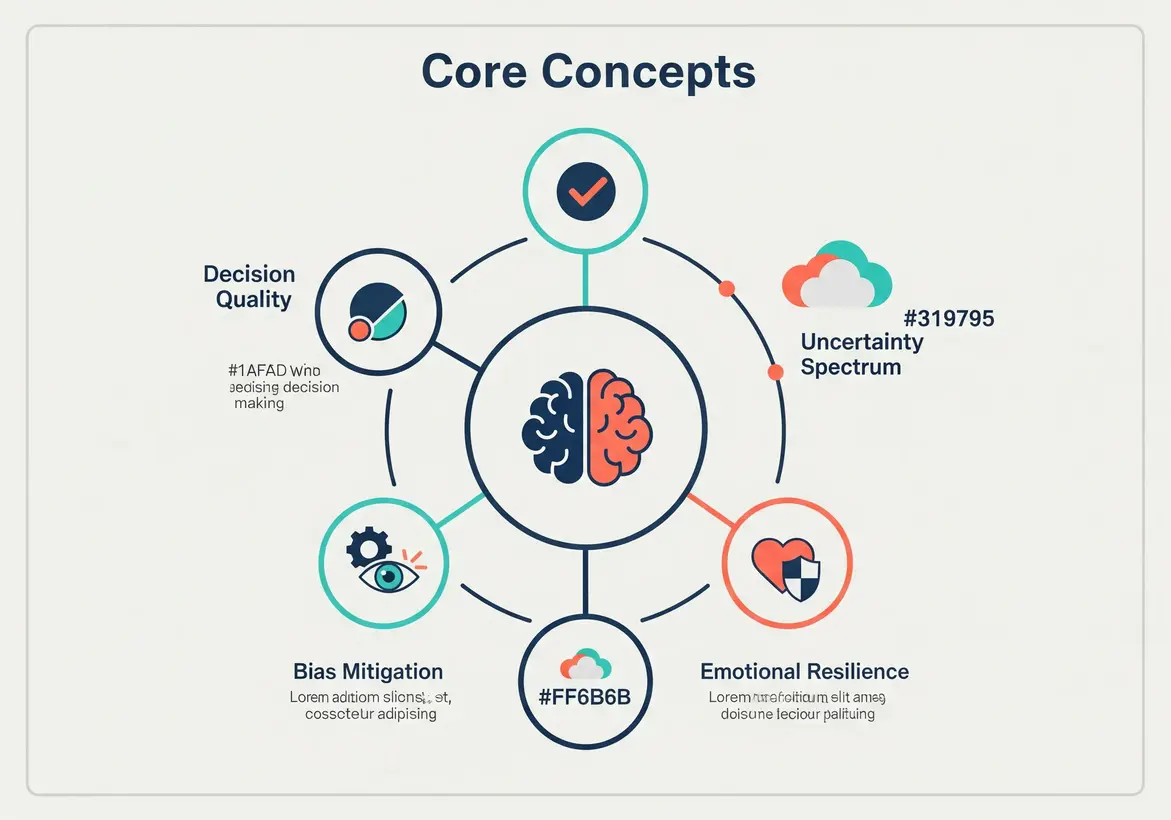
Overconfidence, confirmation bias, and ego-driven myopia have taken down more startups than market shifts or funding droughts. Recognizing and mitigating these biases is not a “nice to have”—it’s core risk management for the first-time CEO.
- Overconfidence Trap: Founders often conflate “I see it clearly” with “the world wants it.” Ritualized pause points, like scheduled debate sessions and “devil’s advocate” roles, disrupt this spiral.
- Homogeneity Bias: Small founding teams can fall into groupthink fast. Anonymous opinion gathering or periodic external mentor checks disrupt cohesion pitfalls.
“The strongest teams aren’t those that decide fastest, but those that learn fastest—from both wins and missteps.”
(Source: Wharton Executive Education, 2023)
Modern bias mitigation, increasingly supported by AI-assisted tools, helps CEOs collect divergent input and surface blind spots early. Explore how ethical AI design and integral coaching can help offset individual and team cognitive errors.
How Can First-Time CEOs Build Decision Systems (Not Just Make Decisions)?
While intuition is often romanticized (“Steve Jobs gut feel!”), first-time CEOs thrive when building repeatable, resilient decision-making rituals and learning loops. Deciding how you decide becomes more important than any single decision.
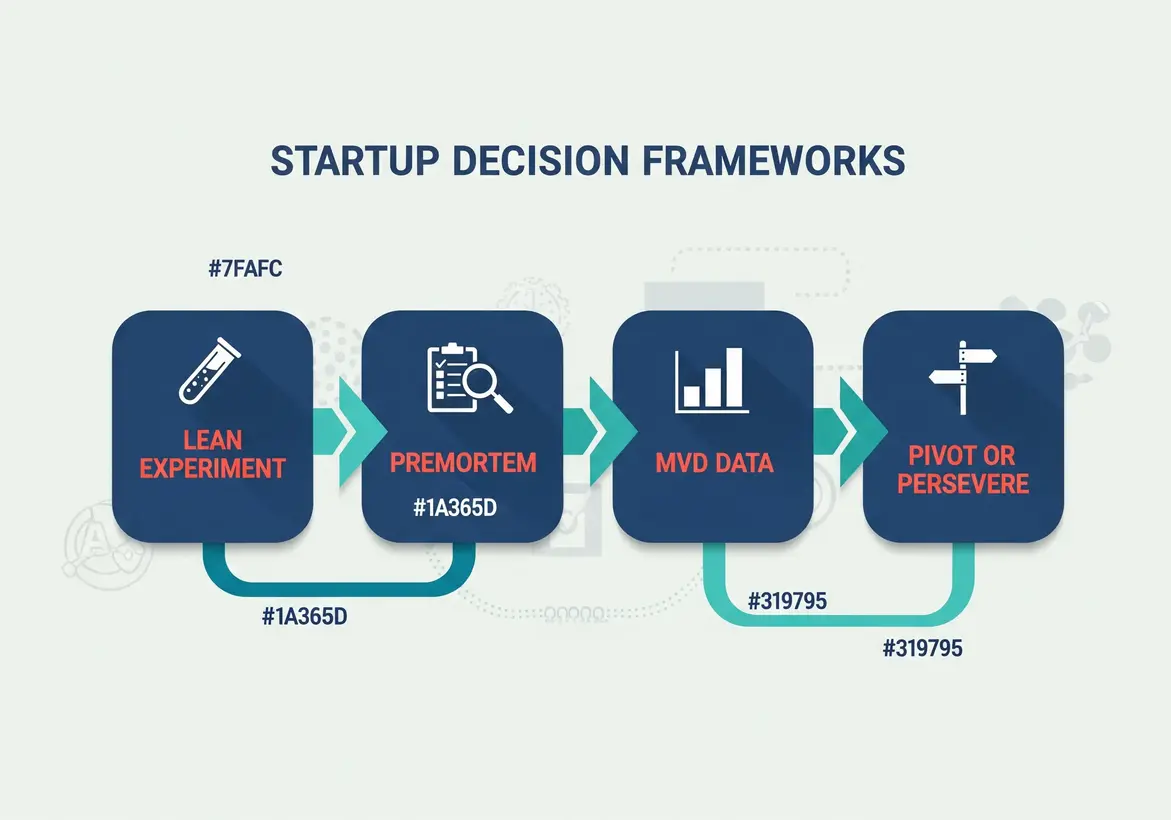
1. Ritualize Reflection Using Learning Loops
After each major bet—a product launch, key hire, or funding choice—run a brief but structured “postmortem.” What signals did you miss? Which frameworks were useful? What stumbled due to bias or haste?
Institutionalize this by documenting patterns; this fast-tracks founder wisdom.
2. Diagnostic Checklists
Before pressing “go” on a consequential decision:
- Have you honestly classified the uncertainty? (Cynefin)
- Did you apply at least one “bias buster” (premortem or external input)?
- Are decision roles and ownership explicit (RAPID)?
- Have you mapped second-order effects (“If X, then what else?”)?
- Did you document your reasoning for future learning?
3. Culture-Building Through Process Adherence
The process itself becomes the foundation for culture. If founders consistently reflect, broaden inputs, and sincerely learn from faulty outcomes, this ethos cascades into hiring, strategy, and adaptability as the organization grows.
What Should You Do After a “Wrong” Decision? Turning Failure Into Fuel
No approach guarantees right answers under uncertainty—sometimes even “good process” leads to unwanted outcomes. The distinction, as found in research, is whether organizations systematically learn from them (Source: Harvard Business Review, 2022).
Systematized Learning Loops
- Debrief as Ritual: After critical outcomes, formalize a “what went wrong and why” meeting—psychologically safe, blame-free, visibly led by the CEO.
- Document Decision Stories: Over time, these records become a custom playbook, more valuable than any generic template.
- Iterate Framework Application: Did Cynefin misclassify? Did the premortem miss a second-order risk? Each cycle calibrates your internal compass for the next ambiguity.
“Founders who transform failures into institutional knowledge, rather than scars, graduate from luck to wisdom.”
(Source: Wharton Executive Education, 2023)
How Do You Decide When to Move Fast and When to Gather More Input?
One of the most paralyzing dilemmas is, “Am I moving too fast, or hesitating too long?” Here’s a founder-tested approach:
Apply the “Reversibility-Test”:
- If a decision is easily reversible (you can test/iterate), move quickly—the cost of delay is greater than the cost of mistakes.
- If a decision is highly consequential and hard to undo (e.g., major capital spend, key executive hire), invest in more robust frameworks and broaden input.
Create a “pause point” ritual for these big bets: schedule a 24-hour cool-off, seek counterarguments, or request outside opinions.
How Can Strategic Decision-Making Become a Culture-Building Force?
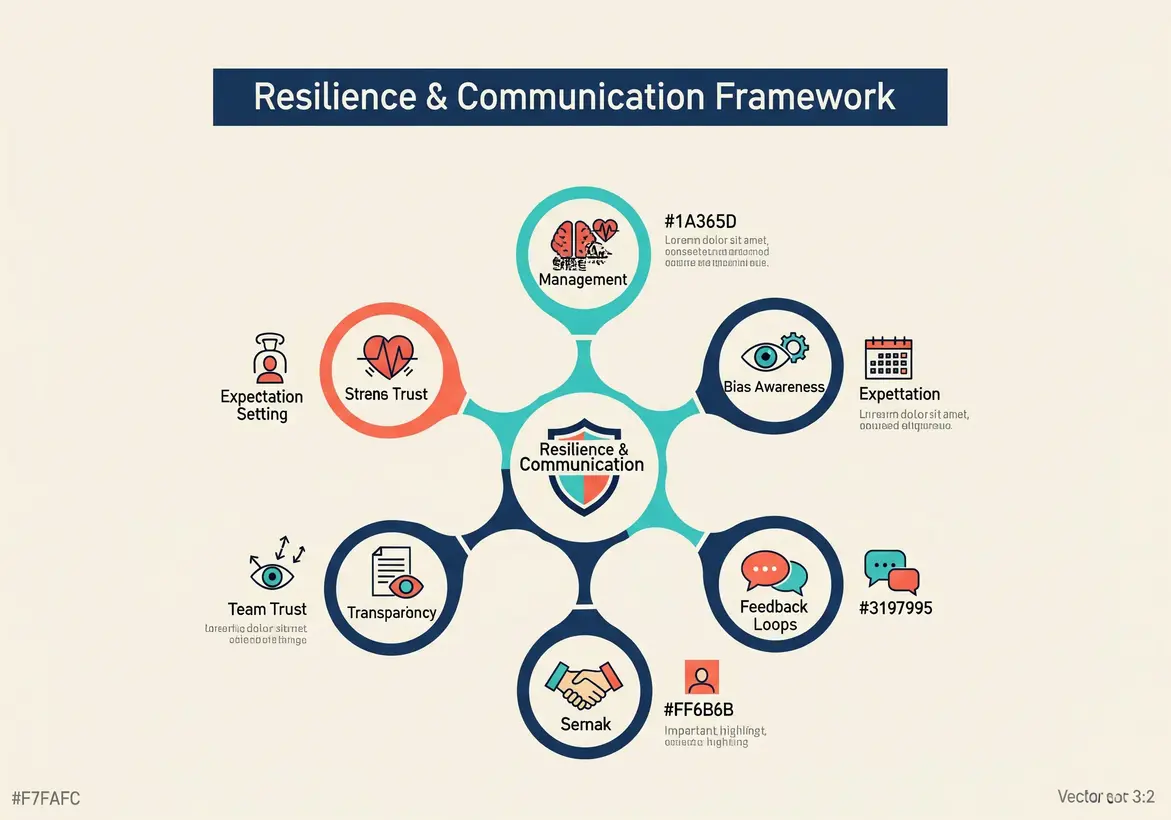
One under-emphasized move for new CEOs is to treat decision-making not just as a tool for progress, but as a core foundation for company culture. This means making visible:
- The rituals you follow (premortems, postmortems, framework checklists)
- The transparency of your reasoning (“Here’s how we decided, what we got wrong, and how we’ll adapt”)
- The humility and adaptation shown by leadership, especially after imperfect results
Founders who normalize “learning in public” transform early-stage uncertainty from a threat into a binding force of trust and ambition. It’s an ethos that endures long after the zero-to-one battles end.
What Mental Models and Motivation Techniques Support Founder Resilience?
Beyond external frameworks, internal readiness matters. First-time CEOs must manage their mindset as aggressively as their strategic playbook.
- First Principles Thinking: Peel every decision down to its basic truths—then reason up. “What do we truly know, and what’s assumption?”
- Second-Order Thinking: Don’t just ask, “What’s the immediate effect?” but “What might happen next?”
- Counterfactual Analysis: “If we hadn’t chosen X, what else might have happened?”
Sustained focus and drive can also come from structured motivation techniques—like visualization, micro-goal setting, or mindfulness—that help founders maintain clarity under pressure.
Explore motivational techniques tailored for leaders navigating uncertainty.
How Does Your Approach to Strategic Decisions Need to Shift as the Startup Grows?
As organizations mature, the decision landscape evolves: ambiguity never disappears, but the shape changes. Early radical uncertainty morphs into more standard risks, with more data and stakeholders involved. The mature CEO’s challenge becomes:
- Delegating decision ownership without losing agility
- Creating layered frameworks for bigger teams
- Adapting playbooks to new markets, cultures, and business models
Learn how to adapt leadership styles and frameworks to changing markets as your organization grows.
FAQ: Strategic Decision-Making Under High Uncertainty for First-Time CEOs
What is the biggest mistake first-time CEOs make under radical uncertainty?
The classic error is paralysis by analysis—waiting for more certainty than the early stage can offer. Alternatively, some rush headlong based on hunches, confusing vision with answers. The most successful founders act, then reflect and adapt—treating every major decision as both a bet and a learning cycle.
How can I tell if a decision is high-uncertainty versus routine risk?
Ask: Is there enough precedent and data to predict likely outcomes? If the answer is “no” and you’re dealing with potential unknowns, unintended consequences, or ambiguous options, you’re in the territory of radical uncertainty. Use frameworks like Cynefin to map the landscape.
How do I involve my founding team in critical early-stage decisions?
Make the decision-making process visible. Use team premortems, openly assign RAPID roles, and encourage even dissenting voices. Psychological safety is key; learning together is more important than being “right” alone.
What if my high-uncertainty decisions repeatedly go wrong?
It’s vital to debrief systematically. Document your process, revisit what frameworks you used, and invite trusted external perspectives (mentors, board, advisors). Over time, you will build a custom playbook, reducing future error rates.
When should I push forward vs. pause for more information?
Run a “reversibility test.” If your decision can be revoked or iterated upon easily, speed trumps caution. If consequences are permanent or systemic, invest time in broader input and frameworks—even if that means delaying the call.
Can bias ever be fully eliminated from founder decisions?
No, bias is part of human cognition—but it can be dramatically reduced through structured tools (premortems, diverse input, anonymized opinions). Adopting these rituals early creates a bias-aware culture from day one.
How do frameworks like Cynefin scale as my startup grows?
What begins as a founder checklist can evolve into team-wide rituals, decision support documentation, and part of new hire onboarding. The backbone stays the same; who participates broadens.
How do strategic decisions influence my organization’s culture long-term?
Every time you choose reflection over blame, structured debate over “gut feel,” and learning over ego, you signal values that compound into culture. Resilience and adaptability become baked into your team’s DNA.
As a first-time CEO, the way you make decisions under high uncertainty doesn’t just dictate your company’s immediate trajectory—it shapes how you and your team learn, adapt, and endure. Strategic decision-making, when grounded in frameworks, bias-awareness, and shared rituals, becomes your greatest asset—not just for surviving ambiguity, but for building a culture of innovation and trust that lasts. What mindset or practice will you experiment with in your next big decision moment?
Continue Your Leadership Journey
- Integral leadership frameworks and methodologies relevant to complex decision contexts — Dive deeper into the frameworks that help structure decision-making when answers aren’t obvious.
- Leadership development for first-time founder CEOs — Discover tailored approaches and real-world insights for founders steering organizations in uncharted territory.
- Empathetic leadership and psychological safety in times of crisis — Learn how emotional intelligence and safety rituals empower better decisions and stronger teams.
- Tailored executive mentoring for leaders facing uncertainty — Explore how skilled mentors can serve as strategic sounding boards during your most pivotal choices.