

Designing Hybrid Work Models: A CHRO’s Guide to Maintaining Culture and Productivity
A hybrid work model blends remote and in-office work, allowing employees flexibility while organizations maintain structure and collaboration. For CHROs, the task is to design systems that go beyond logistics—ensuring that culture, equity, and productivity not only survive but thrive in a distributed environment. By understanding foundational hybrid models, diagnosing organizational needs, and applying intentional leadership strategies, CHROs can create sustainable hybrid environments that align with business goals and foster employee connection.
What is the AQAL model and how can it be applied to leadership development in organizations?
The AQAL model—standing for “All Quadrants, All Levels”—is a comprehensive framework developed by Ken Wilber to map human experience across multiple dimensions. In organizational leadership, the model can be used to diagnose and intervene at individual, team, and systemic levels, ensuring transformation is holistic rather than piecemeal.
For CHROs designing hybrid work environments, the AQAL model helps answer: Are we supporting both the individual psychological needs of employees and the collective structures that sustain culture? It also invites a multi-level leadership approach—focusing simultaneously on leadership mindset, team relationships, organizational processes, and technologies.
“Most hybrid work challenges are not rooted in logistics but in overlooked cultural or systemic misalignments that unfold across many layers.”
Drawing on The Integral Institute’s two-decade integral methodology, leaders are encouraged to assess each level systematically—mapping where hybrid design may disrupt trust, learning, or equity. By applying such a model, leadership development becomes less about reacting to visible issues (like declining engagement surveys) and more about proactively designing systems where hybrid arrangements reinforce, rather than erode, cultural cohesion.
Why is it important to use a multi-level framework when designing leadership training and coaching programs?
Hybrid work exposes friction not just at the surface (policy and tool adoption) but also in less visible strata: sense of belonging, equitable advancement, and leadership effectiveness. A multi-level framework—operating at the individual, team, and organizational layers—ensures interventions are robust and adaptive.
- At the individual level: Training targets self-management, digital fluency, and role clarity.
- At the team level: Coaching focuses on norms, shared purpose, psychological safety, and communication rhythms.
- At the organizational level: Development is anchored in system-wide policies, leadership alignment, and metrics that link people outcomes to business strategy.
Without this multi-level view, companies risk superficial solutions—installing collaboration tech or mandating office days—while ignoring deeper drivers of engagement and performance. For example, many organizations experience presence bias: a subconscious preference for promoting those seen in-person, which disproportionately impacts employees who work remotely.
Grounded in the Integral Model’s multi-level framework, leadership development programs can anticipate and counteract these patterns, fostering environments that truly support diverse work styles while preserving a cohesive culture. For more on decentralized leadership frameworks, explore integral leadership for CHROs and hybrid collaboration.
Understanding Hybrid Work Models: Types, Benefits, and Pitfalls
Hybrid work models are typically categorized into four main types:
- Fixed hybrid: Set days in the office (e.g., Mon-Wed in, Thurs-Fri remote)
- Flexible hybrid: Employees choose when or where to work
- Remote-first: Office is optional, with remote as the default
- Office-first: Default is in-office, but remote options exist
Each model has distinct trade-offs for culture, collaboration, and productivity.
- Fixed hybrids offer predictability and routine but may undermine autonomy.
- Flexible hybrids maximize autonomy but can create coordination chaos unless structured.
- Remote-first models reduce real estate costs and attract talent globally but challenge onboarding and cultural immersion.
- Office-first maintains tradition yet risks alienating those who prefer or need flexibility.
According to the Spacewell Hybrid Working Report, 98% of surveyed employees (2023) want some form of hybrid arrangement; nonetheless, fewer than half of organizations deliver a model with robust, aligned culture practices (Source: Spacewell, The Hybrid Working Model Explained, 2023).
For CHROs, the question is not “Which hybrid is best?” but “Which best fits our culture, strategy, and workforce needs—and how do we build, not just announce, this model?” Review how hybrid culture strategy can also align with CSR and broader business outcomes for greater organizational impact.
How does an integral approach address the root causes of performance challenges at individual, team, and organizational levels?
The integral approach recognizes that performance barriers in a hybrid model are rarely isolated—they are systemic. For example:
- Individual struggles may look like disengagement or role ambiguity, often rooted in insufficient onboarding or ill-defined digital rhythms.
- Team challenges manifest as breakdowns in communication, unclear responsibilities, or uneven opportunity to contribute.
- Organizational pitfalls can be traced to outdated policies, presence bias, or sporadic measurement of culture and output.
Notably, most hybrid model failures are misattributed to the structure itself (“hybrid doesn’t work here”) when underlying causes like manager upskilling, feedback system gaps, or misaligned DEI practices are at fault (Source: SHRM, Hybrid Work Reigns Supreme, 2023).
Using an integral lens—drawing on over 40,000 hours of certified coaching practice—CHROs can:
- Diagnose culture drift with engagement health checks
- Identify where trust and collaboration break down
- Track advancement equity with blended qualitative (focus groups, storytelling) and quantitative (pulse surveys, retention rates) data
The result? Interventions are less reactive, more systemic—tackling not just symptoms but the interconnected factors that drive sustained productivity. Deepen your understanding of how employee engagement diagnostics can underpin purposeful hybrid transformation through the Honor Cord approach.
.
- Clear role clarity and process diagramming: Teams using explicit expectations and transparent workflows outperform those relying on informal routines, especially in distributed settings.
- Hybrid onboarding and re-boarding rituals: These intentionally integrate new joiners and periodically “reset” the team’s shared goals and connection.
The key differentiator? Coaching and leadership development tailored to the hybrid context. Advanced coaching programs for leaders impart not just technical know-how but the emotional intelligence and facilitation prowess that drive hybrid team engagement.
“High-performing hybrid teams emerge when managers are upskilled for empathy, digital fluency, and process discipline—not just project management.”
When evaluating models, consider integrating playbooks drawn from advanced coaching methodologies and systemic team development practices, as seen in longitudinal studies on leadership adaptation.
Can integral coaching techniques improve executive decision-making during periods of rapid disruption?
Yes, integral coaching techniques have a substantial impact on executive agility and the quality of decision-making, especially during periods of rapid market or technological disruption. Such techniques blend cognitive, emotional, and relational perspectives—enabling leaders to approach decisions holistically rather than narrowly.
In hybrid workplaces, this means executives become attuned to:
- Balancing individual well-being with continuous delivery targets
- Spotting emergent patterns in team morale, even when cues are digital/subtle
- Navigating trade-offs between equity, speed, and strategic alignment
Integral Coaching, as practiced by seasoned organizations, uses scenario simulation, awareness-building, and reflective dialogue. This approach transforms short-term “fixes” (e.g., increased check-ins) into sustainable, self-correcting leadership habits.
For leaders seeking measurable upskilling outcomes, leadership development resources offer evidence-based frameworks that support real-time sensemaking and resilient decision architecture.
How do tailored development interventions differ from traditional training programs in driving sustainable performance improvement?
Traditional programs often deliver one-size-fits-all trainings—webinars, policy handbooks, or generic “remote work best practices.” Tailored development interventions, by contrast, are data-driven, context-sensitive, and iterative. Key differences include:
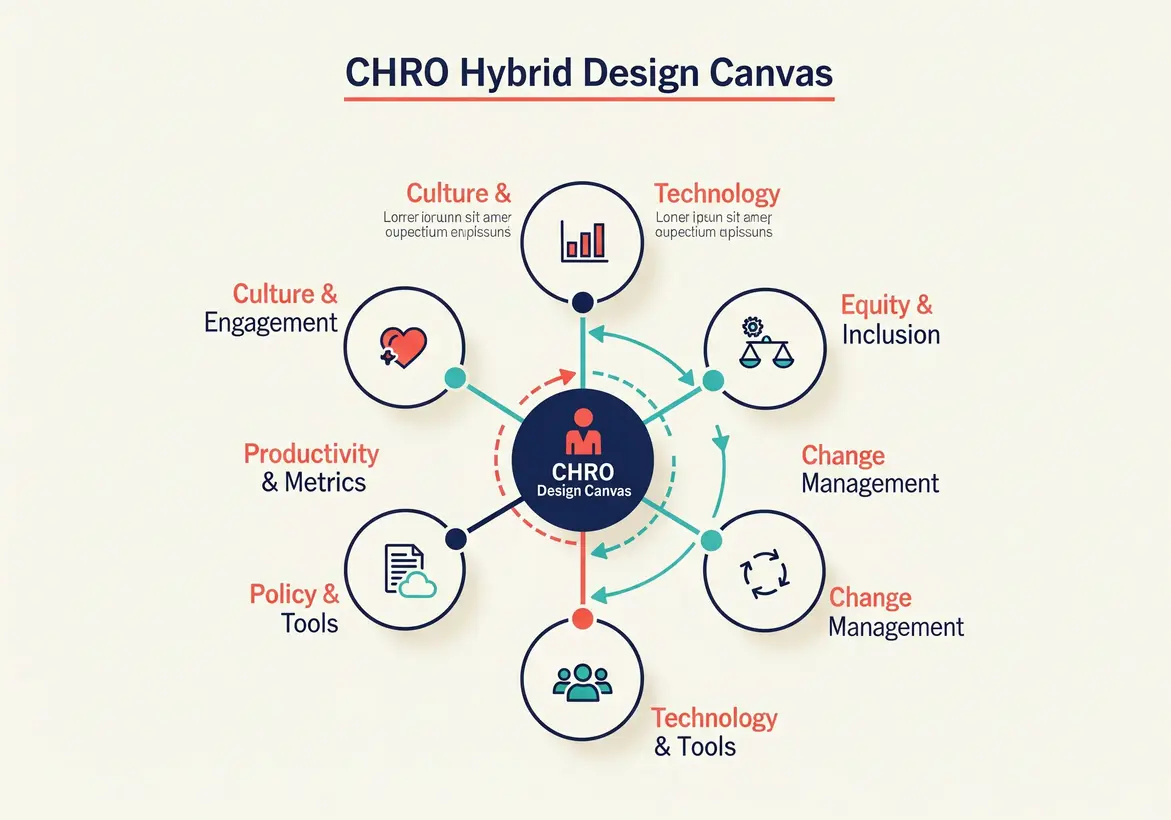
- Ongoing diagnostics: Interventions start with organizational health checks, not pre-set curricula.
- Leadership alignment: Change champions are identified and embedded throughout, providing cultural momentum.
- Personalized learning pathways: Each manager or team may have a bespoke sequence—coaching, workshops, action learning sets—fitted to hybrid-specific challenges.
- Feedback integration: Continuous input (engagement analytics, sentiment surveys, focus groups) shapes evolution, maintaining the relevance of the intervention over time.
Backed by research, tailored programs can drive up to 2.5x higher sustained engagement and a marked reduction in turnover within 12-18 months in high-complexity workplaces (Source: MIT Sloan Management Review, Reinventing Hybrid Leadership, 2021).
Unlocking these benefits requires a shift from event-based training to dynamic, living interventions. For integrating values-driven leadership into cultural transformation, see the framework for purpose-driven leadership and values integration.
How do hybrid work models interact with diversity, equity, and talent retention?
Hybrid work, when designed intentionally, can accelerate DEI outcomes by removing location constraints and opening opportunities to diverse talent pools. However, research repeatedly shows hidden hazards:
- Presence bias skews advancement and recognition toward those often visible in-office—disproportionately disadvantaging caregivers, those with disabilities, or underrepresented identities.
- Unequal access to mentorship: Without structured hybrid mentoring, career guidance tilts toward those conveniently located near senior leaders.
- Cultural drift: Without explicit rituals, remote teams can lose connection to organizational purpose, weakening retention and trust.
“74% of underrepresented employees in hybrid environments report concerns about being overlooked for advancement” (Source: SHRM, DEI and Hybrid Work, 2023).
To counteract, CHROs must install:
- Transparent promotion criteria, agnostic to work location
- Inclusive mentoring programs designed for hybrid accessibility (see inclusive mentoring for diverse leadership)
- Regular equity audits—measuring not just who stays and leaves, but who grows and leads
Advancing these practices elevates both cultural integrity and strategic business impact, making hybrid not just a benefit but a lever for organizational renewal.
Is it possible to measure the impact of integral team coaching on organizational transformation outcomes?
Absolutely. The impact of integral team coaching lends itself to both qualitative and quantitative measurement across several domains:
- Engagement Scores: Tracking eNPS (employee Net Promoter Score), pulse survey items about teamwork, and psychological safety
- Performance Metrics: Monitoring output—such as deadlines, quality indicators, and innovation counts—before and after intervention
- Advancement Outcomes: Comparing promotion rates and retention across hybrid, remote, and in-office employees
- Culture Health Indices: Using diagnostic frameworks (like TII’s culture drift map) to assess belonging, clarity, and alignment
The “aha” is that measurement should not be episodic but ongoing—feeding learning cycles back into leadership behavior, policy calibration, and talent investment.
Longitudinal studies reveal that organizations deploying integral team coaching realize 30-60% higher retention and up to 20% faster time-to-productivity for new hires in hybrid settings over a two-year period (Source: McKinsey, The Hybrid Workplace: Making It Fit, 2023).
For more on integrating neuroscience-based productivity interventions into hybrid strategies, access cross-disciplinary insights on focus and sustained productivity.
When should organizations consider partnering with a leadership development firm for culture assessment and change management?
Partnering with a specialized leadership development firm is most critical when:
- Internal diagnostics identify persistent drift—falling engagement, increased regrettable turnover, unclear organizational purpose
- Leadership or management teams demonstrate inconsistent hybrid capabilities (e.g., frequent breakdowns in remote/in-person integration, presence bias in advancements)
- The organization is scaling or restructuring—acquiring new talent zones or expanding globally—requiring hybrid models that “travel” across cultures
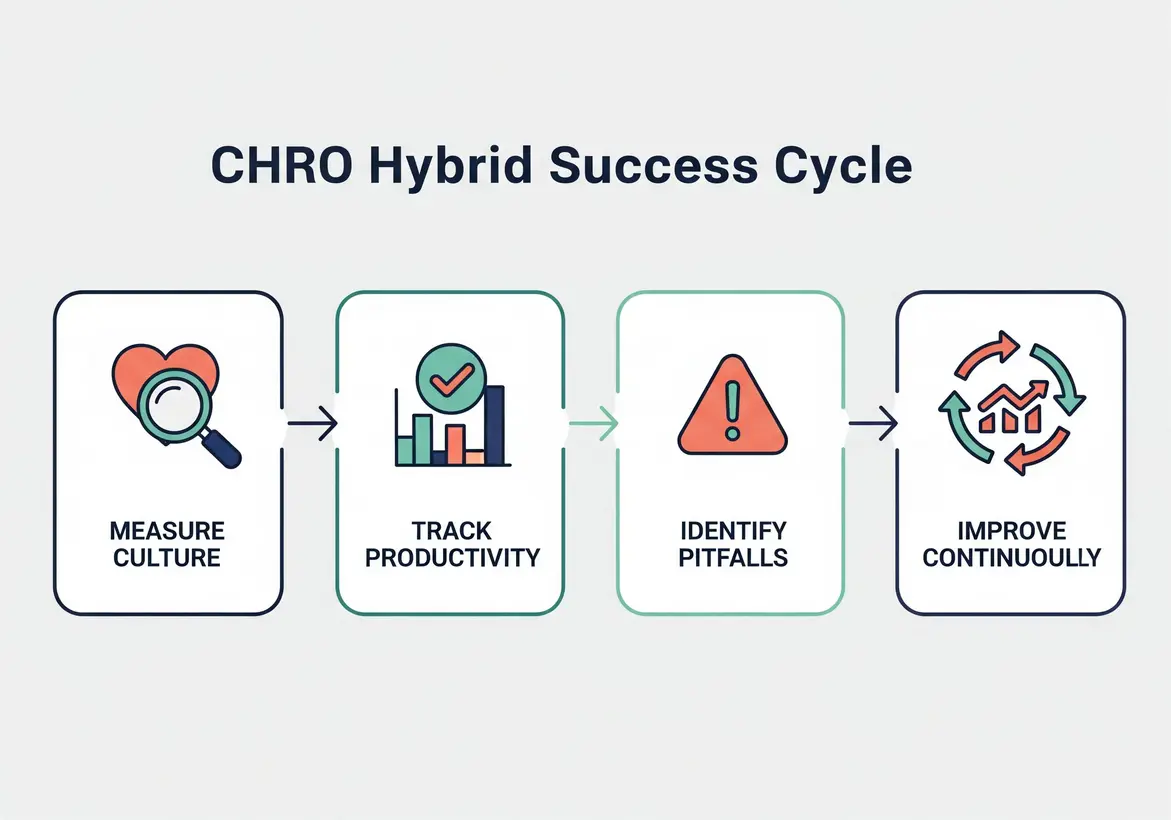
A strategic partner offers not only experience but proprietary diagnostic tools, tailor-made interventions, and objectivity that internal stakeholders may lack. These alliances are especially impactful during periods of transformation that require clear-eyed, multi-level realignment—as seen in global deployments of integral leadership methodologies.
For organizations with multiple office sites or diverse regional practices, market-specific adaptation guides enable leadership to localize hybrid models, recognizing cultural expectations while maintaining unified standards.
FAQ: Designing Hybrid Work Models
What is a hybrid work model?
A hybrid work model blends remote and in-office work, offering flexibility for employees and retaining structure for collaboration. It may vary from fixed in-office days to fully flexible arrangements.
What are the main types of hybrid work models?
The primary types are fixed hybrid (set days in/out), flexible hybrid (employee choice), remote-first (office optional), and office-first (remote is the exception). Each type influences culture, engagement, and operational complexity differently.
How can a CHRO assess if the current hybrid arrangement is working?
CHROs should use a combination of pulse surveys, team interviews, and culture health diagnostics to track engagement, productivity, and equity. Look for signs like declining belonging, uneven advancement, or communication breakdowns.
What’s the most common mistake organizations make with hybrid work?
Most mistakes stem from treating hybrid as a logistical shift rather than a culture and leadership transformation. Relying on policy alone, without upskilling managers or assessing culture impact, is a common pitfall.
How do we prevent presence bias from affecting promotions?
Set transparent, role-specific advancement criteria and conduct regular equity audits to monitor outcomes by work location. Establish mentorship and visibility programs accessible to all employees—regardless of in-person frequency.
How should CHROs approach hybrid work across global offices?
Start with a unified framework but allow adaptation for local cultural attitudes, legal requirements, and communication norms. Lean on regional leadership to design localized rituals and performance rhythms.
What are the most important metrics to track for hybrid work success?
Key metrics include employee engagement (eNPS or pulse scores), turnover and retention by segment, productivity ratios, speed of onboarding, and internal equity indicators for advancement and recognition.
Can hybrid work models boost both productivity and culture?
With intentional design, ongoing culture diagnostics, and leadership development, hybrid work can deliver both high engagement and strong business performance. Success hinges on continuous feedback, inclusive policies, and visible leadership alignment.
No single template can resolve every organization’s hybrid challenges. But by leveraging multi-level frameworks, robust diagnostic tools, and values-driven leadership, CHROs and people leaders can transform hybrid work from an operational necessity into a source of genuine competitive advantage. The journey to hybrid mastery is ongoing—and starts with asking: What story does your current culture tell in a blended world, and what could it become?
Continue Your Leadership Journey
-
How CHROs Can Build Hybrid Work Models That Drive Purpose and Performance — Explore frameworks for designing hybrid strategies that align with culture, productivity, and sustainable business value.
-
Purpose-Driven Leadership and Values Integration in Hybrid Contexts — Deep dive into leadership skillsets for cultural transformation and values-driven hybrid adaptation.
-
Integral Leadership for CHROs: Decentralized Structures and Tech-Enabled Collaboration — Tailored approaches for building integral leadership capability in complex, distributed organizations.
-
Optimizing Focus and Enabling Hybrid Productivity — Science-backed attention and productivity strategies for distributed and hybrid teams.