

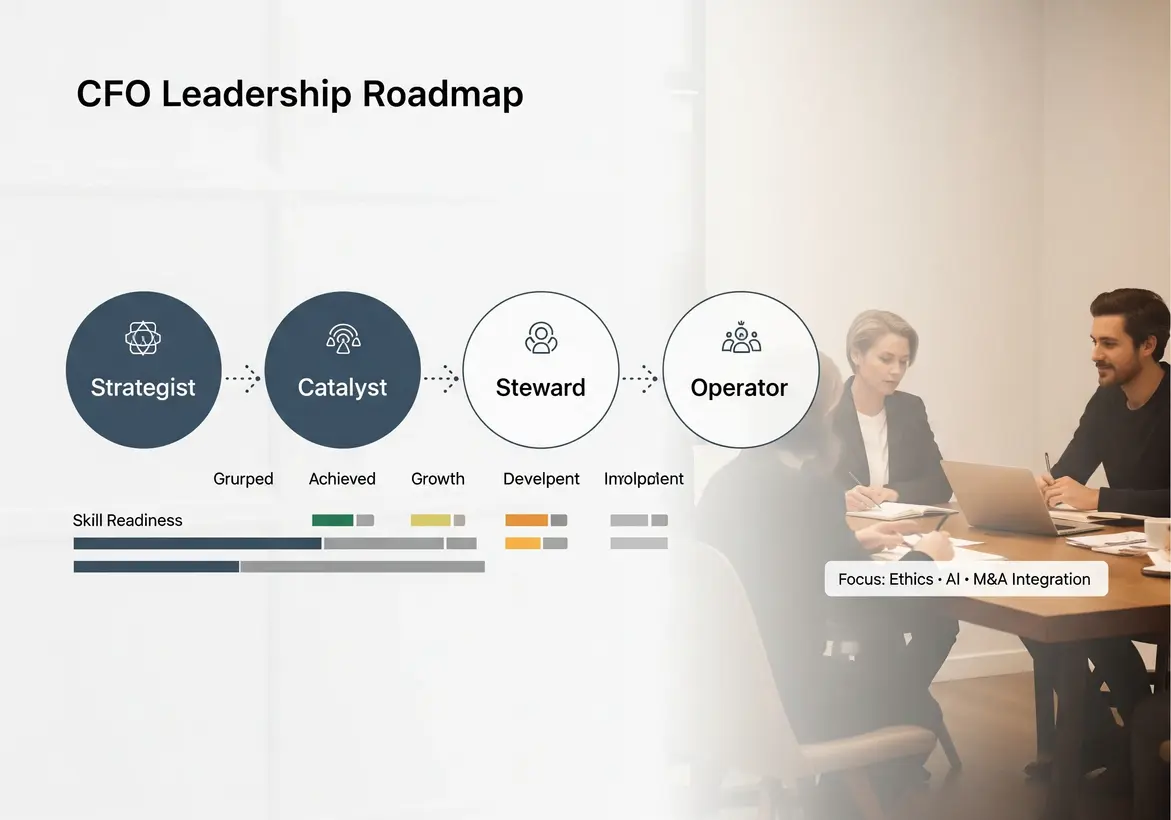
Chief Financial Officers (CFOs) face unprecedented complexity: they must excel as strategists, catalysts, stewards, and operators—all while translating financial acumen into sustainable value creation. Leadership development for CFOs requires more than technical mastery; it demands integral leadership agility, ethical decision-making, advanced risk management, and transformative influence across the organization. By the end of this guide, you will understand precisely which multi-dimensional capabilities drive CFO excellence, how to balance financial stewardship with innovation, and which frameworks support success in volatile environments.
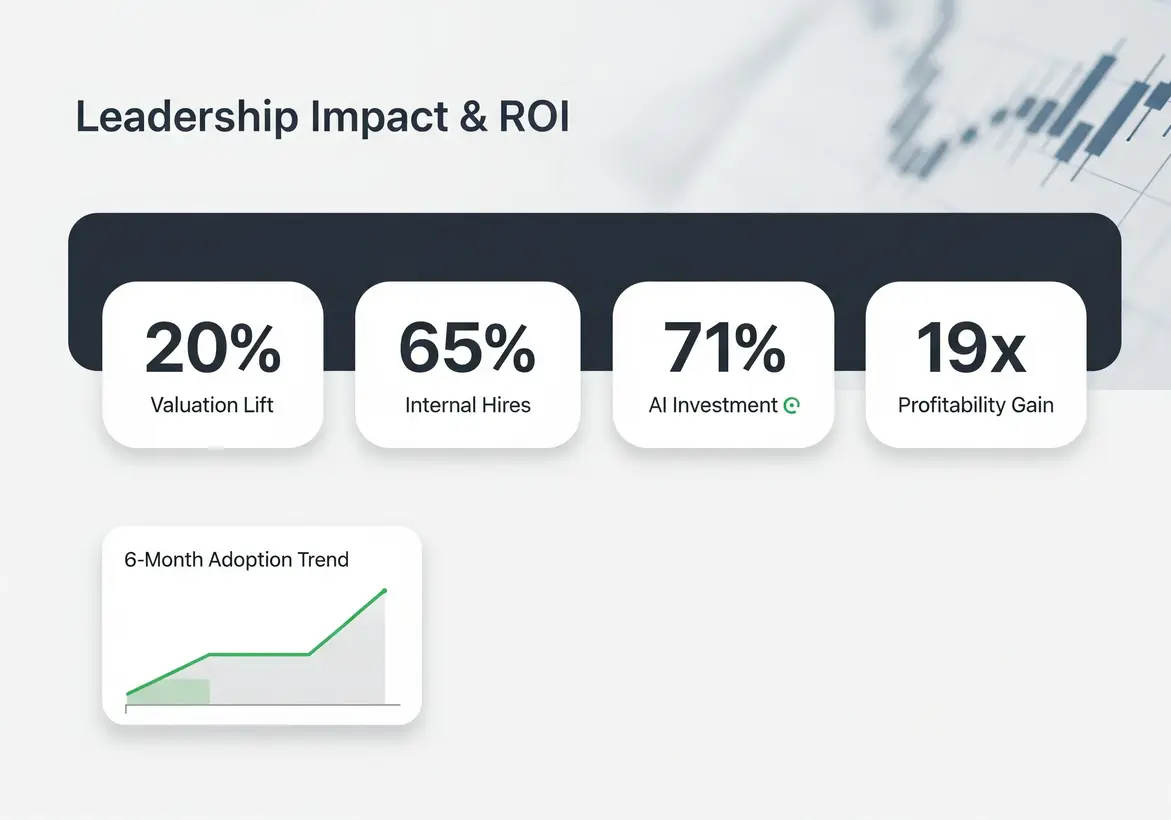
The archetype of the CFO has shifted from pure financial gatekeeper to strategic architect and organizational transformer. Modern boards expect CFOs to champion digitalization, lead M&A value capture, drive ESG outcomes, and act as trusted partners to the CEO. This evolution is fueled by evidence: companies with a true CFO (not just a VP/SVP Finance) see 20% higher valuations, and 82% of CFOs have recently expanded their remits to include areas such as ESG, technology investments, or procurement (Source: Egon Zehnder, Deloitte, 2024). The talent market mirrors this shift: in 2025, 65% of CFO appointments were internal promotions, revealing the premium placed on leadership development and organizational succession.
So, what distinguishes truly effective CFO leadership? And how can CFOs sustain high performance amid economic volatility, disruptive technology, and shifting stakeholder demands?
What is the AQAL model and how is it applied in leadership development?
The AQAL (All Quadrants, All Levels) model, originally conceived by Ken Wilber, offers a powerful lens for developing multi-dimensional leaders—an approach that aligns tightly with the complex reality CFOs inhabit. Instead of viewing leadership solely through behavioral competencies or financial skillsets, AQAL systematically addresses four core perspectives: individual qualities, collective culture, internal mindset, and external systems.
When applied to CFO leadership development, this model ensures interventions address:
- The CFO’s personal mindset and self-mastery (e.g., resilience under pressure, cognitive agility in scenario planning)
- Team culture and cross-functional collaboration (e.g., bridging finance with commercial, tech, or operations teams)
- Organizational structures and processes (e.g., redesigning financial reporting systems, embedding ethical guardrails)
- Real-world behaviors and visible results (e.g., executive presence with investors, decisive action during crises)
Research-backed integrated frameworks, such as those used by The Integral Institute, consistently deliver higher leadership growth by targeting all four AQAL dimensions, not just isolated competencies.
This robust approach explains why simply sending CFOs to executive “skills” courses often underdelivers: sustained change demands alignment across mindsets, teams, systems, and behaviors. The AQAL methodology, grounded in over two decades of application in global firms, creates not only skilled executives but adaptive, value-creating leaders.
Strategic Financial Leadership in a Volatile World
CFOs are tasked with navigating turbulence—macroeconomic shocks, regulatory changes, supply chain fragility, and rapid technology shifts. The strategic imperative is two-fold: safeguard financial health while proactively fueling growth.
The CFO as Chief Value Creator
CFOs are no longer evaluated solely on cost controls or financial stewardship; they are judged on their ability to drive enterprise value. This means translating capital allocation decisions into growth engines, aligning investments with the long-term strategy, and acting as a catalyst for innovation.
Companies with CFOs who serve as strategic partners achieve an average of 20% higher valuations (Source: Egon Zehnder, 2024).
High-performing CFOs zoom out from quarterly earnings to shape enduring value. They challenge short-termism, champion holistic metrics (including intangible assets and ESG), and ensure every financial decision reinforces the organizational mission.
Capital Allocation for Sustainable Value Creation
The art of capital allocation has become more nuanced—requiring CFOs to balance quick wins with enduring impact. New tools (e.g., predictive analytics, real-options analysis) are essential for modelling investment risk and opportunity in uncertain markets.
For example, when deploying capital in M&A, R&D, or digital transformation, best-in-class CFOs:
- Use scenario analysis to test the resilience of proposed investments
- Weigh financial returns against strategic alignment and stakeholder impact
- Prioritize flexible, staged investments over binary, all-in bets
CFOs often use integrated frameworks for sustainable financial strategy, ensuring resource allocation aligns with both immediate profitability and the company’s broader vision.
Advanced Risk Management: Beyond the Basics
Basic risk registers no longer suffice. Forward-thinking CFOs deploy multi-layered risk frameworks, applying both quantitative and qualitative methodologies to unearth threats (geopolitical, cyber, climate, reputational) that hide outside the balance sheet.
CFOs who excel in risk management:
- Regularly commission cross-functional risk assessments, embedding financial, operational, and technology perspectives
- Leverage AI and advanced analytics for early warning signals—improving detection of non-obvious risks before they materialize
- Integrate ESG and geopolitical risk into traditional models, moving past compliance into proactive stewardship
Organization-wide approaches, such as those embedded in The Integral Institute’s risk management framework, enable CFOs to transform risk adversity into risk intelligence—fueling both resilience and competitive advantage (Source: Deloitte, 2024).
M&A Integration: Unlocking Value, Avoiding Pitfalls
The true test of CFO leadership often arrives post-transaction. Integrating acquisitions requires more than financial discipline; it demands harmonization of culture, technology, and strategy.
Key practices include:
- Rapidly aligning financial and operational data flows for real-time synergy tracking
- Facilitating cross-functional integration teams to minimize “us vs. them” inertia
- Applying scenario simulation to anticipate and correct integration roadblocks
CFOs who approach M&A through an integral leadership lens deliver more consistent post-deal value and reduce the notorious “synergy discount” that can erode shareholder returns.
The Data-Driven CFO: Unlocking Predictive Power
With 71% of CFOs planning to increase AI investments by at least 10% in 2024, the mandate is clear: data fluency is now as critical as capital fluency (Source: Gartner, 2024). Yet, the highest impact stems not from data access but from turning analytics into actionable business insight.
Beyond BI: AI/ML for Predictive and Prescriptive Financial Forecasting
While traditional BI tools offer rearview visibility, leading CFOs invest in AI-driven predictive and prescriptive analytics that provide forward-looking guidance, scenario recommendations, and risk-adjusted options in real time.
Effective adoption means:
- Moving beyond descriptive dashboards to real-time, self-learning forecasting engines
- Partnering with IT and data science teams to build robust models tailored to finance use cases (e.g., cash flow forecasting, revenue recognition, risk modeling)
- Ensuring outputs don’t simply inform, but change decision behaviors across the leadership team
Organizations leveraging advanced analytics have reported up to 19x higher profitability gains through operational agility and precision forecasting (Source: Velosio, 2023).
Building an Integrated EPM Framework
Too many finance teams struggle with fragmented data and siloed reporting. The most effective CFOs architect unified Enterprise Performance Management (EPM) frameworks—merging operational, financial, and strategic KPIs for real-time visibility.
This move from scattered data to a single source of truth:
- Accelerates decision cycles
- Improves alignment across business units
- Supports rapid pivots in response to market shifts
CFOs grounded in the integral leadership principles naturally champion these integration efforts, ensuring insights are not just available, but accessible and actionable.
Data Governance and Ethical AI in Finance
The ability to harness data comes with a duty to ensure integrity, privacy, and transparency. CFOs are increasingly responsible for setting guardrails on AI models and analytics, particularly as regulations around explainability and bias intensify globally.
A modern CFO’s data governance playbook includes:
- Rigorous audit trails for financial algorithms and forecasting models
- Continual bias assessments for automated financial decisions
- Clear policies on data privacy, auditability, and AI ethics
Drawing on ethical leadership frameworks, CFOs can guide organizations to leverage technology responsibly—protecting trust while enabling innovation.
Translating Data into Actionable Business Intelligence
Data-savvy CFOs bring intelligence to life by using analytics to facilitate cross-functional collaboration. This means distilling complex patterns into tailored narratives for each stakeholder—whether that’s enabling board-level scenario planning or helping operations teams optimize working capital.
These CFOs are:
- Building “data bridges” between finance and other business functions, breaking down silos and surfacing shared performance drivers
- Leading business-wide education on financial data literacy, raising the collective ability to act on insight
CFOs who excel at cross-functional communication amplify their organization’s agility—turning slow, siloed decision processes into high-velocity, opportunity-driven action (Source: Deloitte, 2024).
Ethical Leadership & Organizational Impact
Trust is the CFO’s indispensable currency. Ethical leadership has become nonnegotiable—not only to satisfy regulators but to safeguard the organization’s future. In an era of real-time scrutiny, social activism, and AI-enabled decision-making, ethical frameworks must be deeply embedded.
Ethical Financial Leadership: Navigating Dilemmas in a Data-Rich, Volatile Landscape
Modern CFOs routinely confront scenarios where regulatory compliance, shareholder expectations, and social values may conflict. Examples include:
- Pressure to smooth earnings using “creative” accounting, under pressure from activist investors during downturns
- Grey areas in ESG reporting as definitions and materiality standards evolve
- Balancing cost reduction imperatives with responsibilities for employee well-being or supplier integrity
Rather than relying on static codes of conduct, CFOs are applying dynamic, scenario-based ethical reasoning frameworks—tested under real-world ambiguity. Drawing on global best practices and integral leadership principles, CFOs can champion “do the right thing before it’s the required thing.”
A credible ethical stance not only averts reputational crisis but, paradoxically, attracts investor capital: boards and asset managers are increasingly factoring organizational integrity into valuation models.
Fostering a Culture of Integrity and Transparency
Ethics is not an individual pursuit; it’s a collective discipline. CFOs signal integrity not only through their own choices but by building cultures that empower ethical conduct.
Practical steps include:
- Redesigning internal controls to spotlight red flags before issues escalate
- Creating safe spaces for whistleblowing and candid conversation at all levels
- Ensuring ethical considerations are integral to every capital allocation and strategic decision
Organizations that invest in ethical leadership development see reduced incident rates and increased employee engagement scores, amplifying their ability to recruit and retain financial talent.
Communication & Influence: Mastering Stakeholder Management
The ability to “speak finance” is no longer sufficient. CFOs bridge the gap between financial logic and strategic narrative—energizing investors, aligning the board, and building internal momentum for transformation.
Key influencing techniques:
- Translating analytic findings into compelling, actionable stories for diverse stakeholders
- Anticipating and addressing board concerns with both depth and strategic context
- Practicing executive presence and gravitas, drawing on frameworks such as The Integral Institute’s executive presence model to maximize authority and approachability
Exceptional CFOs are those who navigate competing interests not by compromise, but by inspiring shared vision across boundaries.
Leading Organizational Change: The CFO as a Catalyst
CFOs are now expected to co-lead transformative change—whether integrating acquisitions, launching digital initiatives, or evolving business models. Research shows that CFOs who act as “Catalysts”—rather than gatekeepers—double the odds of transformation success (Source: Deloitte, 2024).
Core change leadership practices:
- Building cross-functional alliances to sustain momentum after initial enthusiasm wanes
- Facilitating shared ownership of transformation objectives and metrics
- Modeling adaptability, celebrating quick wins, and sustaining transparency through the change curve
CFOs grounded in the Integral Model’s multi-level framework consistently shift their organizations beyond compliance into authentic, enterprise-wide transformation.
Personalized Career Pathways & Continuous Development
Leadership is not a destination but a lifelong learning path. For CFOs, personal and professional renewal is a differentiator: with 60% of top-system CFOs at risk of leaving and 65% of roles filled through internal promotion (Source: FurstGroup, HighRadius, 2024), personalized development pathways have become a board-level priority.
Mapping Your CFO Journey: Self-Assessment and Skill Gap Analysis
Before embarking on any development program, today’s CFOs benefit from comprehensive self-inventory—benchmarking current competencies against evolving role demands. Leading organizations apply 360° assessments, feedback loops, and personalized leadership development plans to accelerate growth.
Choosing the Right Development Path
Unlike uniform executive coaching or generic MBA programs, the most impactful CFO development journeys are tailored to experience level, technical gaps, and career goals. This may include:
- Enrolling in advanced leadership modules focused on digital transformation, ethical leadership, or cross-industry strategy
- Participating in integral leadership programs customized to the CFO role
- Pairing formal training with mentoring or mastermind peer groups
Building Your Strategic Network
Research shows that CFOs embedded in strong peer cohorts (via council memberships or immersive workshops) accelerate both learning and impact—gaining pragmatic insights and trusted sounding boards.
CFOs who actively cultivate diverse strategic networks increase their career mobility and problem-solving capacity (Source: Deloitte, 2024).
Measuring the Impact of Leadership Development
While traditional ROI metrics may be elusive, qualitative indicators—such as accelerated succession, improved stakeholder advocacy, faster integration post-M&A, or increased organizational adaptability—signal the tangible value of sustained leadership development for CFOs.
FAQ: Leadership Development for Chief Financial Officers (CFOs)
Which methods are most effective for building cohesive and high-performing leadership teams?
High-performing CFOs foster team cohesion by combining experiential workshops, scenario-based learning, and tailored feedback with integral team coaching. Drawn from the AQAL model and grounded in The Integral Institute’s methodology, these approaches align individual growth with team purpose, systematizing feedback, and clarifying shared goals—all of which are essential in high-stakes finance environments.
How can organizational assessments diagnose root causes of performance challenges?
Comprehensive assessments, including 360° feedback and team climate surveys, identify both observable and hidden obstacles—ranging from individual mindset barriers to structural and cultural misalignment. Effective interventions target these root causes, ensuring that development investments yield measurable improvement in team dynamics, decision agility, and performance.
Why is it important to address individual, team, and organizational levels simultaneously in leadership coaching?
Targeting only individual skills won’t translate to enterprise-wide growth. Sustainable leadership development occurs when mindset, team norms, and organizational structures all shift in concert—multiplying the impact and creating a lasting culture of excellence.
How does integral coaching support change leadership in complex business environments?
Integral Coaching equips CFOs with adaptive tools to lead transformation under uncertainty—expanding their range of influence, improving resilience, and enabling them to see challenges from multiple systems perspectives, not just linear logic. This holistic foundation accelerates organizational buy-in and successfully anchors change.
When should an organization engage in tailor-made development interventions?
Organizations should consider customized programs when off-the-shelf solutions fail to address specific strategic, cultural, or leadership demands—such as post-M&A integration, digital transformation, or succession risk. Custom interventions generate greater ROI by directly targeting the nuanced challenges CFOs face in their unique contexts.
Can facilitation and mentoring improve transformation sustainability within organizations?
Yes. Facilitation accelerates buy-in and resolves bottlenecks during transformation journeys, while mentoring sustains growth by embedding new mindsets and behaviors over time. This is particularly effective for CFOs navigating succession, role expansion, or cultural change.
Is there a proven framework to navigate uncertainty and rapid disruption through leadership training?
The AQAL-based Integral Leadership Framework, used globally and refined over two decades, has empowered CFOs and leadership teams to navigate disruption with agility and systemic awareness, consistently outperforming siloed or one-dimensional programs in volatile markets.
True CFO leadership is never static, and the path to mastery is rarely linear. The journey to becoming a catalyst for value creation, ethical integrity, and cross-functional impact requires continuous reflection, tailored growth, and systemic perspective. As you consider the next phase of your own or your team’s development, what dimension of your CFO leadership—strategic, ethical, analytical, or transformational—offers the highest leverage for your organization’s future?
Continue Your Leadership Journey
- CFO leadership — Explore in-depth perspectives and methodologies tailored to CFO executive development.
- Integral leadership principles — Learn how multidimensional frameworks elevate financial leadership impact.
- Financial strategy — Discover models for balancing profit imperatives with long-term organizational growth.
- Risk management — See proactive approaches to identifying and mitigating risk across business units.