
AI support for shadow work integration within an Integral growth framework refers to the use of artificial intelligence tools—such as intelligent journaling prompts and pattern recognition algorithms—to help individuals identify, understand, and work with the unconscious or repressed aspects of themselves, guided by multidimensional developmental models like Ken Wilber’s Integral Theory. This approach is designed for those seeking holistic psychological growth by combining deep reflective practices with structured, AI-augmented feedback and is especially relevant for coaches, leaders, and anyone invested in self-mastery. By the end of this exploration, readers will understand the core potential, nuances, safeguards, and best practices for weaving AI into genuine shadow work within a truly integral context.
Why “Shadow Work” Now Needs an Intelligent Mirror
In a world increasingly driven by data and digital acceleration, patterns from our unconscious—the so-called “shadow self”—are showing up everywhere: in hurried Slack messages, leaders’ emotional misfires, or organizational cultures filled with unspoken taboos. Many are seeking deeper self-reflection methods, but traditional journaling or talk therapy doesn’t always fit modern workloads or unlock the reflective “aha moments” people crave.
Enter AI-enhanced reflection. With the advent of intelligent journaling apps able to notice mood shifts, surface recurrent themes, and ask pointed prompts, a new possibility arises: Might technology help us uncover the parts of ourselves we habitually hide—not just repeat our most familiar narratives? Yet this question sneaks in its own “shadow,” too: Can algorithms really support the depth work of integration and healing, or do they risk flattening, distorting, or even pathologizing our inner experience?
Drawing on The Integral Institute’s two-decade integral methodology, let’s unravel the emerging synergy (and tension) between AI, shadow work, and holistic self-development frameworks.
What Is Shadow Work—and How Is AI Changing the Landscape?
Shadow work, originally developed by Carl Jung and later enriched by modalities like Internal Family Systems (IFS), describes the process of discovering, engaging, and integrating parts of the psyche we habitually avoid, deny, or suppress. These “shadow aspects” often manifest as recurring emotional triggers, stubborn behavioral patterns, or blind spots in both personal and professional life.
Traditional shadow work methods include:
- Reflective journaling
- Guided visualization or somatic practices
- Dialogues with trained coaches or therapists
- Experiential group exercises
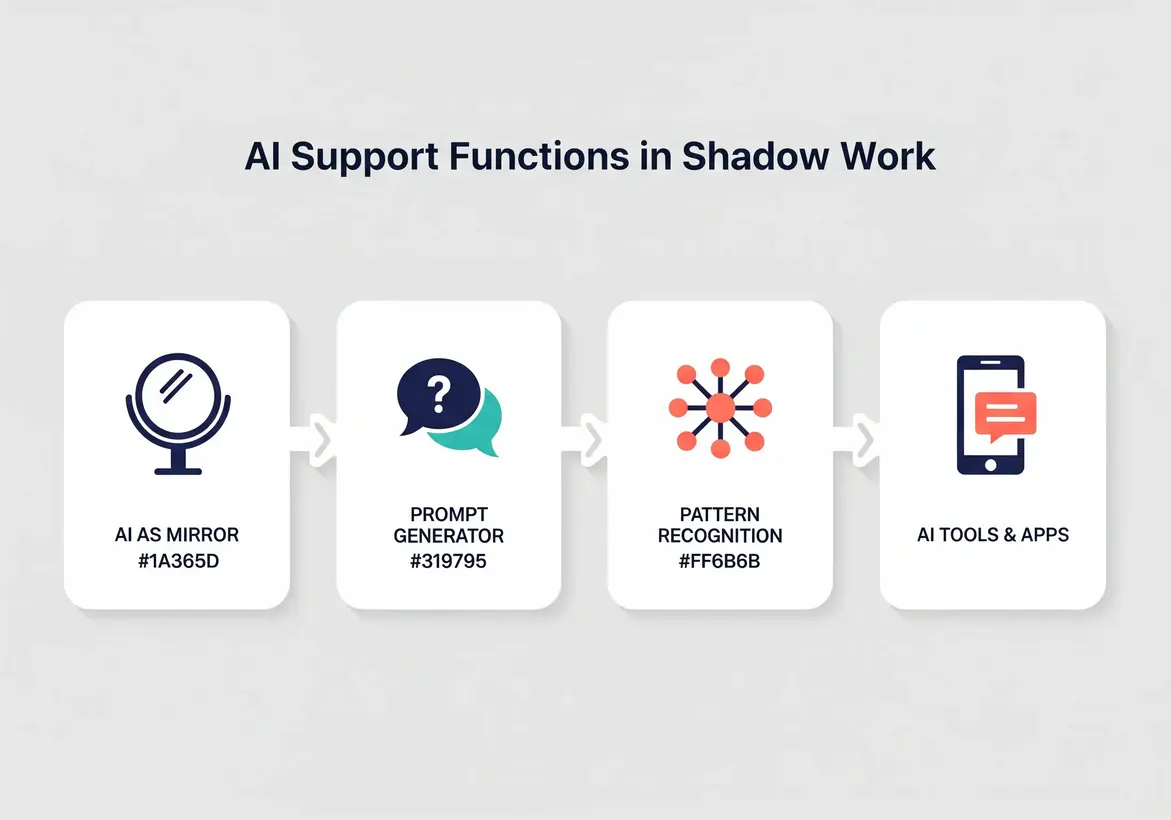
AI support for shadow work leverages advances in machine learning, natural language processing, and sentiment analysis to:
- Suggest self-inquiry prompts based on mood, emotion, or past entries
- Surface hidden linguistic or behavioral patterns across communication channels
- Offer “mirror” feedback highlighting contradictions or recurring avoidance themes
It’s important to clarify: “AI for shadow work” is not the same as “shadow AI” (unofficial tech in companies). Here, we’re talking about psychological integration, not cybersecurity.
How Can AI Tools Actually Support Shadow Integration?
For many, the promise of AI in personal growth is accessibility and nuance: a tireless, always-on support for reflection and self-inquiry. Examples of real-world use include:
- Intelligent journaling apps that recognize emotion shifts and recommend new prompt directions
- AI signal processing tracking how often certain topics or emotional tones recur in communication logs
- Pattern comparison tools aligning personal narrative style with broader psychological typologies
But what really differentiates “superficial” from “deep” support? The most promising AI tools do three things:
- Pattern Recognition Beyond the Obvious: Noticing emotional subtext, avoidance, or contradiction—sometimes picking up cues missed in self-reporting
- Context-aware Prompting: Sequencing prompts that gradually deepen self-inquiry, rather than rushing to “solve” or explain away difficult feelings
- Progress Tracking and Reflection: Helping individuals track not just what they say, but how their perspectives and moods evolve over time
A growing field of emotional reflection tools showcases AI’s ability to help track states of consciousness and foster real-time awareness in moments of confusion or stress (see more on emotional reflection and AI here).
What Is an “Integral Growth Framework,” and Why Does It Matter for Shadow Work?
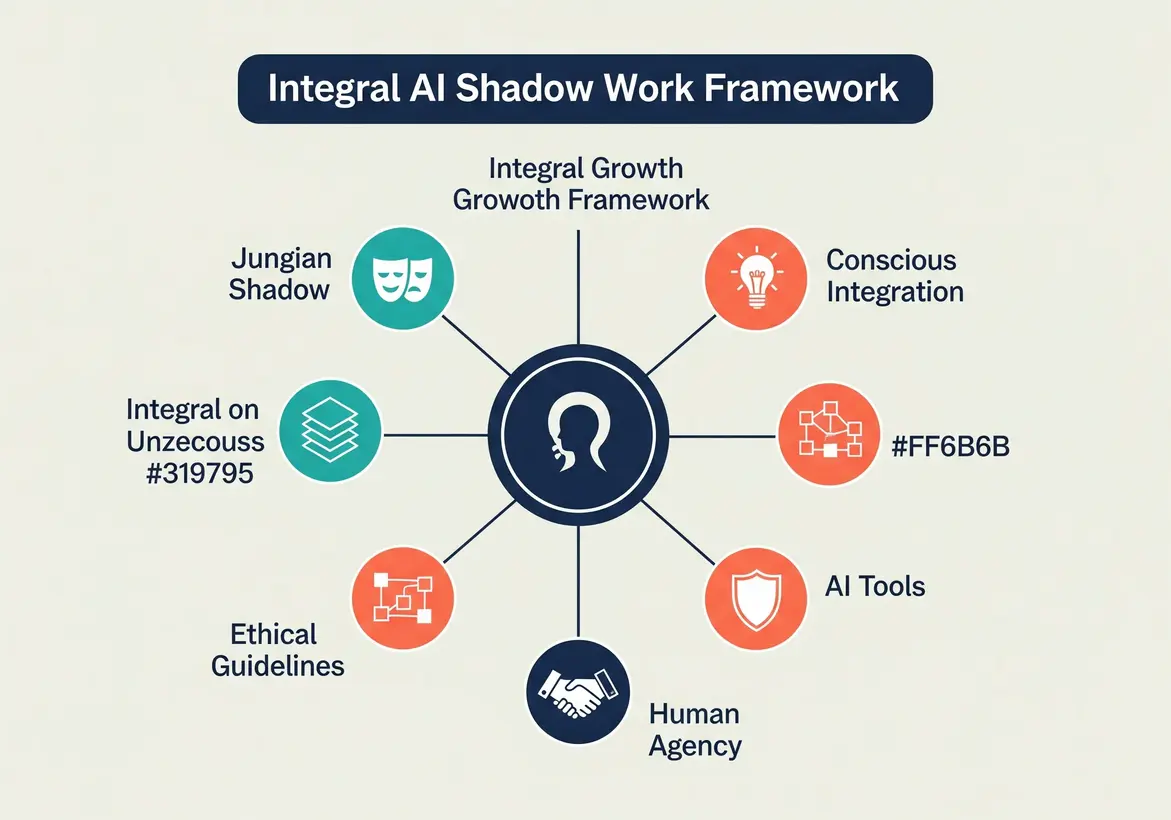
The Integral growth framework—famously mapped by Ken Wilber as AQAL (All Quadrants, All Levels, All Lines, All States, All Types)—offers a map for holistic development across both interior and exterior dimensions at the individual and collective levels. In simple terms, it’s a way to make sure no aspect of growth gets left behind. Shadow work, when approached integrally, goes far beyond “fixing” or “healing”—it becomes about weaving together multiple perspectives, talents, and worldviews into a mature, adaptable self.
Integral Theory’s four quadrants illuminate where and how “shadow” can show up:
- Individual/Interior: Thoughts, emotions, repressed beliefs (classic shadow work territory)
- Individual/Exterior: Observable behaviors, physical habits, unconscious body language
- Collective/Interior: Group norms, unspoken taboos, team or organizational blind spots
- Collective/Exterior: Systemic structures, rules, or cultural practices that reinforce shadow
With this lens, AI tools are not just “self-help gadgets,” but potential bridges across inner experience, outward action, group dynamics, and organizational structures (explore foundational frameworks in depth).
What Are the Practical Benefits—and Hidden Risks—of AI-Assisted Shadow Exploration?
AI has the potential to democratize access to deep inner work, offering scalable, always-ready support in a way that traditional coaching or therapy cannot. But every new tool brings both bright and shadow sides of its own.
Potential Benefits
- Accelerated Pattern Awareness: Well-designed AI can highlight patterns from thousands of words or actions over weeks—something that even the most attentive human coach can easily miss.
- Personalized Prompting: AI can adapt journaling or reflection questions to prior responses, making the process feel more attuned and less scripted.
- Nonjudgmental Feedback: For some, AI is less threatening than a human interlocutor, enabling more honest disclosure and self-acceptance.
Evidence for the positive impact of such reflective practices is robust—Pennebaker’s studies on expressive writing show marked improvements in well-being, resilience, and even physical health when individuals consistently process and integrate challenging emotions (Source: Pennebaker, J. W., Emotion, Disclosure, & Health, 1997).
Subtle and Advanced Risks
- Superficiality Trap: The majority of commercial self-help apps prioritize convenience over depth, potentially reinforcing avoidance and offering “shallow” insights.
- Algorithmic Distortion: AI mirrors are created from data and models—not true awareness. They reflect but also filter, sometimes introducing subtle biases or amplifying existing patterns.
- Dependency and Regression: Without periodic human guidance or real-world grounding, users can become reliant on technological feedback, stalling genuine growth or even regressing into earlier developmental habits.
The risk isn’t that AI will make us more robotic—it’s that we’ll let our “inner mirror” be replaced by a cleverly-coded lens, mistaking scripted feedback for deep self-knowing.
This is where developmental psychology becomes critical. A tool that’s helpful for one stage of psychological maturity may produce confusion, fear, or complacency at another (see how AI maps to developmental stages here).
How Do Integral Coaches Safeguard the Process? Human-in-the-Loop Protocols
Professional coaches working with shadow material have long followed “containment” protocols—establishing boundaries, tracking pace, and discerning when deeper emotion or trauma requires pause or referral. In an AI-augmented context, new protocols are emerging:
- Alternating AI and Human Reflection: Encouraging users to switch between AI prompts and analog journaling or coach-led sessions, reducing risk of algorithmic trance.
- Explicit “Tech Breaks” and Debriefs: Structured digital “fasts” after emotionally intense sessions, using meta-reflection prompts like: “What did I discover that the AI missed? Where am I feeling unsettled?”
- Tracking Lived Impact: Regular self-audits, not just of digital insight, but of observable change in relationships, performance, and self-regulation
These practices draw on a core tenet of Integral Coaching: Technology can support growth, but never replaces human presence, discernment, or embodied learning (for comprehensive coaching strategies, visit).
How Does AI Fit Within the Integral Quadrants? A Practical Mapping
Many guides treat AI for self-development as “journaling on steroids.” The integral map adds powerful nuance:
- Upper Left (“I”/Interior-Individual): AI as journaling prompt, emotion tracker, or “mirror” that helps users notice their own avoidance, emotional triggers, or value conflicts
- Upper Right (“It”/Exterior-Individual): AI as behavioral log analyzer, drawing links between digital habits and recurring stress events—connecting the dots between feelings and actions
- Lower Left (“We”/Interior-Collective): AI as facilitator for group shadow work, noticing conversational avoidance, team taboos, or “group-think” patterns inside organizations
- Lower Right (“Its”/Exterior-Collective): AI-enabled dashboards decode culture—mapping unspoken group norms, feedback loops, and system-wide “shadows” in the organization (see applications for organizational culture and AI)
Integrating these quadrants ensures shadow work remains a multidimensional, not reductionist, affair.
How Can I Avoid Superficial Reflection or Over-Reliance on AI?
A central “aha moment” for many embarking on this path is realizing that AI is a mirror and a lens—never a replacement for the self who gazes. Here’s a practical checklist:
- Use AI as a Starting Point, Not the Whole Journey: After engaging with an AI prompt or dashboard, close the app and ask: “What else wants to be heard?”
- Check for Lived Change: Is insight producing new action, resilience, or improved relationships—or just more digital navel-gazing?
- Debrief with a Human or Group: Periodically discuss discoveries with a trusted coach, mentor, or peer. Are you noticing new blind spots, or just familiar comfort zones?
- Audit Your Growth Stages: Shadow work deepens as your developmental capacity expands. If your AI tool feels “too easy” or “too mindless,” it might be time to seek more tailored support (discover executive-level inner mastery approaches).
Robust shadow work often means stepping back from the digital mirror and checking: Is this really me, or just my algorithm speaking back?
What Ethical Safeguards Are Needed With AI in Shadow Work?
Ethical AI design—especially when intersecting with the psychological depths of shadow—demands special care:
- Confidentiality and Data Security: The sensitivity of inner work data far exceeds most casual journaling. Platforms should employ robust encryption and offer clear, user-controlled deletion.
- Transparency of AI “Personality” and Limits: Users should be reminded that AI provides outputs based on training data and prompts—not lived experience, therapeutic skill, or human intuition.
- Avoiding Pathologizing Language: AI prompts must be carefully curated to avoid medicalization, shaming, or implying deficit (“Why do you always fail at X?”).
- Tiered Guidance: At moments of acute emotional pain or distress, AI tools should prompt users to seek qualified human support (learn more about ethical AI safeguards for coaching).
These protocols ensure AI remains a supportive aid, not an invisible authority or substitute for authentic relationship and wisdom.
What’s Next? Designing Your Own AI-Integrated Shadow Work Journey
The real frontier lies in intentional, sequenced use of AI alongside embodied, human practices. Start by reflecting:
- What aspect of my experience remains most “in the shadow”—emotion, behavior, group dynamic, or culture?
- Which AI tools align with my growth stage, and which risks am I particularly prone to?
- How will I alternate between digital reflection and analog, human-centered integration?
- What checkpoints (weekly, monthly) will help me track progress and pause for deeper reflection?
For those with a coaching mindset or an appetite for next-level inner work, combining AI-enabled journaling with robust, multi-perspective frameworks unlocks both depth and practical traction (discover evidence-based journaling methods in integral contexts).
FAQ: AI Support for Shadow Work Integration within an Integral Growth Framework
Is AI-based shadow work as effective as traditional coaching or therapy?
AI-based shadow work can be a powerful supplement, helping individuals notice patterns and track inner experiences that might otherwise go unseen. However, it cannot replicate the nuanced empathy, ethical containment, or adaptive feedback offered by a skilled human coach or therapist. AI tools are most impactful when integrated with, not used instead of, human-guided methods.
Which AI tools are best for shadow work and integral development?
Most leading tools focus on reflective journaling, emotional state tracking, or pattern analysis. Examples include intelligent journaling apps and AI-enhanced communication trackers. Effectiveness depends less on the tool itself and more on how it’s embedded within a comprehensive development journey that includes both digital and analog practices.
How does AI prompt “deeper” reflection compared to a regular journal?
AI can detect recurring themes, emotional tone shifts, or avoidance patterns over time, then tailor prompts to guide users beyond their comfort zone. For example, if an algorithm notices repeated frustration topics, it might gently inquire about connections to past experiences or challenge the user to reflect from an alternative perspective.
What should I watch out for when using AI in shadow work?
Potential pitfalls include shallow prompts that reinforce familiar stories, an over-reliance on “algorithmic reflection” rather than embodied self-awareness, and privacy risks if data is stored insecurely. Always be critical: let AI challenge your blind spots, but verify insights against lived experience and feedback from trusted humans.
Can AI adapt to my developmental stage, psychological type, or cultural background?
Some advanced integral platforms are exploring ways to match AI feedback with developmental models or typologies. However, most commercial tools remain at a “one-size-fits-all” stage. For nuanced, culturally smart support, seek frameworks or programs built explicitly on developmental psychology and integral methods.
Is there research supporting the benefits of AI-augmented inner work?
While the benefits of expressive writing and pattern recognition are well-documented (Source: Pennebaker, J. W., Emotion, Disclosure, & Health, 1997), empirical studies on AI-specific shadow work are still emerging. Early evidence suggests potential for growth when AI is used thoughtfully and integrated with human insight.
Shadow work integration with AI is a frontier—filled with promise, but also complexity. The real art is knowing when to “look in the mirror,” when to “take off the lens,” and when, ultimately, to lean into authentic community and embodied practice. Your journey, like every integral path, is as unique as your shadow—and shaped as much by your questions as your tools.
Continue Your Leadership Journey
- How AI enhances emotional reflection and self-awareness — Discover how AI tools can track states of consciousness and foster deeper real-time awareness.
- Integral frameworks for holistic development — Explore the multidisciplinary methodologies that underpin true integral growth.
- Coaching strategies for deep shadow work and integration — Access comprehensive frameworks to support your psychological development and shadow work integration journey.
- Ethical safeguards in AI-augmented coaching — Understand the critical considerations in designing and using ethical AI for inner work.